
Listen to this article
Checking audio support
The final whistle has gone. Somewhere inside a packed stadium, one captain is on his knees, another team is scattered across the grass, and millions of people are staring at the same three things: the golden trophy, the winning shirt and the ball that has just survived ninety impossible minutes.
We usually remember the player who scored, the goalkeeper who guessed the right way, or the celebration that becomes a wallpaper for the next four years. But the objects in that frame have their own secret lives. The trophy has been stolen. The balls have been loved, blamed and redesigned like tiny flying machines. The jerseys have travelled from dressing rooms to museums, auctions and childhood cupboards.
And once you know their stories, a World Cup final never looks quite the same again.
The Trophy Every Footballer Dreams About
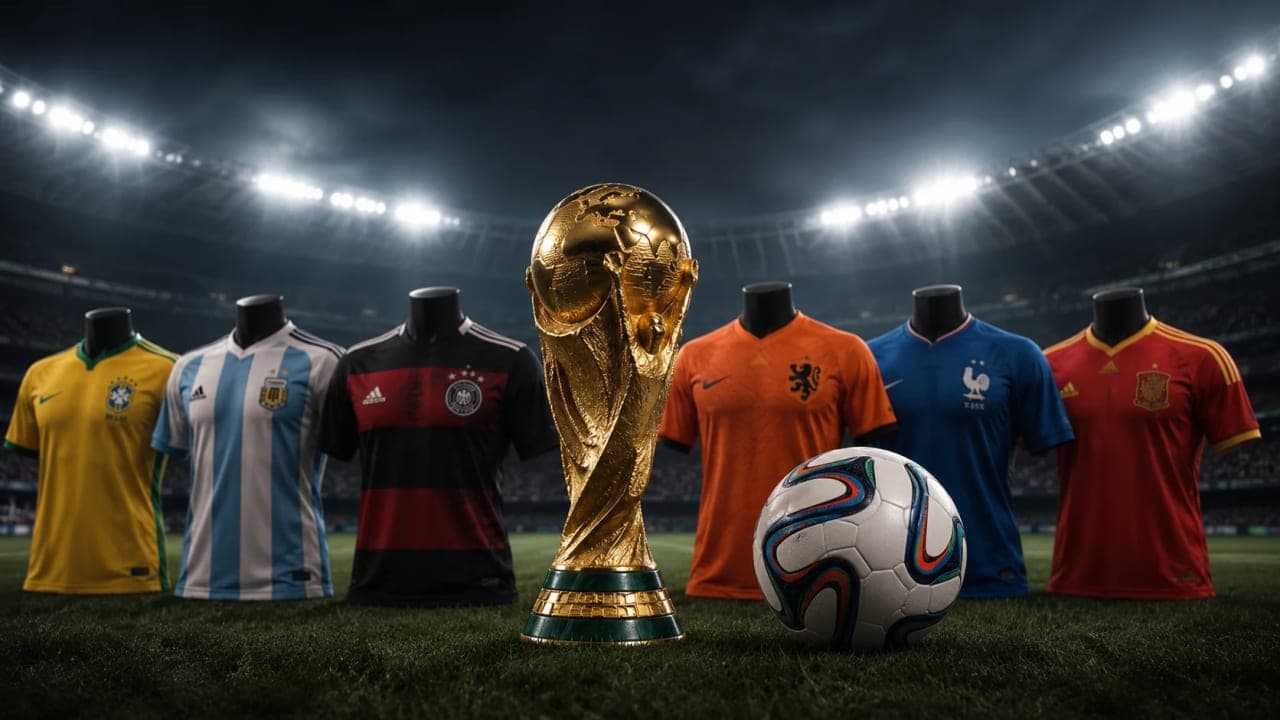
Before the trophy became a global symbol, it was a smaller prize with a very different name. The original World Cup trophy was first called Victory, then later renamed the Jules Rimet Trophy after the FIFA president who helped turn the World Cup dream into reality.
It was not just a prize. It was the physical proof that football had become a world language. From 1930 to 1970, teams chased that trophy across generations, wars, politics and wildly different versions of the sport. Brazil finally earned the right to keep it permanently after winning the World Cup for the third time in 1970.
Then came the current FIFA World Cup Trophy, first awarded in 1974. Italian sculptor Silvio Gazzaniga designed it as two human figures lifting the Earth itself. That is why it feels so powerful. It does not look like a cup you drink from. It looks like a planet being raised by exhausted, joyful hands.
The trophy is made of 18-carat gold, weighs a little over six kilograms and stands just under 37 centimetres tall. Small enough to fit in a captain's hands, heavy enough to feel like history.
Trophy | Years Used | Interesting Fact |
|---|---|---|
Jules Rimet Trophy | 1930-1970 | Brazil kept it permanently after their third World Cup win in 1970. |
FIFA World Cup Trophy | 1974-present | Designed by Silvio Gazzaniga, showing two figures lifting the Earth. |
Winners' Trophy | Modern era | Champions receive a replica to keep; the original remains with FIFA. |
The World Cup Trophy That Went Missing
If the Jules Rimet Trophy had been a movie character, it would have needed its own detective subplot.
In 1966, just months before England hosted the World Cup, the trophy was stolen while on public display in London. The panic was enormous. This was not a missing medal or a misplaced document. This was football's most important object disappearing before the biggest tournament on earth.
Then, in the most British twist imaginable, the hero was a dog named Pickles. While out for a walk with his owner, Pickles sniffed around a package hidden near a car and found the trophy wrapped in newspaper. A global scandal had somehow ended with a curious dog becoming part of football folklore.
The story did not end there. After Brazil kept the Jules Rimet Trophy, it was stolen again in 1983. This time, it was never recovered. Many believe it was melted down, which makes the mystery even stranger: football's first great trophy may have vanished not in a stadium, but in silence.

Every World Cup Has Its Own Ball
The trophy may be the dream, but the ball is the troublemaker. It decides how a free kick bends, how a goalkeeper panics, and how a striker becomes a legend by half a bootlace.
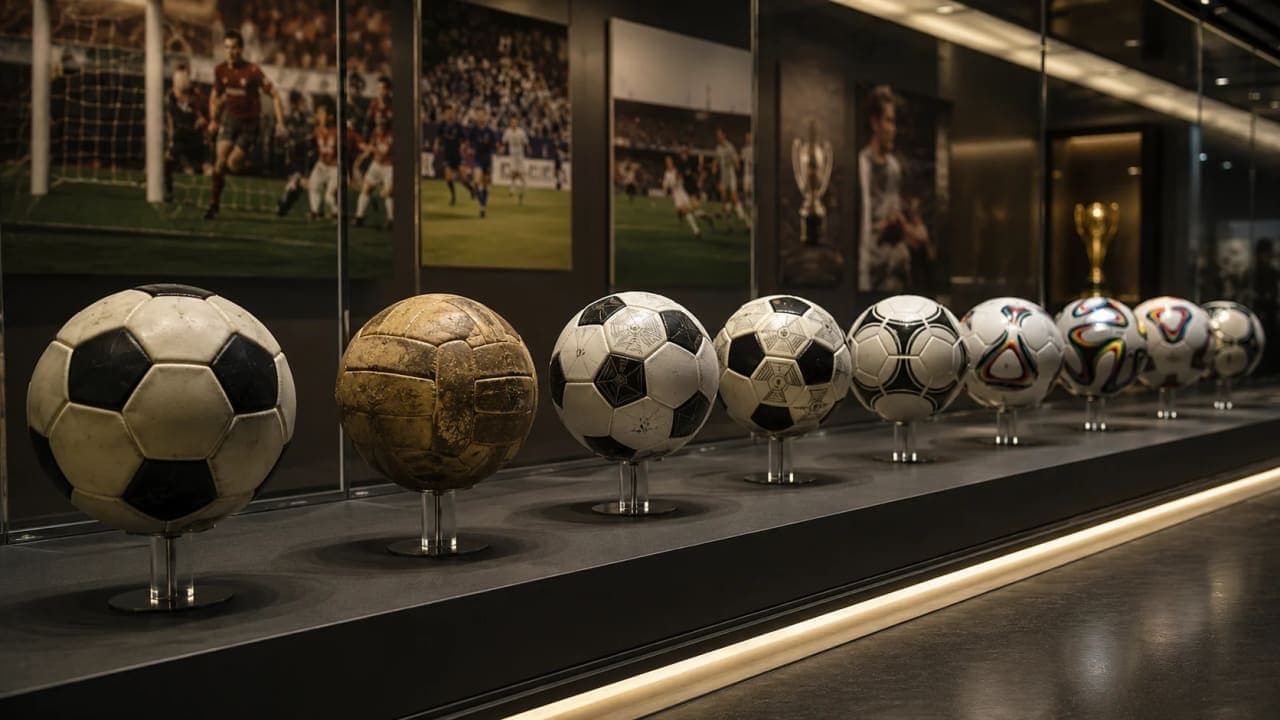
The Telstar in 1970 became famous because its black-and-white panels looked perfect on television. The Tango became a design language of its own. The Azteca in 1986 brought a new synthetic era. Fevernova broke the familiar pattern in 2002. Then came the Jabulani in 2010, a ball that some players treated like it had its own agenda.
How is it so far?
Vote with other readers
By 2014, Brazuca restored trust with a more stable six-panel design and massive pre-tournament testing. In 2022, Al Rihla carried connected-ball technology that helped officials with semi-automated offside decisions. For 2026, FIFA and adidas have revealed Trionda, a ball shaped around the shared identity of Canada, Mexico and the United States.
Ball | Tournament | Innovation |
|---|---|---|
Telstar | 1970 | Black-and-white panel design built for the television age. |
Tango | 1978 | A visual template that influenced World Cup balls for years. |
Azteca | 1986 | One of the first fully synthetic World Cup match balls. |
Fevernova | 2002 | A bold break from the classic Tango-style look. |
Jabulani | 2010 | Highly debated ball known for unpredictable movement. |
Brazuca | 2014 | Six-panel design praised for better stability and testing. |
Al Rihla | 2022 | Connected-ball technology supported modern officiating. |
Trionda | 2026 | Designed around the three host nations of the expanded World Cup. |
The Ball Players Loved... And The One They Did Not
Fans often think a ball is just a ball. Players know better.
The Jabulani proved how sensitive football can be. Its surface, seams and aerodynamics became talking points because players felt it moved too strangely in the air. Goalkeepers complained. Free-kick takers experimented. Long shots suddenly carried an extra layer of chaos.
Brazuca, four years later, felt like an apology letter with better engineering. It was tested widely, behaved more predictably and gave the 2014 tournament a ball that looked modern without constantly trying to steal the headline.
That is why FIFA keeps changing the ball. Materials improve. Aerodynamics get measured more carefully. Broadcasts become sharper. Refereeing technology becomes part of the game. The ball is no longer just stitched leather. It is design, science, branding and pressure, all rolling at once.
The Jerseys That Became History
A jersey is supposed to be fabric. Somehow, at the World Cup, it becomes memory.
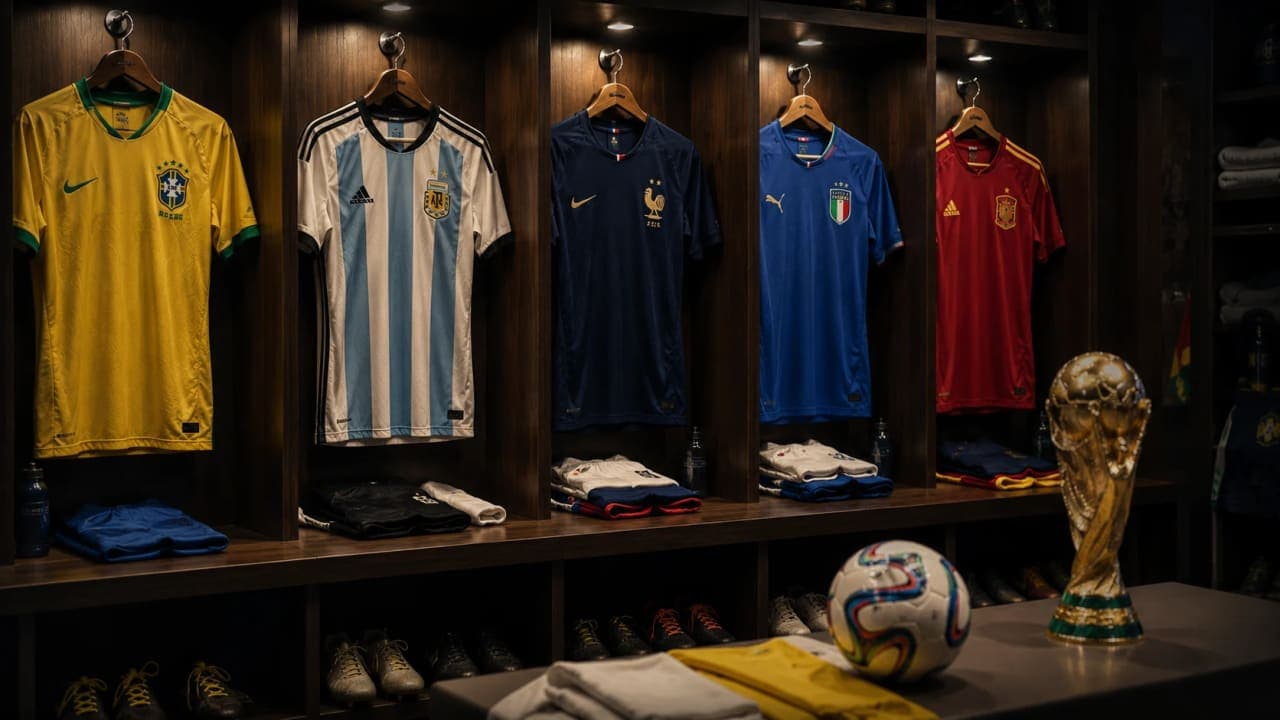
Brazil's yellow shirt from 1970 feels like sunshine and inevitability because Pele's team played football that looked impossibly free. Argentina's 1986 shirt is forever tied to Maradona, both the genius and the controversy. France 1998 carries the feeling of a home nation discovering a new football identity. Italy 2006 belongs to defensive steel, penalties and blue-shirted relief.
Spain 2010 is remembered for patience and perfection. Germany 2014 for ruthless precision. Argentina 2022 for Messi finally turning years of longing into the image every neutral secretly wanted to see.
Team | Tournament | Why It Became Iconic |
|---|---|---|
Brazil | 1970 | Pele and a golden team made the yellow shirt feel timeless. |
Argentina | 1986 | Maradona turned the blue-and-white shirt into football mythology. |
France | 1998 | A home victory gave the blue shirt national symbolism. |
Italy | 2006 | The Azzurri shirt became linked with resilience and penalty drama. |
Spain | 2010 | The red shirt captured tiki-taka control and a first World Cup title. |
Germany | 2014 | The white shirt became part of a dominant modern champion image. |
Argentina | 2022 | Messi's triumph made the shirt feel like a completed story. |
Some Jerseys Became Bigger Than Football
The strange thing about jerseys is that their value has very little to do with cloth.
Maradona's 1986 shirt became one of the most famous sports shirts ever because it was present during two moments that still refuse to leave football conversation: the Hand of God and the Goal of the Century. Pele's shirts carry the glow of a player who helped define global football greatness. Zidane's 2006 final shirt carries beauty, heartbreak and that unforgettable headbutt-shaped silence.
Messi's 2022 World Cup shirts carry something different: the ending of a long argument. For years, people asked whether he needed a World Cup to complete the story. In Qatar, the shirt became proof that the last chapter had finally been written.
That is why fans buy jerseys. Not because polyester is magical. Because identity is. You wear a jersey to say where you belong, who you remember, what tournament made you fall in love with football, and which version of yourself still believes a last-minute goal can fix everything. Sach bolo, half the emotion is not even in the design. It is in what happened while someone wore it.
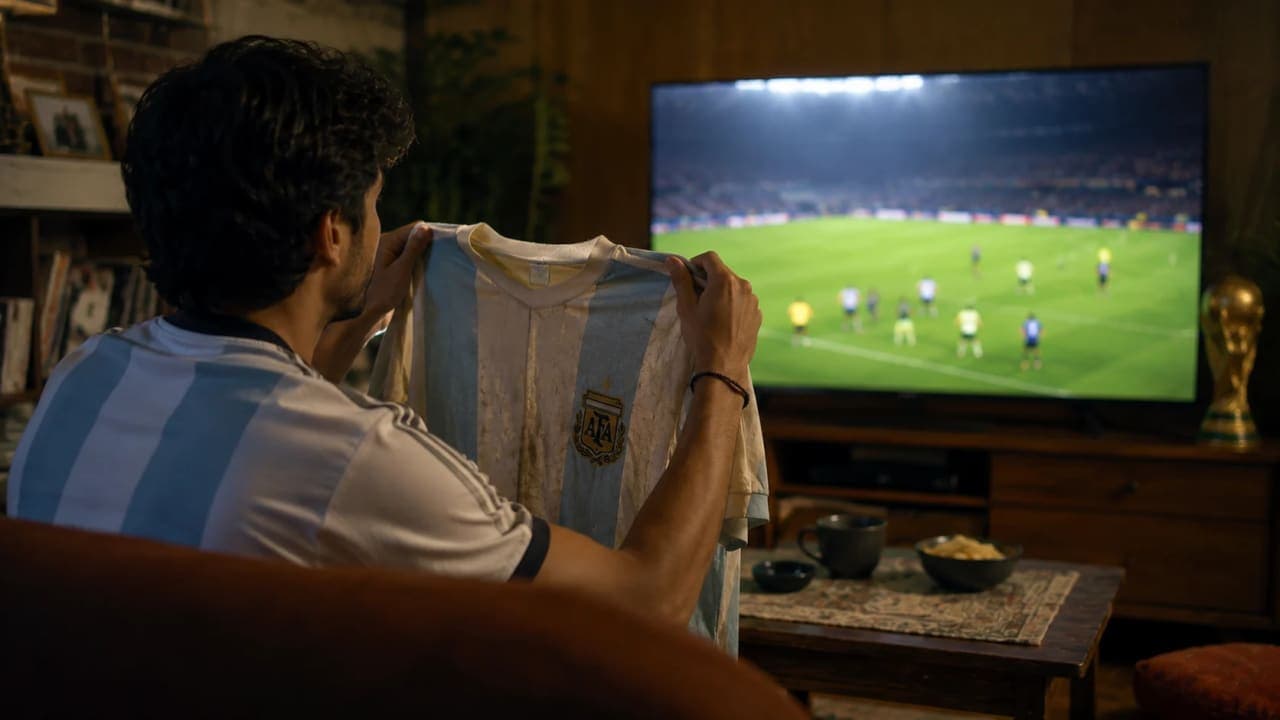
Objects That Became Football Legends
The most powerful World Cup objects are never only objects. The trophy is a dream made visible. The ball is the tournament's heartbeat. The jersey is the skin of memory.
That is why they keep coming back into conversation long after the matches end. A trophy theft becomes a mystery. A dog becomes a hero. A ball becomes a villain. A shirt becomes priceless because one person wore it on the day football changed.
For readers following the modern tournament, our FIFA World Cup 2026 hub is where the fixtures, results and match stories continue. But the deeper magic of the World Cup lives in these symbols too. They sit quietly in the frame while players make history, then somehow become history themselves.
Lock in the takeaway
Frequently asked questions
Who designed the current FIFA World Cup Trophy?
The current FIFA World Cup Trophy was designed by Italian sculptor Silvio Gazzaniga and first awarded at the 1974 tournament.
What happened to the Jules Rimet Trophy?
The Jules Rimet Trophy was stolen in England in 1966 and found by Pickles the dog. It was later stolen again in Brazil in 1983 and has never been recovered.
Why was the Jabulani ball controversial?
The Jabulani used in 2010 was criticised by several players and goalkeepers because its flight felt unpredictable, making it one of the most debated World Cup balls.
Has the FIFA World Cup 2026 ball been revealed?
Yes. FIFA and adidas have revealed Trionda as the official match ball for the 2026 FIFA World Cup, with design details inspired by the three host nations.