
Listen to this article
Checking audio support
From E5 to E100: A Complete Guide to Ethanol-Blended Petrol in India, Its History, Types, Benefits and Future
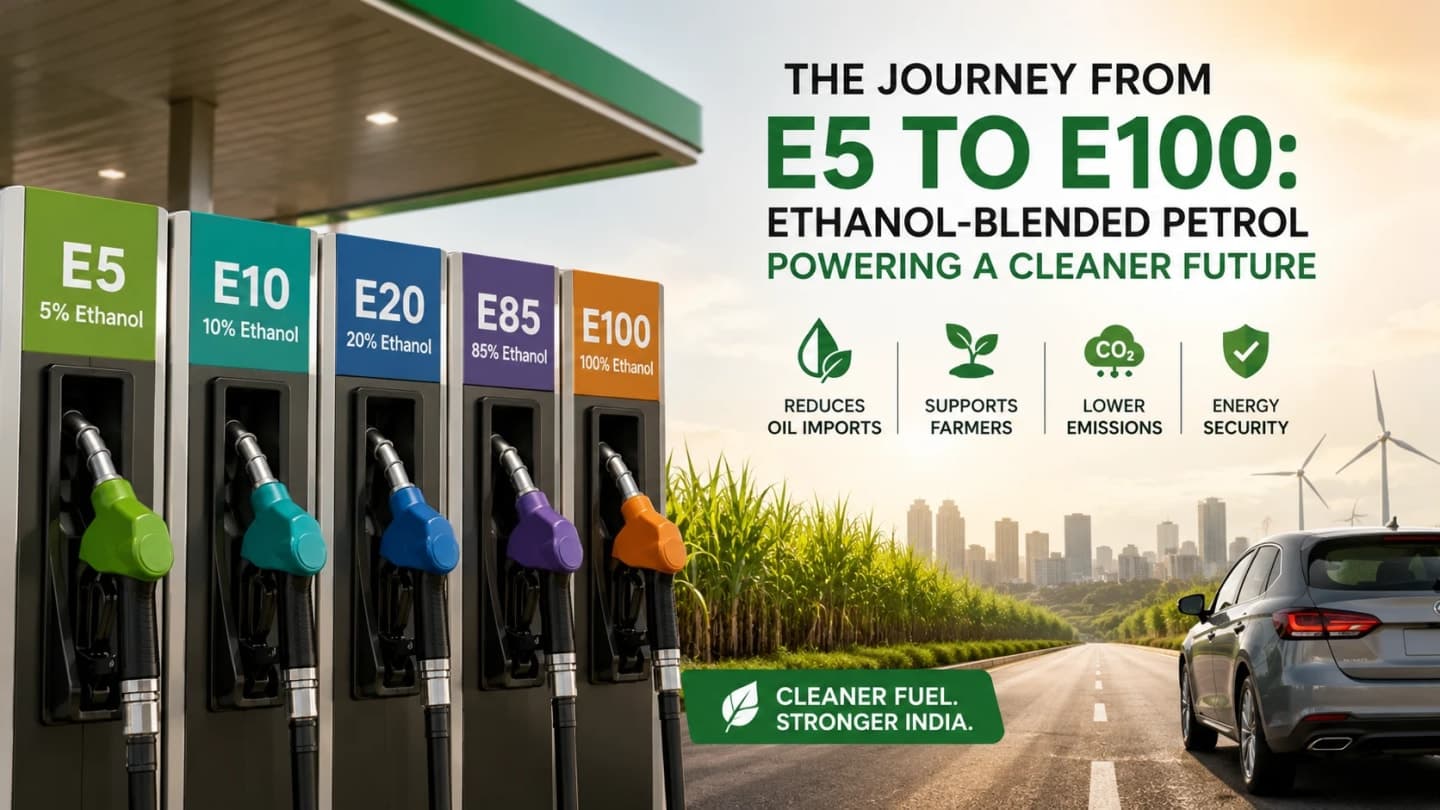
For decades, petrol remained largely unchanged for everyday motorists. A visit to the fuel station simply meant choosing between petrol and diesel. Today, however, things are different. Labels such as E10 and E20 have become common at petrol pumps, while terms like E85, E100, and flex-fuel vehicles are increasingly appearing in automobile discussions.
This shift is part of India's Ethanol Blended Petrol (EBP) Programme, an initiative aimed at mixing renewable ethanol with petrol. The programme seeks to reduce dependence on imported crude oil, support Indian farmers, strengthen energy security and move towards cleaner transportation.
But what exactly is ethanol-blended petrol? Where did it originate? How is ethanol produced? And what do labels like E5, E10 or E100 actually mean?
Let's understand the complete journey.
What Is Ethanol-Blended Petrol?
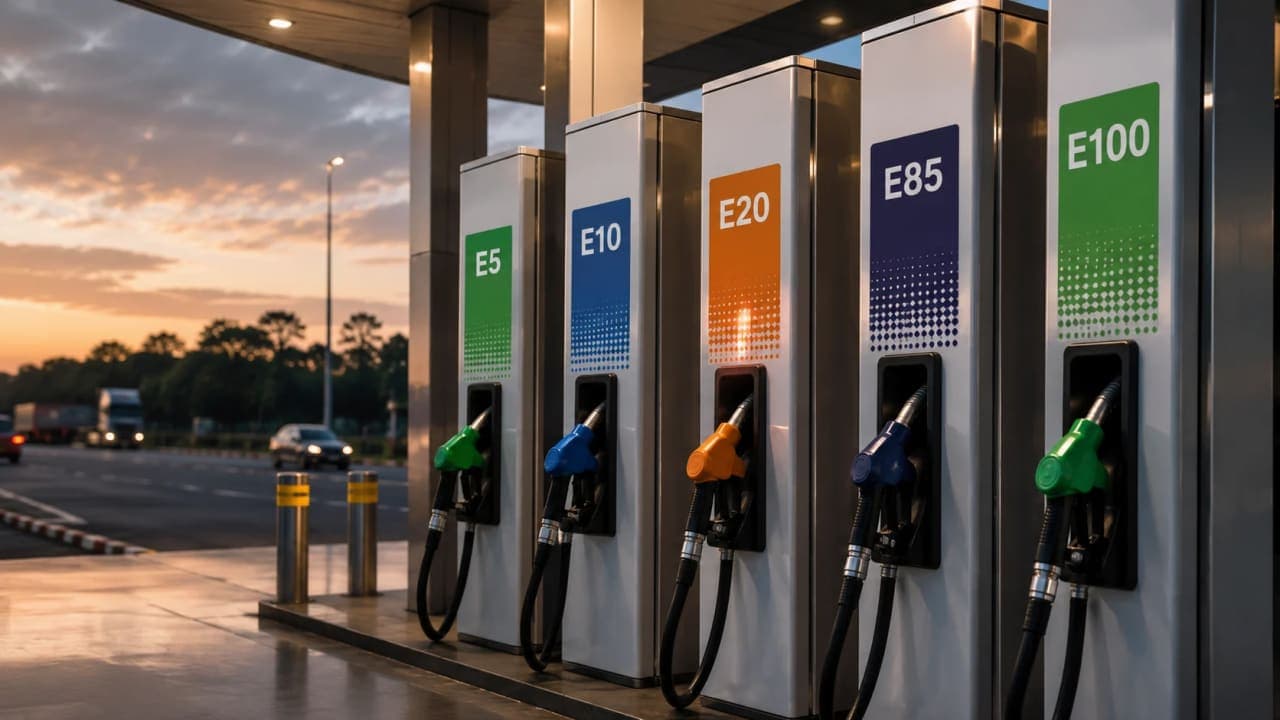
Ethanol-blended petrol is regular petrol mixed with ethanol, a renewable alcohol produced from agricultural feedstocks such as sugarcane, maize (corn), damaged food grains and other approved biomass.
The naming is simple:
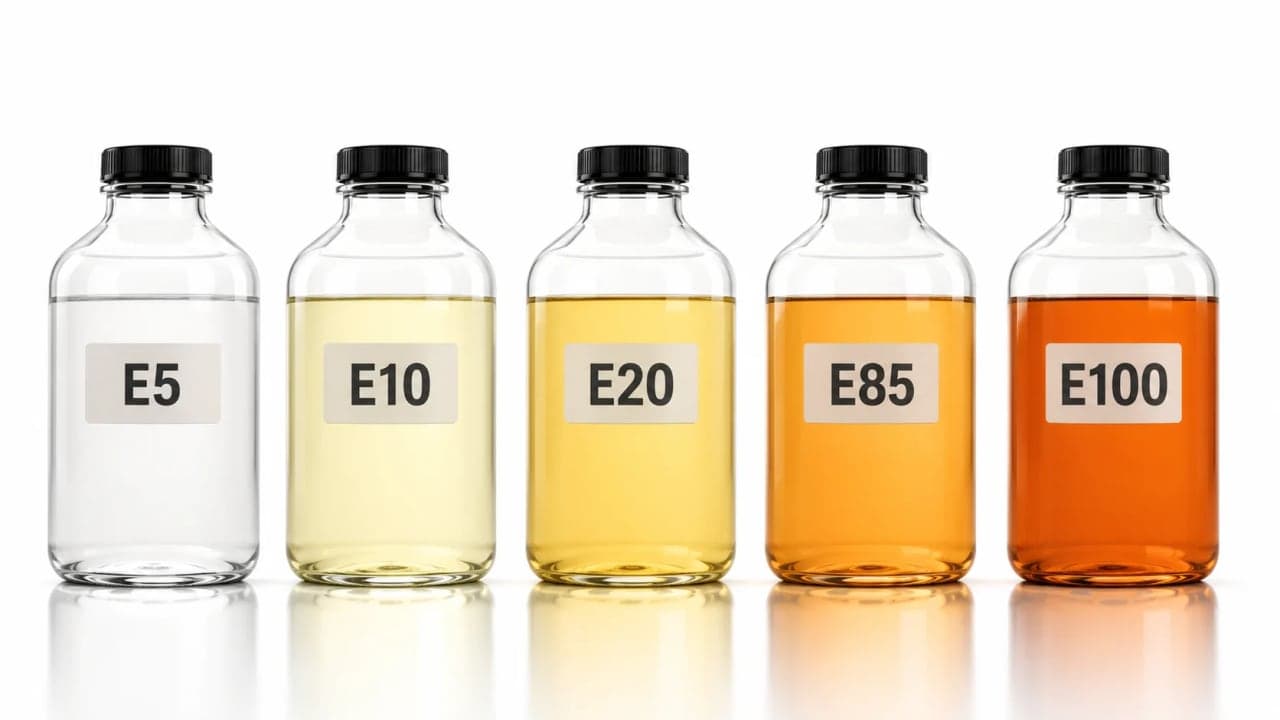
E5 = 5% ethanol + 95% petrol
E10 = 10% ethanol + 90% petrol
E20 = 20% ethanol + 80% petrol
As the number increases, the percentage of ethanol in the fuel also increases.
Unlike petrol, which is refined from crude oil, ethanol is produced from renewable crops, making it a biofuel that can be replenished through agriculture.
The History of Ethanol-Blended Petrol
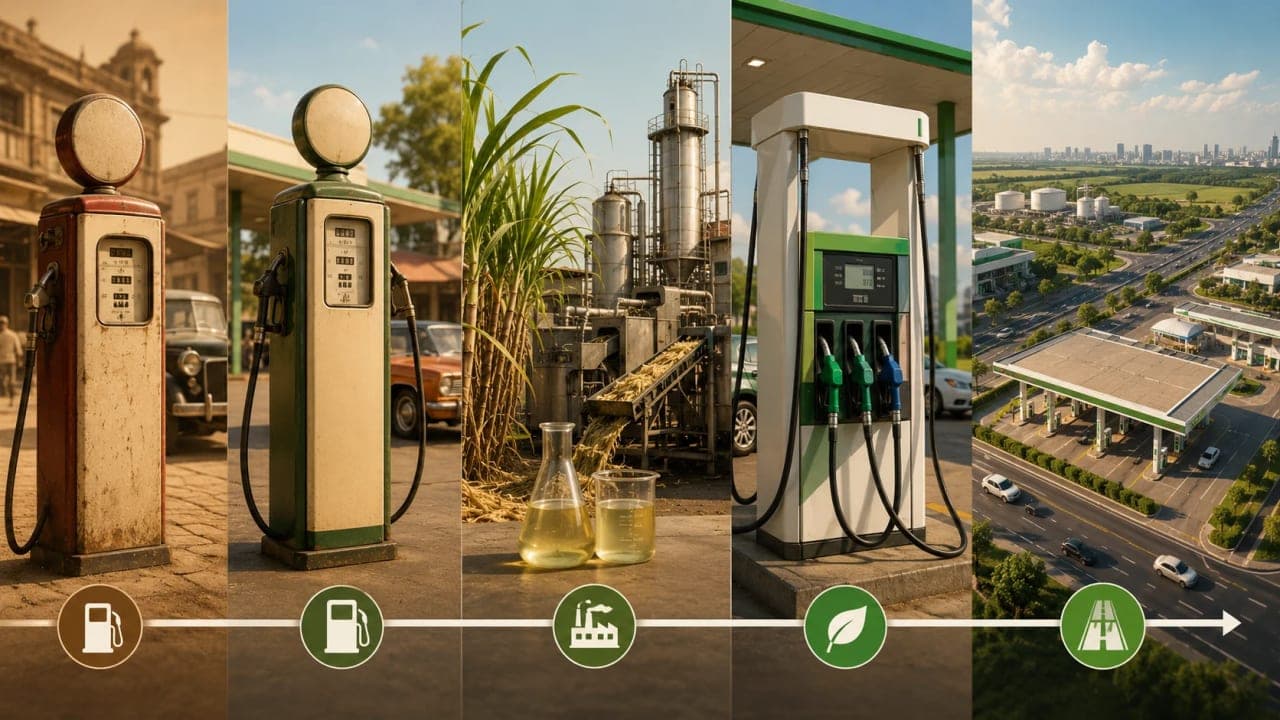
Although ethanol has gained attention only in recent years, its use as a vehicle fuel dates back more than a century.
In the early 1900s, Henry Ford envisioned his famous Model T running on ethanol as well as petrol. However, the discovery of abundant crude oil and the rapid growth of the petroleum industry made conventional petrol the dominant automotive fuel for decades.
Interest in ethanol returned during the 1970s global oil crisis, when rising oil prices encouraged countries to explore alternative fuels. Brazil became a pioneer by producing ethanol from sugarcane on a large scale, while the United States expanded corn-based ethanol production.
India's journey began much later. In 2001, the Government of India launched the Ethanol Blended Petrol Programme as a pilot initiative. The first commercial rollout introduced E5 petrol in selected states in 2003. Over the following years, blending levels gradually increased as ethanol production expanded.
The country later achieved nationwide adoption of E10 petrol, and today E20 is being rolled out across India as part of the next phase of the programme.
How Is Ethanol Made?
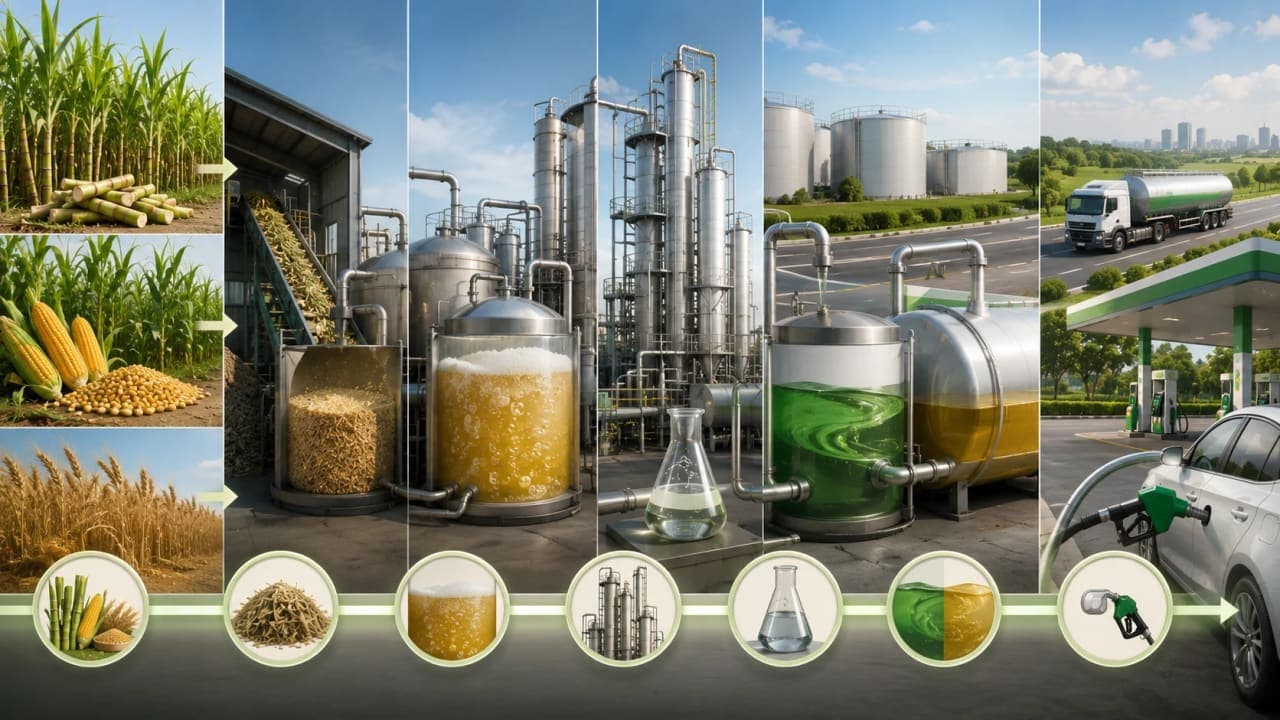
Unlike petrol, ethanol is not extracted from underground fossil fuels. Instead, it is produced using crops rich in sugar or starch.
In India, ethanol is mainly produced from:
Sugarcane juice
Sugarcane molasses
Sugar syrup
Maize (corn)
Damaged food grains
Surplus rice and other approved grains
The manufacturing process involves several stages:
Feedstock Preparation – Agricultural crops are collected and processed.
Fermentation – Natural yeast converts sugars into alcohol.
Distillation – The alcohol is separated from water and impurities.
Dehydration – Remaining moisture is removed to produce fuel-grade ethanol.
Blending – Oil companies mix ethanol with petrol in precise proportions before supplying it to fuel stations.
The result is ethanol-blended petrol such as E10 or E20, depending on the percentage of ethanol added.
How is it so far?
Vote with other readers
Different Ethanol Blend Variants Explained
Several ethanol blends are used around the world, depending on vehicle technology and national fuel policies.
E5: Contains 5% ethanol and 95% petrol. This was India's first widely introduced ethanol blend and laid the foundation for the country's ethanol programme.
E10: Contains 10% ethanol and 90% petrol. E10 became India's standard petrol blend before the transition towards E20.
E15: Contains 15% ethanol. It is available in some countries for compatible vehicles but is not India's standard retail fuel.
E20: Contains 20% ethanol and 80% petrol. This is currently India's primary ethanol blending target and is gradually becoming available across the country.
E27: Contains 27% ethanol. Although occasionally discussed in industry and policy circles, it is not currently available as a standard fuel in India.
E85: Contains up to 85% ethanol. This fuel is designed mainly for flex-fuel vehicles (FFVs) that are specifically engineered to operate on high ethanol blends.
E100: Contains 100% ethanol with no petrol. It is primarily used in specially designed ethanol-powered vehicles, particularly in countries such as Brazil.
India's Ethanol Roadmap
India has expanded ethanol blending gradually over the past two decades rather than introducing high blends overnight.
Some of the major milestones include:
2001: Ethanol Blended Petrol Programme launched as a pilot.
2003: E5 introduced in selected states.
2006 onwards: Wider rollout of E5 across the country.
2022: Nationwide achievement of E10 blending.
2023 onwards: Gradual introduction of E20 fuel and E20-compatible vehicles.
Future: Expansion of flex-fuel vehicles capable of using higher ethanol blends such as E85, while continued research explores future possibilities beyond E20.
India's ethanol journey is still evolving. What started as a small blending experiment has become one of the country's largest energy initiatives, influencing agriculture, automobile technology and fuel infrastructure. As ethanol production continues to grow, motorists can expect to hear much more about E20, flex-fuel vehicles and the future of renewable transport fuels in the years ahead.
What Is E20 Petrol?
Among all the ethanol-blended fuels discussed today, E20 petrol has received the most attention in India. As the name suggests, E20 is a blend consisting of 20% ethanol and 80% petrol.
The Government of India has been gradually introducing E20 under the Ethanol Blended Petrol (EBP) Programme. Fuel retailers have expanded E20 availability in phases, while automobile manufacturers have been developing vehicles designed to operate on this higher ethanol blend.
Unlike older blends such as E5 and E10, E20 represents a significant increase in ethanol content. This makes it an important milestone in India's efforts to reduce crude oil imports and increase the use of renewable fuels.
Advantages of E20 Petrol
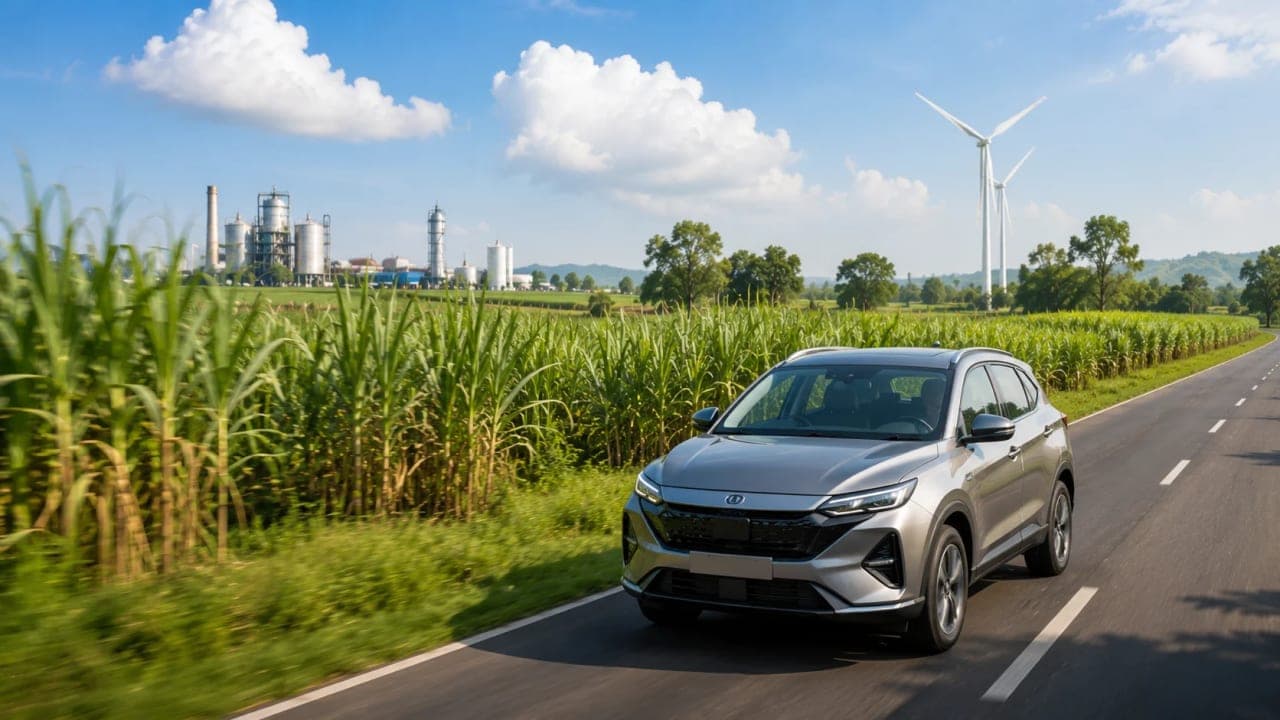
Reduced Dependence on Imported Crude Oil: India imports a large share of its crude oil requirements. By replacing part of petrol with domestically produced ethanol, E20 can help reduce reliance on imported fossil fuels and improve energy security.
Support for Indian Agriculture: Most fuel ethanol used in India is produced from sugarcane-based feedstocks, maize and approved food grains. Increased ethanol production creates additional demand for these crops, providing another market for farmers and supporting rural industries.
Renewable Fuel Source: Unlike petroleum, ethanol is produced from renewable agricultural resources that can be cultivated each year. This makes ethanol an important component of India's long-term strategy to diversify its transport fuel mix.
Potential Emission Benefits: Because ethanol contains oxygen, it can contribute to more complete combustion under many operating conditions. Policymakers consider higher ethanol blending one of several measures that may help reduce certain vehicle emissions when combined with modern engine technologies and emission standards.
Improving Energy Security: Producing part of the country's transport fuel within India helps reduce exposure to global crude oil price fluctuations and supply disruptions.
Disadvantages and Challenges of E20 Petrol
While E20 offers several policy and environmental advantages, it has also raised important questions among vehicle owners.
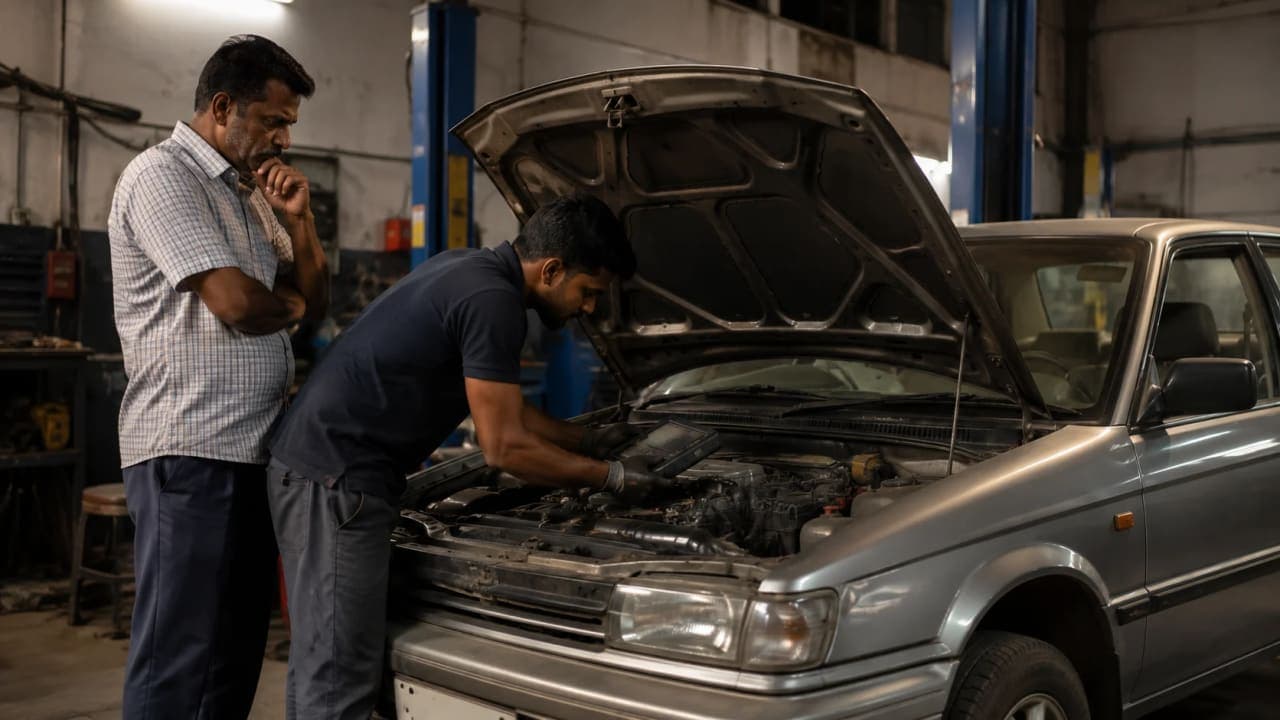
Vehicle Compatibility: One of the biggest concerns is compatibility. Not every petrol vehicle was originally designed to run on higher ethanol blends. Many manufacturers now produce E20-compatible models, but owners of older vehicles should always refer to their vehicle handbook or manufacturer before regularly using E20 fuel.
Fuel Efficiency: Ethanol contains less energy per litre than petrol. As a result, some vehicles may experience a slight reduction in fuel economy when using higher ethanol blends. The actual impact varies depending on engine design, driving conditions and vehicle calibration.
Maintenance Considerations: Higher ethanol blends can behave differently from conventional petrol in certain fuel systems. Manufacturers take these characteristics into account when designing compatible vehicles, but older models may require additional consideration depending on their fuel system materials and recommended fuel specifications.
Consumer Awareness: Many motorists remain uncertain about which fuel is suitable for their vehicle. This has led to confusion at fuel stations, especially during the ongoing transition from E10 to E20.
Environmental Impact of E20 Petrol: E20 is often described as a cleaner alternative to conventional petrol, but its overall environmental impact depends on several factors.
On the positive side, ethanol is produced from renewable agricultural feedstocks rather than fossil fuels. Increasing ethanol use can reduce dependence on crude oil and contribute to lower greenhouse gas emissions over the fuel's lifecycle in many scenarios.
However, ethanol production also requires land, water, energy and agricultural inputs. The environmental benefits therefore depend not only on the fuel itself but also on how the crops are grown, processed and transported.
For this reason, experts generally evaluate ethanol using a lifecycle approach, considering everything from crop cultivation to fuel combustion rather than focusing only on vehicle exhaust emissions.
Which Vehicles Can Use E20 Petrol?
Vehicle compatibility depends on the manufacturer's specifications rather than a single rule for every car or motorcycle.
Broadly speaking:
Many newly manufactured petrol vehicles are designed or certified to operate on E20.
Older vehicles may have different recommendations depending on their model year and engineering.
Flex-fuel vehicles are specifically designed to operate on a much wider range of ethanol blends, including fuels such as E85.
Before switching fuels, owners should always follow the recommendations provided by the vehicle manufacturer.
What Could Come After E20?
Although E20 is currently India's primary ethanol blend, discussions about future fuels are already underway.
Some of the possibilities include:
E85: E85 contains up to 85% ethanol and is intended for specially designed flex-fuel vehicles. As flex-fuel technology develops, E85 could become available for a broader range of compatible vehicles.
E100: Pure ethanol is already used in specially designed vehicles in countries such as Brazil. While E100 is not expected to become a mainstream fuel for conventional vehicles in India, it demonstrates the possibilities offered by dedicated ethanol-powered engines.
Multiple Fuel Technologies
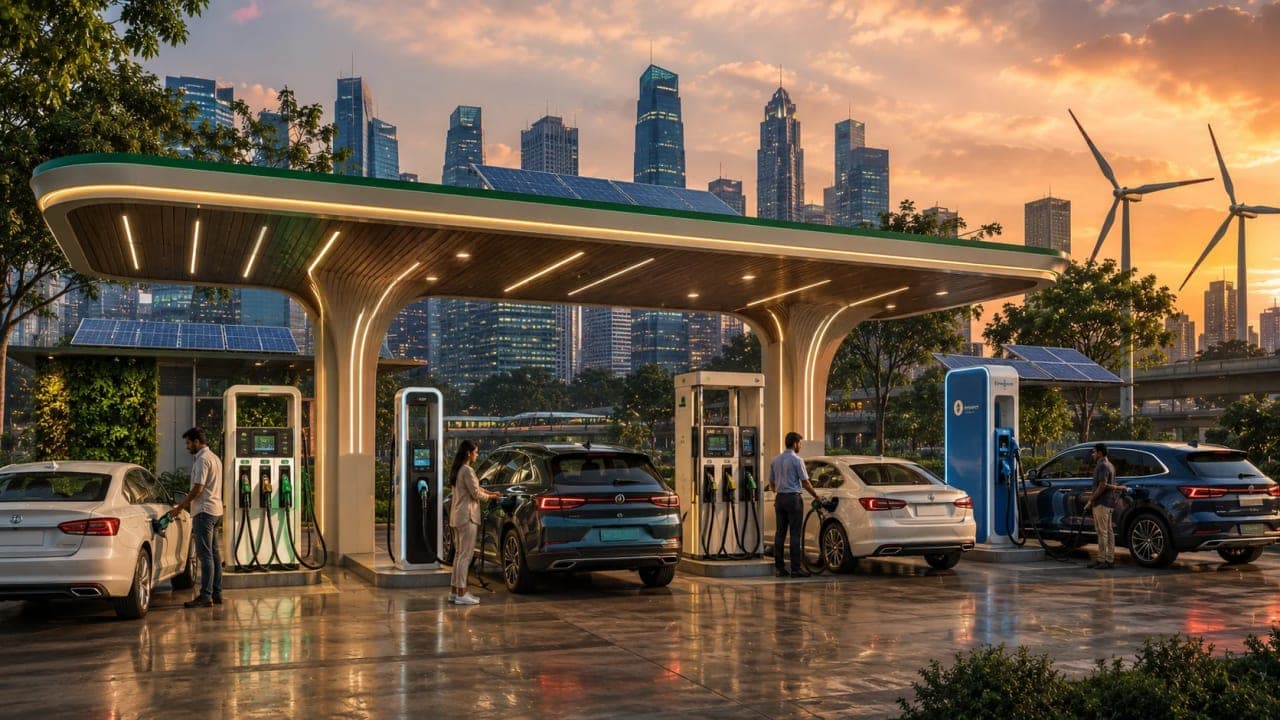
India's future transport sector is unlikely to rely on a single fuel alone. Instead, experts expect a combination of technologies, including:
Ethanol-blended petrol
Flex-fuel vehicles
Electric vehicles
Hybrid vehicles
Hydrogen-powered transport
Sustainable biofuels
Each technology is likely to serve different vehicle categories and transportation needs.
Conclusion
Ethanol-blended petrol represents one of the most significant changes in India's fuel landscape in recent decades. From the early introduction of E5 to today's rollout of E20, the country's ethanol programme has steadily expanded with the aim of improving energy security, supporting agriculture and promoting renewable fuels.
E20 stands at the centre of this transition. It offers potential benefits such as reduced crude oil dependence and greater use of domestically produced biofuels, while also raising practical questions about vehicle compatibility, fuel efficiency and consumer awareness.
Looking ahead, the journey is unlikely to stop at E20. As automobile technology evolves and alternative fuels continue to develop, India is expected to adopt a diverse mix of cleaner transport solutions rather than relying on a single fuel source. Understanding how these fuels work will help motorists make informed decisions as the country's automotive and energy sectors continue to evolve.
Lock in the takeaway
Frequently asked questions
What is ethanol-blended petrol?
Ethanol-blended petrol is petrol mixed with ethanol, a renewable alcohol produced mainly from sugarcane, maize and other biomass. The percentage of ethanol determines the blend, such as E10 (10% ethanol) or E20 (20% ethanol).
What does E20 petrol mean?
E20 petrol contains 20% ethanol and 80% petrol.
What is the difference between E10 and E20 petrol?
E20 contains twice as much ethanol as E10. While E10 is compatible with most modern vehicles, E20 compatibility depends on the vehicle manufacturer's recommendations.
Which ethanol-blended petrol is currently available in India?
India has largely transitioned from E5 to E10 and is now expanding the availability of E20 petrol across the country. Higher blends like E85 and E100 are primarily intended for specially designed flex-fuel or dedicated vehicles rather than general passenger vehicles.
How is ethanol made?
Fuel ethanol is mainly produced by fermenting sugars or starch from crops such as sugarcane, sugar beet, maize and damaged food grains. The alcohol is then distilled and dehydrated before blending with petrol.
Does ethanol-blended petrol reduce pollution?
Higher ethanol blending can help reduce dependence on fossil fuels and lower certain emissions over the fuel's lifecycle. However, the overall environmental impact depends on factors such as feedstock production, land use, vehicle technology and emissions standards.
Can every car use E20 petrol?
No. Vehicle owners should always check their manufacturer's recommendations before using E20 petrol, as compatibility varies by model and year.