
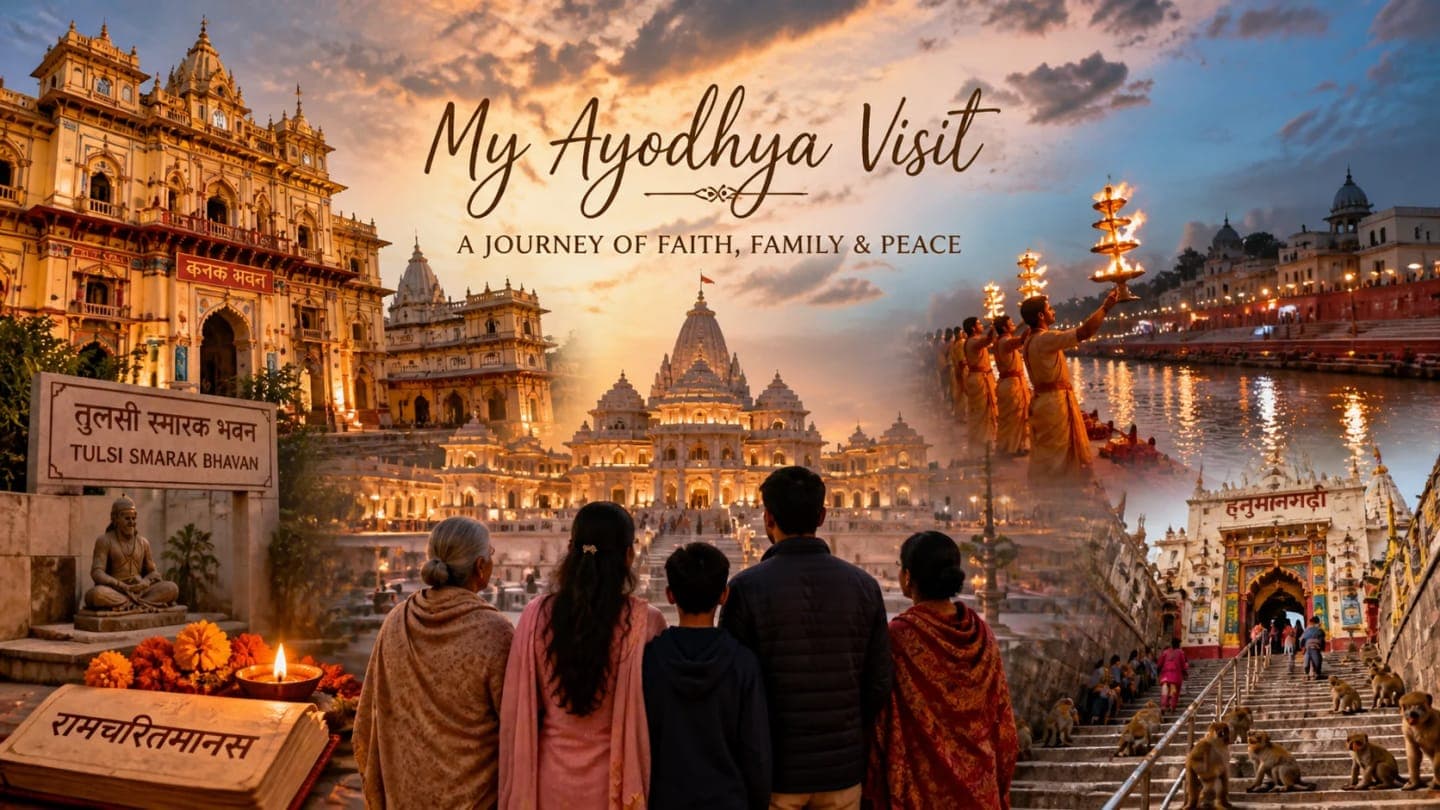
Listen to this article
Checking audio support
There are some journeys that begin like any other… and then quietly turn into something you carry for a long time. Our visit to Ayodhya was exactly that—a simple family trip that slowly unfolded into something deeply emotional, spiritual, and peaceful.
We left early in the morning—me, my parents, my brother, and my grandmom. The roads were still waking up, the air had that crisp morning chill, and there was a strange calmness in all of us. Somewhere between conversations and silence, we stopped for breakfast on the way. Nothing fancy—just simple food, but somehow it tasted better when you know you’re headed somewhere special. Around six hours later, we finally reached Ayodhya.
The city didn’t feel loud or rushed. It felt… steady. As if it had been standing still in time, quietly holding centuries of stories within it.
We checked into our homestay and, like any wise traveler, asked the owner what we should do first. He smiled the way locals do when they know their city well and suggested a perfect route—start with Dashrath Mahal, then Kanak Bhawan, Ram Darbar, visit Tulsi Smarak Bhavan, spend the evening at Saryu Ghat for aarti, and end the day at Ram Mandir to witness it in its full lighting glory.
We ordered lunch, freshened up, rested for a bit, and soon our e-rickshaw ride began.
The narrow lanes of Ayodhya, the temple bells, the saffron flags—it all felt like stepping into a living story. When we reached Dashrath Mahal, it was said to be the royal residence of King Dashrath, the father of Lord Ram. Whether rebuilt or restored over time, the belief attached to it gives the place its soul. Just standing there, you could almost imagine the stories of Ram’s childhood echoing through its walls.
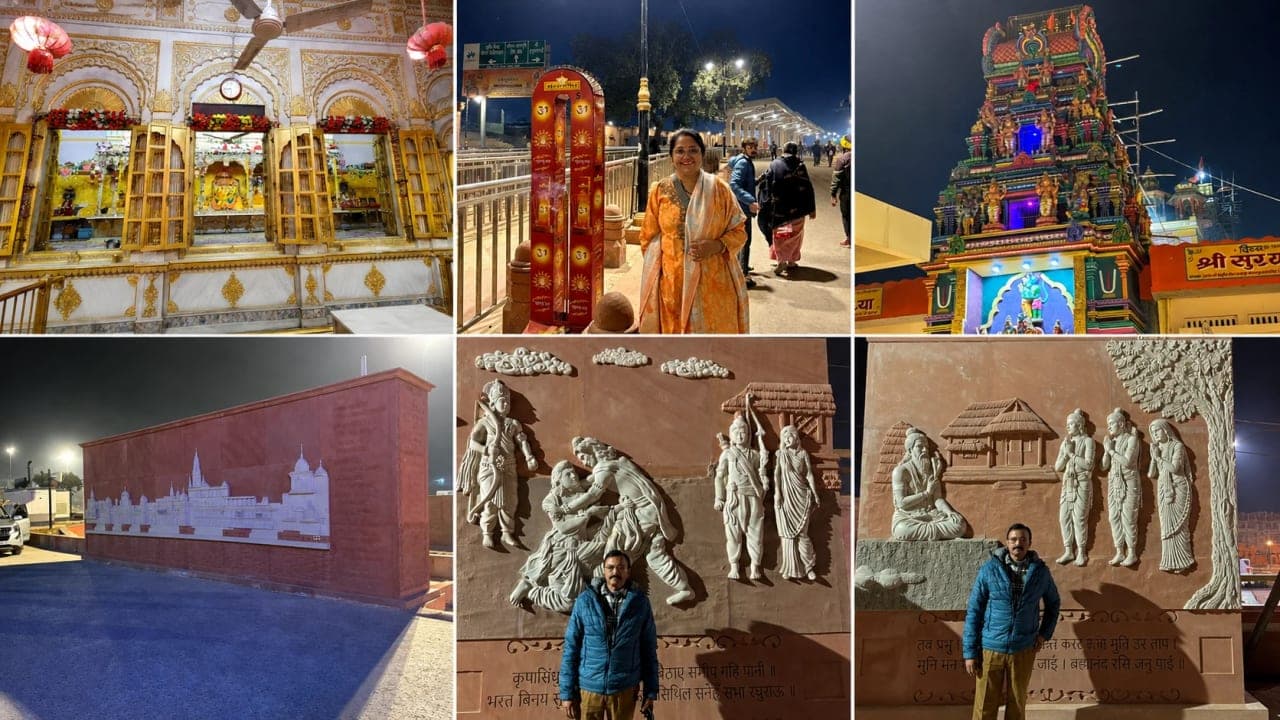
Kanak Bhawan was even more captivating. It is believed that this temple was gifted to Goddess Sita by Queen Kaikeyi after her marriage to Lord Ram. The idols inside, adorned beautifully, gave the temple a warmth that felt both royal and divine. People weren’t just visiting—they were connecting.
As we continued, we reached Tulsi Smarak Bhavan—Tulsi Smarak Bhavan—and the pace of the day slowed down a little. Built in 1969 by the Government of Uttar Pradesh, this place was created to honor Goswami Tulsidas, the saint who wrote the Ramcharitmanas and brought the story of Ram closer to people in a language they could understand. Inside, the Ramkatha Museum quietly preserves manuscripts, artifacts, and glimpses of that era. It didn’t feel crowded or noisy—just calm, like a place meant for reflection more than sightseeing.
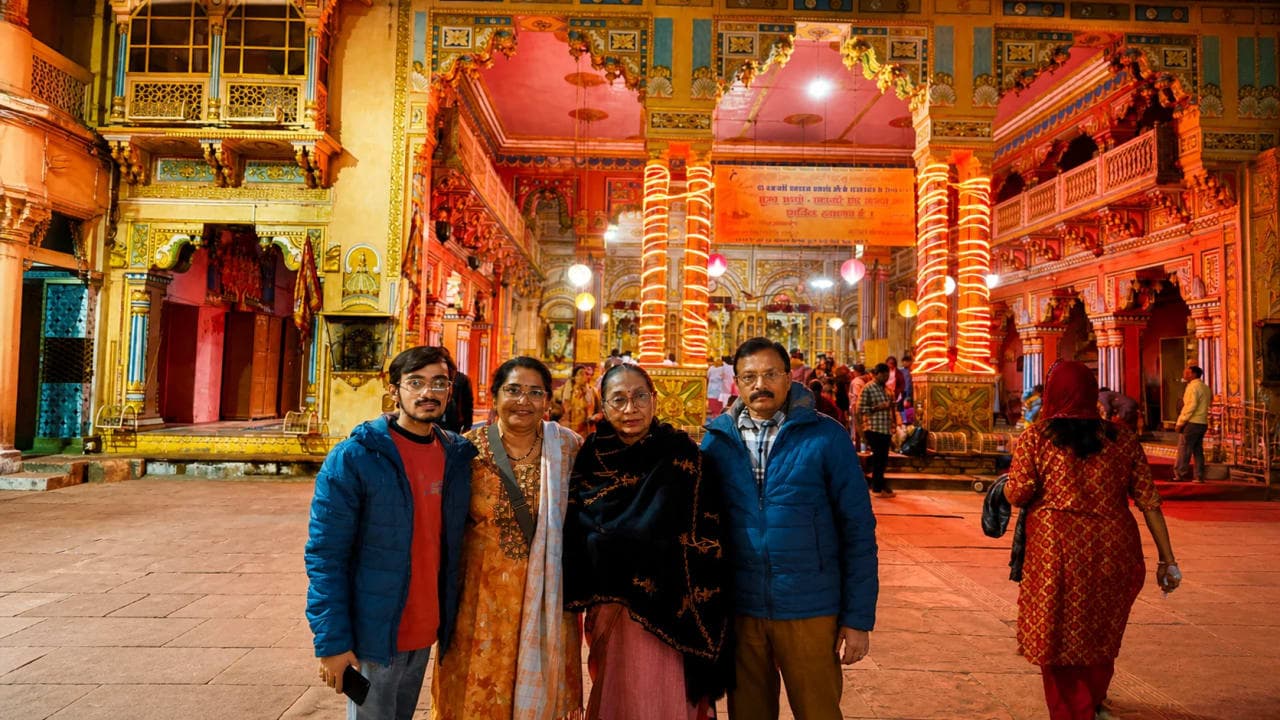
By the time we stepped out, the sky had begun to change colors. Evening had arrived, and we made our way to Saryu Ghat.
The Saryu River is not just a river—it is believed to be deeply connected to the life of Lord Ram, even mentioned in ancient scriptures. Over the years, the ghats have been rebuilt and beautified, especially in recent times, but their essence remains untouched. As we walked along the ghat, the breeze carried a mix of temple chants, laughter, and the distant sound of bells.
How is it so far?
Vote with other readers
Then the aarti began.
Rows of diyas lit up the river, priests moved in perfect rhythm, and the sound of chants echoed in a way that didn’t feel loud—it felt powerful. It was one of those rare moments where no one really spoke, yet everyone understood what they were feeling. We sat there for a while after that, eating chaat, popcorn, and bhutta, doing the simplest things in one of the most meaningful places.
Soon, it was time for what we had been waiting for—the visit to Ram Mandir Ayodhya.
The temple complex was vast. There was a system—lockers for belongings, security checks, long lines—but everything was managed well. And then came the moment of darshan. The idol of Ram Lalla stood there with a presence that was hard to explain. The architecture, the grand dome above, the lighting—it all came together in a way that made you forget everything else for a few seconds.
We took prasad, walked around the campus, clicked pictures, and just stood there, letting the moment settle in. Outside, we bought small idols, malas, and prasad for family and friends. A little street food later, and we headed back to the homestay, tired but quietly happy. It had been a long day.
The next morning came early again. After getting ready, we called the same e-rickshaw bhaiya and headed towards Hanuman Garhi.
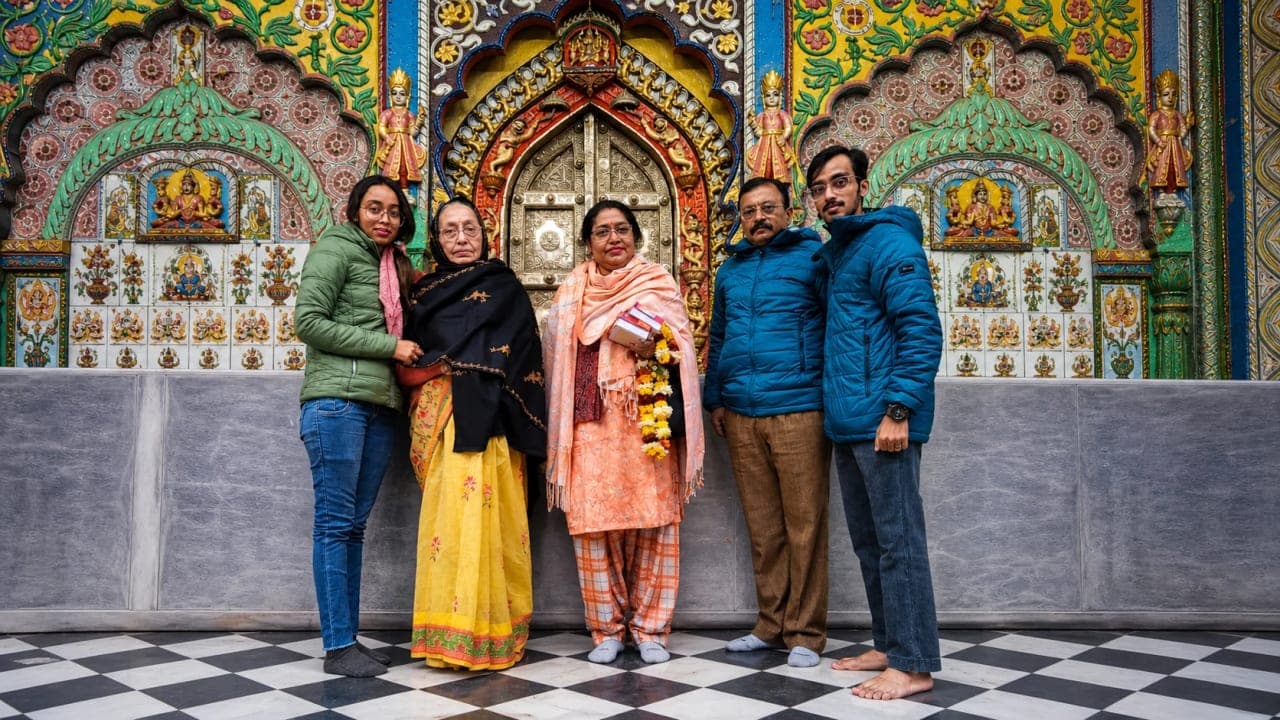
This temple, believed to have been established in its present form in the 18th century, holds a special place in Ayodhya. It is said that Lord Hanuman resides here, guarding the city. To reach the temple, we had to climb around 70–80 steps. The climb wasn’t easy, especially with the crowd and the monkeys all around—but that’s part of the experience here.
And then something unexpected happened.
A monkey gently tugged at my mom’s saree—not aggressively, just enough to get attention. It felt less like mischief and more like a quiet request. We laughed and offered him some laddoos we had brought as prasad. It turned into one of those little moments that you don’t plan but end up remembering the most.
After darshan, we spent some time in the temple परिसर, clicking pictures and listening to locals share stories—stories that don’t exist in books but live through people.
We also visited Sita Ki Rasoi, believed to be the kitchen used by Goddess Sita, and Valmiki Bhawan, associated with Maharishi Valmiki, the author of the Ramayana. Whether you see them as historical sites or places of belief, they carry a certain quiet respect within their walls.
And just like that, it was time to head back.
We picked up our luggage from the homestay, loaded it into the car, and started our journey home. Somewhere along the way, we stopped for lunch again. But this time, things felt different. The same roads, the same kind of food—but the feeling had changed.
It wasn’t just a trip anymore.
It was a memory of devotion, of family, of small moments like sharing prasad with a monkey, of sitting silently during aarti, of walking barefoot in temple corridors, of feeling something you can’t quite explain.
Ayodhya doesn’t overwhelm you. It doesn’t try to impress you loudly. It simply stays with you… quietly, deeply, and forever. ✨
Lock in the takeaway
Spiritual Travel Stories
Frequently asked questions
What places are covered in this Ayodhya travel story?
The article covers Ram Mandir darshan, Saryu Ghat aarti, Hanuman Garhi, Tulsi Smarak Bhavan, and family moments around the city.
Is this Ayodhya article a personal story or a guide?
It is mainly a personal family travel story, with practical details woven in for readers planning a peaceful Ayodhya visit.
What made the Ayodhya trip memorable?
The calm devotional feeling, the evening Saryu aarti, and shared family moments made the journey feel personal and peaceful.