
Listen to this article
Checking audio support
By late afternoon, Mexico City will already be humming.
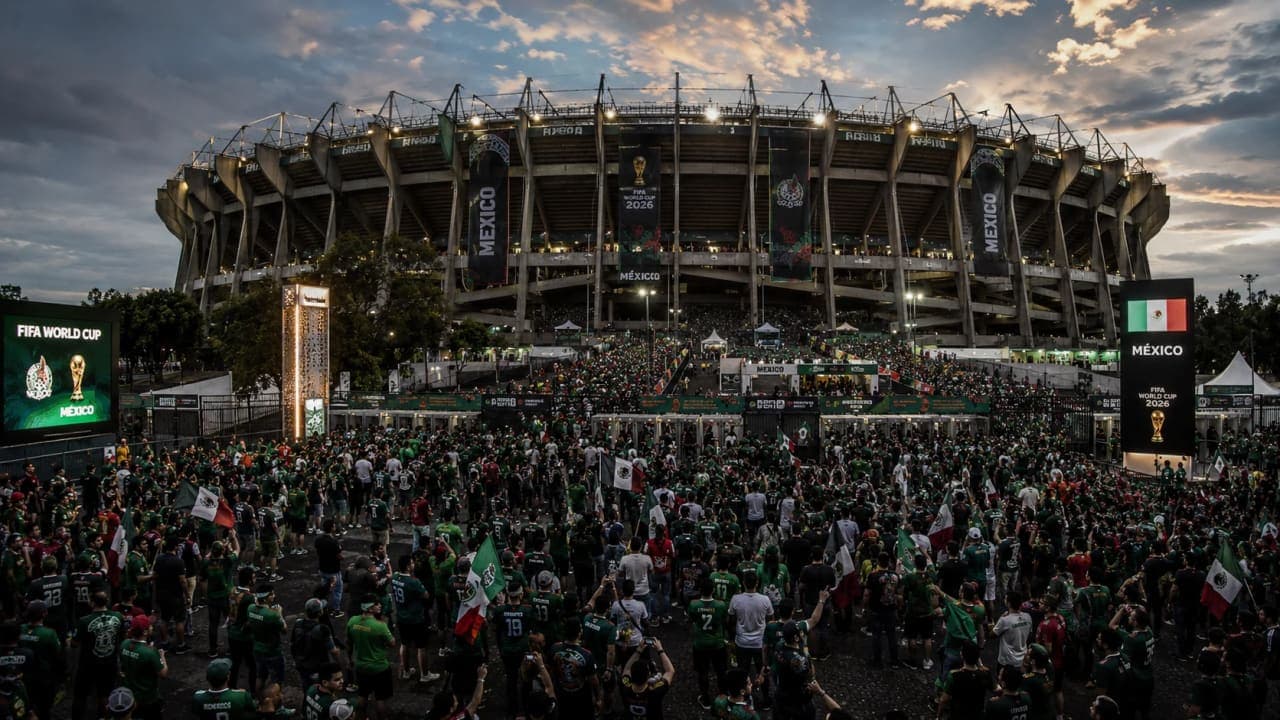
Street vendors will be waving scarves above traffic. Drums will roll somewhere beyond the concrete. Families in green shirts will move towards the stadium in steady waves, while visiting fans stop for photos because some places in football still feel bigger than sport.
Then the sun will dip, the lights will come on, and the noise around Mexico City Stadium will begin to tighten into that unmistakable World Cup tension: part celebration, part nerves, part history pressing down on the next ninety minutes.
When Mexico and South Africa walk out on 11 June 2026, the match will do more than open another tournament. It will launch the biggest World Cup the game has ever tried to contain.
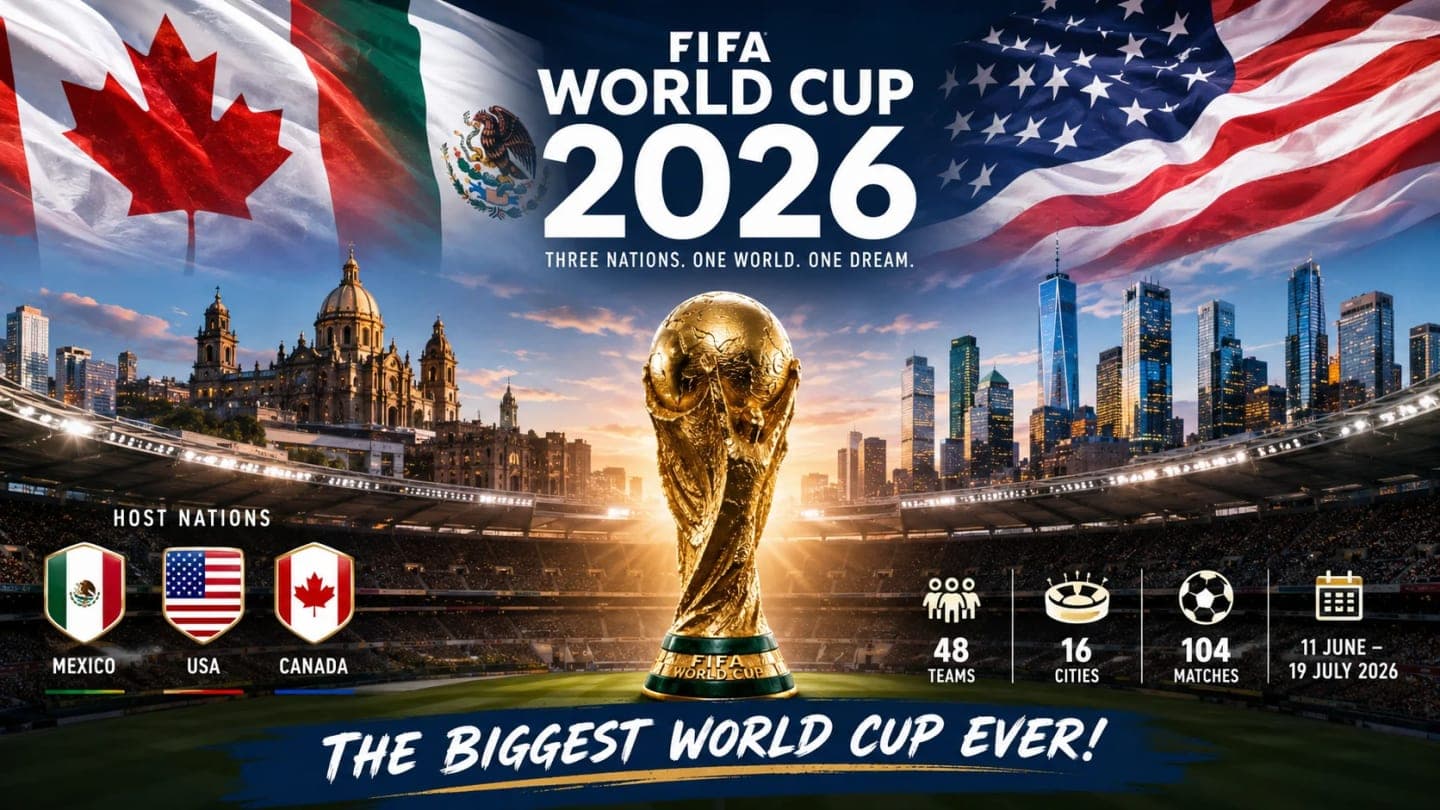
This is the version of the World Cup that stretches across a continent, moves through three host nations, expands to 48 teams and 104 matches, and asks football to become even larger than it already is. For travelling supporters, television audiences and cities preparing to host the sport’s grandest spectacle, FIFA World Cup 2026 already feels less like an event on the calendar and more like a season of its own.
Why This World Cup Already Feels Larger Than The Ones Before It
Every World Cup arrives with the usual promises. The football will be faster. The stakes will be higher. A young player will become a global star. A favourite will wobble. An underdog will change the mood of the tournament.
But 2026 is different because the scale itself changes the story.
FIFA has expanded the men’s World Cup from 32 teams to 48. The field is broader, the map is wider and the road to the trophy is longer. There will be 12 groups of four, a new round of 32, and eight matches for the finalists instead of seven. That matters not only because there is more football, but because the tournament rhythm changes. More nations arrive believing they belong. More supporters travel with a sense that history might be available to them too.
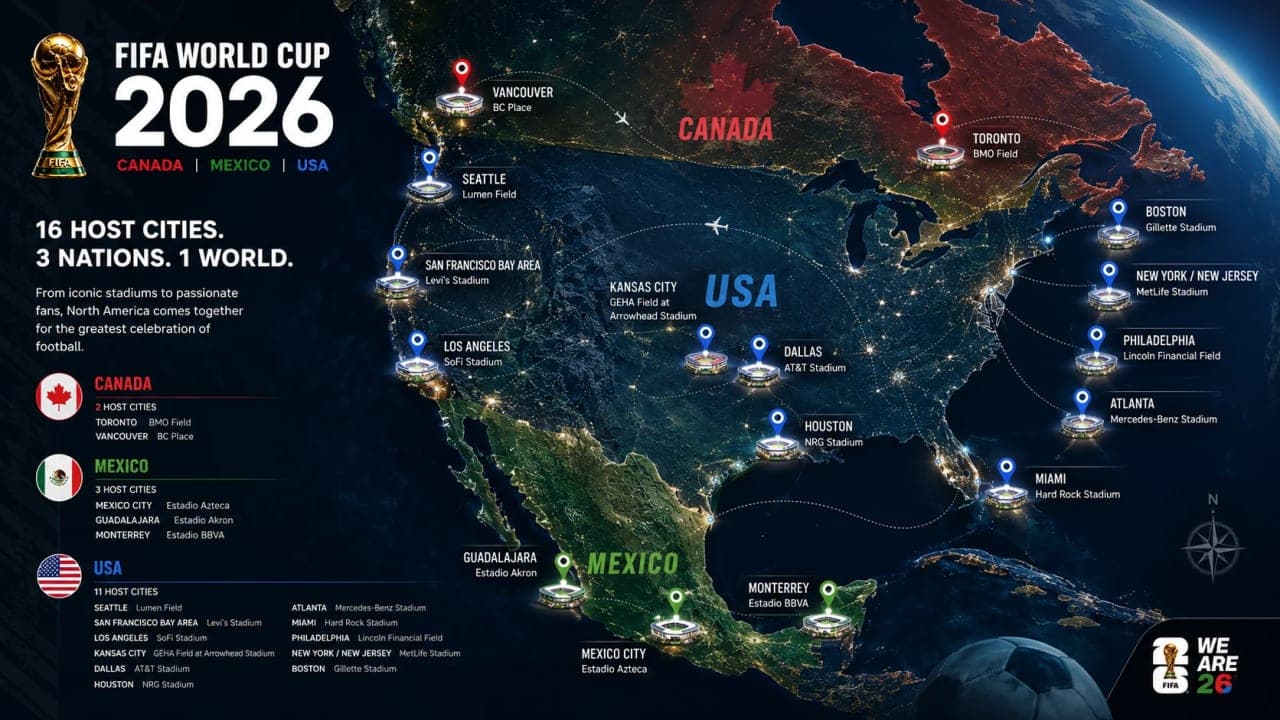
It also becomes the first men’s World Cup hosted by three countries together: Canada, Mexico and the United States. That trio tells its own story. Mexico brings memory and football romance. The United States brings size, logistics and stadium scale. Canada brings a fresher chapter, one shaped by a sport that has been rising fast and wants a stage large enough to show it.
Readers following the broader competition can keep one eye on our FIFA World Cup 2026 hub, because this tournament is not really one story. It is dozens of them happening at once.
Opening Match Information
Detail | Information |
|---|---|
Match | Mexico vs South Africa |
Stage | Group A |
Date | 11 June 2026 |
Venue | Mexico City Stadium |
Kick-off | 19:00 local time |
India time | Early morning of 12 June for IST viewers |
Why it matters | It begins the first 48-team World Cup and returns the opening night to one of football's most mythic venues |
Official FIFA listings confirm the opener as Mexico against South Africa in Group A, with kick-off set for 19:00 local time at Mexico City Stadium. On paper, it is one fixture. In atmosphere, it is likely to feel much larger.
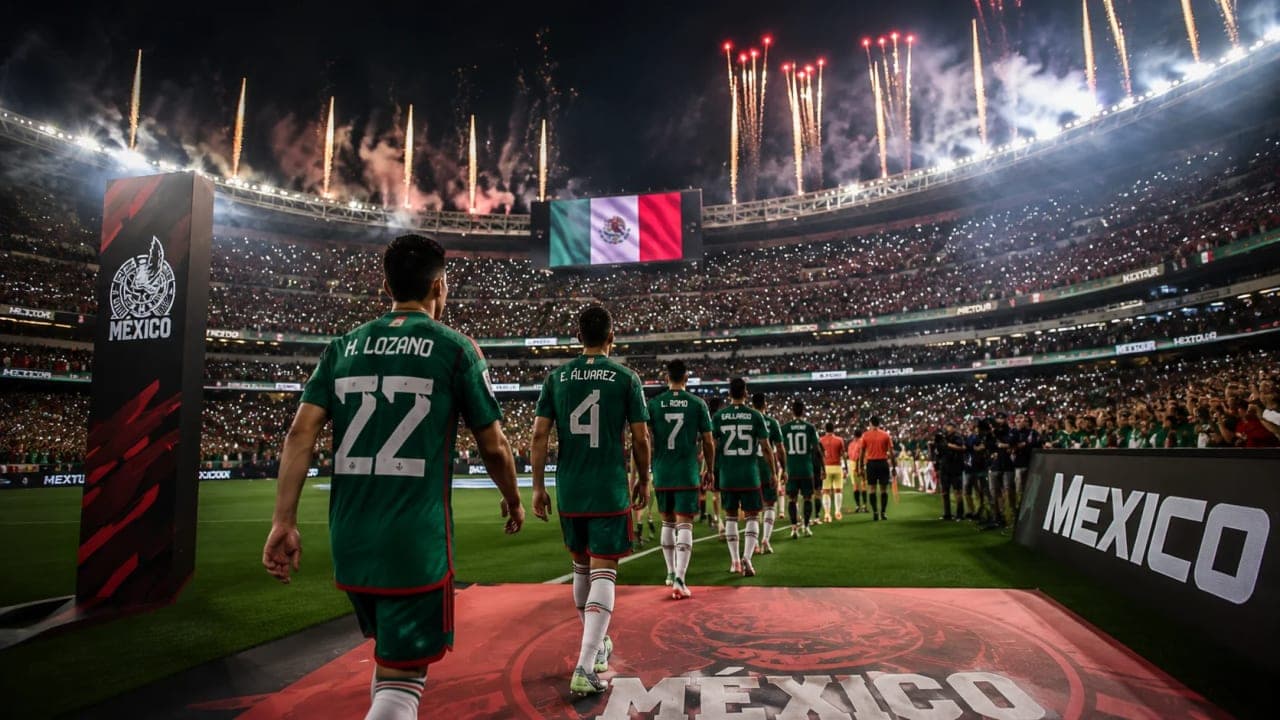
Opening matches are never ordinary. They carry ceremony, caution and adrenaline all at once. The hosts know the whole tournament is watching, so even simple passes can feel heavier than usual. The away side knows that one brave performance can instantly become part of World Cup folklore. The crowd, meanwhile, rarely behaves like it is attending just a group-stage match. It behaves like the month belongs to them already.
That is why this opener matters beyond the standings. It is the moment the tournament stops being promotional material and becomes real sound, real tension and real consequence.
The Stadium Where The World Cup Begins
The choice of venue does a lot of the storytelling on its own.
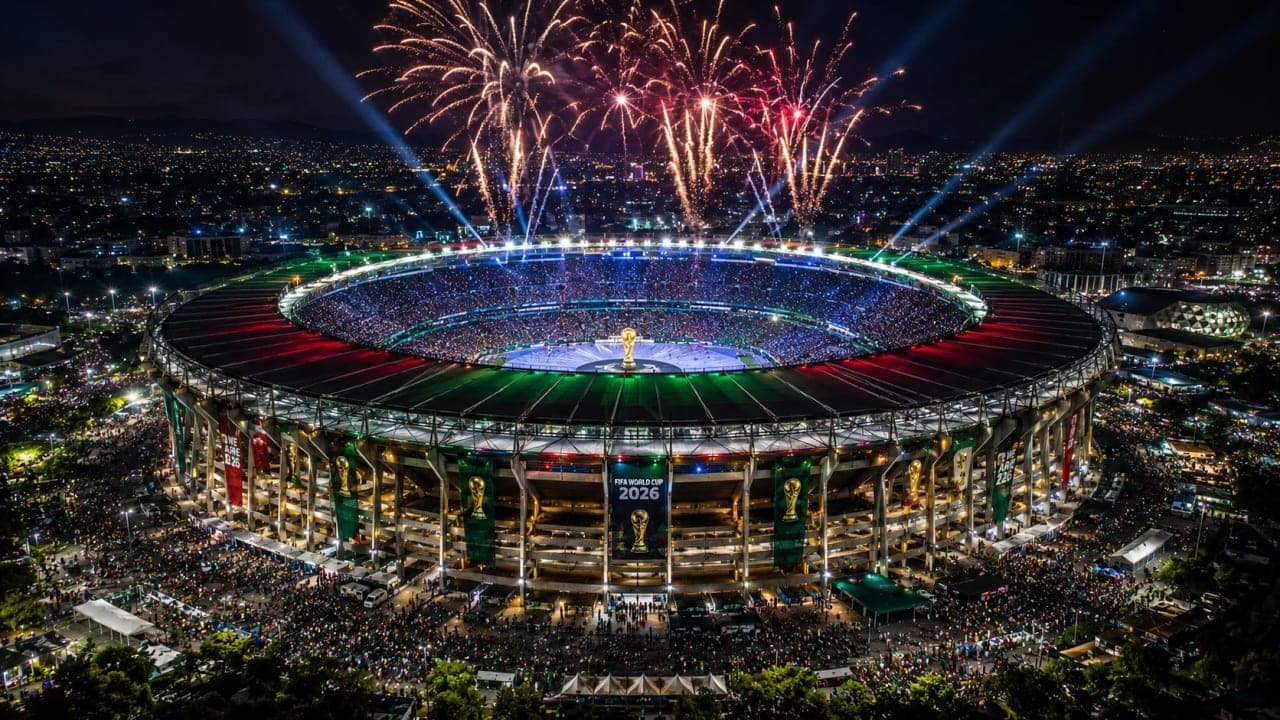
Mexico City Stadium, still emotionally known to millions as the Azteca, is one of the rare football grounds that feels mythological even before a ball is kicked. FIFA’s own World Cup history around the venue gives it a weight almost no modern stadium can copy. It staged opening matches and finals in both 1970 and 1986, and it is returning in 2026 with the honour of opening the tournament again.
That matters because World Cups are built on memory as much as planning. Stadiums become sacred not only because of architecture, but because of what they have already seen. Mexico City Stadium has seen Pele’s Brazil lift the trophy. It has seen Diego Maradona’s Argentina take over a tournament. It has seen noise, altitude, pressure and the kind of crowd energy that television can register but never fully translate.
FIFA’s own host-city material also frames the stadium as the first venue to host a third men’s World Cup. That alone explains why the opener belongs here. There are larger transport operations in this tournament. There are newer arenas. There may even be more commercially polished matchdays elsewhere. But few places on the football map can give opening night this much immediate historic gravity.
And then there is the feeling of the place itself. Mexico City does not greet football quietly. It absorbs it into the streets. Supporters do not merely enter the ground; they build the mood around it first. That is what makes this venue such a fitting starting point. The World Cup is supposed to feel oversized. This stadium has always known how to hold oversized emotions.
Venue fact | Why it matters |
|---|---|
Mexico City Stadium hosts the opener | The tournament begins in one of football's most recognisable cathedrals |
Hosted opening matches and finals in 1970 and 1986 | Gives the 2026 curtain-raiser instant historical depth |
Returns for a third men's World Cup | Links three eras of the tournament in one place |
Home-city football culture is intense and public | Creates an atmosphere that begins long before kick-off |
Why Mexico Raises The Curtain
FIFA did not need to say everything out loud for the logic to be obvious.
If the first match of the biggest World Cup ever needed a city that already speaks football as daily language, a nation that has hosted this tournament before, and a venue whose history is immediately legible to even casual fans, Mexico was always going to feel like the emotional front door.
That does not make the other hosts secondary. The United States will stage the most matches and the final, and Canada’s role is important in the broader North American story. But Mexico gives the tournament its oldest heartbeat. It connects 2026 to 1970 and 1986, and that connection matters because expanded tournaments can sometimes feel too modern, too commercial or too sprawling. Opening in Mexico counters that risk. It reminds everyone that beneath the scale, the World Cup is still a feeling.
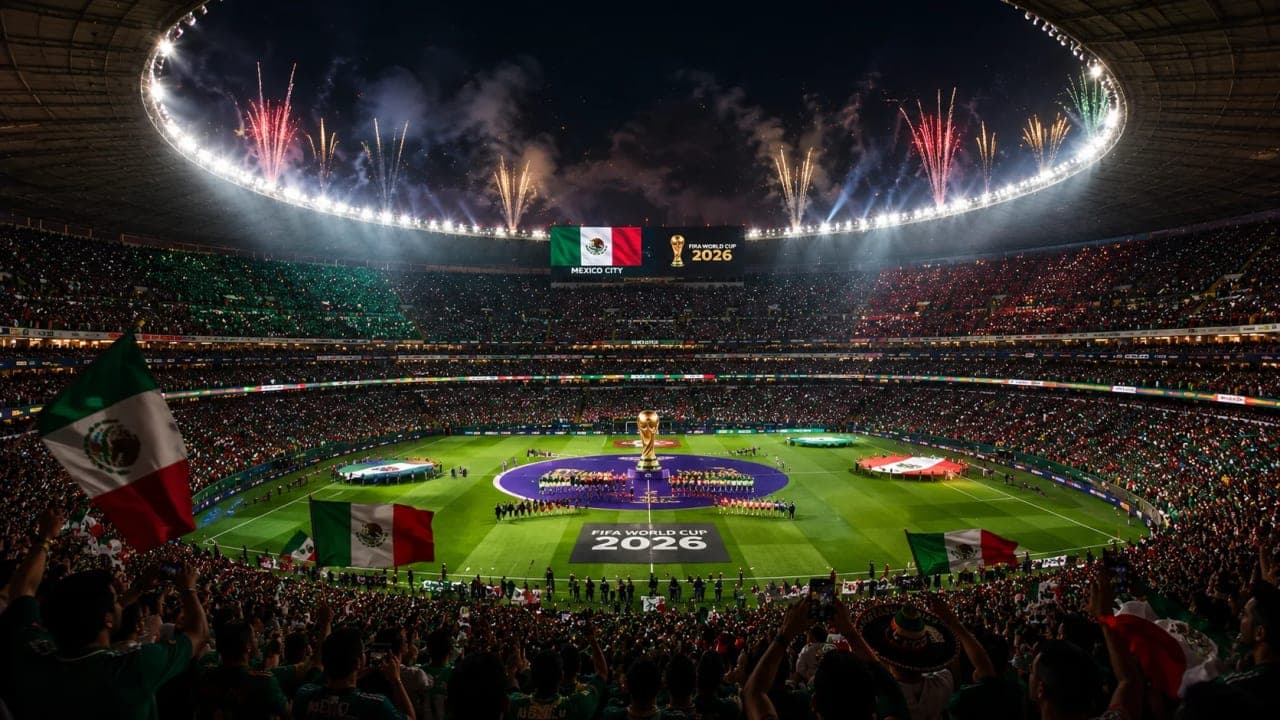
There is also a simpler truth. Opening nights need noise. They need colour. They need a crowd that understands ceremony and refuses to stay neutral. Mexico almost guarantees that.
One Tournament, Three Hosts, Sixteen Cities
What makes 2026 especially fascinating is that the World Cup will keep changing its accent as it moves.
How is it so far?
Vote with other readers
In one week the tournament might feel steeped in old football memory. In the next it might feel like a giant modern event machine. Then it may drift into a city where the sport still feels like it is writing its newest chapter in real time. That is the gift of three-nation hosting: variety without losing a single overarching identity.
Host country | Host cities | What it brings |
|---|---|---|
Mexico | 3 | Historic World Cup memory, deep football culture, emotionally charged venues |
Canada | 2 | A newer but growing football stage, fresh energy and strong civic hosting |
United States | 11 | Stadium scale, travel infrastructure and the broadest share of matches |
Country | Host cities |
|---|---|
Mexico | Mexico City, Guadalajara, Monterrey |
Canada | Toronto, Vancouver |
United States | Atlanta, Boston, Dallas, Houston, Kansas City, Los Angeles, Miami, New York/New Jersey, Philadelphia, San Francisco Bay Area, Seattle |
For travelling fans, that range is thrilling and demanding at the same time. A World Cup trip in 2026 is not one city break. It can become a moving football journey across regions, climates and cultures. A supporter could start under the volume of Mexico City, drift into the shape of a West Coast American double-header, and finish by chasing the final in New York/New Jersey. That is not normal tournament travel. That is almost a festival circuit built around the world’s most watched sporting event.
For readers mapping that journey in more detail, our World Cup fixtures coverage and venue guide are the natural next stops after this feature.
How 48 Teams Change The Entire Tournament
Expansion is often discussed like an accounting exercise. More places. More matches. More revenue. But in football terms, the bigger change is emotional.
A 48-team World Cup changes who gets to believe. Smaller nations arrive with a real shot at reaching the knockouts. Mid-tier nations gain more room to recover from one bad match. Group-stage tension becomes less predictable because the race for the best third-placed teams widens the number of countries still alive late into the first round.
That means the month should produce fewer dead nights and more consequential ones. A match that would once have been treated as schedule-filler can now reshape qualification mathematics, media mood and the travel plans of tens of thousands of supporters.
Phase | Structure |
|---|---|
Group stage | 12 groups of four teams |
Group-stage matches | 72 |
Progression | Top two in each group plus the eight best third-placed teams |
First knockout round | Round of 32 |
Total matches | 104 |
Matches needed to win the title | 8 for the finalists |
The expansion also changes the psychology of the giants. Traditional heavyweights are used to arriving with the confidence of structural advantage. In 2026, they still have quality, but they also have a longer path, more tactical adjustments and more chances for disorder to intrude. One extra knockout round is not just one extra fixture. It is another night where a favourite can be dragged into extra time, lose a player, pick up fatigue or simply meet a team that refuses to read the script.
So yes, the 48-team format makes the tournament bigger. More importantly, it should make it stranger. And World Cups are often remembered most vividly when they become strange in the right way.
The Fan Experience Will Be As Big As The Football
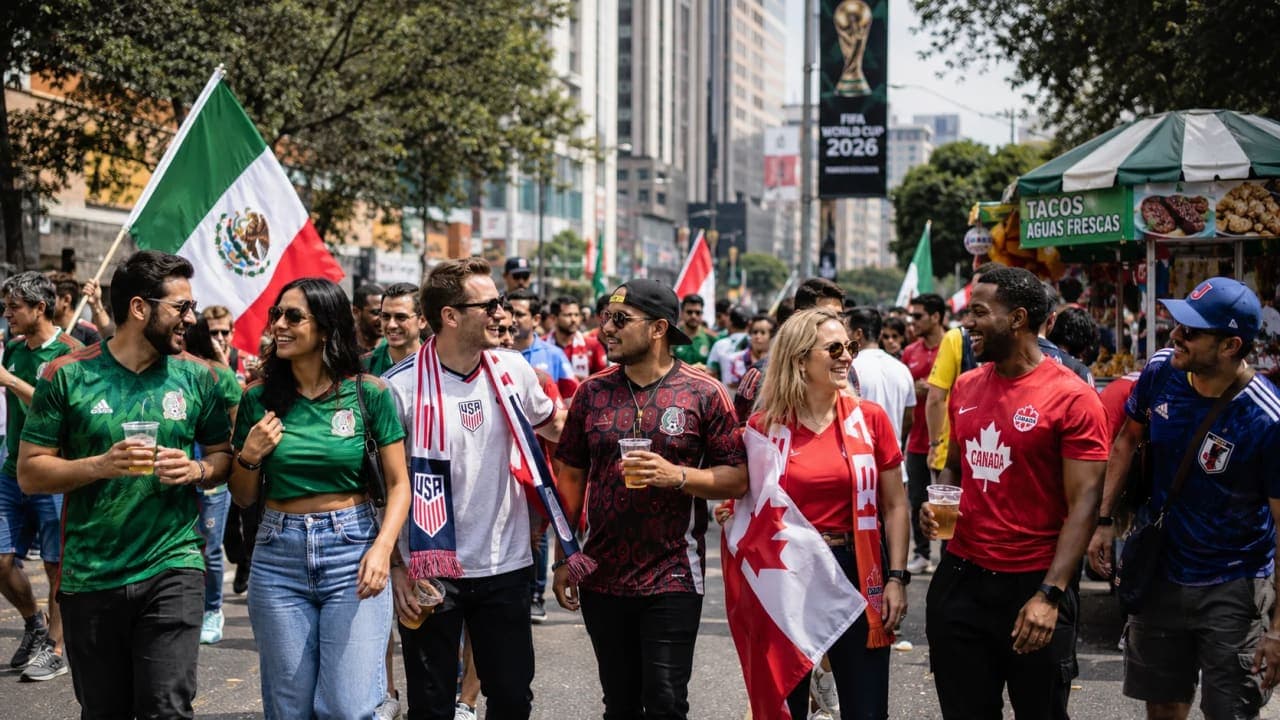
World Cups are unique because they make normal routines disappear. Airports turn into shirt parades. City centres become language lessons. Fans who would never sit together at club level end up trading predictions in train stations, food queues and fan zones.
In 2026 that feeling should be magnified by geography. Supporters will not just be visiting one country and adapting to one rhythm. They will be moving through different cultures, different travel patterns and different matchday energies. Some cities will feel like open-air carnivals. Others will feel sharper, faster and more stadium-centred. All of them will be carrying the same conversation: who is rising, who is wobbling and who suddenly looks dangerous.
For fans travelling from India or other distant markets, timing will become part of the experience too. Some matches will demand early-morning alarms, others late-night stamina, and the social ritual around that viewing matters almost as much as the football. World Cups create communities of inconvenience. People lose sleep together, rearrange work together and end up remembering where they watched a match almost as clearly as the scoreline itself.
Topic | What to expect |
|---|---|
Matchday atmosphere | Bigger than league football, with national colour and ceremony everywhere |
Travel planning | Multi-city planning matters more than ever because the tournament spans three countries |
Tickets | Official ticketing and hospitality information exists, but availability and logistics can change closer to matchday |
Viewing rhythm | Time-zone differences will shape how global fans watch and travel |
Best approach | Follow the hub, the schedule, the venue guide and team pages together rather than relying on one update source |
If you want a single starting point without leaving SNIGDHA Blogs, stay with the FIFA World Cup 2026 hub and move outward from there into the schedule, teams and venues as your own tournament path takes shape.
Teams To Watch
Not every team carries the same kind of intrigue. Some come in because they are genuine title threats. Some come in because they look ready to disrupt the assumptions around them. Others matter because the pressure on them is impossible to ignore.
Team | Why the world will watch |
|---|---|
Mexico | Opening-night pressure, home support and the emotional charge of beginning the tournament |
United States | Home-soil expectations and the burden of turning infrastructure into a serious run |
Canada | A younger World Cup identity with a chance to grow in public view |
Morocco | Proof that recent deep tournament runs were not a one-off |
Senegal | Physical presence, tournament maturity and upset potential |
Japan | Tactical clarity and the sense that they are always one step away from something bigger |
Mexico are compelling because hosts are judged by feeling as much as results. A narrow win can sound like a statement. A shaky draw can sound like anxiety. No team will carry that immediate emotional scrutiny more intensely on opening night.
The United States sit under a different kind of pressure. A World Cup on home soil is supposed to produce a signature run at some point. Anything less than sustained relevance deep into the tournament will invite uncomfortable questions, not only about the team but about how the country sees football at this level.
Canada are fascinating because this tournament offers them a chance to move from promising football nation to established one in the eyes of a wider audience. Morocco and Japan, meanwhile, are exactly the kinds of teams that expanded tournaments can elevate. Organised, credible and dangerous, they do not need chaos to help them. They can generate their own.
Potential Title Contenders
Team | Why they look like contenders |
|---|---|
Argentina | Champions know how to manage pressure and expectation, even when age and transition questions appear |
France | Depth, pace and tournament experience keep them permanently dangerous |
Spain | Control, technical quality and the ability to dominate rhythm in big matches |
Brazil | Individual brilliance and the constant expectation that a World Cup is where Brazil should feel fully alive |
England | Talent-rich squads and another chance to prove they can carry pressure into July |
Germany | A team rarely ignored once knockout football begins to strip away sentimentality |
This table is analysis, not prophecy. World Cups punish certainty. Still, the usual elite names are elite for a reason. Across a month of attrition, depth matters. Experience matters. The ability to survive ugly matches matters. That is why the short list nearly always feels familiar, even when the journey to the final does not.
Players Who Could Shape The Mood Of The Tournament
Every World Cup eventually becomes attached to faces. A teenager, a captain, a forward who cannot stop scoring, a midfielder who seems to control time for two straight weeks.
In 2026, the spotlight will naturally drift toward players who combine status with unfinished business. Kylian Mbappe remains the kind of attacker who can turn a tournament into his own highlight reel. Jude Bellingham belongs to the new generation of players already asked to behave like old leaders. Vinicius Junior brings the sort of one-v-one electricity that can detonate a match in seconds. Jamal Musiala and others from the same rising class represent the reminder that the World Cup always creates at least one new hierarchy before it ends.
The point is not to predict the Golden Boot or the best player award here. The point is to recognise that World Cups are emotional accelerators. Good players become symbols very quickly when the stage is this large.
Key Dates That Will Shape The Month
Date | Tournament moment |
|---|---|
11 June 2026 | Opening match: Mexico vs South Africa in Mexico City |
27 June 2026 | Group stage concludes |
28 June 2026 | Round of 32 begins |
4 July 2026 | Round of 16 begins |
9 July 2026 | Quarter-finals begin |
14 July 2026 | Semi-finals begin |
18 July 2026 | Third-place play-off |
19 July 2026 | Final at New York/New Jersey Stadium |
That timeline reveals something important. The tournament barely pauses. There is enough space for stories to develop, but not enough for anyone to relax inside them for long. A team can look ordinary on one night and terrifying four days later. A city can host a forgettable group match and then suddenly become part of the knockout map. Momentum in this kind of World Cup may feel fragile because the calendar leaves very little room to hide.
Why This Edition Feels Different Even Before It Starts
Some tournaments gather anticipation because of one dominant team. Others do it because of one host country, one rivalry or one generation nearing its last chance.
The 2026 World Cup feels different because it gathers all of those things while also changing the shape of the event itself.
It is bigger, yes, but it is also more layered. It opens in a stadium that already belongs to football history and ends in a final venue designed for a very different era of sports spectacle. It begins in Mexico’s noise and moves through the broad logistical machinery of the United States and the rapidly growing football confidence of Canada. It invites more teams, more supporters and more styles of belief into the room.
That is why this edition already feels closer to a continental festival than a standard tournament. It is not simply adding matches. It is widening the emotional geography of the World Cup.
And that is also why the most useful way to follow it is not through isolated updates, but through connected coverage: our hub, fixtures, teams and venue pages are built for that wider picture.
Final Thoughts
Eventually this World Cup will belong to details. A missed chance. A save in the 88th minute. A city that seemed secondary until it hosted a famous upset. A player who arrived as a promising name and left as a tournament symbol.
But before all of that, there is still the opening night.
There is still Mexico City, filling up by degrees. Still the vendors, the flags, the camera flashes, the nerves, the first anthem, the first tackle and the first sound that tells the rest of the planet the wait is over.
That is the real power of FIFA World Cup 2026. It is enormous on paper, historic in structure and ambitious in geography. Yet when the ball finally moves in Mexico City, all of that scale will collapse into the same simple feeling every great World Cup begins with: the sense that football has taken over the world again, and for the next few weeks, almost nothing will feel bigger.
Lock in the takeaway
Frequently asked questions
When does FIFA World Cup 2026 start?
The tournament begins on 11 June 2026 with Mexico against South Africa in Mexico City.
Why is FIFA World Cup 2026 considered historic?
It is the first men’s World Cup with 48 teams, the first to feature 104 matches, and the first to be hosted by three countries together.
Where will the 2026 World Cup final be played?
The final is scheduled for 19 July 2026 at New York/New Jersey Stadium.
How can readers follow the tournament on SNIGDHA Blogs?
The easiest route is to begin with the FIFA World Cup 2026 hub, then continue into the fixtures, teams and venue coverage as the tournament unfolds.