
Listen to this article
Checking audio support
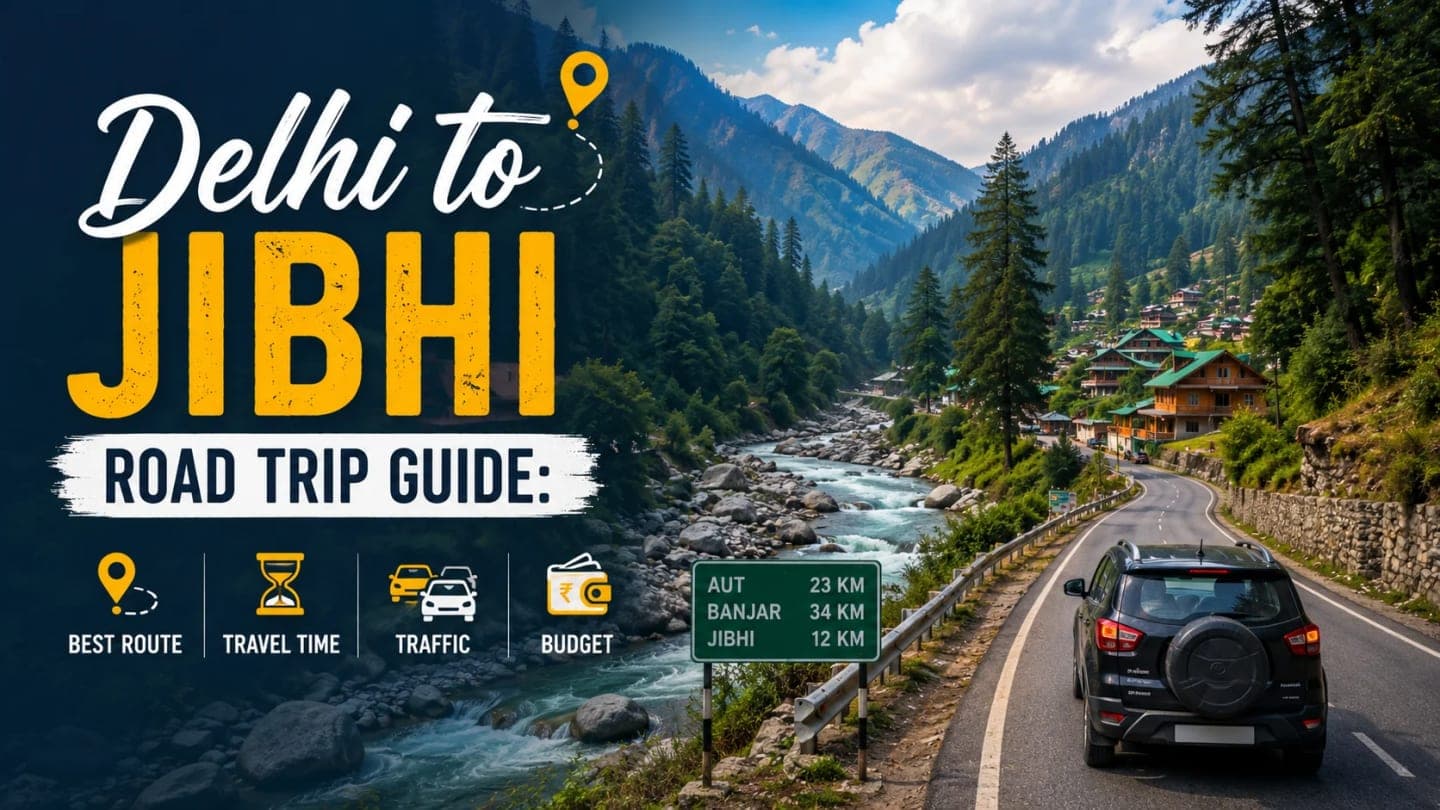
The Ultimate Delhi to Jibhi Road Trip Guide: Routes, Stops, Costs & Hidden Gems You Shouldn't Miss
Mountain roads, riverside cafés, sleepy villages, and endless pine forests—if there's one road trip from Delhi that perfectly blends adventure with peace, it's the drive to Jibhi.
Why Is Everyone Suddenly Talking About Jibhi?
Not long ago, Jibhi was one of Himachal Pradesh's best-kept secrets. Today, it's quietly becoming the favourite weekend escape for travellers who want mountains without the overwhelming crowds of Manali or Shimla.
Tucked away in the Banjar Valley of Himachal Pradesh, Jibhi isn't about luxury malls or famous tourist attractions. Instead, it offers something rarer—a slower pace of life.
Imagine waking up beside a flowing river, sipping hot chai while clouds drift through cedar forests, crossing wooden bridges that look straight out of a movie, and ending your evening under a sky full of stars.
If that sounds like your kind of vacation, this guide is for you.
Where Exactly Is Jibhi?
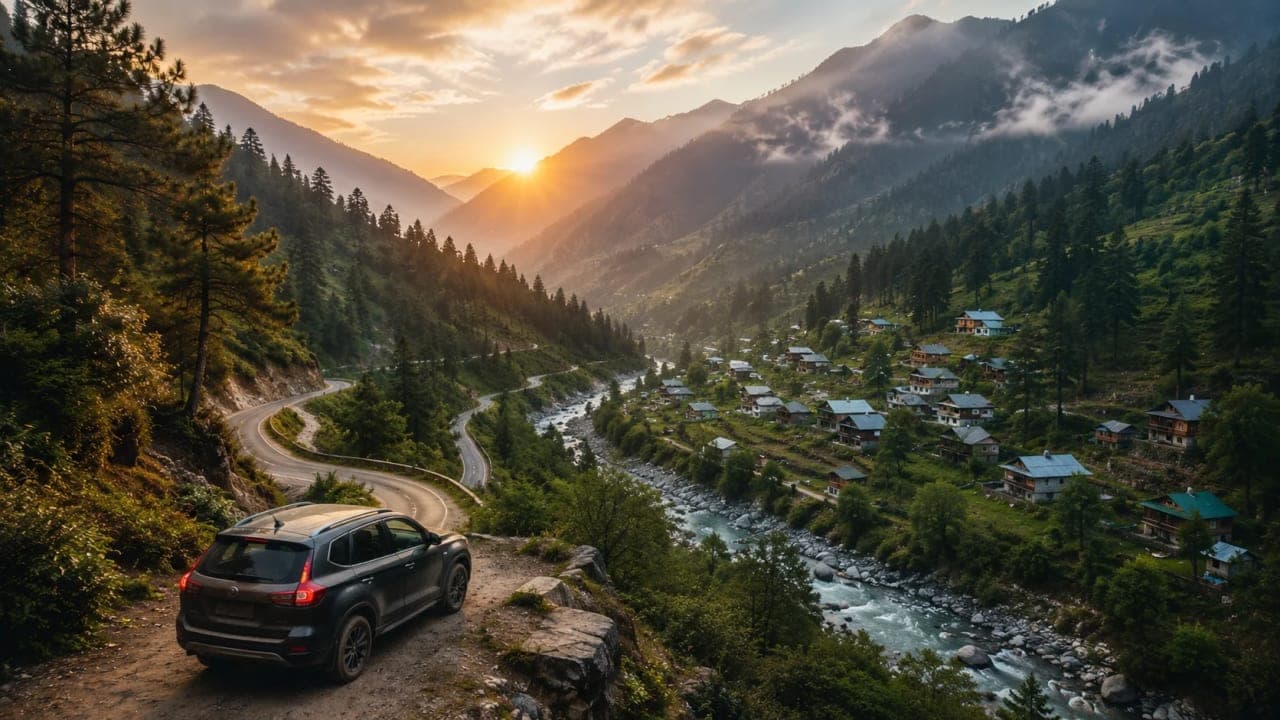
Jibhi is a small village located in the Banjar Valley of Himachal Pradesh.
Distance from Delhi: Approximately 500–520 km
Travel Time: 11–14 hours depending on traffic and weather.
Although it looks close on Google Maps, don't underestimate the journey. The last few hours through the mountains are slower but also the most beautiful.
Best Route from Delhi to Jibhi
The most preferred route is:
Delhi → Murthal → Karnal → Kurukshetra → Ambala → Chandigarh → Bilaspur → Mandi → Aut → Banjar → Jibhi
This route offers:
Better highways
Plenty of food options
Multiple fuel stations
Beautiful mountain views after Mandi
Once you cross Aut Tunnel, the scenery changes dramatically. The roads become narrower, the air cooler, and rivers begin following you almost the entire way.
That's when the real road trip begins.
Should You Drive During the Day or Night?
This is probably the biggest question travellers ask.
Night Drive
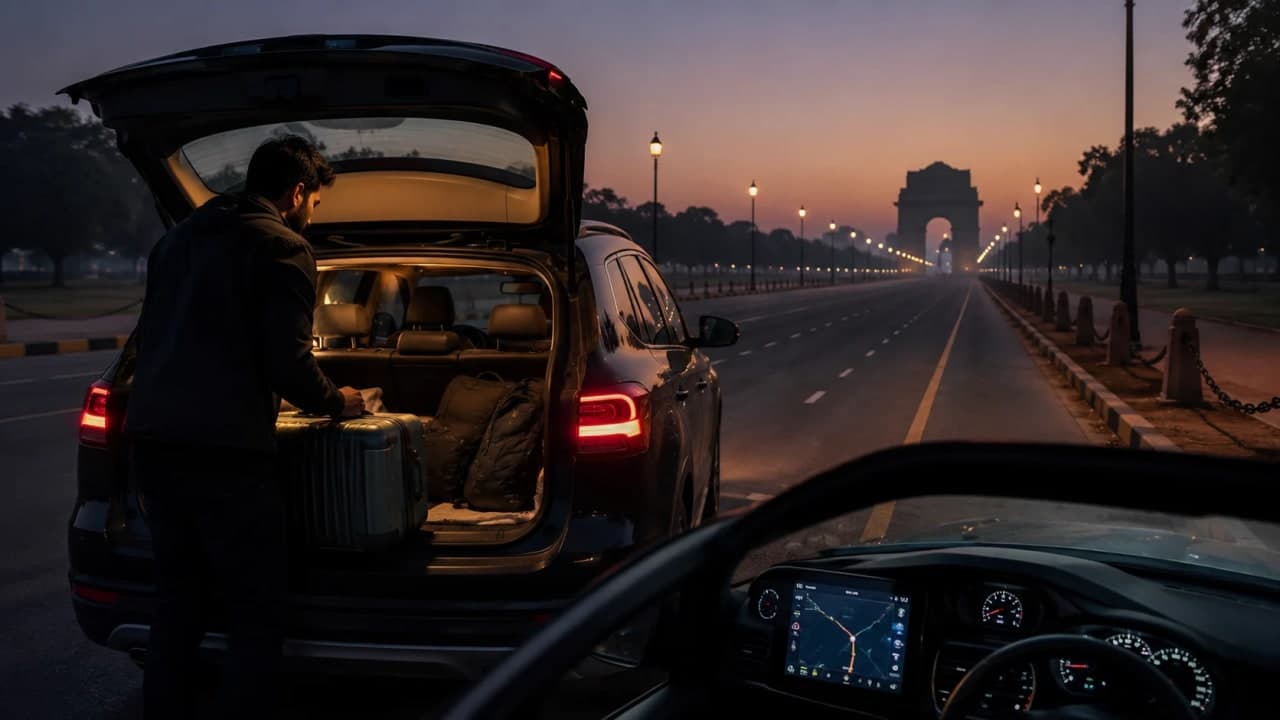
Many people leave Delhi around midnight or 1 AM.
Pros
Less traffic leaving Delhi NCR
Reach the mountains early morning
Save an entire day
Cons
Driver fatigue
Limited visibility in mountain sections
Fewer roadside services late at night
Early Morning Drive
Leaving around 4–5 AM gives you daylight throughout most of the journey.
It may take a little longer, but it's generally more relaxed and lets you enjoy the changing landscapes.
Is There Traffic on the Delhi to Jibhi Route?
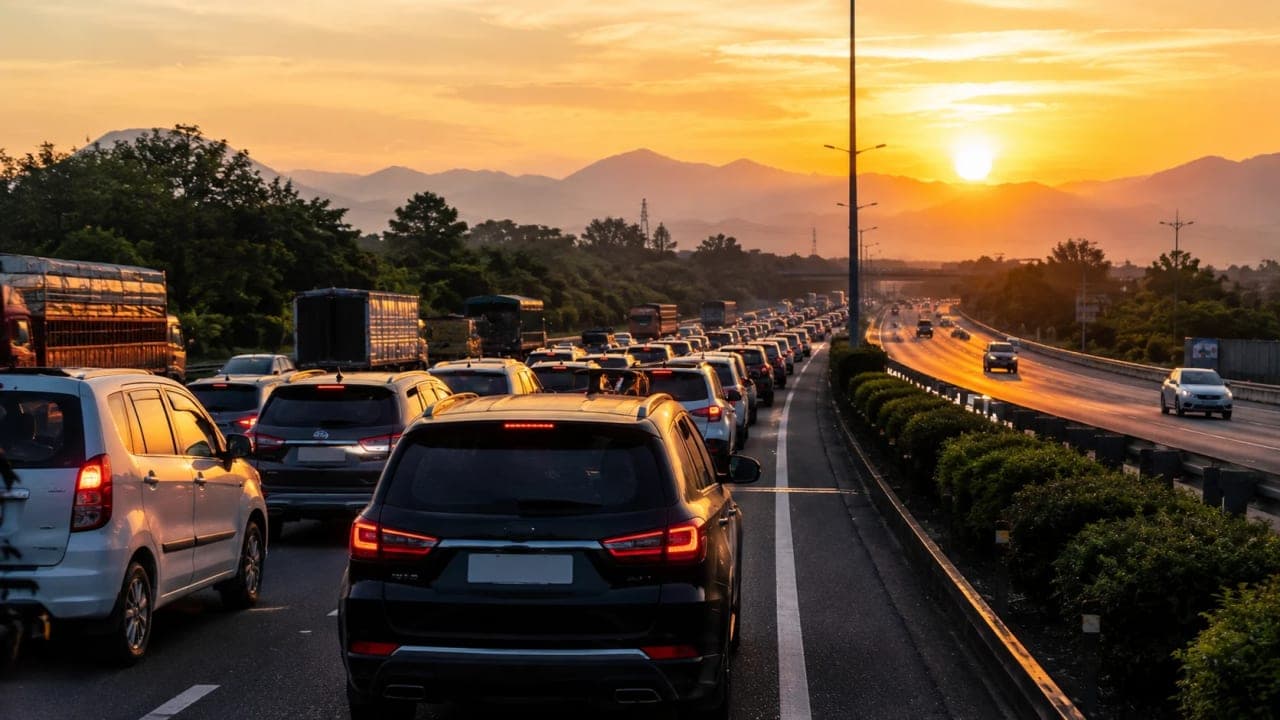
The short answer is yes—especially during holidays and peak travel seasons.
One mistake many first-time travellers make is assuming the journey will take exactly as long as Google Maps predicts. In reality, travel time can increase by 2–5 hours depending on when you leave.
The biggest delays usually happen before you even reach the mountains.
Expect heavy traffic if you're travelling during:
Long weekends
Summer vacations (May–June)
Christmas and New Year holidays
Holi weekend
Diwali holidays
Independence Day long weekend
Republic Day long weekend
During these periods, thousands of travellers from Delhi NCR head towards Himachal Pradesh, Uttarakhand, and Jammu & Kashmir at the same time.
Avoid Long Weekends If You Want the Real Jibhi Experience
One of Jibhi's biggest attractions is its peace and quiet.
Ironically, during long weekends, that's exactly what becomes difficult to find.
You may experience:
Traffic jams near cafés
Fully booked hotels
Waiting time at popular restaurants
Parking shortages
Crowded viewpoints
Longer queues at Jalori Pass
If your schedule allows, consider travelling on weekdays instead. A Tuesday to Thursday stay often feels completely different from a Saturday–Sunday visit.
A Small Tip That Can Save Hours
If you're planning to visit during a long weekend, don't leave on Saturday morning.
Instead:
Leave Friday night or very early Saturday morning (around midnight–1 AM).
Or better yet, take one extra day off and travel on Thursday night.
You'll spend less time staring at brake lights and more time enjoying the mountains.
After all, no one plans a mountain getaway to spend hours stuck in traffic.
The First Mandatory Stop: Murthal
Let's be honest.
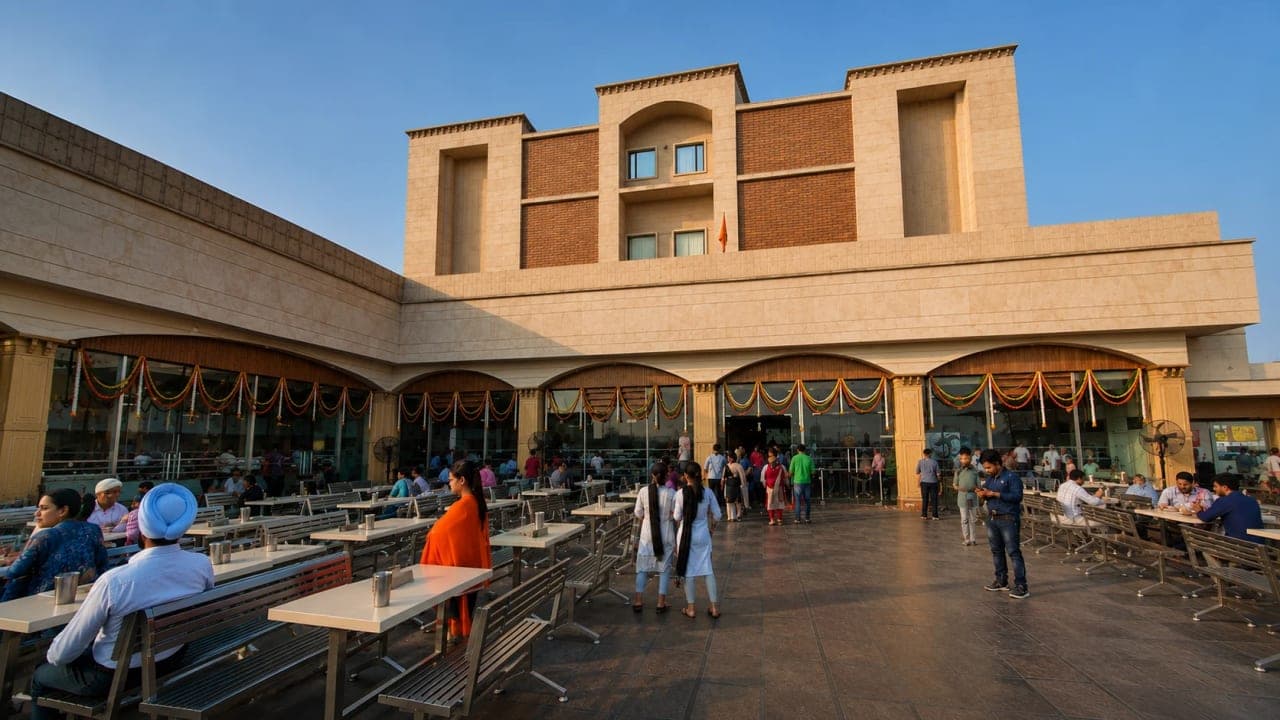
A Delhi road trip isn't complete without stopping at Murthal.
Whether you choose Amrik Sukhdev, Garam Dharam, Haveli, or another dhaba, this is the perfect place for breakfast.
Parathas loaded with butter, hot tea, fresh lassi, and that unmistakable road-trip excitement make Murthal almost a tradition rather than just a stop.
How is it so far?
Vote with other readers
Fuel Up Before the Mountains
Although petrol pumps are available throughout the route, it's a good idea to top up your fuel before reaching Mandi.
Mountain fuel stations are fewer, and filling up early gives peace of mind.
The Mountains Begin After Bilaspur
Until Bilaspur, it's mostly highway driving.
Then the landscape slowly changes.
Buildings become fewer.
Roads begin twisting.
The air gets cooler.
The Beas River starts appearing beside you.
Soon, you'll realise you've stopped checking your phone because you're too busy looking outside the window.
Aut Tunnel: The Gateway to Jibhi
Every road trip has one moment where you feel you've officially entered the mountains.
For Jibhi, that's the Aut Tunnel.
Once you cross it, the traffic reduces, forests become denser, and the roads become more peaceful.
It's also where many travellers instinctively slow down—not because they have to, but because the scenery deserves it.
The Final Stretch to Jibhi
The road from Banjar to Jibhi is narrower than the highway.
You'll encounter:
Sharp bends
Small villages
Wooden houses
Flowing streams
Apple orchards (seasonal)
Drive patiently.
This isn't the place to rush.
Half the beauty lies outside your windshield.
Best Time to Visit Jibhi
Spring (March–April)
Pleasant weather.
Blooming flowers.
Perfect for sightseeing.
Summer (May–June)
Cool temperatures.
Escape Delhi's heat.
Most popular season.
Monsoon (July–September)
Everything turns incredibly green.
Waterfalls come alive.
However, landslides and slippery roads are possible.
Autumn (October–November)
Clear skies.
Beautiful mountain views.
Ideal weather for photography.
Winter (December–February)
Cold weather.
Occasional snowfall nearby.
Perfect for travellers who enjoy peaceful mountain winters.
Places You Shouldn't Miss
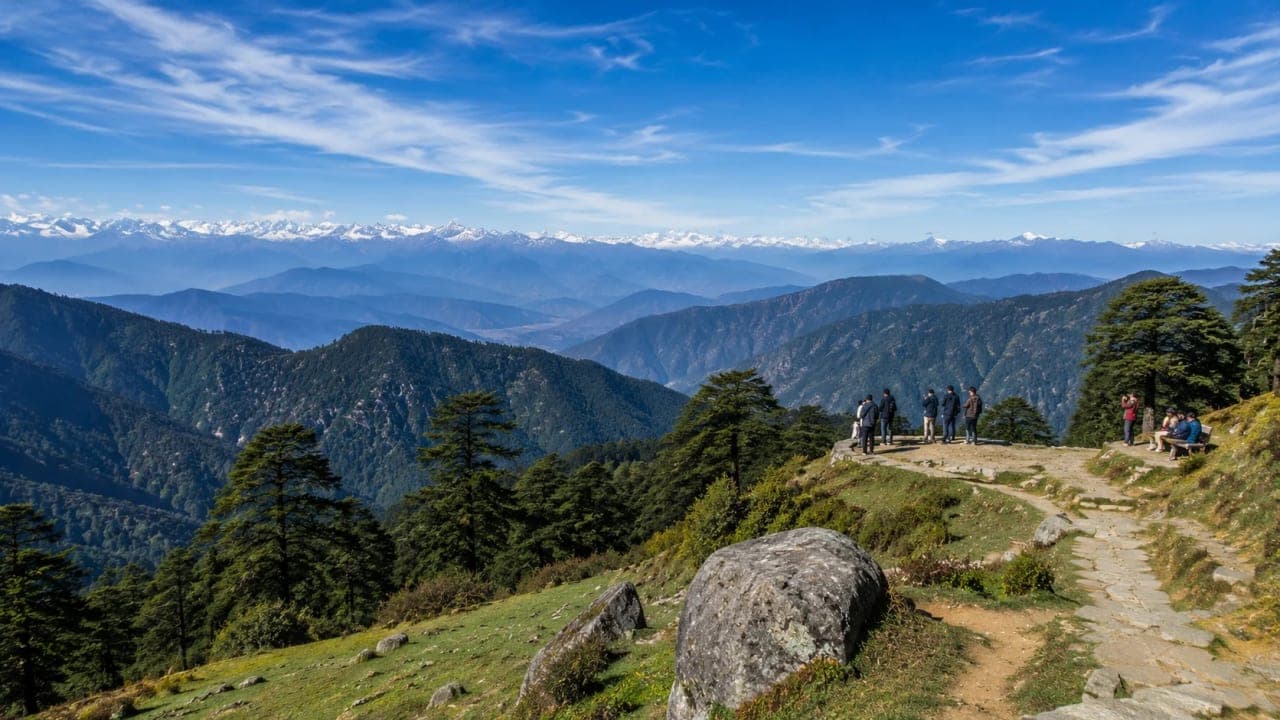
Jalori Pass
One of the highest drivable mountain passes in the region.
The views alone are worth the drive.
Serolsar Lake
A peaceful trek through forests leading to a crystal-clear lake.
One of the easiest and most rewarding hikes near Jibhi.
Jibhi Waterfall
A short walk from the village leads to a charming waterfall hidden among dense trees.
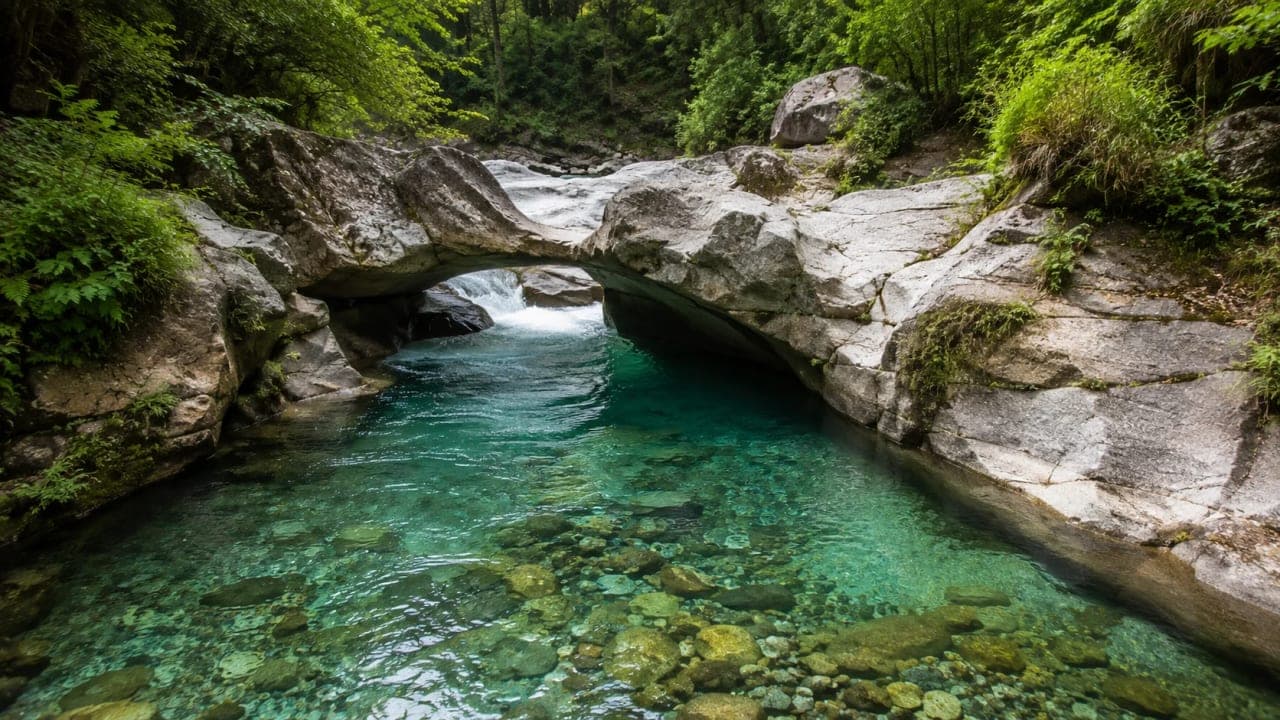
Mini Thailand
A unique natural rock formation where flowing water creates a scene surprisingly similar to tropical landscapes.
It's small but incredibly photogenic.
Chehni Kothi
An ancient tower showcasing traditional Himachali architecture.
The hike is equally rewarding.
Shringa Rishi Temple
One of the most important spiritual sites in the Banjar Valley, known for its peaceful surroundings and local legends.
Where Should You Stay?
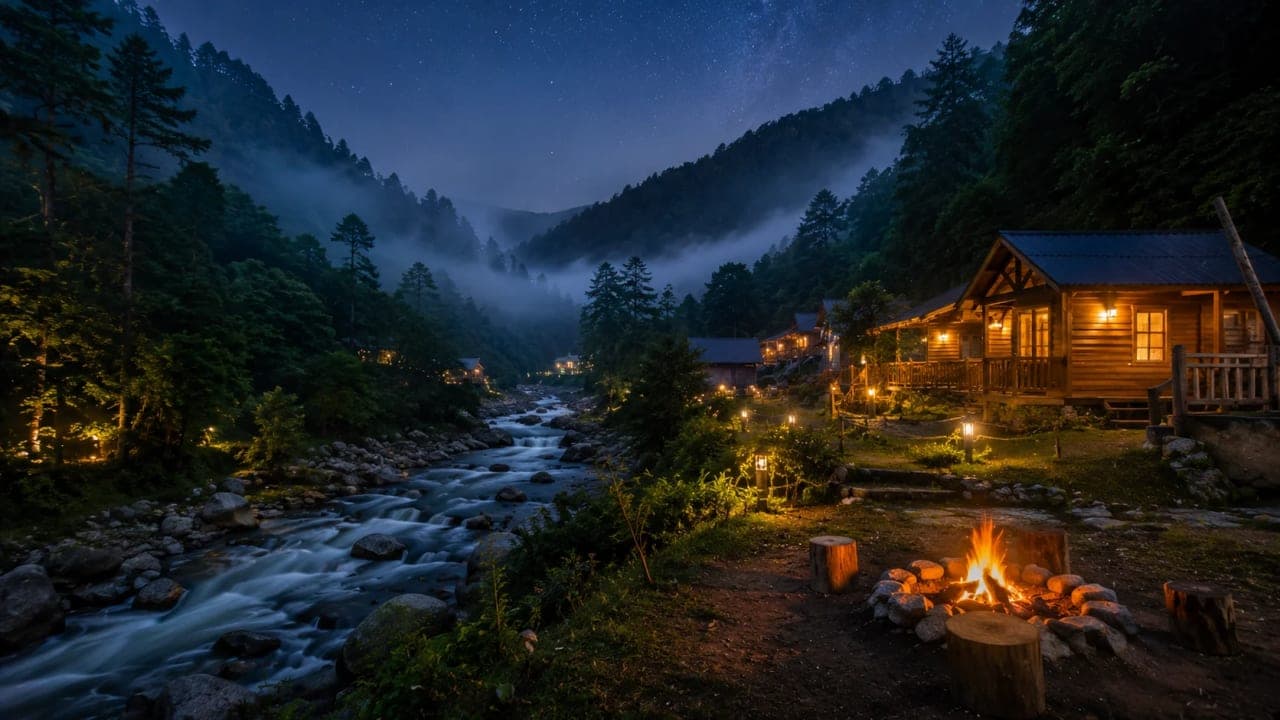
Jibhi offers everything from budget hostels to riverside cottages.
Popular choices include:
Riverside cottages
Wooden cabins
Homestays
Hostels for backpackers
Boutique mountain stays
Many accommodations overlook forests or streams, making the stay as memorable as the destination itself.
How Much Does the Trip Cost?
Approximate budget for two people:
Expense | Estimated Cost |
|---|---|
Fuel | ₹5,000–₹7,000 |
Toll | ₹1,200–₹1,800 |
Stay (2 Nights) | ₹3,000–₹8,000 |
Food | ₹2,000–₹4,000 |
Activities | ₹1,000–₹3,000 |
Estimated Total: ₹12,000–₹24,000 (depending on your travel style).
Things to Pack
Don't forget:
Warm jacket (even in summer evenings)
Comfortable walking shoes
Power bank
Torch
Cash (some places have limited digital payment options)
Basic medicines
Rain jacket during monsoon
Offline maps
Driving Tips
Avoid speeding in mountain sections.
Honk before blind turns.
Never overtake on curves.
Start early if travelling during monsoon.
Keep snacks and water in the car.
Check your tyres and brakes before leaving Delhi.
Is Jibhi Worth Visiting?
Absolutely.
Jibhi isn't a destination that tries to impress you with massive attractions.
Instead, it wins you over quietly.
It's the sound of the river outside your room.
The wooden bridges connecting tiny villages.
The smell of pine forests after rain.
The conversations with locals over a cup of tea.
The drive where every turn reveals another postcard-worthy view.
And perhaps that's why so many travellers return—not because they missed seeing something, but because they miss feeling what Jibhi gave them.
If you're planning your next mountain escape from Delhi, Jibhi deserves a place at the top of your list. Just fuel up, pick a good playlist, and let the mountains take care of the rest.
Lock in the takeaway
Frequently asked questions
How far is Jibhi from Delhi?
Jibhi is approximately 500–520 km from Delhi. Depending on traffic, weather, and road conditions, the drive usually takes between 11 and 14 hours.
What is the best route from Delhi to Jibhi?
The most popular route is:
When is the best time to visit Jibhi?
March to June and September to November are considered the best months for pleasant weather and sightseeing. Winter is ideal for travellers looking for chilly mountain weather and nearby snowfall.
Is there heavy traffic on the Delhi to Jibhi route?
Traffic can be heavy during long weekends, summer vacations, Holi, Diwali, Christmas, and New Year holidays. Leaving Delhi around midnight or very early morning can help avoid major traffic jams.
Is the Delhi to Jibhi road safe for beginners?
Yes, most of the route is well-maintained. However, the mountain roads after Aut and Banjar have sharp turns and narrow sections, so careful driving is essential.
How many days are enough for Jibhi?
A 3-day or 4-day trip is ideal to explore Jibhi, Jalori Pass, Serolsar Lake, Mini Thailand, Chehni Kothi, and nearby attractions without rushing.
Is Jibhi suitable for a family trip?
Yes. Jibhi is a peaceful destination suitable for families, couples, solo travellers, and groups looking for nature, scenic landscapes, and a relaxing mountain vacation.