
Listen to this article
Checking audio support
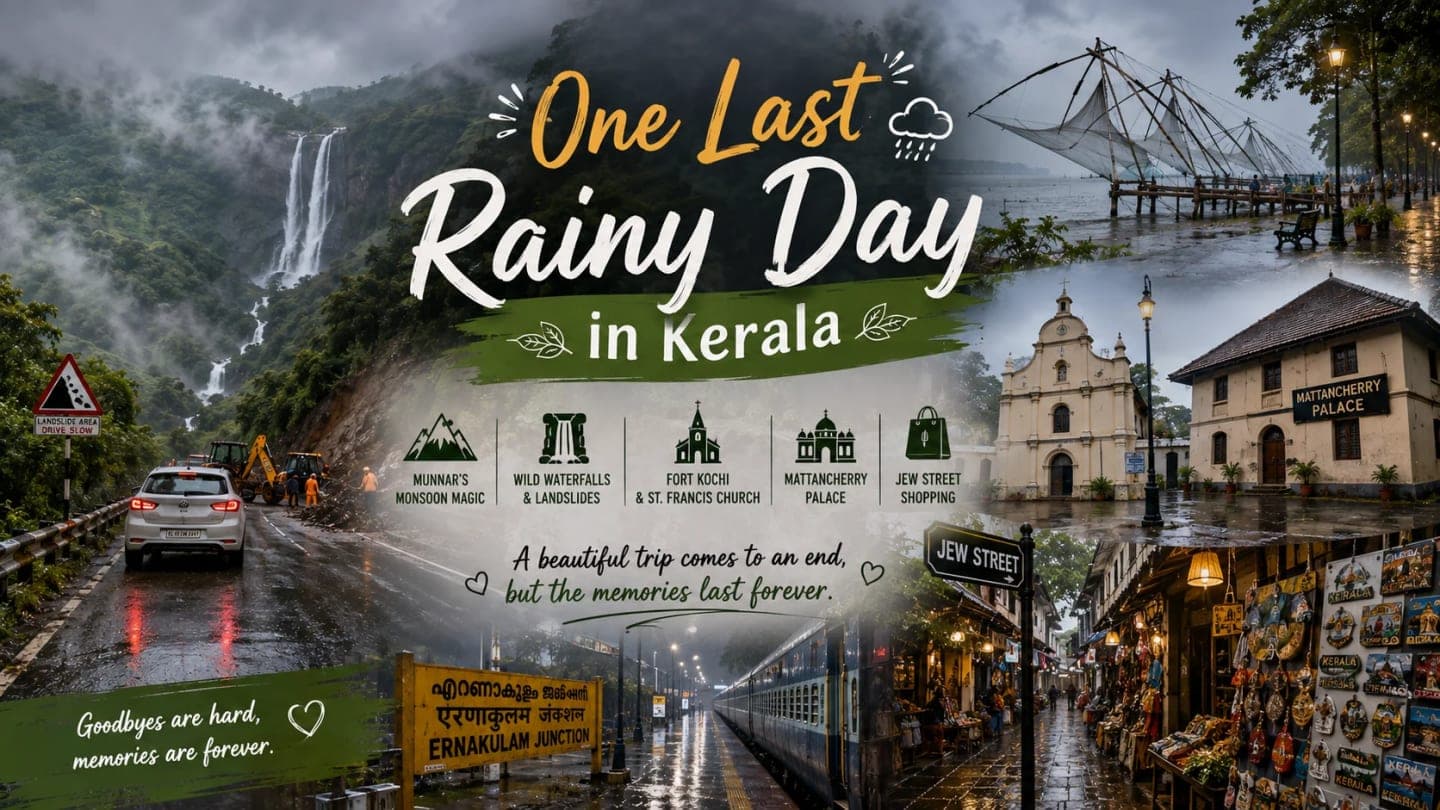
Our Last Day in Kerala: Rain, Landslides & One Final Adventure
There is something strange about the last morning of a trip.
You wake up excited because there is still one more day left to explore, but somewhere in the back of your mind, you know that every place you visit today is taking you closer to home.
That was exactly how our last morning in Kerala felt.
We were happy. The trip had given us so many memories—Alleppey, the houseboat, Thekkady, Periyar, spice gardens, waterfalls, elephants, Kathakali, Munnar, tea plantations, jeep safaris and Rajamalai.
But we were sad too.
Today, we had to leave Kerala.
And as if saying goodbye wasn't difficult enough, Kerala's monsoon had one final surprise waiting for us.
One Last Morning in Munnar
We woke up early and started getting ready. The hot-water problem at our Munnar hotel, unfortunately, hadn't magically disappeared overnight, so that little struggle continued right until our final morning.
By then, however, we'd almost accepted it as part of the experience.
We packed everything carefully because this time there would be no returning to the hotel. Our luggage had to go straight from Munnar to Kochi and eventually to Ernakulam railway station for our evening train.
Everything was going normally.
Until our driver bhaiya called.
"There Is a Red Alert..."
The conversation immediately changed the mood of our morning.
Our driver told us that a red alert had been issued in some areas because of extremely heavy rainfall. There had also been landslides along the route, and according to him, the road towards Kochi had been affected.
We immediately started checking the news ourselves.
Unfortunately, what he had told us was true.
Reports of landslides and fatalities made the situation suddenly feel much more serious.
Until then, the monsoon had mostly been beautiful for us.
Rain had followed us through spice gardens.
It had made waterfalls stronger.
It had covered Munnar in mist.
It had turned tea gardens impossibly green.
We had laughed about constantly wearing raincoats.
But this was a reminder of the other side of the monsoon.
The same rain that makes mountains beautiful can also make them dangerous.
My husband and I knew the seriousness of the situation, as did our driver. But we decided not to discuss all the alarming details with my in-laws at that moment. There was nothing they could do about the road conditions, and unnecessarily frightening them before a long drive wouldn't help.
The three of us quietly remained alert instead.
Leaving Earlier Than Planned
There was no point taking chances.
We finished packing as quickly as possible, had breakfast and decided to leave Munnar early.
While our driver was preparing the cab and loading everything, we still managed to take a few photographs and videos around the hotel.
Perhaps we needed those few normal moments.
For everyone else, it was another beautiful rainy morning in Munnar.
For my husband, our driver and me, every look towards the mountains came with another thought:
Will the road be clear?
Eventually, all the bags were loaded.
We sat inside.
And began our final road journey through Kerala.
Munnar Looked Completely Different That Morning
The rain hadn't stopped.
As we travelled through Munnar's mountain roads, we could see water practically everywhere.
Small streams had turned stronger.
Water poured down rock faces beside the road.
Huge waterfalls could be seen in the distance, falling from mountains partially hidden behind clouds.
At some places, we could see several thin white streams flowing down the green slopes at once.
It was spectacular.
And slightly frightening.
Every waterfall looked beautiful until you remembered exactly why there was suddenly so much water.
Then we reached one section of road where the reality became impossible to ignore.
Heavy machinery was working beside the road.
Mud.
Rocks.
Debris.
The remains of a landslide.
Workers and machines were clearing the route while vehicles carefully moved through the accessible section.
Our conversations became quieter.
The driver slowed down.
And we passed the area cautiously.
Once safely beyond it, everyone relaxed a little.
But we still had a long road ahead.
Munnar to Kochi: One Last Mountain Drive
The road distance between Munnar and Kochi is roughly 125–130 kilometres, depending on your exact starting and ending points and the route taken.
Under normal conditions, the journey generally takes around four hours.
During heavy monsoon rain?
Timings become much less predictable.
Traffic, poor visibility, water on the roads and landslide-related restrictions can easily extend the journey.
Fortunately, our driver knew the roads well.
We continued gradually towards Kochi, occasionally stopping where it was safe to admire the scenery.
At one point, we stopped near a waterfall.
At another, beside a rushing stream.
Our cameras came out again.
Apparently even a landslide warning couldn't completely cure us of our habit of stopping for photographs.
Tea, Coffee, Fries... And More Rain
After driving for some time, we stopped at a restaurant for a short break.
By then, everyone needed one.
We ordered tea, coffee and fries and sat watching the rain outside.
It was still pouring.
Not drizzle.
Not romantic Bollywood rain.
Proper monsoon rain.
After warming ourselves with tea and coffee, we returned to the cab and continued towards Kochi.
Along the way, we noticed the water levels in some streams had risen considerably.
Again, it was beautiful.
Again, it reminded us to respect the weather.
Eventually, the mountains began disappearing behind us.
The roads became busier.
Buildings became more frequent.
And finally—
we reached Kochi.
One Afternoon in Kochi, Too Many Places to Choose From
It was already afternoon by the time we reached Kochi, so lunch came first.
We found a place, sat down and enjoyed a proper meal before deciding what to do with the few hours we had left.
Our train was scheduled for around 6 PM.
That meant sightseeing had to be planned carefully.
Our driver suggested a museum.
We could also visit the beach.
How is it so far?
Vote with other readers
Realistically, we didn't have enough time to leisurely explore everything.
So we chose the beach.
In hindsight?
The museum might have been the smarter choice.
It was raining.
A museum has a roof.
A beach very famously does not.
But apparently sensible decisions were not part of our itinerary that afternoon.
Fort Kochi Beach in Wild Monsoon Weather
Our driver dropped us some distance from Fort Kochi Beach, and we began walking.
The rain had slowed slightly.
My in-laws had their raincoats and umbrella, while my husband and I decided an umbrella would be enough.
It wasn't.
The closer we got to the sea, the stronger the wind became.
And then we reached the beach.
The Arabian Sea looked completely different under the monsoon sky.
The wind was fierce.
Waves were rough.
Sea spray travelled with the wind.
At moments, simply standing comfortably felt difficult.
Our umbrella was fighting for its life.
Still...
We took pictures.
Of course we did.
After spending some time near the waterfront, we decided not to remain exposed to the weather for too long and began walking back.
Instead of returning by exactly the same route, we took another way through the surrounding streets.
That turned out to be a good decision.
A Little Shopping in Fort Kochi
Once we reached the streets away from the waterfront, we found several shops.
And whenever souvenir shops appear, our fridge-magnet ritual follows.
We browsed around and bought a few more magnets along with a small showpiece for the car.
By this point, our refrigerator back home was going to need its own Kerala section.
While walking through the area, we also came across one of Fort Kochi's most historically important buildings.
St. Francis CSI Church.
St. Francis Church: Centuries of History Behind One Door
Unfortunately, the church was closed when we reached it, so we couldn't explore the interior.
We still stopped outside for photographs.
St. Francis Church is significant because its history reaches back to the early Portuguese presence in India. The original church at the site was constructed by Portuguese Franciscans in the early 16th century, although the building evolved over subsequent periods under different colonial powers.
It is also famously associated with Portuguese explorer Vasco da Gama.
After da Gama died in Kochi in 1524, he was initially buried at this church. His remains were later transferred to Portugal, but the original burial site remains an important historical feature.
Standing outside it while completely wet from the rain, we unfortunately didn't have the time—or dryness—to contemplate five centuries of history for very long.
Back to the cab we went.
Towels came out.
Everyone tried to dry themselves as much as possible.
And then we moved towards our next destination.
Mattancherry Palace: From Kerala Kings to the Dutch Palace
Our next stop was Mattancherry Palace, popularly known as the Dutch Palace.
The name can be slightly misleading because the Dutch didn't originally build it.
The palace was constructed by the Portuguese around 1545 and presented to Veera Kerala Varma, the Raja of Kochi.
Later, when the Dutch gained influence in Kochi during the 17th century, they carried out repairs and renovations to the building.
That association eventually gave it the popular name "Dutch Palace."
The building itself reflects a fascinating mixture of Kerala architectural traditions and colonial influences.
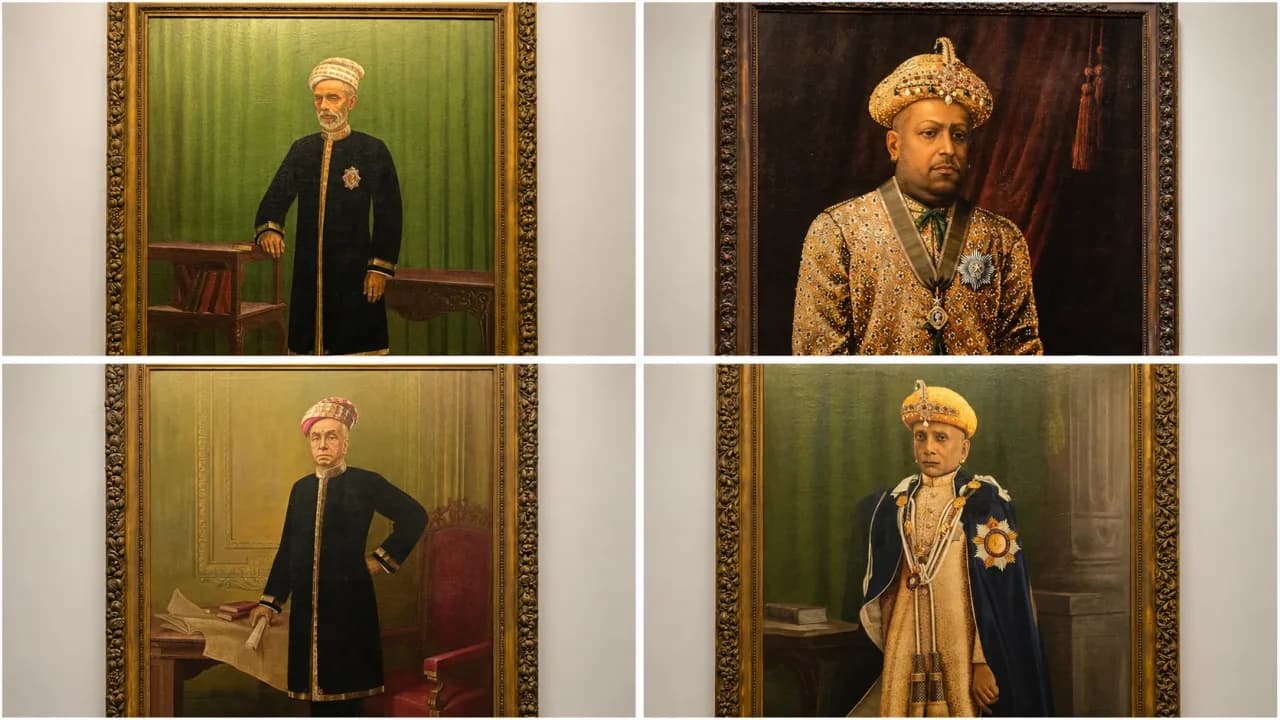
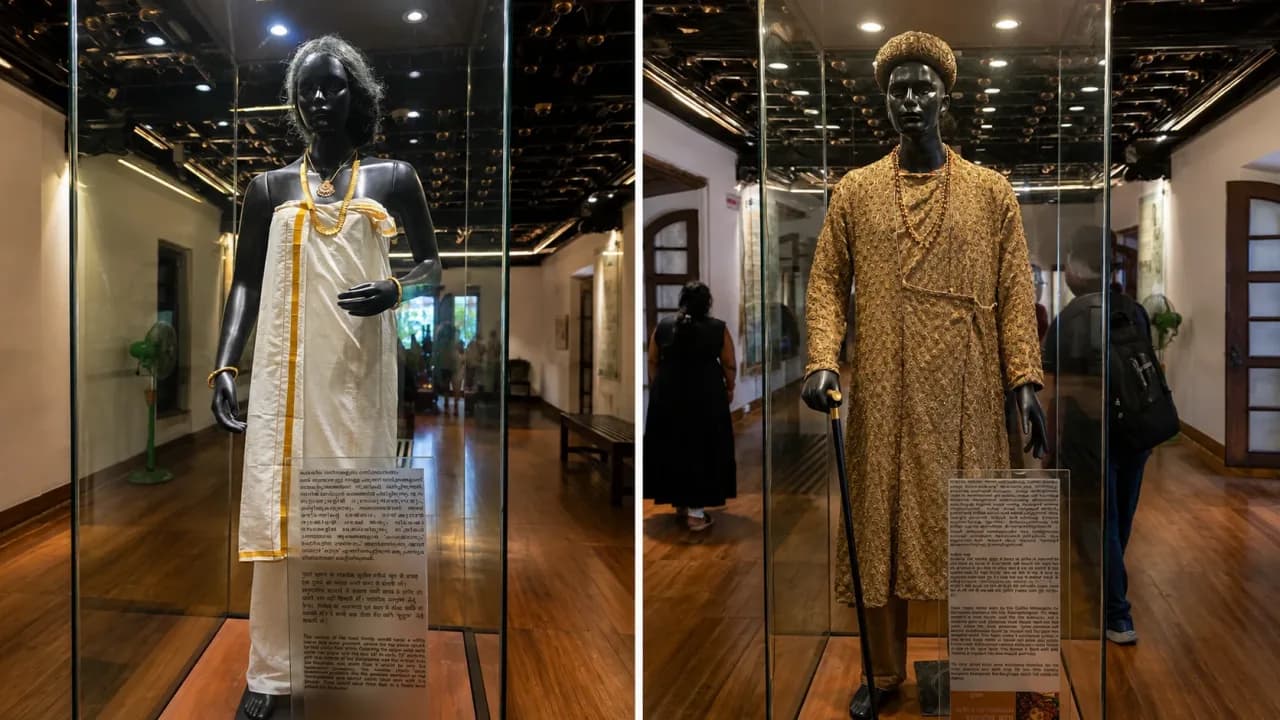
What Can You See Inside Mattancherry Palace?
Today, Mattancherry Palace functions as a museum and is protected by the Archaeological Survey of India.
One of its greatest treasures is its collection of Kerala murals, many depicting scenes from Hindu epics and traditions.
Visitors can also see historical objects connected with the rulers of Kochi, including portraits, ceremonial items, weapons and other artefacts associated with the royal family.
After spending days exploring Kerala's natural landscapes, it was refreshing to experience another layer of its history.
Mountains and waterfalls tell one story.
Palaces tell another.
Unfortunately, the clock was still moving.
Our train wasn't going to wait because we suddenly became interested in history.
So we continued.
Walking Through Jew Street
From Mattancherry, we explored the famous Jew Street area.
This historic neighbourhood is closely connected with Kochi's Jewish community and the nearby Paradesi Synagogue, one of the best-known heritage landmarks of Mattancherry.
Today, the narrow streets are filled with antique shops, handicrafts, cafés, spice stores, souvenir shops and colourful old buildings.
And because we'd apparently decided we hadn't eaten enough that day...
We stopped for ice cream and pancakes.
Rain outside.
Dessert inside.
Not a bad combination.
We wandered around, enjoyed the atmosphere and—yes—bought more fridge magnets.
At this stage, nobody should be surprised.
The Cruise We Had to Leave Behind
While exploring the area, we noticed a boat or cruise service taking visitors out onto the water.
Immediately, we wanted to go.
Of course we did.
After houseboats, speedboats, shikaras and safari buses, apparently our Kerala trip still hadn't satisfied our need to climb into moving vehicles.
For a few minutes, we genuinely considered it.
Then we checked the time.
Reality won.
Our train was waiting.
The cruise would have to become another item on the increasingly long list titled:
"Next time in Kerala."
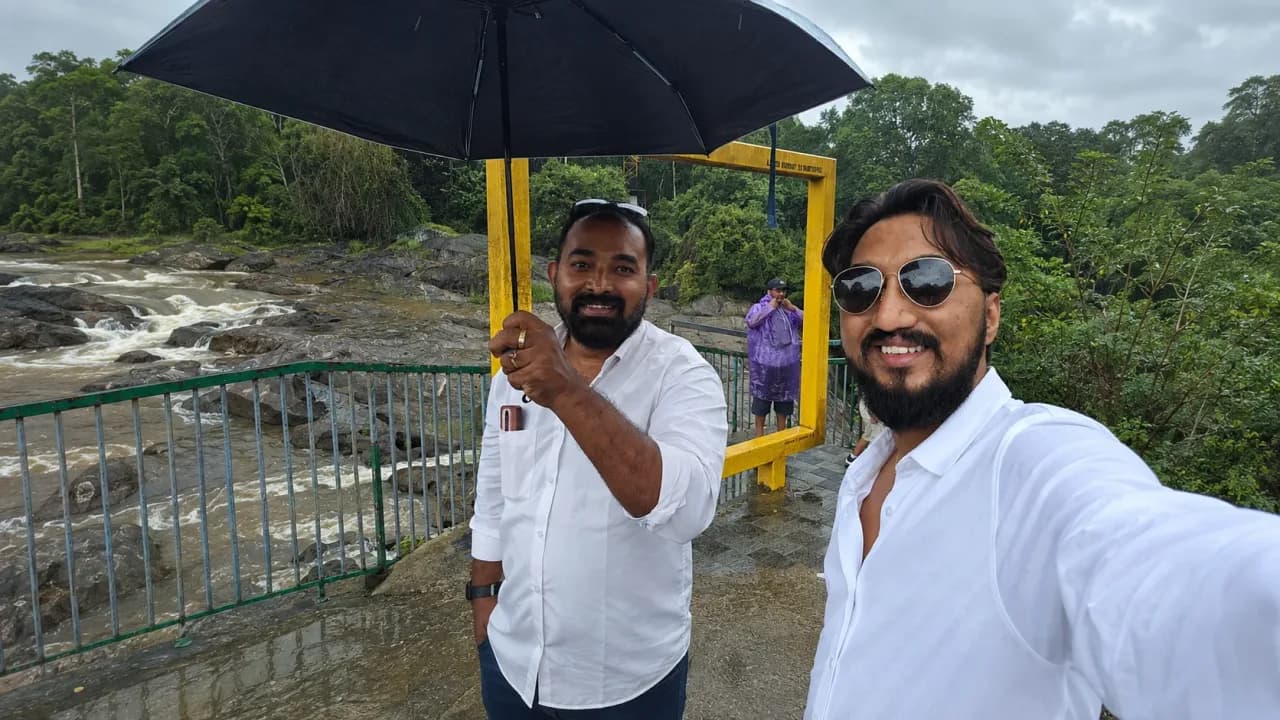
One Final Drive With Driver Bhaiya
We returned to the cab for the last time.
From the Mattancherry/Fort Kochi area, reaching Ernakulam Junction can take roughly 30–60 minutes depending heavily on traffic.
We didn't have unlimited time.
So there were no more stops.
No more waterfalls.
No more magnets.
No more food.
Straight to the railway station.
As we drove, the mood inside the car changed.
This was the same driver bhaiya who had travelled with us through so much of Kerala.
He had taken us from one destination to another.
Waited while we took endless photographs.
Recommended restaurants.
Helped with our pictures and videos.
Navigated rain.
Driven through mountains.
And now he was taking us to the place where our journey together would end.
We wanted to give him something small as a memory.
So before saying goodbye, we gave him a keychain as a little token from us.
Nothing expensive.
Nothing elaborate.
Just something to say:
Thank you for being part of our journey.
We said goodbye, collected our luggage and entered the station.
Back Where This Kerala Story Had Begun
It was still raining.
We were wet.
Our luggage was wet in places.
And when we reached the platform, our train was already standing there.
Interestingly, it was still almost empty.
Only a few passengers had boarded.
After spending half the afternoon fighting Kerala's rain, we desperately wanted dry clothes.
So we improvised.
We hung a curtain around our berths, created our own little changing area and changed into dry clothes inside the train.
Travel teaches you many skills.
Apparently temporary interior design is one of them.
Once everyone was finally dry, we settled into our seats.
And for the first time that day...
There was nowhere else to go.
No attraction waiting.
No ticket to buy.
No road to calculate.
No raincoat to put on.
No driver waiting outside.
We simply sat there.
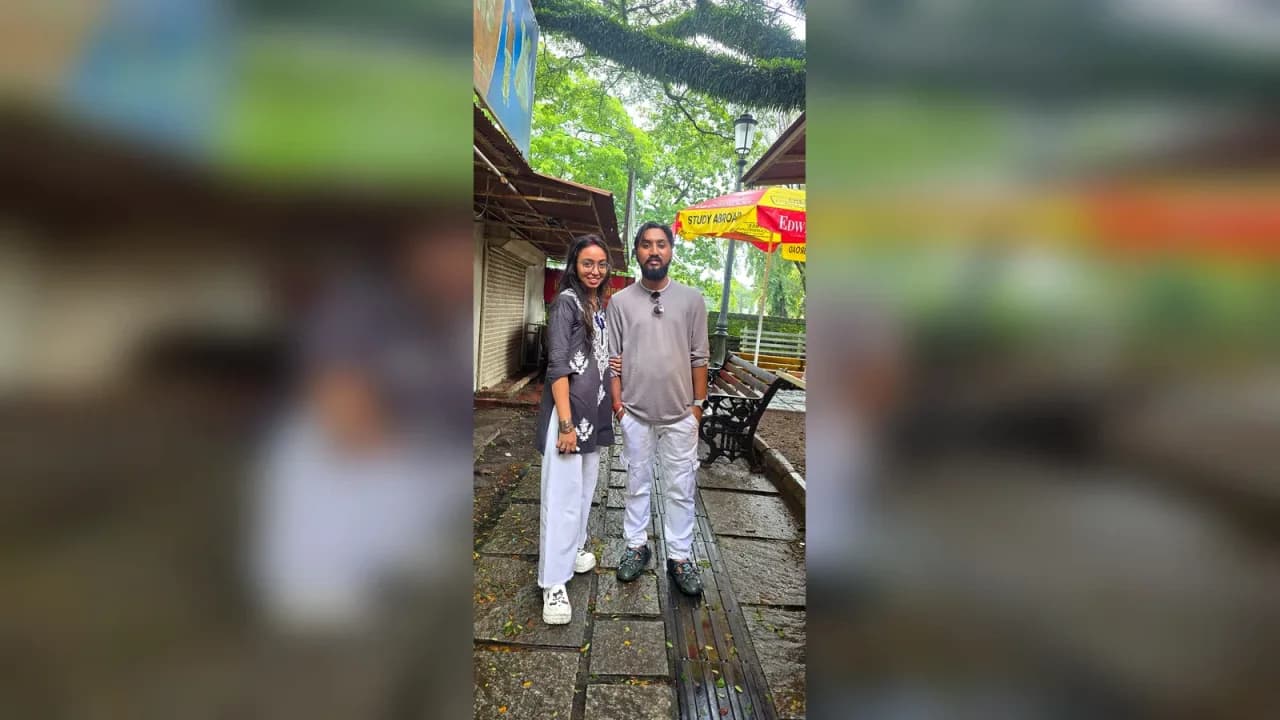
Imperfect trips make stories.
As the departure time approached, we sat quietly inside the train looking back at the photographs and videos we'd collected.
We were tired.
Happy.
A little sad.
And already missing Kerala before we'd even left it.
Outside the window, the rain continued to fall.
It had welcomed us into God's Own Country.
It had followed us through almost every chapter of our journey.
And somehow, on the final evening...
Kerala's rain had come to say goodbye too.
Lock in the takeaway
Kerala Travel Stories
Frequently asked questions
How far is Munnar from Kochi?
Munnar is roughly 125–130 km from Kochi by road, depending on the exact route and destination in Kochi. Under normal conditions, the journey usually takes around four hours, but rain, traffic and road conditions can increase travel time considerably.
Is it safe to travel from Munnar to Kochi during heavy monsoon rain?
Conditions can change quickly during Kerala's monsoon, particularly in mountainous areas where landslides may occur. Travellers should check official weather and road advisories, start early when appropriate, and follow instructions from local authorities rather than relying only on a fixed itinerary.
What are the best places to visit in Fort Kochi?
Popular attractions include Fort Kochi Beach, St. Francis Church, the Chinese fishing nets, heritage streets and cafés. Nearby Mattancherry adds attractions such as Mattancherry Palace, Jew Street and the Paradesi Synagogue.
Why is St. Francis Church in Kochi famous?
St. Francis Church is one of Fort Kochi's most important historic landmarks. Portuguese explorer Vasco da Gama was initially buried there after his death in Kochi in 1524 before his remains were later transferred to Portugal.
What is Mattancherry Palace?
Mattancherry Palace, popularly known as the Dutch Palace, is a historic palace in Kochi. It was originally built by the Portuguese in the 16th century and presented to the Raja of Kochi before later renovations by the Dutch gave it its popular name.
What can you see inside Mattancherry Palace?
The palace is known particularly for its remarkable Kerala murals. Visitors can also see portraits, royal artefacts, ceremonial objects and exhibits connected with the rulers and history of the Kingdom of Cochin.
What is Jew Street in Kochi famous for?
Jew Street in Mattancherry is part of Kochi's historic Jewish quarter. It is known for its heritage buildings, antique shops, handicrafts, spice stores, cafés and proximity to the historic Paradesi Synagogue.
Can Fort Kochi and Mattancherry be explored on the same day?
Yes. Fort Kochi and Mattancherry are close enough to combine in a day. However, keeping several hours available is better if you want to properly explore the churches, palace, synagogue, heritage streets, waterfront and markets rather than rushing between them.
Was choosing Fort Kochi Beach during the rain worth it?
It gave us a memorable experience, but in hindsight an indoor museum would have been the more practical choice during such heavy monsoon weather. The strong wind and sea spray made exploring the beach difficult, although it certainly gave us another story to remember.
How did your Kerala trip end?
After exploring Kochi and Mattancherry, we headed to Ernakulam railway station, said goodbye to our driver bhaiya and boarded our evening train. Sitting inside in dry clothes while the rain continued outside was a bittersweet ending to an unforgettable Kerala journey.