
Listen to this article
Checking audio support
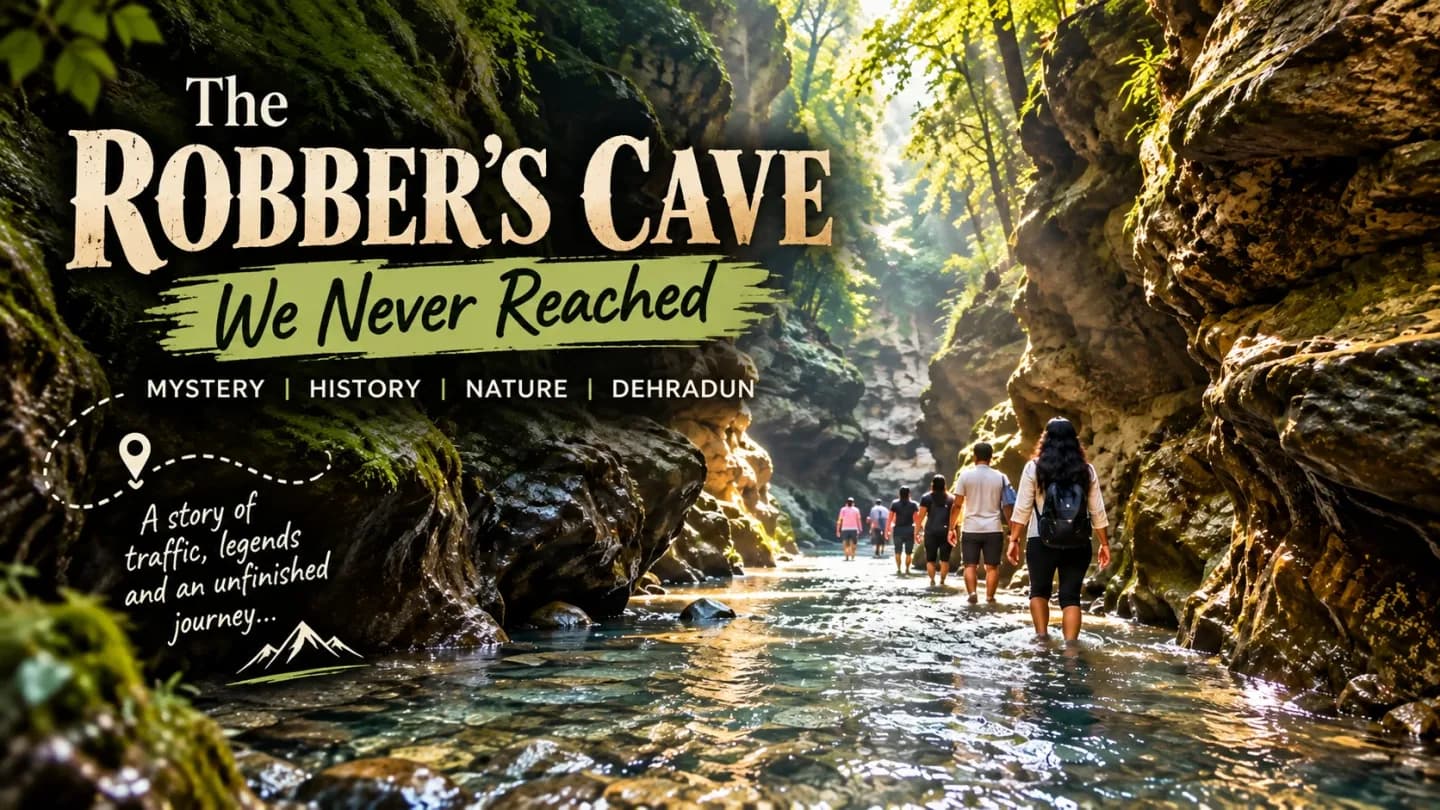
The Robber’s Cave We Never Reached
Some travel stories are about the places we reach.
And then there are those about the places we almost reach.
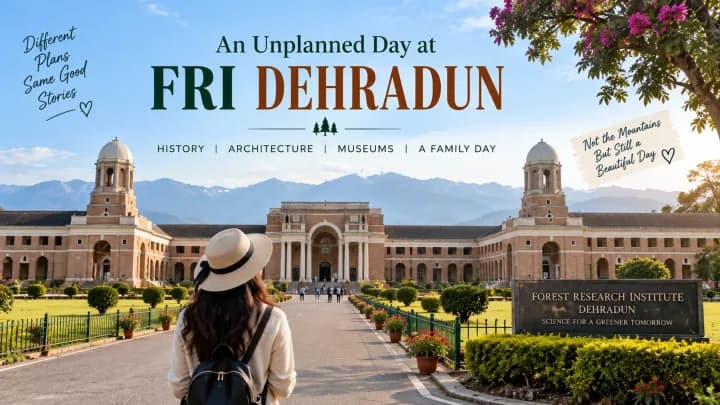
After spending time at the Forest Research Institute in Dehradun, clicking photographs, making videos and finally leaving because the canteen was closed, we still had time left in the day. So we decided to head towards another famous place in Dehradun—Robber’s Cave, locally known as Guchhupani.
On the map, it didn't look like a difficult plan at all.
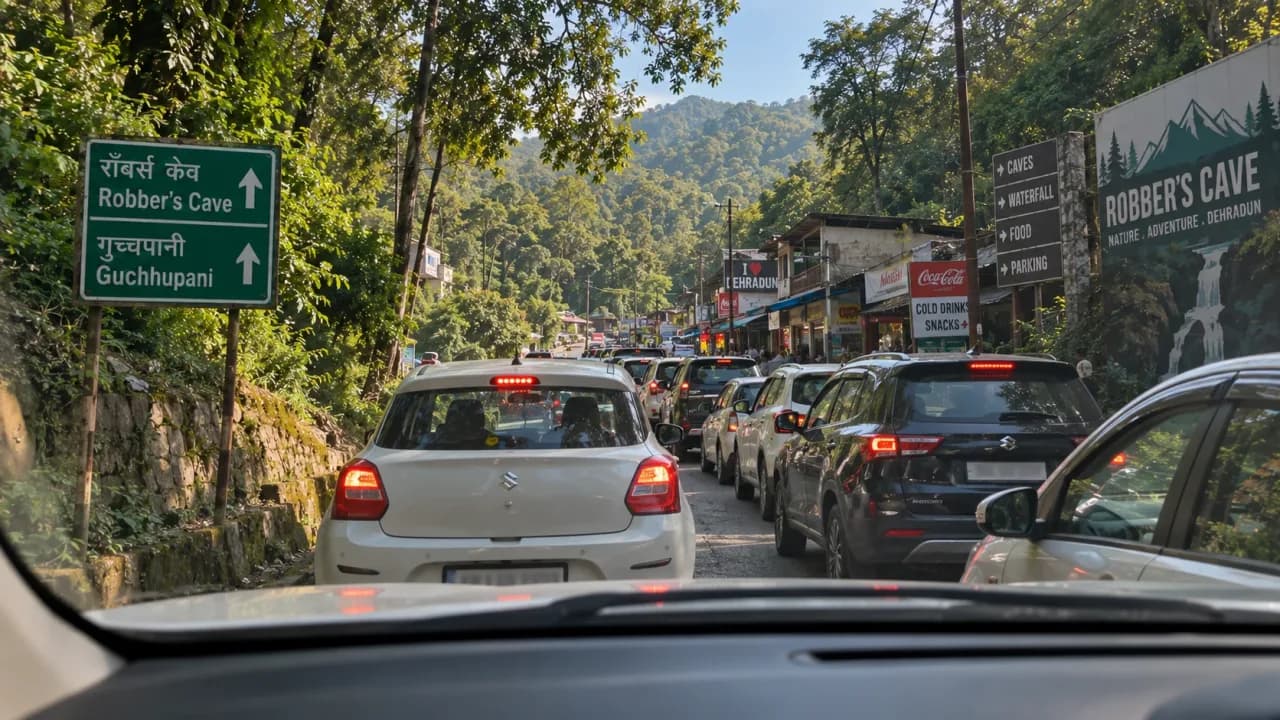
From where we were, the journey ahead looked short. At one point, what should have taken us roughly 10 minutes turned into an endless line of vehicles.
Ten minutes became thirty.
Thirty became an hour.
And eventually, we had spent somewhere around one to one-and-a-half hours sitting in traffic.
We kept hoping the road would clear.
It didn't.
Cars were barely moving, and despite spending all that time waiting, we still weren't able to reach Robber's Cave.
Finally, we had to accept it.
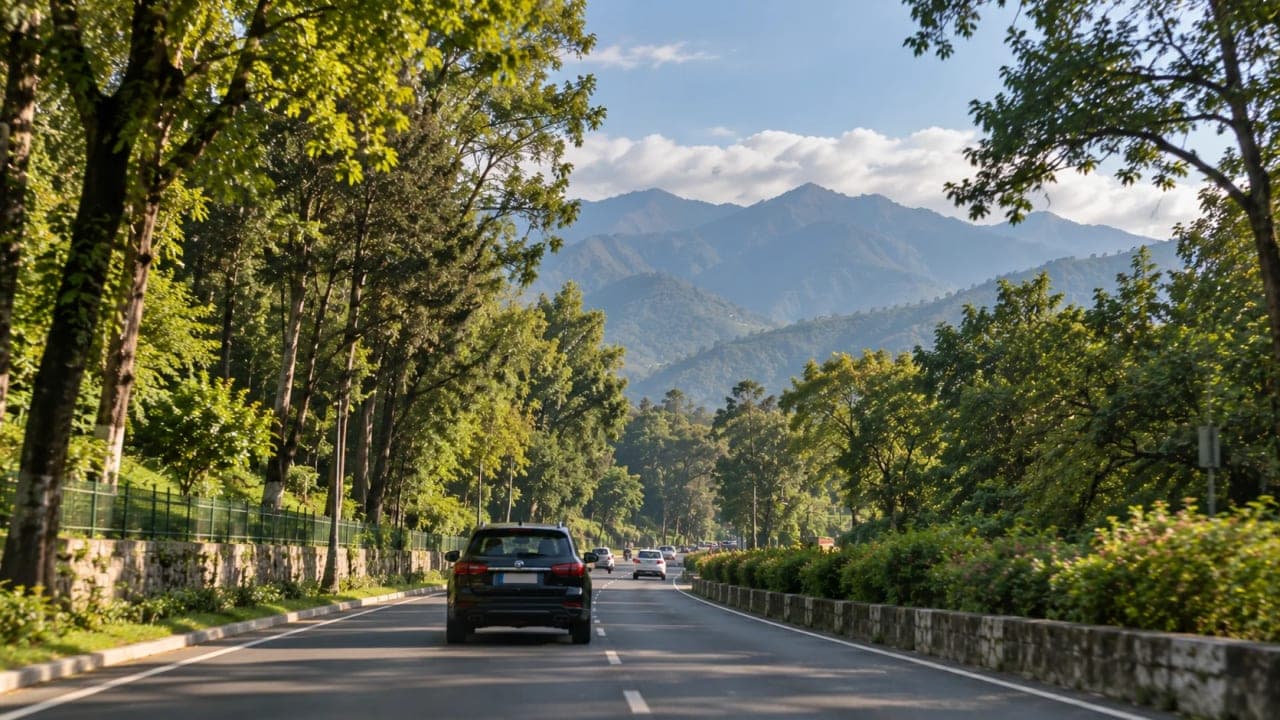
This wasn't happening today.
So we turned the car around.
Another plan cancelled on the same long weekend.
But strangely, not reaching Robber's Cave made me even more curious about it.
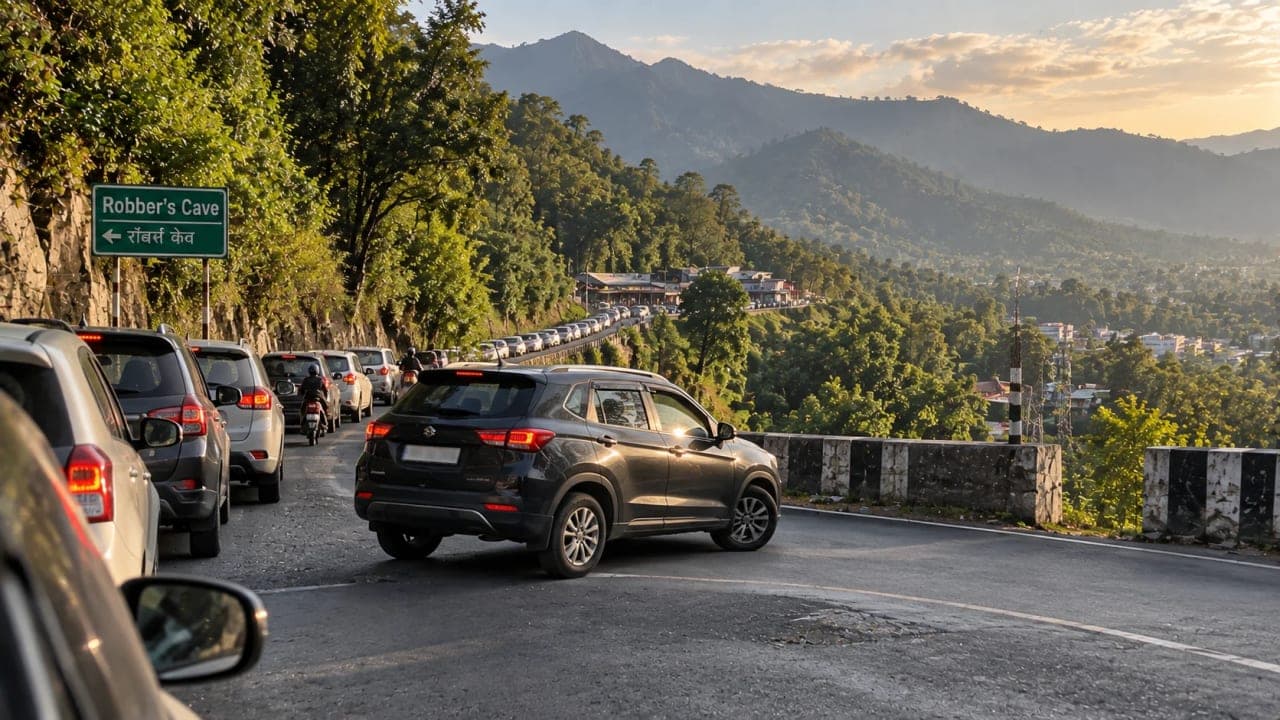
What exactly was hidden at the end of that traffic?
Why is a natural gorge in Dehradun called Robber's Cave?
Why does water supposedly disappear inside it?
Were robbers actually hiding there?
And is it really a cave at all?
The answers are much more interesting than I expected.
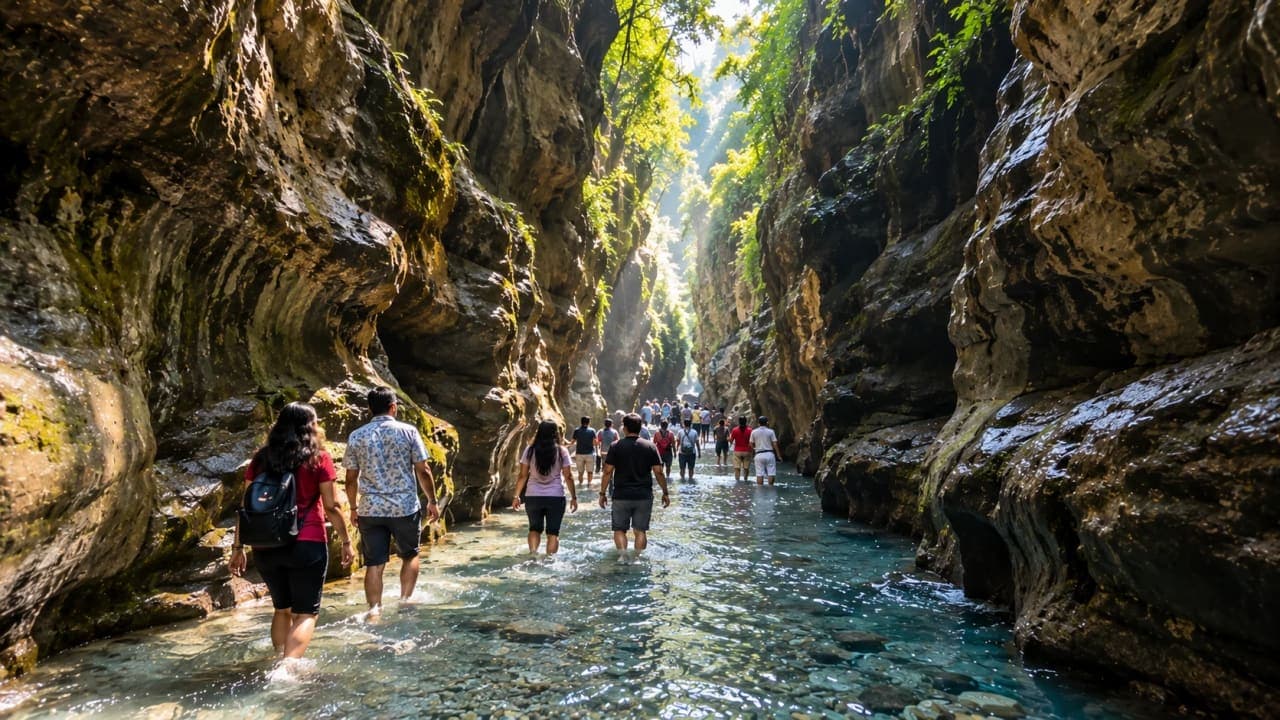
Robber's Cave Is Actually Guchhupani
Robber's Cave is located near Anarwala village and Garhi Cantt in Dehradun, Uttarakhand, roughly 8–9 kilometres from central Dehradun. Dehradun's municipal information describes it as being about 8 km from the city centre, while Uttarakhand Tourism similarly places it around 9 km from the heart of Dehradun. nndehradun.uk.gov.in
Gucchupani Robbers' Cave
4.3Tourist attraction
But Robber's Cave isn't its traditional local name.
Locally, it is known as Guchhupani or Gucchupani.
And once you learn what happens to the water here, that local name starts feeling much more appropriate than Robber's Cave.
This isn't the kind of cave where you simply walk into a dry, dark chamber.
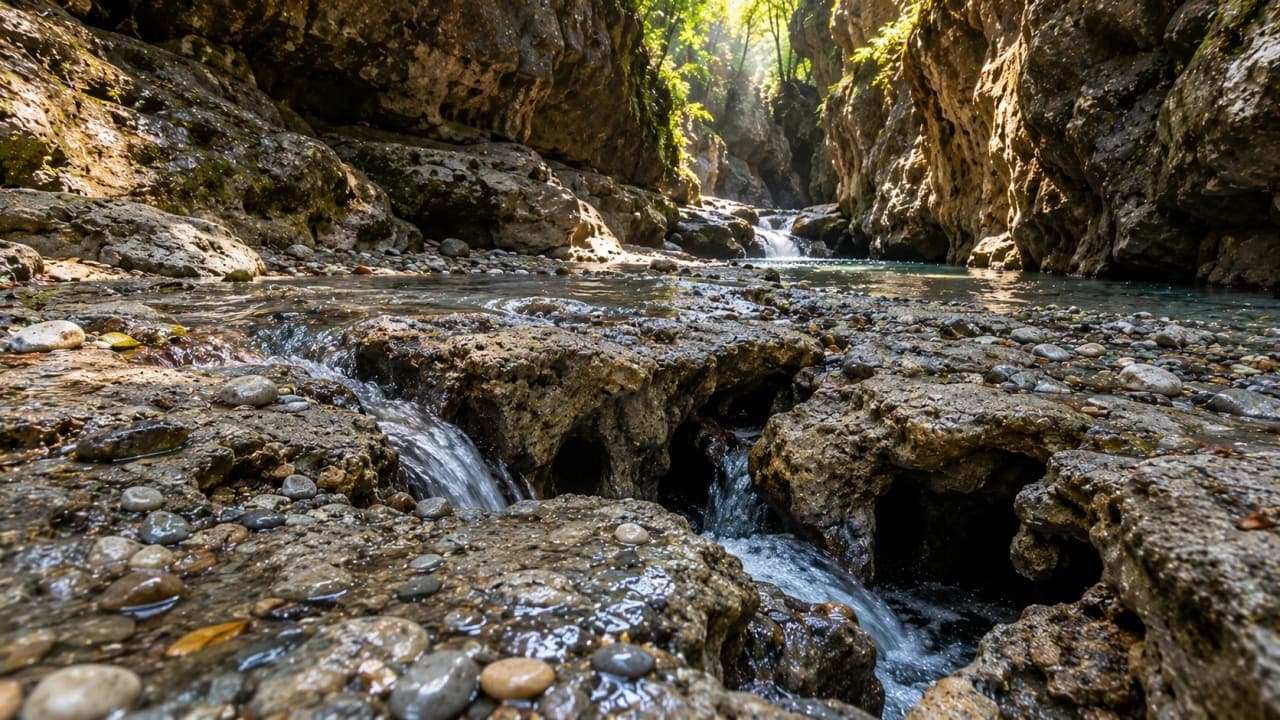
A stream actually flows through the narrow rocky passage.
Visitors roll up their trousers, step into the cold water and walk between towering rock walls as the stream continues beneath their feet.
Uttarakhand Tourism describes it as a natural cave with a subterranean river, where visitors can wade through the water towards a small waterfall. Uttarakhand Tourism
That alone would make the place unusual.
But then the water starts playing tricks.
The River That Apparently Disappears
This is the mystery that made me most curious about Guchhupani.
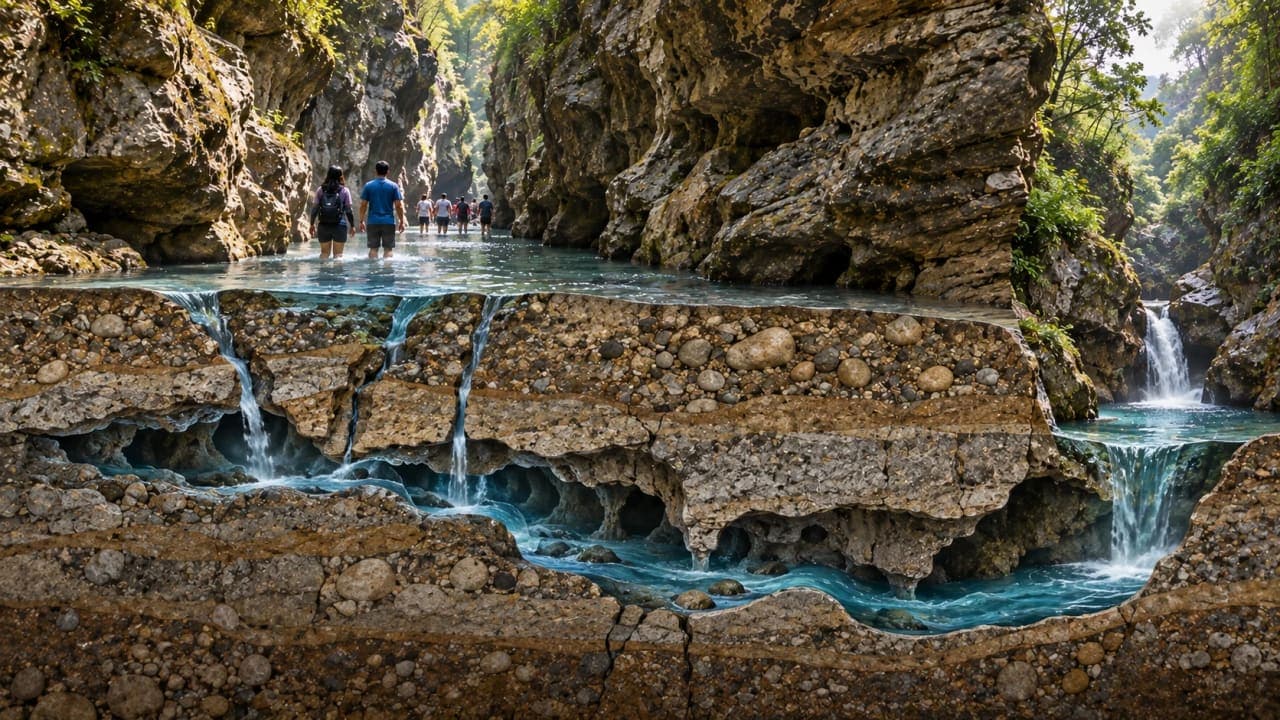
At certain points, the flowing water seems to disappear underground.
You can be following the stream through the gorge and then suddenly the visible flow vanishes into the rocky ground.
Walk a little further...
and the water appears again.
The Dehradun district administration itself describes Robber's Cave as a place where water suddenly disappears from sight, travels underground and reappears a few yards later as a stream. Dehradun District
Imagine seeing that before anyone explained the geology to you.
A river is flowing.
Then it isn't.
Then, a short distance later, it is flowing again.
It isn't difficult to understand how a natural phenomenon like this could collect stories and mystery around it.
But fortunately, this particular mystery doesn't require anything supernatural.
Nature already has a perfectly fascinating explanation.
The Science Behind the Disappearing Water
Robber's Cave sits within the geological landscape of the Doon Valley, where flowing water has worked on rock and sediment over immense periods of time.
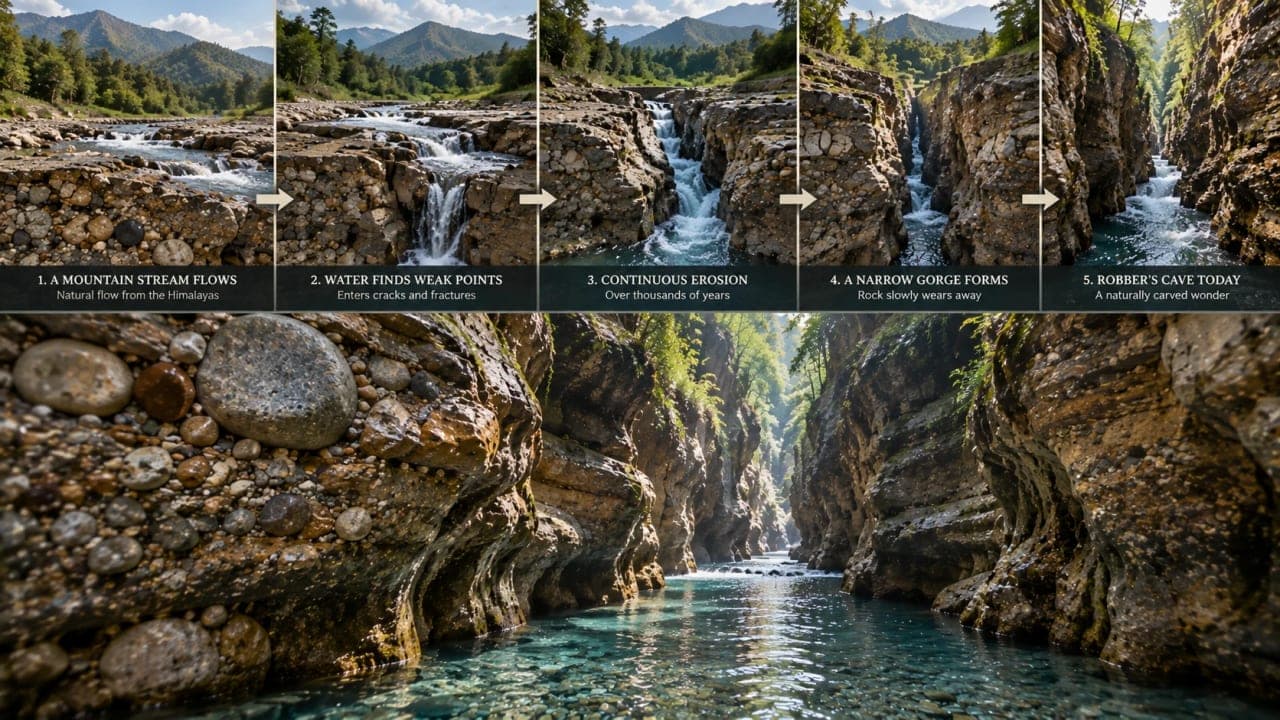
The formation is commonly described as an extremely narrow gorge developed in calcite-cemented conglomerate or conglomerate-limestone of the Dehra plateau. A specialist cave record goes one step further and points out that Guchhupani isn't really a classic enclosed cave for much of its length—it is better understood as a narrow, roofless or partly open gorge cut deeply into the rock. Grotto Map
That distinction is actually quite interesting.
We call it Robber's Cave.
But geologically, what you're walking through is largely a dramatic narrow gorge.
Water continually follows weaknesses and openings within rock. Over long periods, erosion enlarges cracks and channels. In a landscape where water can enter porous material, fractures or underground passages, part of a surface stream can temporarily travel below ground.
Then, when that underground channel meets the surface again, the water reappears.
So the disappearing stream isn't vanishing.
It is taking a route we can't see.
And somehow I find the scientific explanation even better than the mystery.
A 600-Metre Passage Carved by Water
Robber's Cave is generally described as being about 600 metres long and divided into two main sections. Sources also describe a waterfall of roughly 10 metres within the formation. Wikipedia
Six hundred metres doesn't sound enormous until you imagine walking much of it through flowing cold water between narrow rock walls.
This is part of the reason the place is particularly popular during warmer months.
You aren't simply looking at the stream.
You are walking in it.
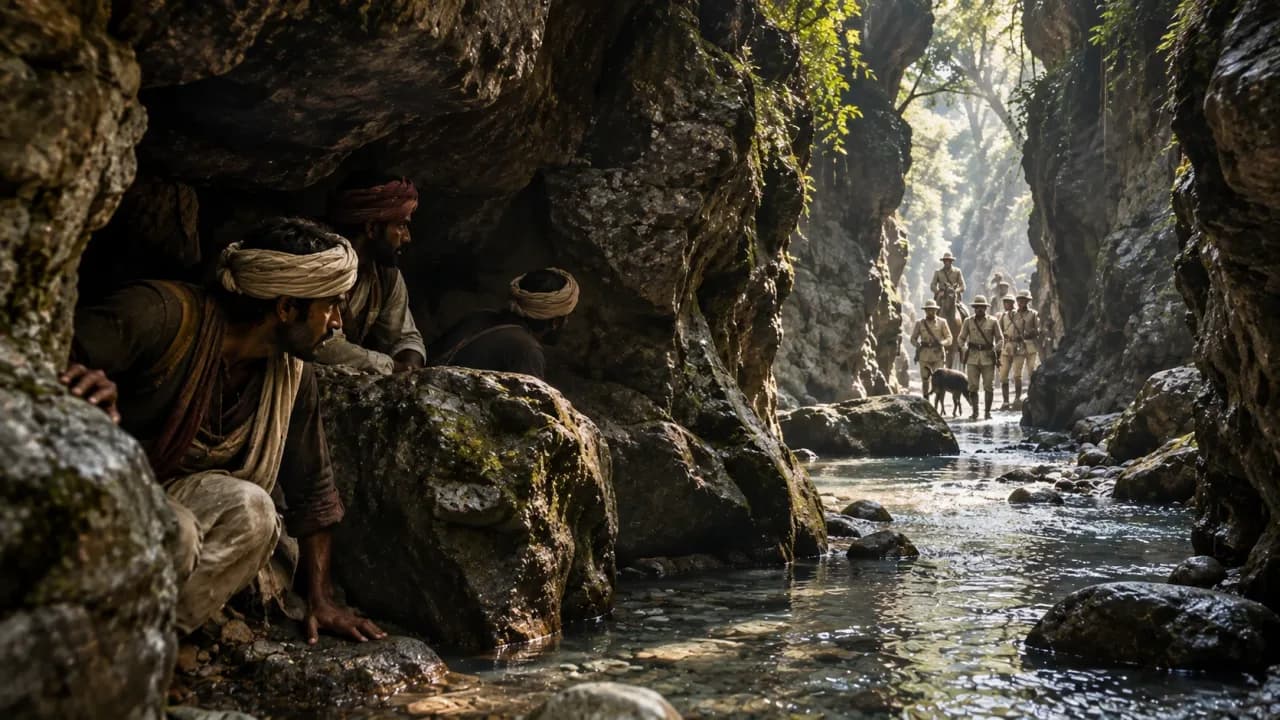
The water, high rock faces, filtered sunlight and echo inside the narrow gorge create the feeling of entering a little world hidden from the city outside.
Which brings us to the obvious question.
If the local name is Guchhupani...
who brought the robbers into the story?
How is it so far?
Vote with other readers
Why Is It Called Robber's Cave?
This is where documented geology gives way to local legend.
The most repeated story goes back to the British colonial period.
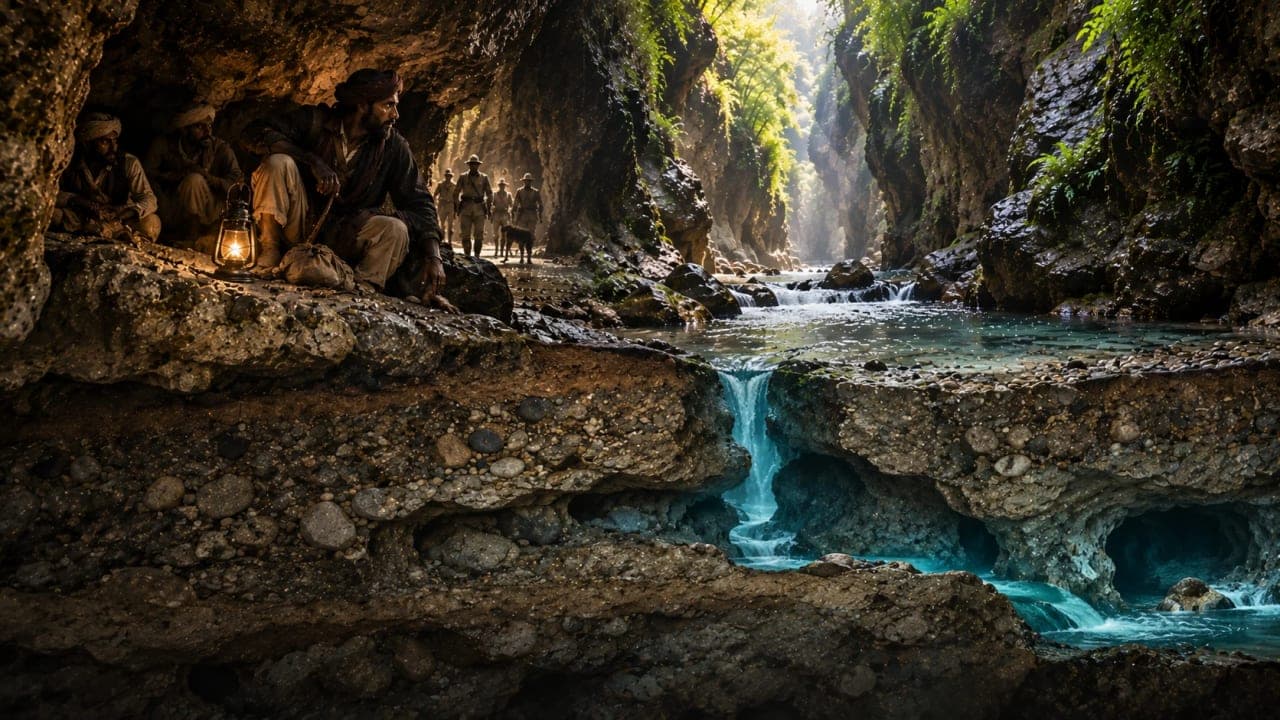
According to local tradition, robbers or dacoits used the narrow passages around Guchhupani as a hideout after committing robberies. The unusual terrain apparently made it an excellent place to disappear from pursuing authorities.
Think about the landscape from the perspective of someone trying to hide.
A narrow gorge.
Rock walls.
Water.
Hidden passages.
A stream that disappears underground.
Natural turns and confined spaces.
No modern roads, tourist stalls or crowds.
If you didn't know the terrain, following someone inside could have been difficult.
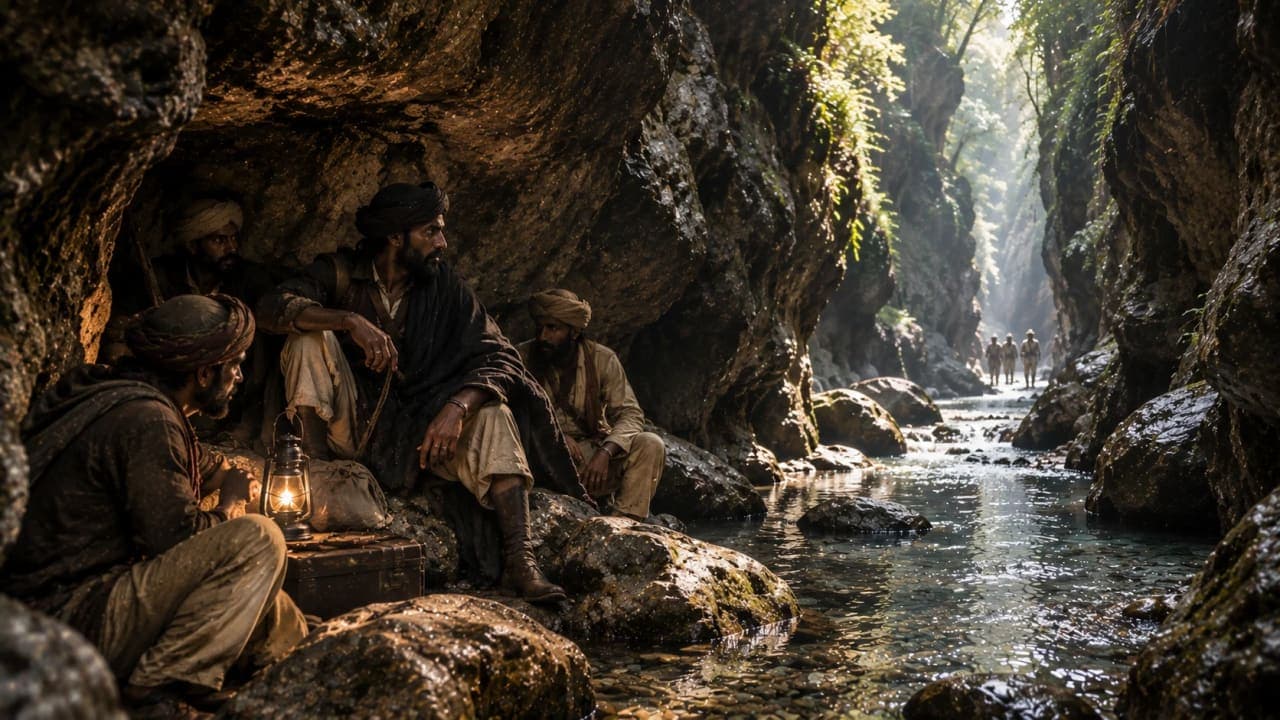
That is supposedly why the British began referring to the place as Robber's Cave. The same explanation is repeated in several modern accounts of the site. Chal Banjare
But there is an important distinction.
We should call this a legend, not proven history.
There doesn't appear to be strong archaeological or contemporary documentary evidence demonstrating exactly which robbers regularly occupied the cave or proving the colourful stories told about them. The association survives mainly through local oral tradition. Chal Banjare
And naturally, once a place is called Robber's Cave, legends tend to grow.
Was Sultana Daku Really Hiding Here?
One version of the story gets even more specific.
Some local and travel accounts connect Guchhupani with the famous outlaw Sultana Daku, claiming that he and members of his gang used the area to hide from British authorities and perhaps conceal stolen goods.
It's a wonderfully cinematic story.
A notorious dacoit.
British police searching for him.
A mysterious gorge.
Water disappearing beneath their feet.
The robber knowing exactly which passage to follow while his pursuers lose track.
You could practically write the movie yourself.
There is just one problem.
Reliable historical evidence firmly connecting Sultana Daku specifically with Robber's Cave is difficult to establish. Some modern sources repeat the connection, but it should be treated as local folklore rather than confirmed historical fact. gucchupani.mahsua.com
That doesn't make the story worthless.
Folklore tells us how communities remember places.
The gorge genuinely looks like somewhere people could hide.
The historical association with robbers may have some basis.
But separating “people say this happened” from “we know this happened” makes the story much more interesting, not less.
Was There Really a Fort Inside the Cave?
There is another curious detail.
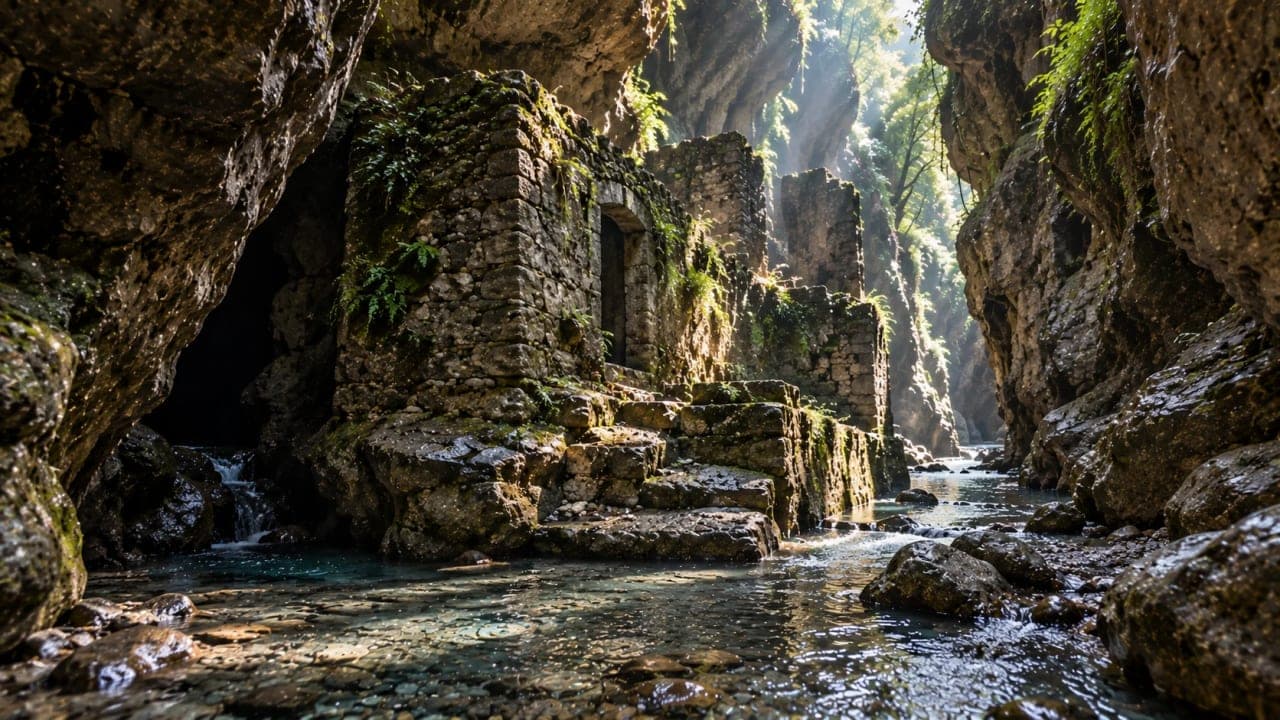
Descriptions of Robber's Cave mention the remains of a broken wall or fort-like structure in the central part of the formation. Wikipedia
Naturally, a ruined wall inside somewhere called Robber's Cave sounds like the beginning of another mystery.
Who built it?
Was it connected with the robbers?
Was it defensive?
Unfortunately, the evidence doesn't give us a neat dramatic answer.
The surviving structure is mentioned in descriptions of the gorge, but it shouldn't automatically be turned into a “robbers' fort” without historical evidence.
Sometimes a ruin is simply a clue whose full story hasn't survived.
And Robber's Cave already has enough genuine mysteries without inventing another one.
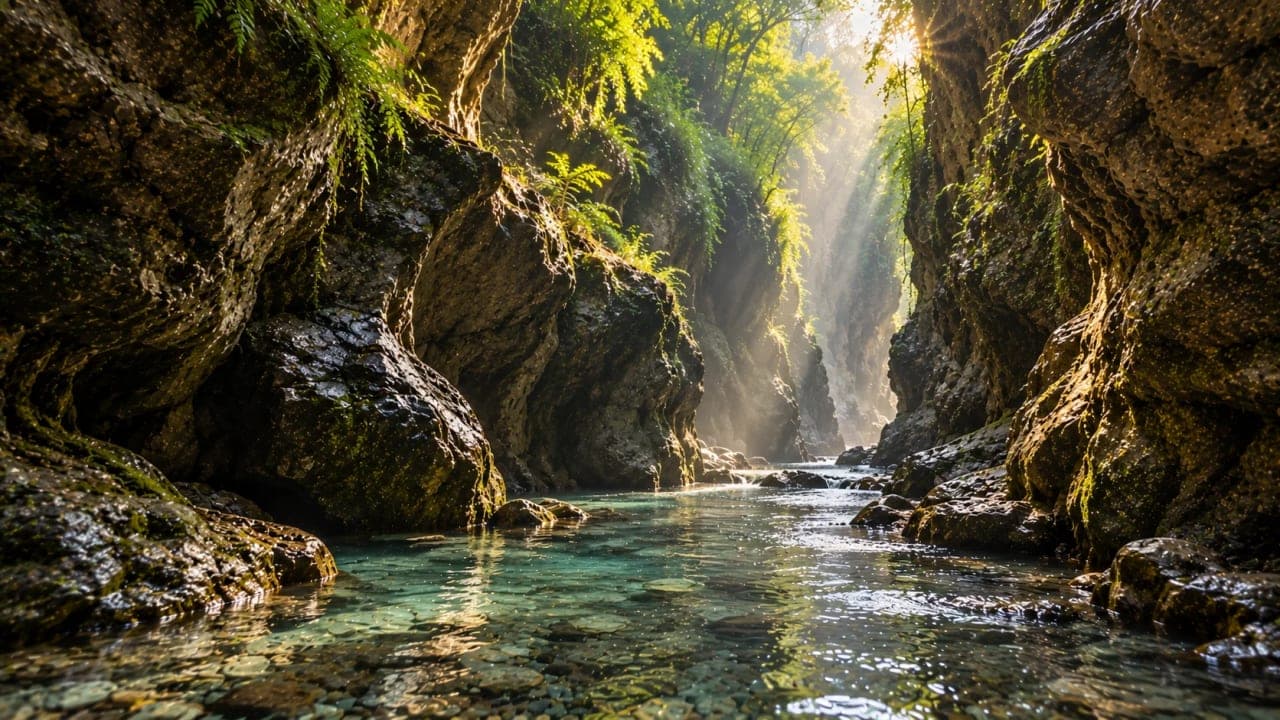
Why Does the Place Feel So Different From the City Outside?
Perhaps the real magic of Guchhupani has nothing to do with robbers.
It's the landscape.
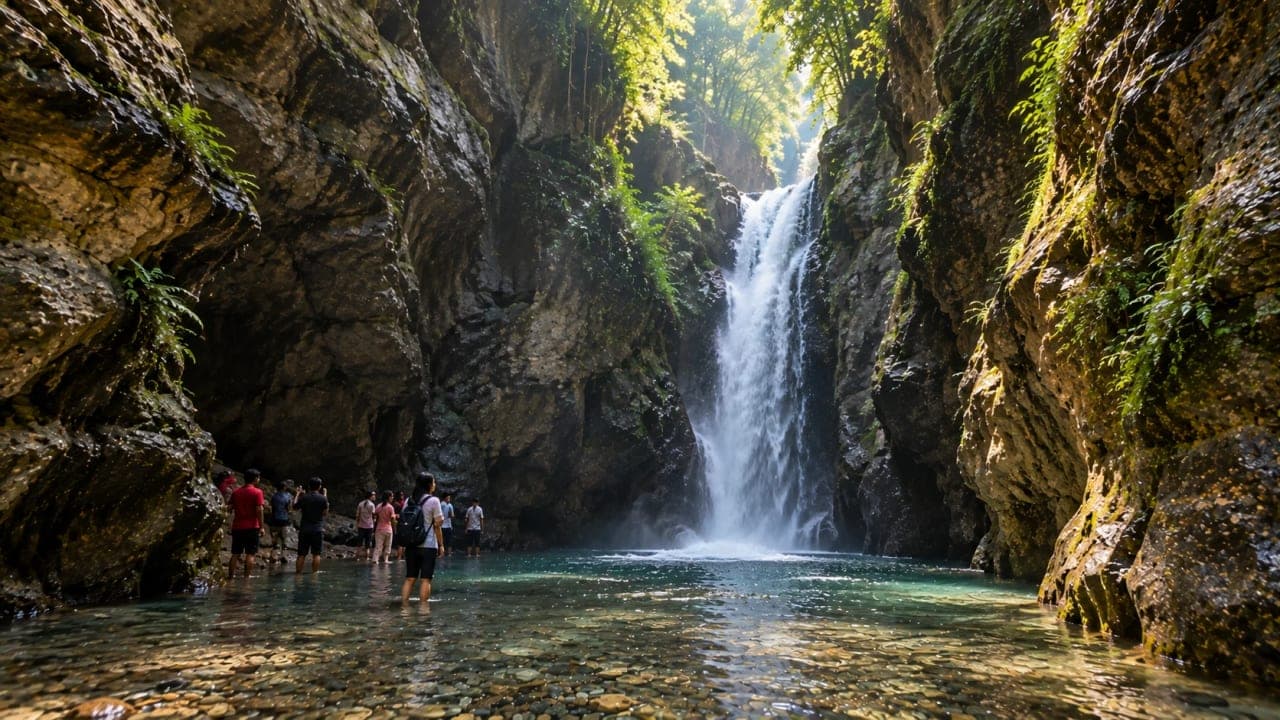
You're only several kilometres from central Dehradun, yet inside the gorge, the experience changes completely.
The rock walls narrow around you.
The temperature feels different.
Your feet are in flowing water.
Sunlight reaches down from above in patches.
The sound of the stream echoes between the rocks.
Then the water disappears.
Then it comes back.
Further along, there is a waterfall.
Uttarakhand Tourism describes the experience as entering a mysterious world deep in the forest, and I can understand why the site became such a popular picnic and summer destination. Uttarakhand Tourism
Nature has essentially created its own little adventure trail.
And That Explains the Traffic We Met
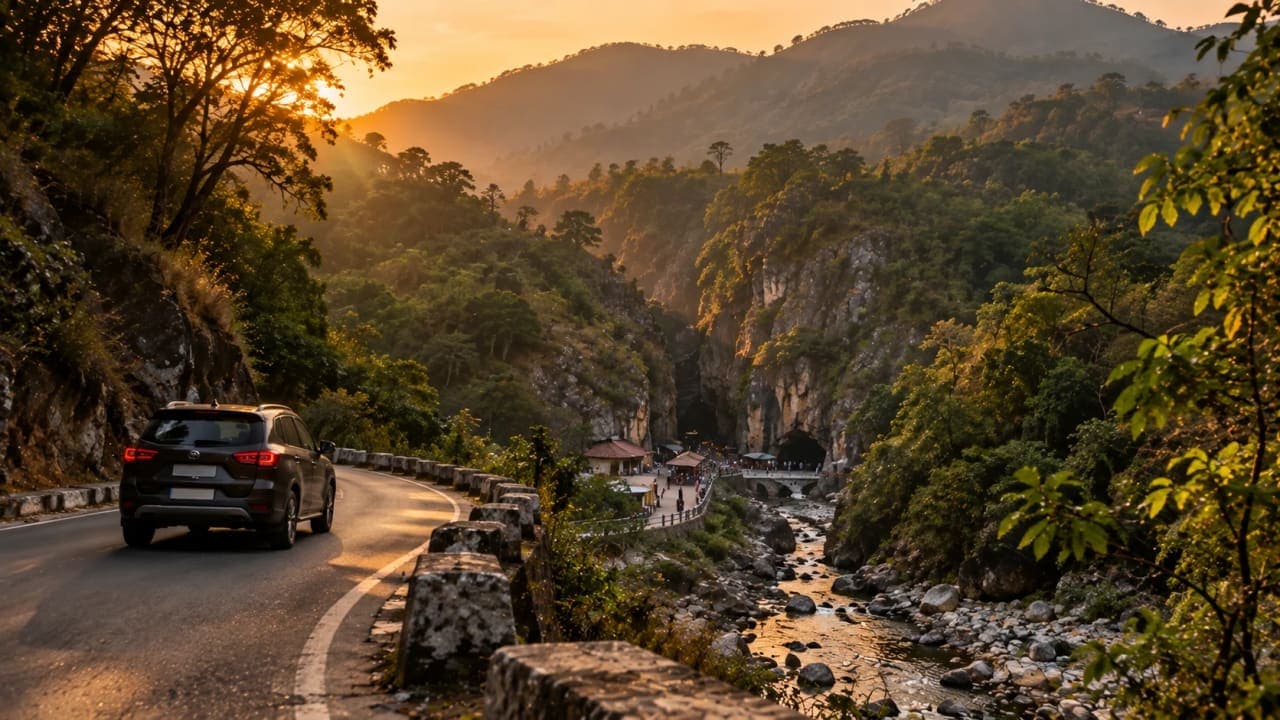
When we were sitting in traffic, I kept wondering:
Where has everyone suddenly come from?
After learning how popular Robber's Cave is, the traffic makes much more sense.
Guchhupani is one of Dehradun's best-known natural attractions. It is close enough to the city for a relatively short outing, popular with families, students and groups of friends, and particularly appealing when people want to escape the heat by walking through cold water. Dehradun's municipal authority describes it as a popular picnic destination attracting young visitors and adventure seekers. nndehradun.uk.gov.in
So what looks like a short journey on a map can become something completely different when a large number of visitors head towards the same narrow tourist area.
We learned that part without ever seeing the cave.
What We Would Have Done If We Had Reached
Had the traffic cooperated, the experience would have been quite different from FRI.
At FRI, we were walking through enormous lawns and heritage corridors.
At Robber's Cave, we would have been walking through water.
Visitors generally enter the gorge on foot and wade upstream. Because the route is wet and rocky, suitable footwear matters. Uttarakhand Tourism notes that slippers can be rented near the entrance. Uttarakhand Tourism
And I already know what would have happened with us.
The Insta360 Flow 2 Pro would have come out again.
Although after finally getting it wet near a stream, I suspect our confidence from FRI would have disappeared faster than Guchhupani's water.
Some experiments are better saved for dry land.
The Mystery Is Real—Just Not Supernatural
The more I read about Robber's Cave, the more I realised that the most interesting part isn't deciding whether its legends are true.
There are actually three different stories layered together.
The first is geology.
Water has carved a narrow gorge through the landscape, using cracks, softer material and underground channels to create the disappearing-and-reappearing stream.
The second is history—or at least historical memory.
Generations have passed down stories that robbers used these hidden passages to escape authorities during the British period.
And the third is folklore.
Named outlaws, hidden loot and mysterious escapes have gradually become attached to the place.
Together, those stories transformed an unusual geological formation into Robber's Cave.
Nature created the gorge.
People created the legend.
The Place We Still Haven't Seen
Eventually, after sitting in traffic for around an hour to an hour and a half, we stopped hoping that the line would suddenly disappear.
We had already spent far longer than expected covering what should have been a very short distance.
And we still hadn't reached the cave.
At some point, travelling becomes about knowing when to stop trying.
So we found an opportunity to turn around.
And we left.
No cold stream.
No narrow gorge.
No waterfall.
No disappearing water.
No robbers either—which, admittedly, was probably for the best.
After our mountain plans had already failed and FRI's canteen had denied us lunch, Robber's Cave became the third little reminder that this particular long weekend wasn't going to follow an itinerary very obediently.
But I don't think this story ends with “we couldn't reach it.”
Because now I actually want to return.
Not simply because Robber's Cave is famous.
I want to walk through that water and see the point where the stream apparently disappears.
I want to stand between those narrow rock walls and understand why generations of people could so easily imagine robbers hiding there.
I want to see how much of the legend makes sense once you're actually inside the landscape that created it.
So Robber's Cave remains unfinished business for us.
We drove towards it.
We waited.
We tried.
We turned around.
And somewhere beyond that traffic was a 600-metre gorge, a disappearing stream, a waterfall and a story that has survived from Dehradun's colonial past.
We didn't get there that day.
Maybe that's exactly why I haven't stopped being curious about it.
Lock in the takeaway
Dehradun Travel Stories
Frequently asked questions
Where is Robber’s Cave in Dehradun?
Robber’s Cave, locally known as Guchhupani or Gucchupani, is located near Anarwala and Garhi Cantt in Dehradun, Uttarakhand. It is roughly 8–9 km from central Dehradun.
Why is Robber’s Cave called Guchhupani?
Guchhupani is the traditional local name associated with the site. The place is particularly famous for water that disappears underground at certain points before reappearing, which has helped give the gorge its mysterious reputation.
Why is it called Robber’s Cave?
According to a popular local story, robbers or dacoits used the narrow gorge and its hidden passages as a hideout during the British period. The difficult terrain supposedly helped them escape from authorities. This is widely repeated as local tradition rather than firmly documented historical fact.
Did robbers actually hide inside Robber’s Cave?
Stories of robbers hiding at Guchhupani are part of the site’s long-standing folklore. The landscape certainly looks suitable for hiding, but there is limited reliable historical evidence identifying specific gangs or proving all the stories associated with them.
Is Sultana Daku connected with Robber’s Cave?
Some local stories and travel accounts associate the famous outlaw Sultana Daku with Guchhupani and claim that he used the area as a hideout. However, strong historical evidence confirming this connection is difficult to establish, so it is better treated as folklore rather than fact.
Why does the water disappear at Robber’s Cave?
The disappearing water has a natural geological explanation. Water can enter cracks, porous rock and underground channels within the gorge, travel below the visible surface and then emerge again further downstream. The water has not vanished—it has simply taken an underground route.
Is Robber’s Cave actually a cave?
Although it is popularly called a cave, much of Guchhupani is better described geologically as a narrow gorge or canyon-like formation, with sections enclosed or partly enclosed by rock. A stream flows directly through the formation.
How long is Robber’s Cave?
Robber’s Cave is commonly described as extending for approximately 600 metres, with the natural formation divided into two principal sections.
Is there a waterfall inside Robber’s Cave?
Yes. The gorge is also known for a waterfall, commonly described as being around 10 metres high, adding another natural feature to the walk through Guchhupani.
Do you have to walk through water at Robber’s Cave?
Yes. Walking through shallow flowing water is a major part of the Guchhupani experience. The surface can be wet and rocky, so suitable footwear is important. Water levels can also vary depending on weather and season.
What is the best time to visit Robber’s Cave?
Pleasant-weather months are generally comfortable for exploring, while summer is popular because visitors enjoy walking through the cool water. During periods of heavy rain, however, water levels and conditions inside a narrow gorge can change quickly, so local weather and access conditions should always be checked before entering.
How much time should I keep for Robber’s Cave?
Around 2–3 hours is a sensible allowance for reaching the area, walking through the gorge and spending some time around the stream and waterfall. On weekends and holidays, keep extra time because traffic and crowds can significantly affect the visit.