
Listen to this article
Checking audio support
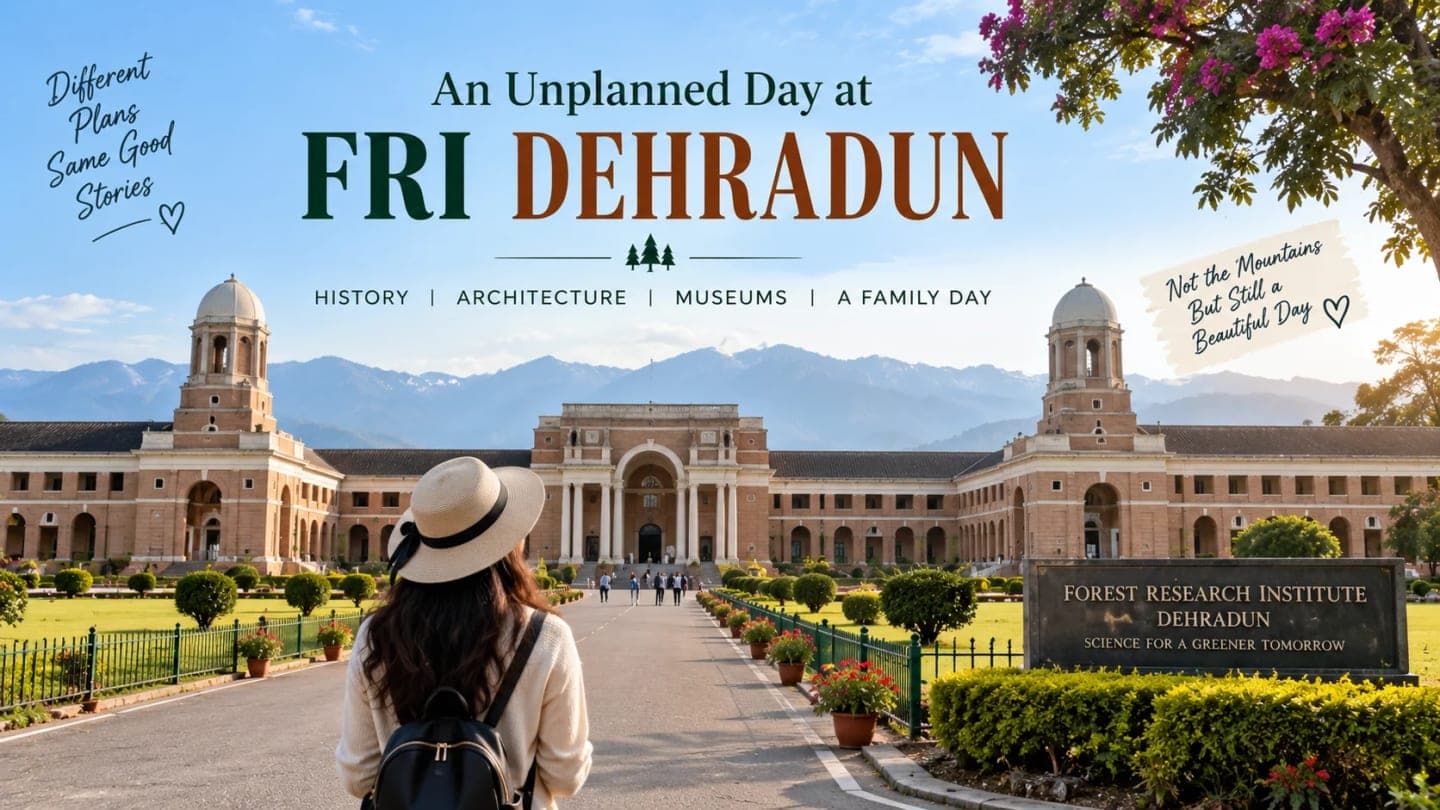
An Unplanned Day at FRI Dehradun
Long weekends and mountains somehow belong together in my mind.
Whenever my husband and I get a few days together, the first thought is usually to go somewhere—preferably towards the mountains, away from the usual routine. This long weekend was supposed to be something like that too. We had different plans and were hoping to spend our time somewhere beautiful in the mountains.
But the trip didn't work out.
For one reason or another, we couldn't make it, which meant our mountain plans were gone and we were going to spend the long weekend in Dehradun itself.
Now, Dehradun isn't exactly a bad place to be stuck in. But when your mind has already travelled to the mountains before your body has even left home, staying back can feel a little disappointing.
We still didn't want to spend the entire long weekend doing nothing.
That was when my husband suggested, “We can go to FRI.”
And that's how the Forest Research Institute, Dehradun, which hadn't been part of our original plan at all, became one of the places we explored that weekend.
My mother-in-law and father-in-law came along with us, and we set out for what became a relaxed family outing—and also the first proper public test of our newly purchased Insta360 Flow 2 Pro gimbal.
Reaching FRI Dehradun
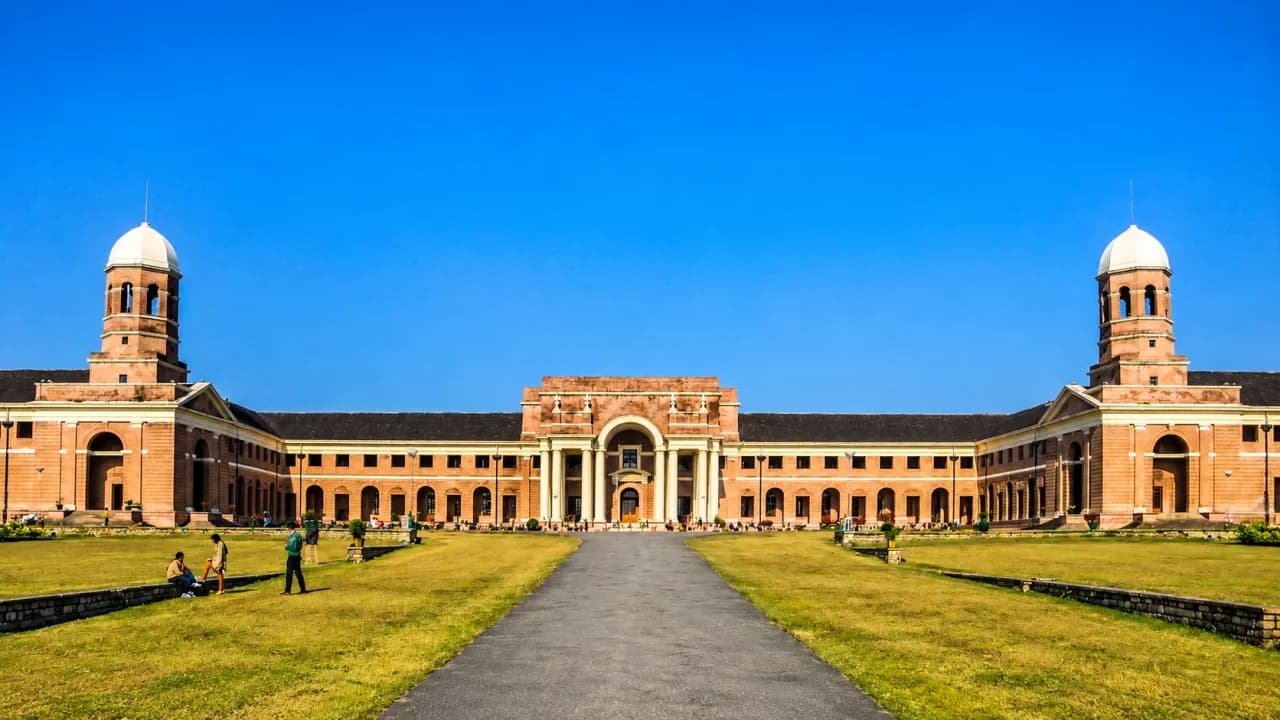
The Forest Research Institute is located at New Forest, Dehradun, Uttarakhand – 248006, in the Doon Valley. It sits on an enormous green campus with the outer Himalayas forming the backdrop. FRI's official information puts the campus at roughly 450–500 hectares, depending on the institutional description being referenced. Forest Research Institute
When we reached the main entrance, we first stopped to get our tickets.
During our visit, we paid ₹100 per person, and because we wanted to take our car inside, we paid another ₹150 for the vehicle.
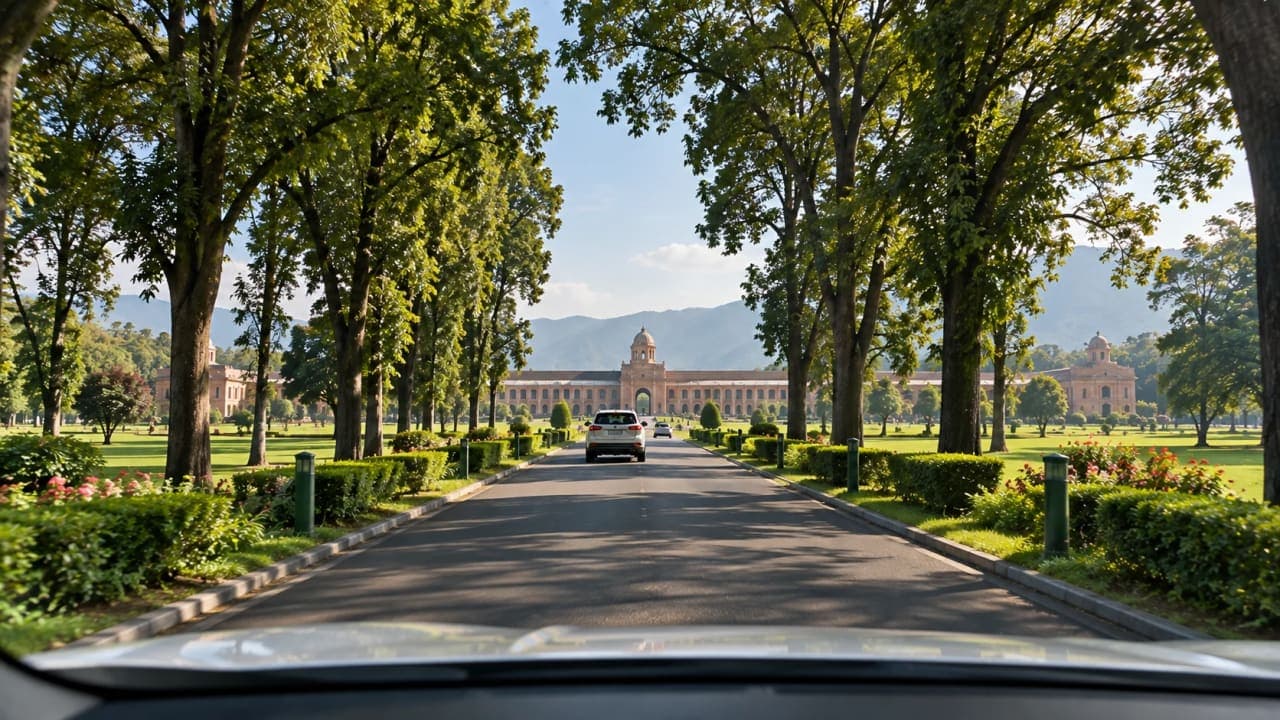
Taking the car inside was especially important for us because the main building and museum are quite a distance from the main entrance.
My father-in-law had suffered a leg fracture last year. Although he can walk now, he still isn't comfortable walking long distances. Since we were visiting together, making him walk all the way from the gate and then walk around the huge building didn't make any sense.
So we took the car in.
And that decision also gave us a better idea of just how large the FRI campus actually is.
The Main Building Is Deep Inside the Campus
After entering through the gate, you don't immediately arrive at the famous building.
You have to go further inside.
As we drove through the campus, there were trees, lawns and large open areas around us. It felt very different from visiting a typical tourist attraction where you buy a ticket, walk through a gate and immediately reach the monument.
Eventually, we reached the area around the main building, parked our car and got down.
And this was where our actual FRI visit began.
The building is difficult to appreciate properly from photographs because of its scale. The long façade, repeated arches, huge columns and enormous open lawns create the kind of symmetry that immediately makes you want to take out your camera.
Which, naturally, is exactly what we did.
FRI Is Much Older Than the Building You See Today
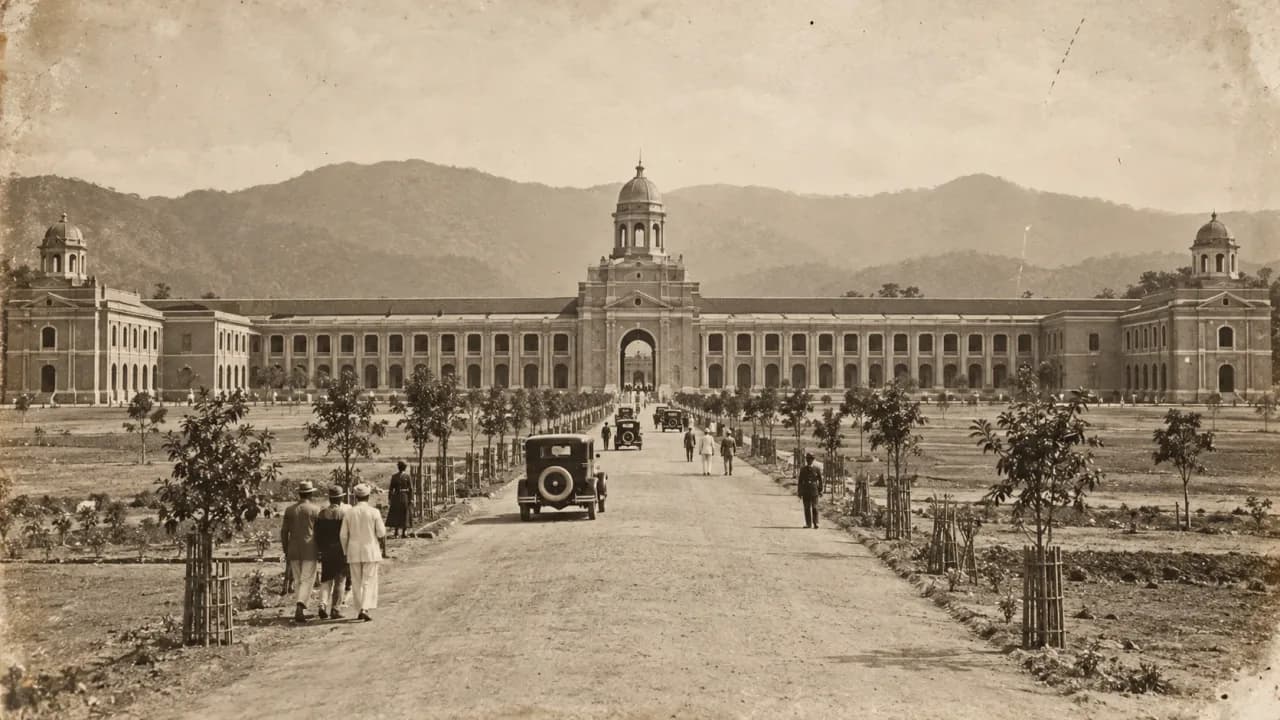
While most tourists recognise FRI because of this grand building, the institution itself is older than the structure.
The Forest Research Institute traces its roots to the Imperial Forest Research Institute and College, established in 1906 to organise and lead forestry research and train forestry personnel. After Independence, it became the Forest Research Institute. In 1988, FRI and its research centres came under the Indian Council of Forestry Research and Education (ICFRE), which operates under India's Ministry of Environment, Forest and Climate Change. Forest Research Institute
The famous building came later.
The present main building was completed and inaugurated in 1929. FRI credits architect C. G. Blomfield with its design and describes the architecture as combining Greco-Roman with colonial and Oriental influences. Forest Research Institute
Its plinth area alone is around 2.5 hectares. Forest Research Institute
That explains why the building seems to stretch endlessly when you stand in front of it.
It wasn't created as a decorative palace or tourist monument. It was designed for a serious scientific institution.
Yet almost a century later, its architecture has become one of the biggest reasons travellers come here.
Why Was the Forest Research Institute Created?
The name tells you part of the answer, but FRI's role is much broader than simply studying trees.
Its history is closely linked with the development of scientific forestry in India and the wider Indian subcontinent. Forest Research Institute
Forests have always been enormously important to India—for timber, biodiversity, medicinal plants, livelihoods, soil protection, water systems and countless forest products. Managing them scientifically requires understanding how trees grow, what diseases affect them, how insects interact with forests, how degraded land can be restored and how forest resources can be used sustainably.
FRI developed as a major centre for that work.
Its present mission includes improving forest productivity and planting stock, rehabilitating wastelands, finding efficient uses for wood and non-wood forest products, and developing environmentally friendly products and processes. Forest Research Institute
That is something worth remembering when visiting.
The building may look like something created for photographs.
But the institute exists for science.
Walking Through Those Famous Corridors
Once inside the main building, we started exploring.
And, predictably, we also started clicking pictures.
A lot of pictures.
FRI makes that very easy.
There are long corridors where the repeated columns seem to continue into the distance. There are enormous arches, high ceilings and beautiful symmetrical frames almost everywhere you turn.
Even if you're not someone who normally pays much attention to architecture, you start noticing it here.
We moved from one part of the building to another, stopping frequently for photographs and videos.
But this time, taking videos was particularly exciting for us because we had brought along our newest travel gadget.
Our Insta360 Flow 2 Pro Finally Left the House
We had recently purchased the Insta360 Flow 2 Pro gimbal, and naturally, after buying it, we had been trying to use it as much as possible.
There was just one problem.
Most of that practice had happened at home.
We had tried its features, played with the controls and experimented with different movements, but using a gimbal around the house isn't quite the same as taking it somewhere and actually trying to create travel content.
FRI became the first place where we properly used it in public.
That was an experience by itself.
Suddenly, instead of testing movements inside a room, we had huge corridors, lawns, arches and an enormous building to work with.
How is it so far?
Vote with other readers
We walked around making videos, experimenting with shots and trying to get smoother movements.
And, as happens whenever you're using a new gadget, there was a little bit of figuring things out as we went.
At home, you can repeat the same shot ten times without thinking about it.
Outside, there are people walking around you while you're simultaneously trying to remember what every button on your new gimbal does.
But that made it fun.
By the end of our visit, we had made plenty of videos—and the Flow 2 Pro had officially completed its first real travel-content outing.
What Is Inside FRI?
FRI isn't only about its façade and corridors.
The institute also has museums dedicated to different areas of forestry. Its museum collections help visitors understand subjects such as timber, forest products, insects, tree diseases and forest management.
The wider campus also contains laboratories, a library, herbarium, plantations and experimental areas used for forestry research. Forest Research Institute
Its botanical history is particularly interesting. FRI's botany division dates to the institution's early years, while the Dehradun Herbarium has even older roots. The institute says the herbarium originated from collections associated with the Forest School and later absorbed the historic Saharanpur Herbarium. Forest Research Institute
So when tourists walk around admiring the building, there is an active world of research and scientific collections behind what they see.
That's what separates FRI from a conventional heritage monument.
It has history, but it isn't merely historical.
It still has a purpose.
Why Does FRI Look So Familiar?
There was another interesting thing about walking around the campus.
Parts of FRI can give you a strange feeling that you've seen them somewhere before.
And there's a good chance you have.
In a movie.
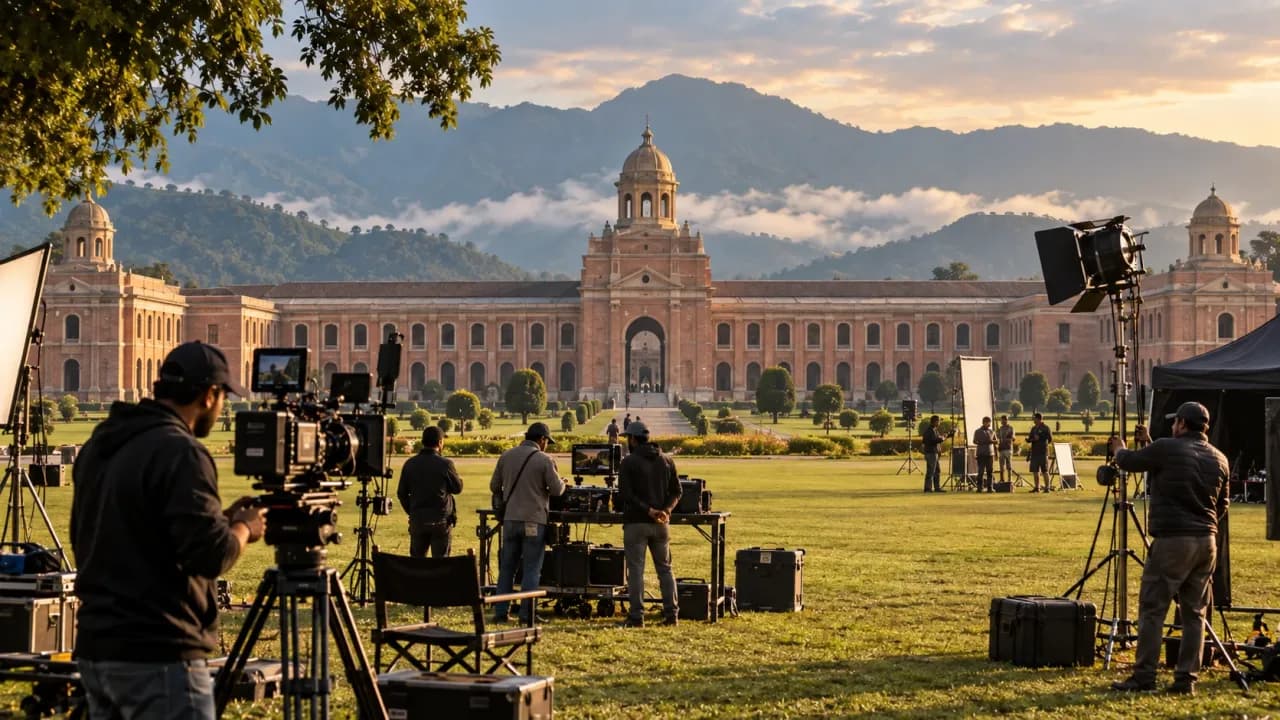
The Forest Research Institute has become a popular filming location because its architecture can easily stand in for a grand school, college or institutional campus.
One of its best-known Bollywood connections is Student of the Year. Contemporary reporting identifies FRI as one of the film's Dehradun locations, and the campus later returned to the screen for Student of the Year 2. The Times of India
For the sequel, the FRI campus was transformed into the fictional Saint Teresa school, and a large production team worked on the location during filming. The Times of India
Once you know this, some parts of the campus suddenly become even more recognisable.
Those grand columns and huge lawns already have a cinematic quality without anyone needing to do much to them.
So naturally, while we were testing our gimbal there, we had chosen a location that filmmakers had already discovered long before us.
No pressure for our little travel video, then.
From Forestry Research to a Dehradun Landmark
What I found interesting after learning more about FRI was how many identities one place manages to have.
For researchers, it is a scientific institution.
For students, it is a place of education.
For historians, it represents more than a century of forestry research in India.
For architecture lovers, the 1929 building is the attraction.
For filmmakers, it is a ready-made cinematic campus.
And for travellers like us, it becomes somewhere to walk around, explore, photograph and learn something along the way.
FRI itself describes the main building as a national heritage structure, while the institute remains closely associated with the development of scientific forestry in India. Forest Research Institute
That combination is probably why it remains one of Dehradun's most recognisable places.
After All Those Photos, We Wanted Food
Eventually, after walking around the building, clicking pictures and making videos, we started getting hungry.
So we decided we would eat something at the canteen.
Simple enough.
We headed towards it expecting to sit down, get something to eat and take a break before continuing.
Except...
the canteen was closed.
After all that walking and shooting, that wasn't exactly the discovery we wanted to make.
There wasn't much point hanging around waiting, so our food plan ended almost as quickly as it had begun.
Apparently, our long weekend wasn't finished cancelling plans yet.
First the mountains.
Now lunch.
At least FRI itself had worked out.
Back to the Car
Since the canteen was closed, we walked back towards the car.
By this point, we had explored enough, clicked plenty of photographs and recorded more than enough footage to remember the visit.
Everyone got back into the car, and we left.
It was a very simple outing.
There wasn't some dramatic moment that suddenly made FRI the highlight of our Dehradun trip.
And I don't want to pretend there was.
The truth is much more ordinary.
We had wanted to go somewhere else.
My husband and I had imagined spending our long weekend somewhere beautiful in the mountains. That plan didn't happen, so we stayed in Dehradun.
Rather than waste the weekend sitting around, my husband suggested FRI.
My in-laws joined us.
We drove there.
We explored.
We took photographs.
We made videos.
We tested our new gimbal.
We tried to find food.
The canteen was closed.
And then we left.
That was our FRI visit.
Sometimes You Explore What's Already Around You
Perhaps that's actually what I like about this particular travel memory.
We often think travelling means going far away.
If the mountains are the plan, anything less can feel like the trip didn't happen.
But sometimes circumstances force you to stay where you are.
And then you start noticing the places around you that you might otherwise have kept saying, We'll visit someday.
FRI was that kind of place for us.
It didn't replace our mountain trip.
I would still choose those mountain roads in a heartbeat.
But because that trip couldn't happen, we ended up spending part of our long weekend exploring a place established in 1906, walking through a building completed in 1929, learning a little about India's forestry history and using a very 2026 piece of technology to record it all.
There is something amusing about that combination.
Nearly century-old corridors.
A brand-new smartphone gimbal.
And us walking between the two trying to get the perfect shot.
Is FRI Worth Visiting in Dehradun?
If you're already in Dehradun, I think FRI is worth adding to your itinerary—especially if you enjoy architecture, photography, history, museums or peaceful green campuses.
But go knowing what the place actually is.
FRI isn't an amusement attraction where something is happening around every corner. Part of its appeal is simply walking through the huge campus, observing the architecture and understanding the history behind the institute.
And if you're visiting with parents, grandparents or anyone who has difficulty walking long distances, the size of the campus is worth considering. Taking a vehicle inside made our visit much easier because of my father-in-law's limited walking ability.
Visitor fees and access rules can change; FRI issued revised visitor-entry rates effective from 25 May 2026, so checking the institute's latest notice before visiting is sensible. Forest Research Institute
For us, though, FRI will probably always be remembered for something slightly different.
It was the place my husband suggested when our mountain plans didn't happen.
The place where my in-laws joined us for an easy family outing.
And the place where our Insta360 Flow 2 Pro finally stopped being something we practised with at home and became part of our actual travels.
Not the long weekend we had planned.
But still a memory we brought home.
Lock in the takeaway
Dehradun Travel Stories
Frequently asked questions
What is FRI Dehradun?
FRI stands for the Forest Research Institute. Located in Dehradun, Uttarakhand, it is one of India’s important institutions for forestry research and education. Its huge heritage building, museums, green campus and distinctive architecture have also made it a popular place for visitors.
When was the Forest Research Institute established?
The institution traces its history to the Imperial Forest Research Institute and College, established in 1906. The famous main building visitors see today was completed in 1929.
Who designed the FRI Dehradun building?
The present Forest Research Institute building was designed by architect C. G. Blomfield. Its architecture combines Greco-Roman, colonial and Oriental influences.
Why is FRI Dehradun famous?
FRI is important for its contribution to forestry research in India, but among travellers it is particularly famous for its monumental heritage architecture, long corridors, museums, enormous lawns and appearances in Indian films.
What is there to see inside FRI Dehradun?
Visitors can explore the grand main building and forestry museums covering subjects such as timber, forest products, insects, tree diseases and forest management. The architecture, corridors and surrounding lawns are also major attractions.
What was the FRI Dehradun entry fee during my visit?
During my visit, we paid ₹100 per person for entry and an additional ₹150 to take our car inside. Entry charges and visitor rules can change, so it is best to check the latest official information before visiting.
Can you take a car inside FRI Dehradun?
We were able to take our car inside by paying the applicable vehicle-entry fee. This was especially helpful because the main building and museum area are quite far from the entrance. Vehicle-access rules may change, so confirm them before your visit.
Which movies were shot at FRI Dehradun?
FRI has been used as a filming location for several Indian movies. One of its best-known appearances is in Student of the Year, where its grand architecture helped create the fictional college setting. Other productions have also used the campus over the years.
Was Student of the Year filmed at FRI Dehradun?
Yes. The Forest Research Institute was one of the recognisable Dehradun filming locations associated with Student of the Year. The campus was also used for Student of the Year 2.
How much time should I keep for FRI Dehradun?
Around 2–3 hours is reasonable if you want to see the building, explore the museums, walk around the campus and spend some time taking photographs. Photography lovers may easily spend longer.
Is FRI Dehradun worth visiting?
Yes, particularly if you enjoy architecture, photography, museums, history or peaceful green spaces. It is different from Dehradun’s waterfalls and mountain attractions and offers a combination of heritage, science and beautiful architecture.
What should I know before visiting FRI Dehradun?
Wear comfortable shoes, remember that the campus is large, and check the latest entry fees, timings and vehicle rules before leaving. If you are relying on the canteen for food, it is also worth checking whether it is operating—during our visit, we reached it only to find it closed!