
Listen to this article
Checking audio support
Thekkady to Munnar: More Than Just a Drive
The next morning in Kerala began in a way that was slowly becoming our routine.
Wake up early.
Freshen up.
Get ready.
Pack the bags.
Have breakfast.
Load everything into the cab.
And leave for another destination.
But somehow, it never felt repetitive.
Because every morning in Kerala seemed to take us into an entirely different world.
We had spent the previous day exploring Thekkady and Periyar, experiencing an elephant ride, jungle safari, Kalaripayattu performance, delicious food and some of the most beautiful monsoon scenery we'd seen so far.
Now it was time to leave Thekkady behind.
Our next destination was one I had been particularly excited about—
Munnar.
The journey between Thekkady and Munnar itself is considered one of Kerala's most scenic drives. In fact, the Munnar–Thekkady route was recognised as India's "Most Scenic Road" at the India Today Tourism Survey's Editors' Choice Awards in 2025. Depending on the route, the journey is roughly 100–110 km and can take around four hours without long sightseeing stops.
Of course, we were travelling during monsoon.
And we had several stops planned.
Four hours was never going to be four hours for us.
Our First Stop: A Kerala Spice Garden
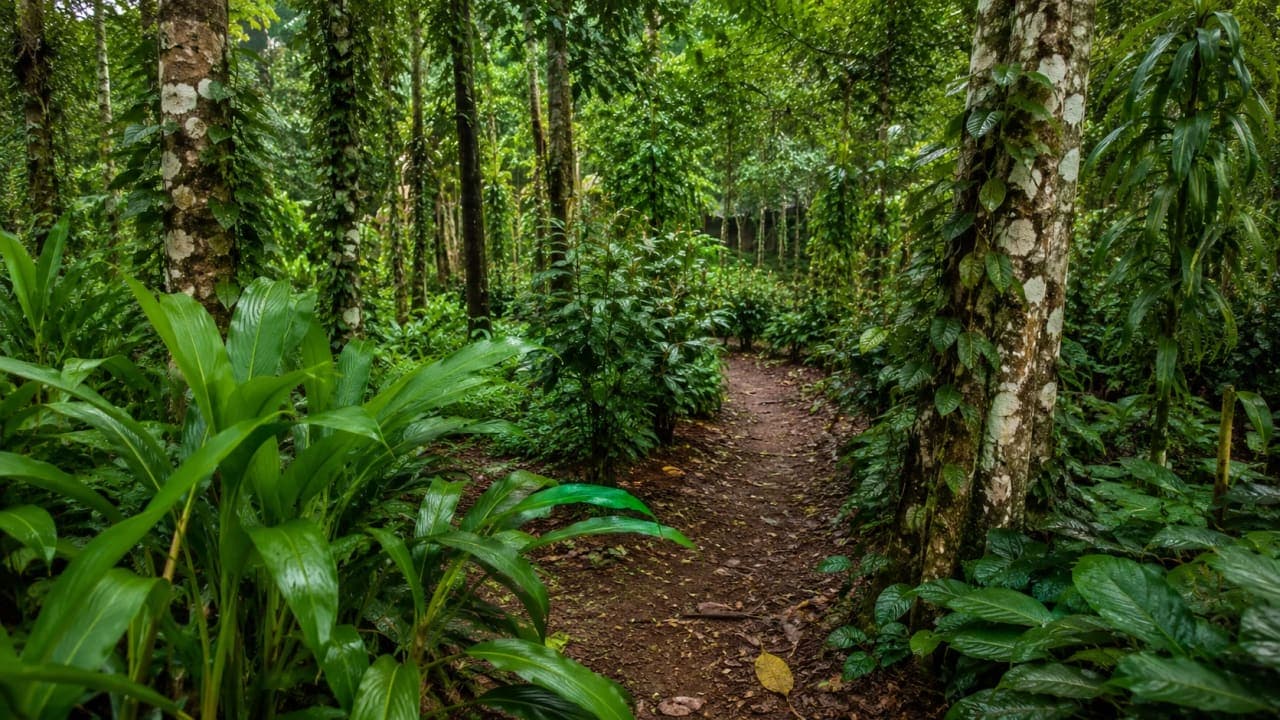
After leaving the hotel, our first major stop was a spice and Ayurvedic garden.
If you have ever opened an Indian masala box, you've probably seen many of the things that grow in these hills.
But seeing spices in a kitchen and seeing the plants they actually come from are two completely different experiences.
Kerala's high ranges are famous for plantations growing spices and medicinal plants, particularly around Idukki and Thekkady. Guided gardens in the region introduce visitors to Kerala's long spice-growing and Ayurvedic traditions.
The moment we entered the garden, we were surrounded by plants.
Cardamom.
Black pepper.
Cinnamon.
Cloves.
Nutmeg.
Turmeric.
Ginger.
Vanilla.
And several medicinal plants whose names I had either never heard before or had only seen printed on Ayurvedic products.
Thankfully, we had a guide.
And she was excellent.
When a Garden Turns Into a Classroom
Our guide didn't simply point towards a plant and tell us its name.
She explained everything.
How it grows.
Which part is used.
How it is harvested.
How people traditionally use it.
What conditions it requires.
And the medicinal uses associated with different plants.
Suddenly, something as ordinary as black pepper became fascinating.
Pepper grows as a climbing vine.
Cardamom pods appear close to the base of the plant rather than hanging from branches the way many of us might imagine.
Cinnamon comes from bark.
Turmeric hides underground.
Every few steps brought another little surprise.
The rain continued throughout our visit.
Umbrellas remained open almost the entire time.
The pathways were wet.
Plants were covered with raindrops.
And somehow that made the garden even more beautiful.
We weren't going to let Kerala's monsoon stop us now.
By this point in the trip, rain had practically become our fifth travel companion.
Kerala and Ayurveda
The spice garden also introduced us to another side of Kerala—Ayurveda.
Ayurveda has deep historical roots in India, but Kerala has developed a particularly strong association with Ayurvedic practice and wellness traditions.
The state's tropical climate and extraordinary variety of medicinal plants helped traditional practitioners develop preparations using herbs, oils, roots, bark and spices.
Kerala's monsoon season is also traditionally associated with Ayurvedic rejuvenation treatments. The cooler, humid weather has long been considered suitable in Kerala's Ayurvedic tradition for certain therapies and oil treatments.
That connection becomes much easier to understand when you're standing inside a garden surrounded by medicinal plants.
Instead of seeing a bottle labelled "herbal oil," you're looking at the ingredients growing around you.
The Ayurvedic Shop We Couldn't Leave Empty-Handed
At the end of the tour, the garden had its own shop selling Ayurvedic products and medicines.
And naturally...
We entered.
There were oils.
Herbal preparations.
Skin and hair products.
Pain-relief products.
Digestive preparations.
And several other remedies.
The products weren't exactly cheap.
In fact, some felt quite expensive.
But after spending so much time hearing about the plants and their traditional uses, we decided to buy a few things.
The staff spoke very confidently about their products and assured us they would be highly effective.
We hoped they were right.
One important thing I'd add now, though: traditional or Ayurvedic products can still have side effects or interact with medicines, so claims of "100% effectiveness" are better treated as sales claims rather than medical guarantees.
Shopping done, umbrellas folded, we returned to the cab.
Munnar was still waiting.
And Then We Saw a Giant Ganesha
How is it so far?
Vote with other readers
Not too long after leaving the spice garden, something huge appeared beside the road.
Lord Ganesha.
And when I say huge...
I mean huge.
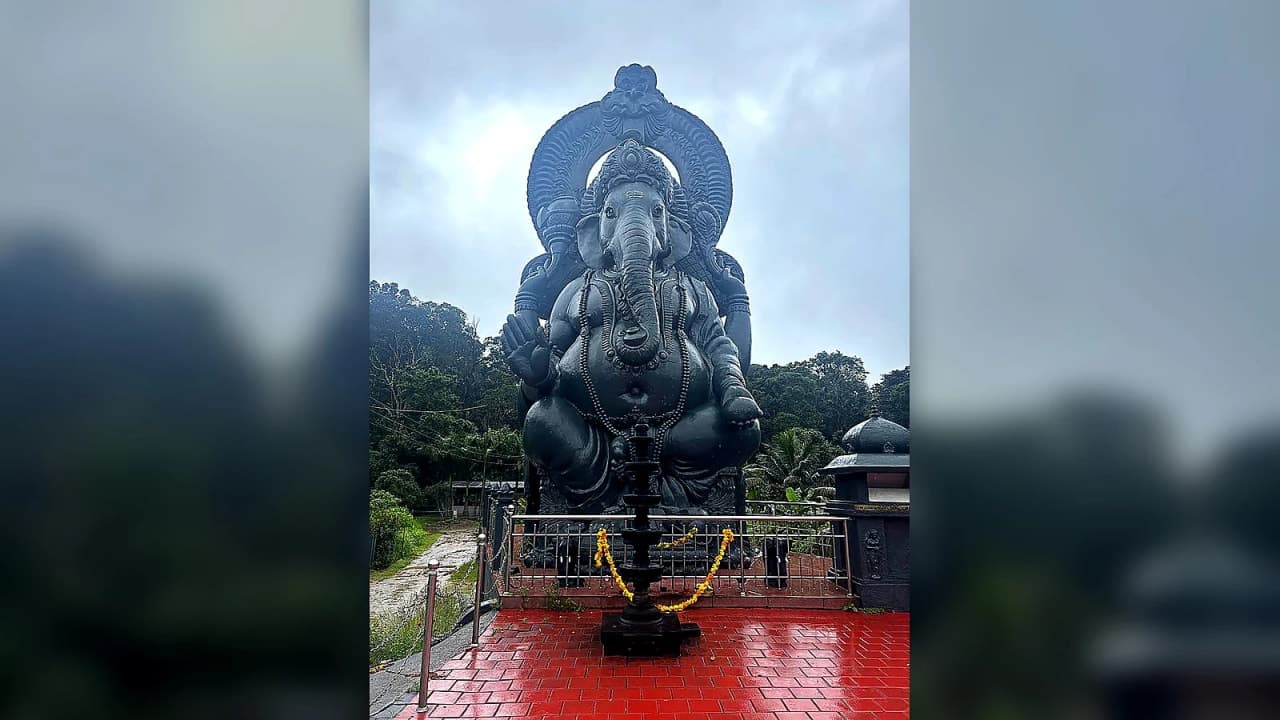
A towering dark Ganesha statue stood against the green surroundings, impossible to miss from the road.
We obviously had to stop.
The roadside Lord Ganesha statue at Vandanmedu, on the Munnar–Thekkady route, has become a popular quick stop for travellers. Visitor accounts describe it as approximately 38 feet tall and constructed using cement and supporting materials.
There is something especially fitting about encountering Ganesha here.
After all, this entire region is famous for elephants.
Whether or not there is an old historical legend connecting this particular statue with Thekkady's elephants, the symbolism is difficult to ignore.
We got out.
Admired the statue.
Clicked photographs.
And then returned to the cab once again.
We had quite a distance still to cover.
And our stomachs had started reminding us about something important.
Lunch.
Five People, One Hungry Table
Our driver bhaiya suggested a restaurant on the route.
At this point, we trusted his recommendations.
So all five of us—my husband, my mother-in-law, my father-in-law, our driver bhaiya and I—sat down together for lunch.
There is something I really enjoy about road-trip meals.
They aren't always planned.
You don't necessarily know the restaurant beforehand.
You simply stop because everyone is hungry.
Sit down.
Order whatever looks good.
Talk about everything that has happened since morning.
And then continue travelling.
Once everyone was full and happy, we returned to the car.
The next part of our journey was going to get much wetter.
The Rain Was Getting Serious Now
As we moved closer towards Munnar, the rain became heavier.
Then heavier again.
The roads curved through hills covered with tea plantations and forests.
Clouds hung low over the mountains.
Small waterfalls appeared beside the road.
The windows were covered in raindrops.
And our windshield wipers were working overtime.
Kerala's monsoon was clearly in no mood to take a break.
Neither were we.
Our next planned destination was Ripple Waterfalls.
But before reaching it, we spotted something that immediately caught our attention.
A zipline.
Not just any zipline.
Eagle's Flight.
The Zipline We Really Wanted to Try
My husband and I immediately became interested.
The official Eagle's Flight operator describes it as India's longest zipline, stretching approximately 1.8 kilometres across a tea valley near Suryanelli, around 30 km from Munnar. The operator says riders can reach roughly 50–70 km/h, with the line reaching a maximum height of around 250 metres above the terrain; the ride itself lasts approximately two to three minutes.
Just imagine that.
Flying over Kerala's tea-covered hills with mountains surrounding you.
We genuinely wanted to do it.
But then we looked outside.
Rain.
And not the cute, romantic kind of rain where you slowly walk around holding an umbrella.
It was pouring.
The operator itself notes that weather can affect the experience, and considering how heavily it was raining that day, we decided not to take the chance.
That one hurt a little.
But sometimes travelling also means knowing when to say,
"Next time."
We watched the zipline disappear behind us as the cab continued forward.
"You Cannot Miss the Jeep Safari"
Soon our driver bhaiya suggested another activity.
A jeep safari.
According to him, we simply couldn't come all this way and skip it.
Now, when your local driver says something like that with complete confidence, you start thinking...
Maybe he knows something we don't.
So we stopped.
Several jeeps were available.
We spoke to the operators.
Asked about the route.
Checked the price.
And naturally...
Bargained a little.
Some traditions must be respected.
Eventually, the deal was done.
We selected our jeep, climbed inside and prepared ourselves for yet another adventure.
The smooth road trip was about to become significantly bumpier.
And honestly?
That was part of the fun.
Off We Went in the Jeep
The jeep started moving through smaller roads surrounded by greenery.
The rain had completely transformed the landscape.
Water ran beside the roads.
Leaves looked freshly washed.
Mist floated through the hills.
Everything smelled of wet soil and vegetation.
The farther we travelled, the more it felt like we were leaving the normal tourist road behind.
Our next stop was somewhere we'd already been looking forward to seeing.
Ripple Waterfalls.
Ripple Waterfalls, Munnar
Also commonly referred to as Sree Narayanapuram Ripple Waterfalls, Ripple Waterfalls is located in Kerala's Idukki district in the Munnar region.
The waterfall is associated with the Muthirapuzha River system, and water tumbles through rocky terrain surrounded by dense vegetation.
But photographs don't fully explain why waterfalls become so spectacular during Kerala's monsoon.
Rain changes everything.
Streams become stronger.
The surrounding vegetation becomes intensely green.
Mist rises from the valley.
And the sound of rushing water becomes much louder.
By the time we reached Ripple Waterfalls, we'd already been travelling through rain for much of the day.
But here...
The rain suddenly felt like an advantage.
The waterfall was alive.
Why Is It Called Ripple Waterfalls?
There are several tourism stories surrounding the origin of the name.
One commonly repeated account says that the name "Ripple" came from the rippling appearance created as water cascades over and between the rocks. Some local tourism accounts also connect the site with the plantation era, when the surrounding high ranges were being developed for tea cultivation.
What is certain is that today the waterfall has become one of the scenic stops explored around the Munnar region, particularly through local jeep tours.
But standing there, history wasn't the first thing on our minds.
The view was.
Water crashed through the rocks.
Rain continued around us.
Greenery surrounded everything.
Our phones came out almost automatically.
Pictures.
Videos.
More pictures.
Another video.
The usual routine.
But this time, the adventure had only just begun.
Because our jeep safari wasn't simply about taking us to one waterfall and returning.
There were more roads ahead.
More viewpoints.
More monsoon surprises.
And eventually...
Munnar itself.
After the spice gardens of Thekkady, an enormous Ganesha watching over the roadside, a zipline we reluctantly had to leave for another day, and a rain-soaked jeep ride to Ripple Waterfalls, it was becoming increasingly clear that reaching Munnar wasn't going to be just another drive.
The road itself had become part of the destination.
And our day was far from over.
Lock in the takeaway
Kerala Travel Stories

Frequently asked questions
How far is Munnar from Thekkady?
The road distance between Thekkady and Munnar is roughly 90–110 km depending on the route. The drive generally takes around 3–4 hours without long sightseeing stops, but you should keep extra time if you plan to explore attractions along the way.
Is the road from Thekkady to Munnar scenic?
Yes. The route passes through the Western Ghats with forests, plantations, winding hill roads, waterfalls and spectacular viewpoints. During the monsoon, rain and mist make the landscape particularly beautiful.
Which spices can you see in spice gardens near Thekkady?
Depending on the plantation, visitors may see cardamom, black pepper, cinnamon, cloves, nutmeg, turmeric, ginger, vanilla and various medicinal plants used in traditional preparations.
Why is Ayurveda so popular in Kerala?
Kerala has a long tradition of Ayurvedic practice supported by its tropical climate and abundance of medicinal plants. Ayurvedic treatments, herbal preparations and traditional wellness therapies remain an important part of Kerala's culture.
What is Ripple Waterfalls in Munnar famous for?
Ripple Waterfalls, also known as Sree Narayanapuram Ripple Waterfalls, is known for water cascading through rocky terrain surrounded by lush vegetation. It becomes especially impressive during the monsoon when rainfall increases the water flow.
Is Ripple Waterfalls worth visiting during the monsoon?
Yes, the waterfall can be particularly beautiful during the rainy season because of the stronger water flow and vibrant greenery. However, visitors should be cautious around wet rocks, slippery paths and areas affected by heavy rainfall.
Can you take a jeep safari to Ripple Waterfalls?
Local jeep tours around the Munnar region commonly include waterfalls, viewpoints and plantation landscapes. Routes and stops can vary between operators, so it is worth confirming exactly what is included before booking.
What is Eagle's Flight near Munnar?
Eagle's Flight is an adventure zipline near the Munnar region. The operator promotes its approximately 1.8-km course as India's longest zipline, taking riders high above the area's scenic plantation landscape.
Can you do the Munnar zipline during rain?
Zipline operations depend on current weather and safety conditions. Heavy rain, strong winds or poor visibility can affect operations, so travellers should follow the operator's instructions rather than assuming the activity will run.
Is the journey from Thekkady to Munnar worth making by road?
Absolutely. For us, the journey itself became part of the experience. Spice gardens, plantations, rain-covered mountains, waterfalls and spontaneous stops turned what could have been a simple transfer between two destinations into another memorable day of our Kerala trip.