
Listen to this article
Checking audio support
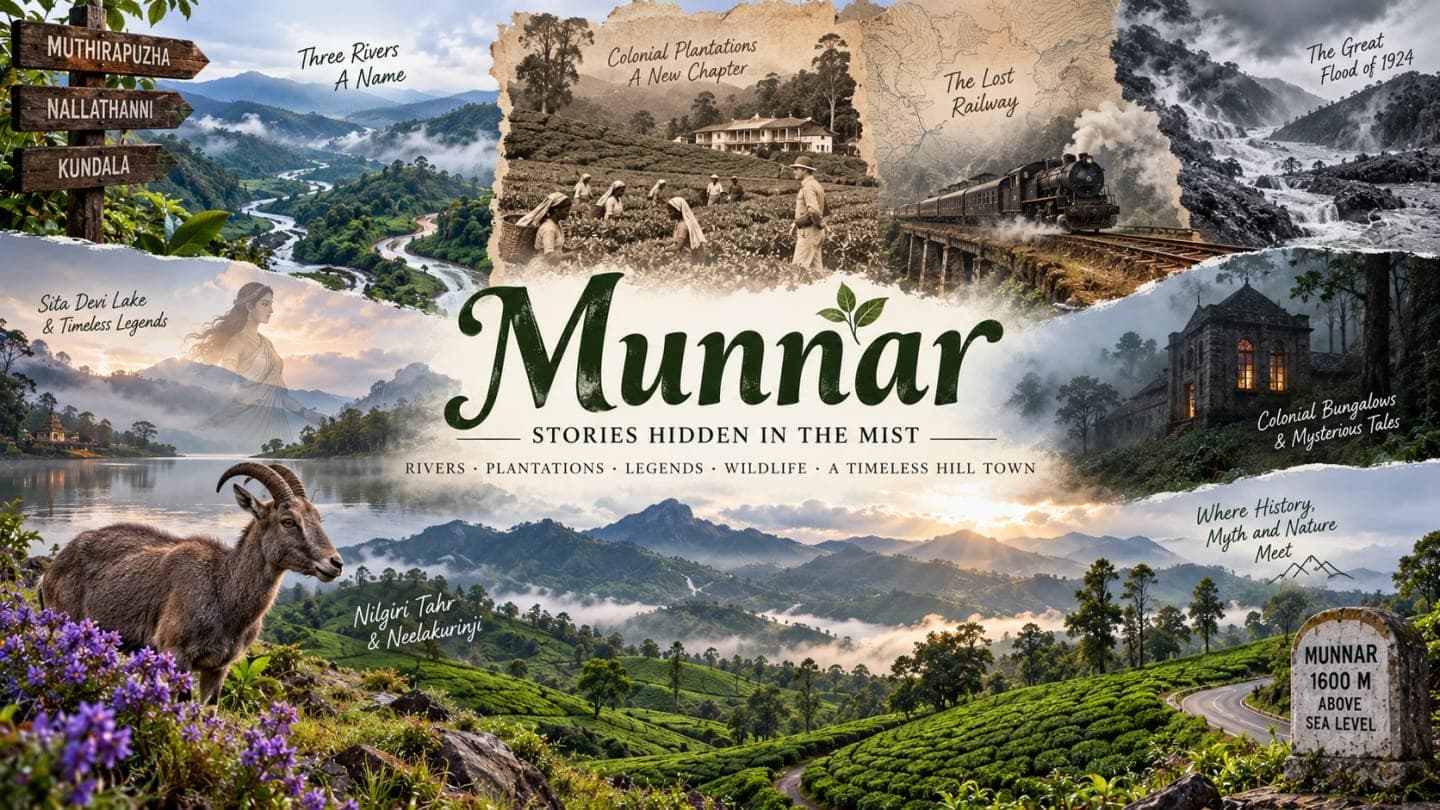
Munnar Beyond the Tea Gardens: History, Myths and Stories Hidden in the Mist
When we visited Munnar, most of what we saw was green.
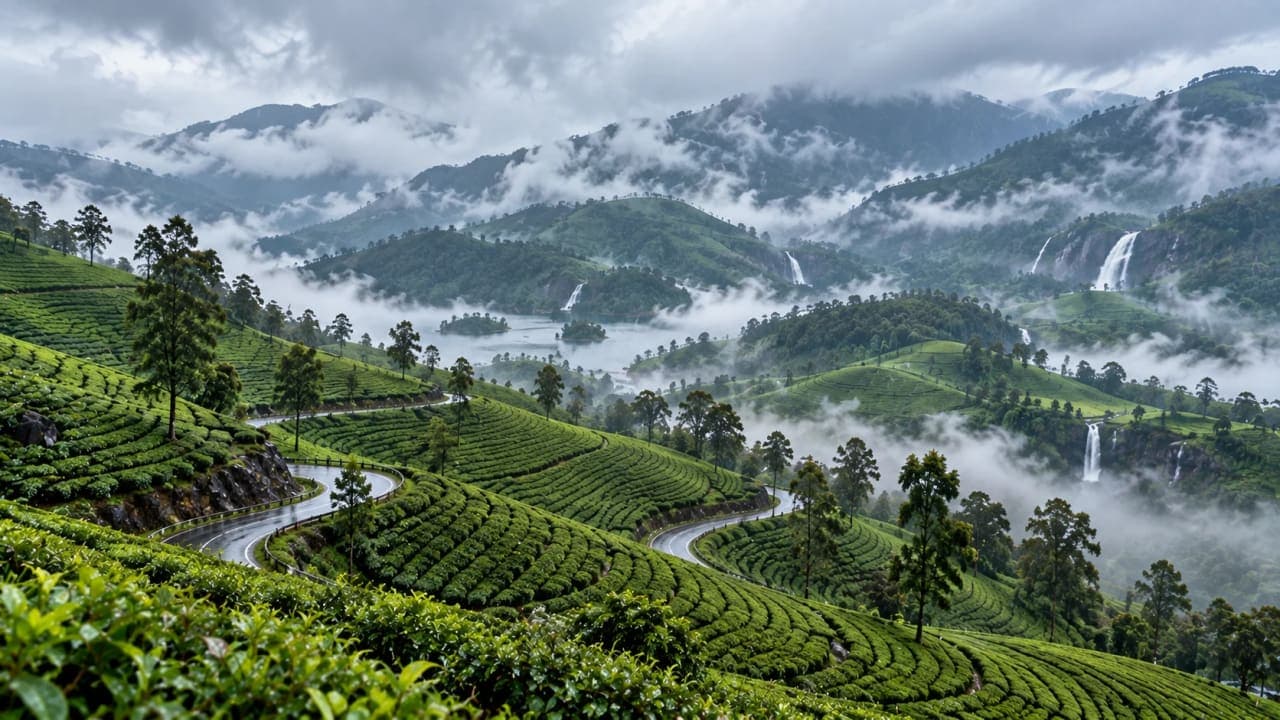
Tea plantations stretched across the hills like carpets. Clouds floated so low that they sometimes seemed to touch the roads. Waterfalls appeared around bends, rain followed us almost everywhere, and mountains repeatedly disappeared behind thick layers of mist.
We explored tea gardens, Mattupetty Dam, the botanical garden, waterfalls and Rajamalai. We walked through wild rain at Eravikulam National Park and finally spotted the endangered Nilgiri tahr. But after returning from the trip, I started wondering about something else.
What was Munnar before all these tea gardens existed?
Who lived in these mountains? Why is it called Munnar? Why do three rivers matter so much to its identity? What happened when the British arrived? And what about those strange stories of goddesses, ghosts and even devil worship that still float around these misty hills?
Once I started reading, I realised that Munnar's past is almost as fascinating as its landscape.
First Mystery: What Does "Munnar" Actually Mean?
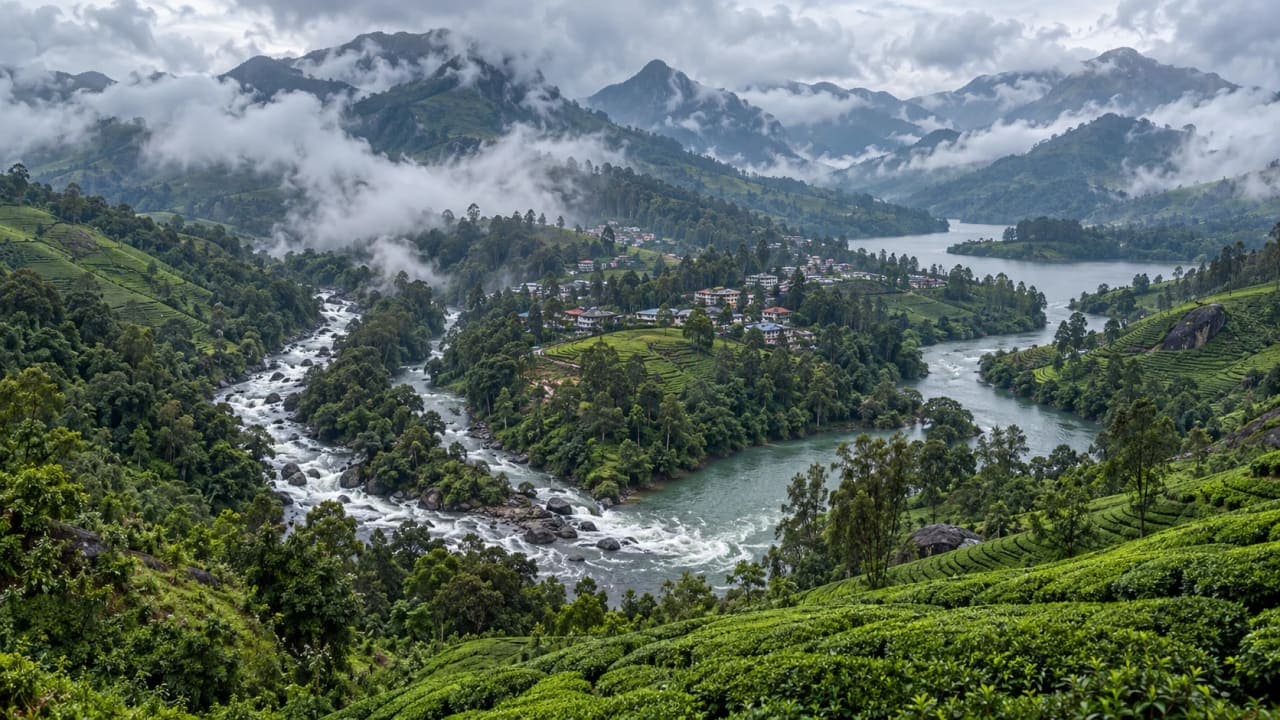
One of the stories I'd heard was that the word Munnar came from two Malayalam words connected with the rivers surrounding the town.
That story is essentially correct—but there are three rivers, not two.
The name is generally traced to the Malayalam words "moonnu", meaning three, and "aaru", meaning river. Over time, Moonnu Aaru is understood to have become Munnar. Kerala Tourism and Idukki district's official tourism information both describe the town as lying at the confluence of the Muthirapuzha, Nallathanni and Kundala mountain streams. (Kerala Tourism)
So the name doesn't merely sound beautiful.
It describes the geography of the place itself:
Three rivers → Moonnu Aaru → Munnar.
Once you know this, Munnar begins to feel less like a name somebody randomly gave a hill station and more like an old geographical description that simply survived.
The town lies at roughly 1,600 metres above sea level in Kerala's Idukki district, surrounded by the Western Ghats. (Kerala Tourism)
But Munnar's story began long before tourists, colonial bungalows or tea estates appeared.
Before Tea, There Were the Muthuvans
Today, it is almost impossible to imagine Munnar without tea.
But those perfectly trimmed plantations are relatively recent additions to a landscape with a much older human history.
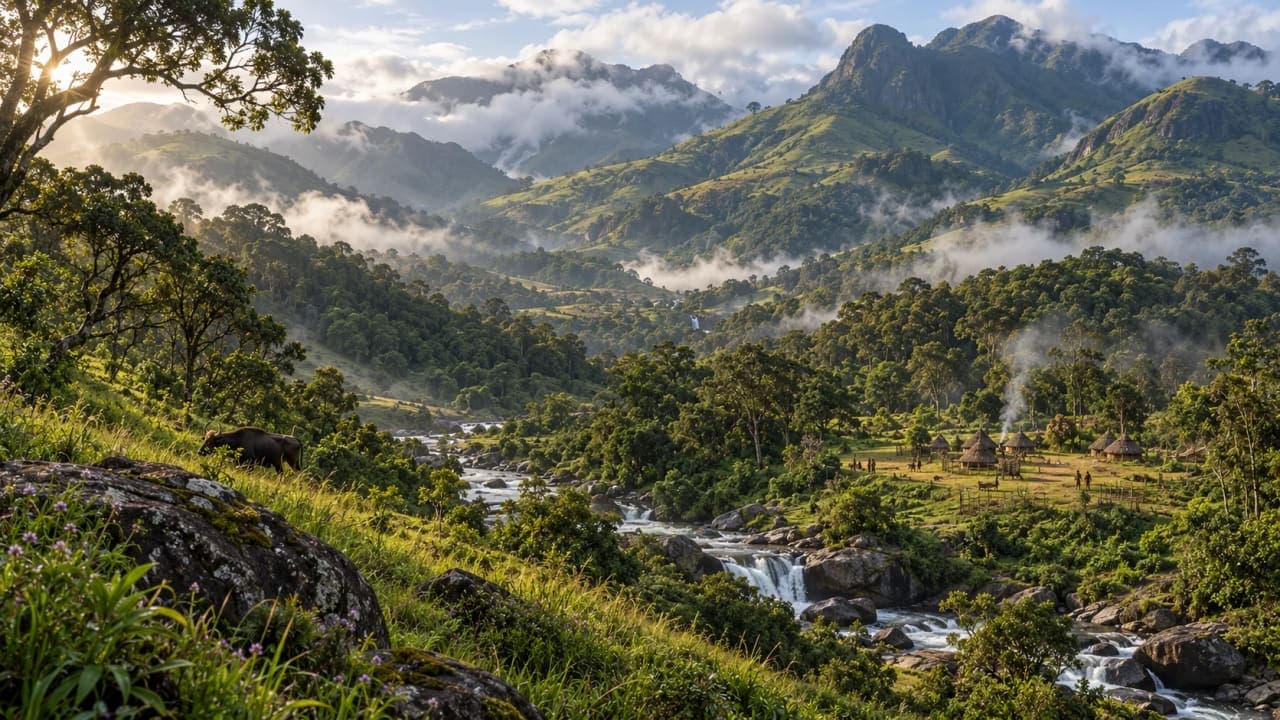
Kerala Tourism identifies members of the Muthuvan tribal community among the early inhabitants of the region. For centuries, these high ranges were far more isolated than the Munnar we know today. Dense forests, grasslands, streams and difficult mountain terrain separated them from the more populated plains. (Kerala Tourism)
Research into the wider Devikulam high ranges also points to evidence of human presence stretching much further back, including archaeological traces in the broader high-range landscape. (ResearchGate)
The important thing to remember is that Munnar wasn't an "empty wilderness" waiting for Europeans to discover it.
People already knew these mountains.
The transformation that occurred in the nineteenth century was not the beginning of Munnar—it was the beginning of plantation-era Munnar.
And that chapter changed everything.
When the British Saw Opportunity in the Hills
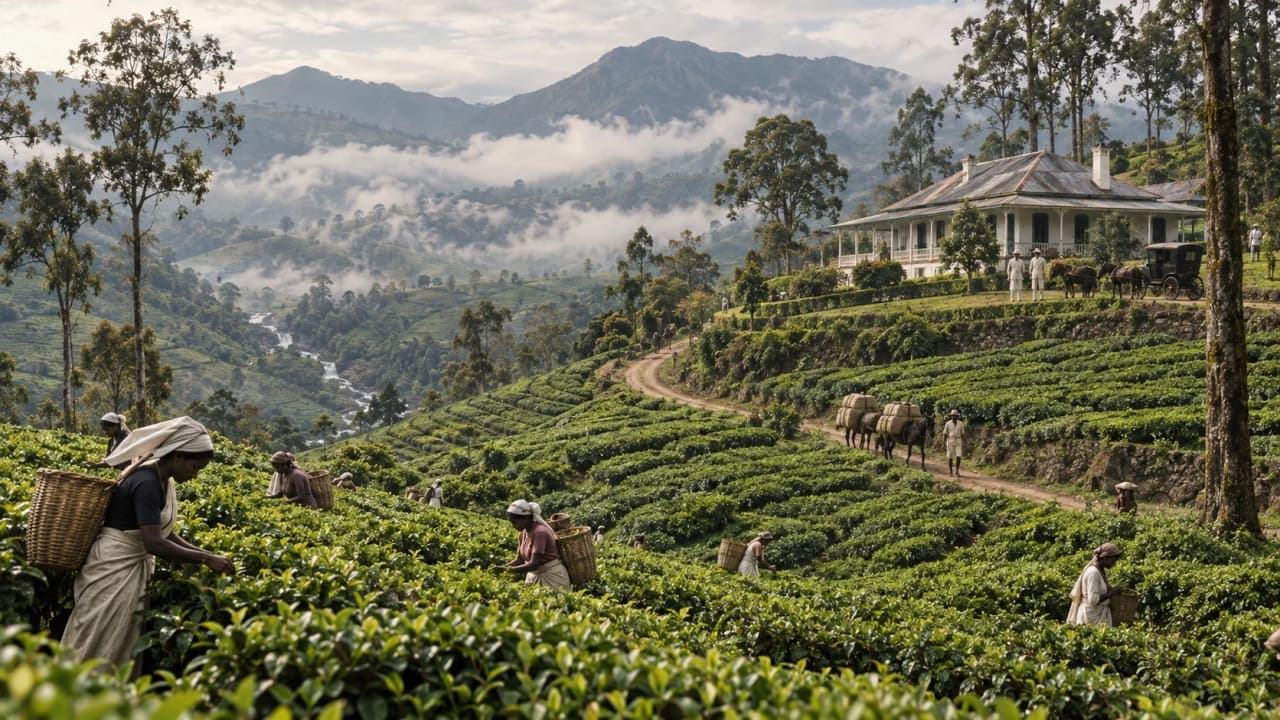
Munnar became better known to the colonial world during the 1870s, when John Daniel Munro, then British Resident of Travancore, visited the region while dealing with a border dispute.
The area came under the jurisdiction of the Kingdom of Travancore, while the land rights were held by the Poonjar royal family. Munro recognised the agricultural potential of the Kannan Devan Hills and became interested in developing plantations there. (Kerala Tourism)
Experiments followed with crops such as coffee, cardamom, cinchona and sisal.
But one plant would eventually dominate everything.
Tea.
In 1880, European planter A. H. Sharp planted tea across roughly 50 acres at Parvathy Estate, now associated with the Seven Mallay estate. In the following years, plantation activity expanded rapidly. Finlay Muir & Company acquired numerous estates in the 1890s, and the Kannan Devan Hills Produce Company was formed in 1897. (Kerala Tourism)
The green landscape tourists photograph today was beginning to take shape.
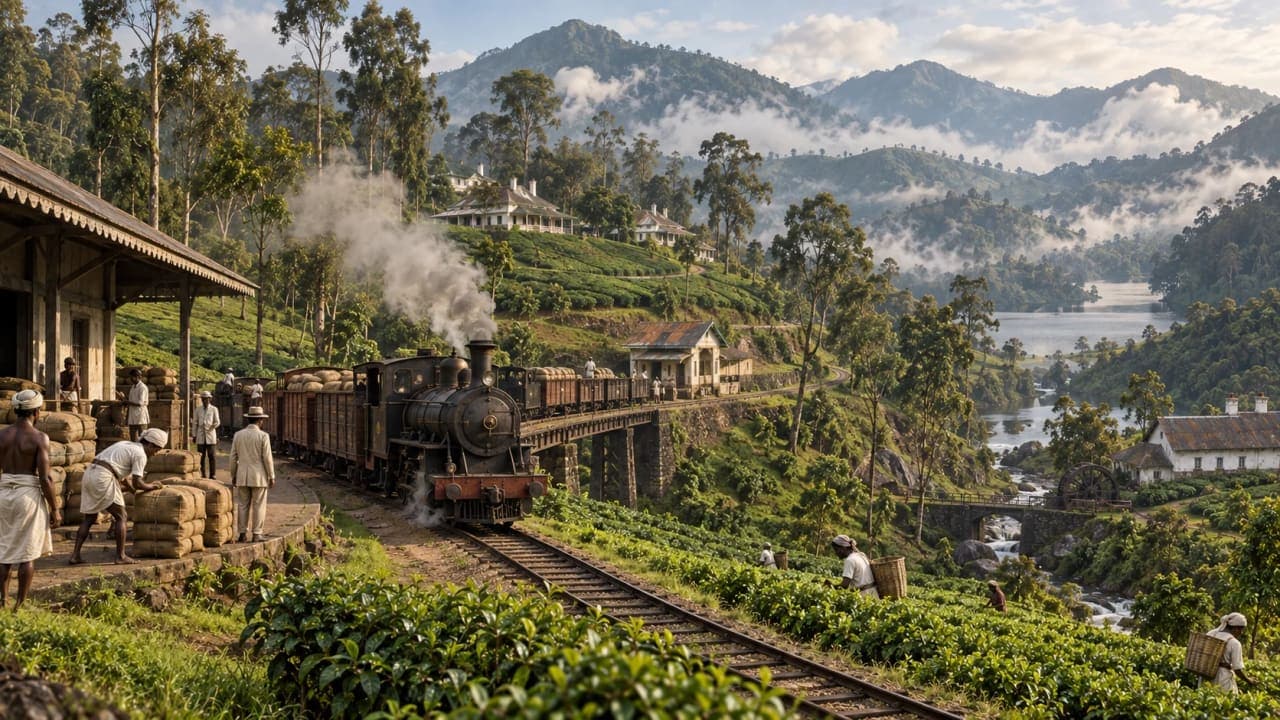
Tea Didn't Just Change Munnar's Economy—It Changed the Mountains
Large-scale tea cultivation required far more than planting bushes.
Workers had to be brought in.
Roads had to be created.
Factories had to be built.
Tea had to somehow be transported down difficult mountain terrain.
Infrastructure began spreading through the hills.
One of the most surprising chapters of Munnar's history is that the region once had its own transportation system involving a monorail and later the Kundala Valley Railway for moving plantation goods. Kerala Tourism notes the irony that traces of this railway history remain even though Munnar and Idukki do not have a railway connection today. (Kerala Tourism)
Imagine standing among Munnar's tea gardens a century ago and seeing plantation goods travelling through a mountain railway system.
Then nature intervened.
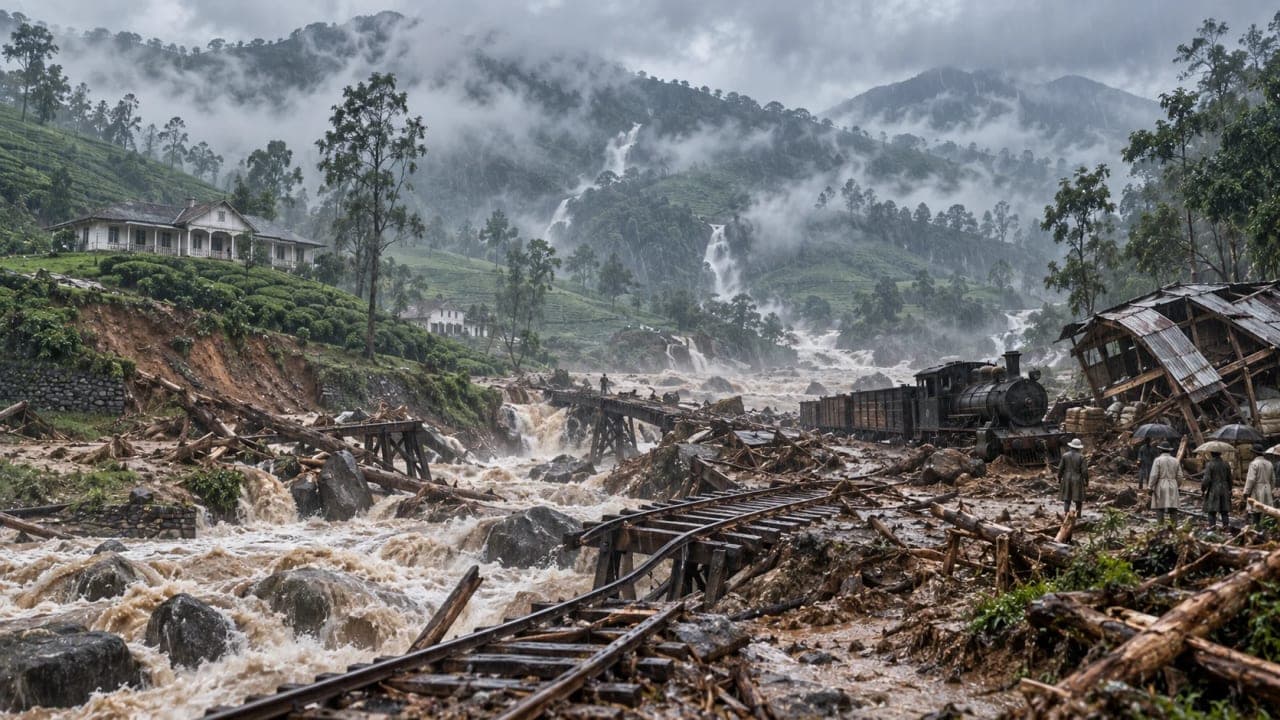
The Great Flood of 1924 That Changed Munnar
The monsoon has always been part of Munnar's identity.
We experienced that ourselves.
But in 1924, the rain became catastrophic.
A devastating monsoon brought flooding and landslides across the region. Kerala Tourism says the disaster caused serious loss of life and property and altered parts of Munnar's landscape. Plantation infrastructure was badly affected, and the Kundala Valley railway system was destroyed and never rebuilt. (Kerala Tourism)
The plantations eventually recovered through large-scale replanting.
Decades later, another major corporate chapter began. The Tata Group entered into collaboration with Finlay in 1964, Tata Tea was formed in 1983, and in 2005 the Kannan Devan Hills Plantations Company (KDHP) took over much of the plantation operation. (Kerala Tourism)
So when we casually stood inside a Munnar tea plantation taking photographs, we were actually standing inside the result of more than a century of economic, environmental and social transformation.
But Munnar's documented history is only half the fun.
Because these mountains are also filled with stories that history books can't quite prove.
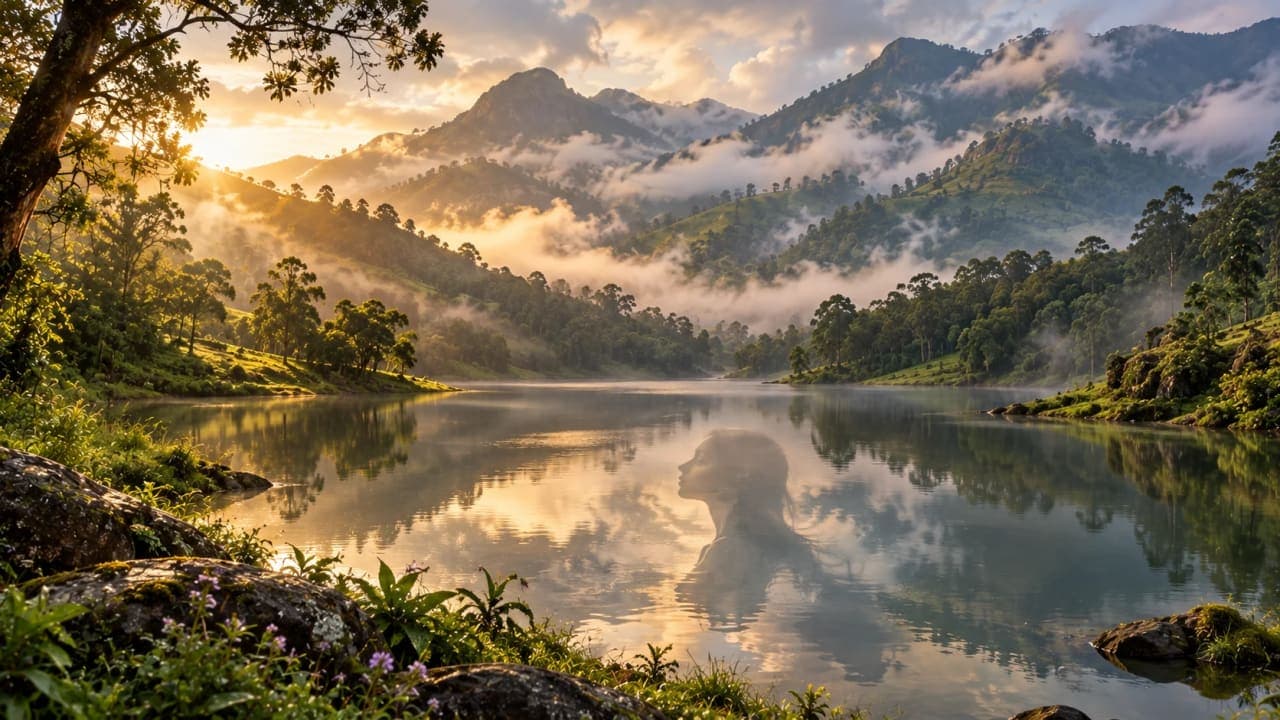
The Goddess Who Bathed Near Munnar
Only a short distance from Munnar lies Devikulam.
The name itself means roughly "Lake of the Goddess"—Devi meaning goddess and kulam meaning pond or lake. (Kerala Tourism)
And this is where history begins blending with mythology.
According to a popular local legend, Sita Devi from the Ramayana bathed in the lake at Devikulam. The belief became so closely associated with the place that the water body is commonly called Sita Devi Lake. Kerala Tourism also records another strand of the legend: that the goddess's golden chariot remains buried near the lake's banks. (Kerala Tourism)
Is there historical evidence that Sita actually bathed here?
No.
It is a religious and local tradition rather than documented history.
But that doesn't make the story unimportant. Legends often tell us how generations of people understood and gave meaning to their landscape.
And Devikulam has another extraordinary story.
Bhima's Tasteless Rice Balls?
A local legend reported from the Devikulam high ranges connects the region not with the Ramayana, but with the Mahabharata.
According to this tale, the Pandavas stayed in the surrounding hills during their period of exile. A king supposedly sent them provisions, including broken rice. Draupadi prepared steamed rice balls, keeping a generous portion for Bhima, famous for his appetite.
Bhima took a mouthful.
There was a problem.
How is it so far?
Vote with other readers
No salt.
According to the legend, an annoyed Bhima threw the tasteless rice balls away across the hills. Locals later associated unusual stone-like objects found in the area with those legendary rice balls. (The New Indian Express)
Historical fact?
Almost certainly not something we can establish.
Wonderful hill-country folklore?
Absolutely.
But even that isn't the strangest story around Munnar.
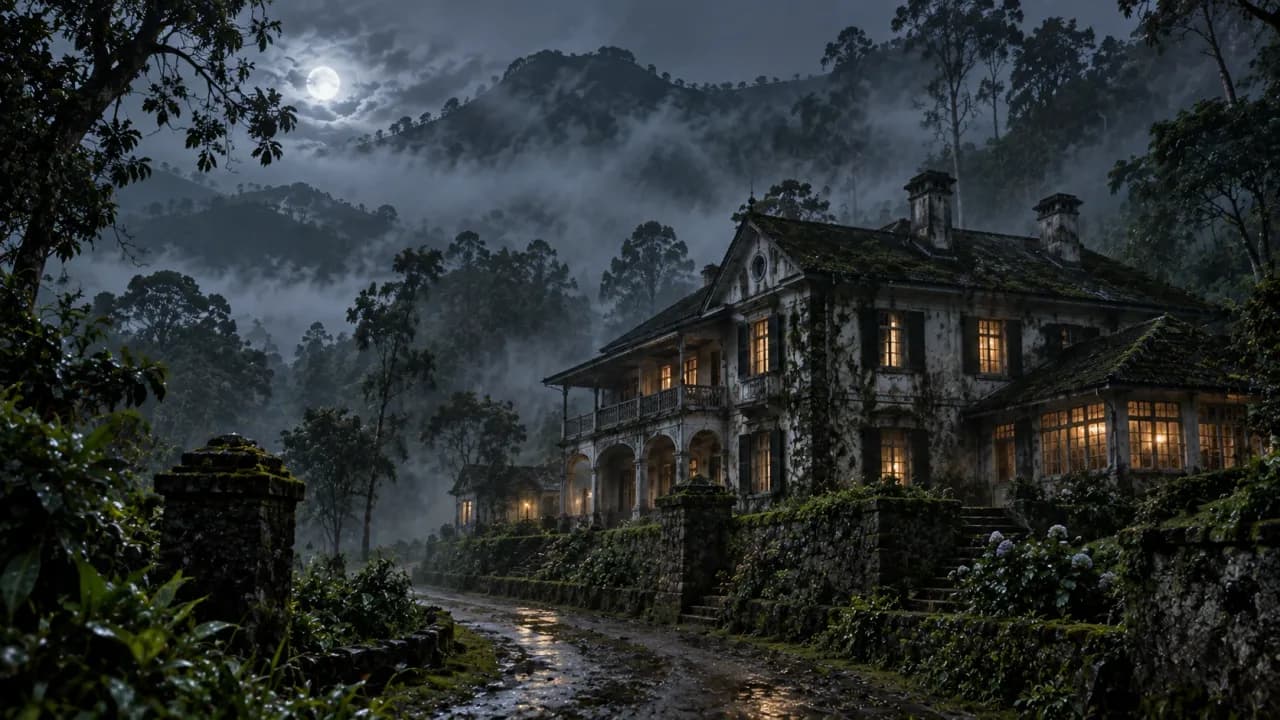
The Devil Story of Munnar
This was the story I was especially curious about.
And surprisingly, there is a documented local tale involving devil worship near old Munnar.
An old building known as Lodge Heather No. 928 acquired a sinister reputation in local oral tradition. The Kerala Department of Archaeology's former blog records stories surrounding the abandoned structure, which some locals called "Thalavetti Kovil."
According to one version of the tale, British plantation managers gathered there on Christmas Eve to worship the devil. The more dramatic version claimed they would cut off their own heads as an offering—and that the devil would restore them afterward.
Another version claimed human sacrifices had once been offered there. (keralaarchaeology.blogspot.com)
Before anyone starts planning a midnight paranormal investigation, there is an important distinction:
These are folk stories, not established historical events.
Even the archaeologist writing about the building explicitly expressed disbelief in the tales while recording them as part of Munnar's local oral tradition. (keralaarchaeology.blogspot.com)
And honestly, it's easy to understand how stories like this develop.
Imagine colonial Munnar decades ago.
Dense forests.
Isolated European bungalows.
Almost no street lighting.
Cold mountain nights.
Heavy fog.
Strange abandoned buildings.
And stories being passed from one generation of plantation workers to another.
You hardly need a devil.
The atmosphere does half the work.
Munnar's Ghosts Apparently Prefer Colonial Bungalows
The devil story isn't alone.
Munnar's plantation communities developed a rich collection of ghost stories around old colonial houses and clubs.
One published account describes a story in which a British planter's wife answered a knock at her bungalow and found an elderly man dressed like an old planter standing outside. He smiled, tipped his hat and disappeared down the foggy driveway.
Later, she supposedly recognised the same man in an old photograph.
The problem?
He had been a former occupant of the bungalow.
And he was already dead. (The New Indian Express)
Again, this belongs to folklore rather than verified history.
But when you combine Munnar's fog, abandoned plantation buildings and colonial past, you begin to understand why the hills accumulated so many ghost stories.
Perhaps Munnar's mist doesn't merely hide mountains.
It gives people's imaginations somewhere to wander.
And Then There Is Neelakurinji
Not every extraordinary Munnar story requires a ghost or goddess.
Sometimes nature creates something strange enough on its own.
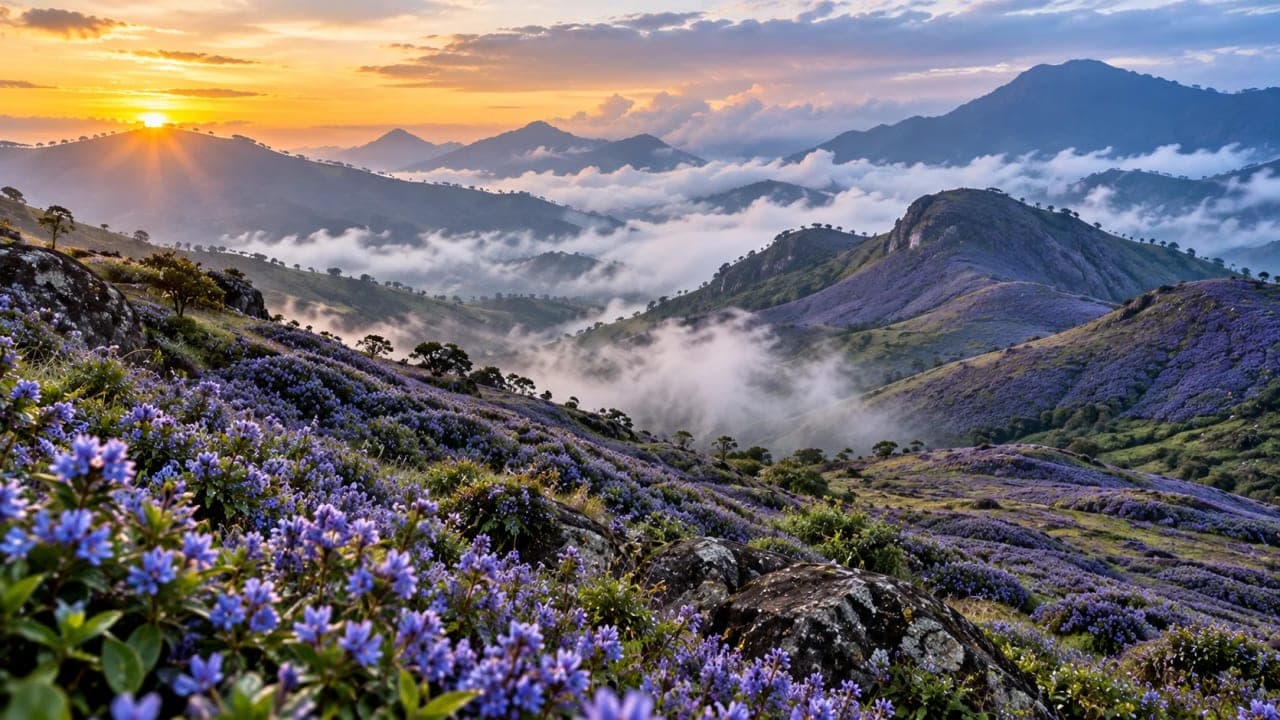
Munnar is famous for Neelakurinji, a plant whose mass flowering occurs roughly once every 12 years. When it blooms, entire mountain slopes can appear covered in shades of blue and purple. (Kerala Tourism)
The flower has become inseparable from the identity of the high ranges.
And towering above this landscape is Anamudi, South India's highest peak, rising to about 2,695 metres. (Idukki)
Nearby Eravikulam National Park, established as a national park in 1978, protects high-altitude grasslands and is particularly famous for the endangered Nilgiri tahr. (Incredible India)
We were fortunate enough to spot them ourselves during our rainy climb through Rajamalai.
Knowing how closely their survival is tied to these mountains made that sighting feel even more special.
The Places That Tell Munnar's Story Today
If you want to understand Munnar rather than simply photograph it, the Tea Museum is one of the most obvious places to begin. Located at the Nallathanni Estate, it preserves machinery, photographs and artefacts connected with the evolution of tea cultivation in the region. (Kerala Tourism)
Then there is Eravikulam National Park and Rajamalai, where Munnar's ecological history becomes visible through grasslands, waterfalls and Nilgiri tahr.
Mattupetty Dam and Lake provide another side of the high ranges, while Top Station, at around 1,700 metres, is known for panoramic mountain views and its association with Neelakurinji landscapes. (Incredible India)
Devikulam adds mythology through Sita Devi Lake.
The tea plantations preserve the visible legacy of the plantation era.
And the scattered colonial-era buildings quietly remind visitors that today's tourist town was once a remote working settlement shaped around estates.
Munnar isn't really one historical site.
The entire landscape is the historical site.
What Is Munnar Famous for Today?
Ask most travellers and tea will probably come first.
That's understandable.
Tea plantations have become Munnar's visual identity.
But the town is equally associated with misty valleys, waterfalls, mountain roads, cool weather, Neelakurinji, Nilgiri tahr, Eravikulam National Park, Mattupetty, Top Station, Anamudi and plantation heritage. (Kerala Tourism)
It is also a place where you can move between completely different experiences within a single day.
Walk through a botanical garden in the morning.
Photograph tea plantations.
Eat hot Maggi while it rains.
Visit a dam.
Take a mountain bus.
Walk through mist.
See a waterfall.
Spot a Nilgiri tahr.
Watch Kathakali in the evening.
We practically did exactly that.
And What Should You Eat in Munnar?
Munnar doesn't have one single dish that defines it in the way tea defines its landscape. Its food reflects the broader cuisines of Kerala and the neighbouring Tamil-influenced high ranges.
You will commonly find appam with stew, puttu with kadala curry, idiyappam, dosa, Kerala parotta with curry, rice meals, fish preparations and payasam. Government tourism material also highlights dishes such as idiyappam with egg curry and rice-based pathiri with curry among foods travellers can explore in the region. (Incredible India)
But in Munnar, beverages and plantation products deserve their own category.
Tea, obviously.
Then coffee.
Spices.
Homemade chocolates.
And when the rain is falling and the temperature drops?
Sometimes the finest meal in Munnar isn't complicated at all.
For us, hot Maggi, boiled corn and tea beside a rainy mountain road tasted better than any elaborate restaurant meal could have at that moment.
The Munnar We Saw and the Munnar Hidden Beneath It
When we visited Munnar, I saw tea gardens.
Now I see a plantation history stretching back to the nineteenth century.
I saw three rivers and streams without thinking much about them.
Now I know those waterways gave Munnar its name.
I saw old buildings.
Now I know that some of them accumulated stories of colonial planters, ghosts and even supposed devil worship.
I saw Devikulam as another beautiful place near Munnar.
Now I know people have connected its lake with Sita Devi for generations—and that somewhere in those same hills, another legend claims Bhima angrily scattered tasteless rice balls.
I saw the Nilgiri tahr after climbing through rain.
Now I understand that the animal represents one of the most important conservation stories of these high-altitude grasslands.
And those endless tea plantations?
They no longer look like scenery alone.
They represent indigenous landscapes transformed by colonial enterprise, generations of plantation labour, railways that disappeared in floods, companies that came and went, and an industry that ultimately reshaped Munnar's identity.
Perhaps that is what makes Munnar particularly fascinating.
Its documented history is interesting enough.
Its folklore makes it even better.
Three rivers gave it a name.
Tea transformed its hills.
A catastrophic monsoon destroyed its railway.
Sita is said to have bathed nearby.
Bhima supposedly threw his breakfast across the mountains.
Old plantation bungalows acquired ghosts.
And somewhere in the fog, people even invented stories about a building where the devil supposedly returned severed heads.
Fact, history, religion, folklore and imagination have all become tangled together in these mountains.
You don't have to believe every legend to enjoy it.
Sometimes knowing that generations before you stood among the same misty hills and told these stories is fascinating enough.
The next time I visit Munnar, I don't think I'll see only tea plantations and waterfalls.
I'll probably look at the fog a little differently.
Because behind those green hills lies another Munnar—the one built from three rivers, indigenous communities, tea, floods, forgotten railways, gods, ghosts and stories that refuse to disappear into the mist.
Lock in the takeaway
Kerala Travel Stories
Frequently asked questions
What does the name Munnar mean?
Munnar is generally understood to come from the Malayalam words moonnu, meaning "three," and aaru, meaning "river." The name refers to the three mountain waterways associated with Munnar—the Muthirapuzha, Nallathanni and Kundala.
What are the three rivers of Munnar?
The three waterways traditionally associated with Munnar's name are the Muthirapuzha, Nallathanni and Kundala. Their meeting in the Munnar region is believed to have inspired the name of the town.
Who lived in Munnar before the development of tea plantations?
Indigenous communities, particularly the Muthuvan people, have a much older association with the high ranges. Munnar's large commercial tea plantations developed much later, mainly from the late 19th century onwards.
Did Munnar once have a railway?
Yes. The plantation region once had transport systems that developed into the Kundala Valley Railway, which was used to move tea and other plantation goods through the hills. The railway was destroyed during the devastating 1924 floods and was never fully rebuilt.
What happened in Munnar during the 1924 flood?
Extremely heavy monsoon rainfall caused severe flooding and landslides across the high ranges. Plantation infrastructure suffered major damage, and the Kundala Valley Railway was among the systems destroyed during the disaster.
What is the Sita Devi Lake legend near Munnar?
Local tradition says Sita from the Ramayana bathed in the lake at Devikulam, which became known as Sita Devi Lake. Another version of the folklore says her golden chariot remains buried nearby. These are religious legends rather than historically verified events.
Are there ghost stories in Munnar?
Yes. Old plantation bungalows and isolated colonial buildings have inspired several local ghost stories over the years. Munnar's mist, forests and colonial history have helped these tales become part of the region's folklore, although they are not documented historical events.
Why is Neelakurinji famous in Munnar?
Neelakurinji is famous for its spectacular mass flowering cycle, which occurs roughly once every 12 years. During major blooming seasons, parts of the Western Ghats can become covered in blue-purple flowers.
What is Munnar most famous for today?
Munnar is best known for its tea plantations, cool mountain climate, mist-covered Western Ghats, waterfalls, Eravikulam National Park, Nilgiri tahr, Neelakurinji, Anamudi Peak, Mattupetty Dam, Top Station and plantation heritage.
What food should you try in Munnar?
Popular choices include appam with stew, puttu and kadala curry, idiyappam, Kerala parotta with curry, dosa, Kerala rice meals, fish preparations and payasam. Munnar is also particularly famous for locally sold tea, coffee, spices and chocolates.
Is Munnar worth visiting for history as well as scenery?
Yes. Beyond its tea gardens, Munnar has a fascinating story involving indigenous communities, the Kingdom of Travancore, colonial plantation development, a lost mountain railway, the 1924 flood, wildlife conservation and generations of local myths and folklore.