
Listen to this article
Checking audio support
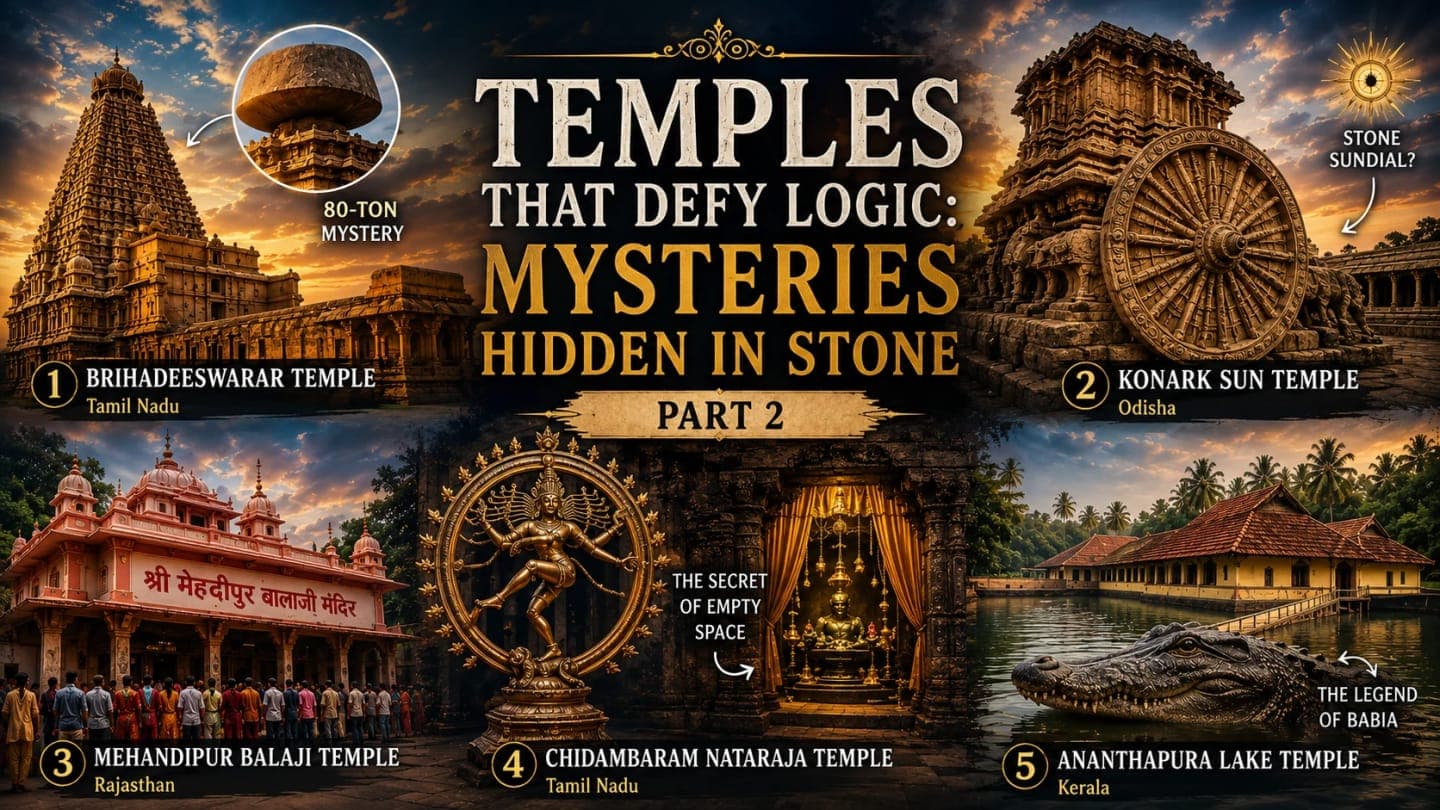
From floating legends and hidden cosmic secrets to sacred crocodiles and ancient astronomical wonders, these five Indian temples continue to challenge what we think we know.
If you read Part 1 of this series, you travelled through five extraordinary temples where eternal flames, hanging pillars, hidden vaults, and sacred legends blurred the line between faith and logic.
But India's list of mysterious temples doesn't end there.
In fact, you could spend years travelling across the country and still discover places that leave you asking, "How did they build this?", "Why does this happen?", or simply, "How has this story survived for so many centuries?"
Some mysteries have scientific theories.
Some are rooted in folklore.
Others remain topics of debate among historians, archaeologists, architects, and devotees alike.
Let's continue the journey with five more remarkable temples that prove India's ancient heritage is filled with stories as fascinating as any modern mystery novel.
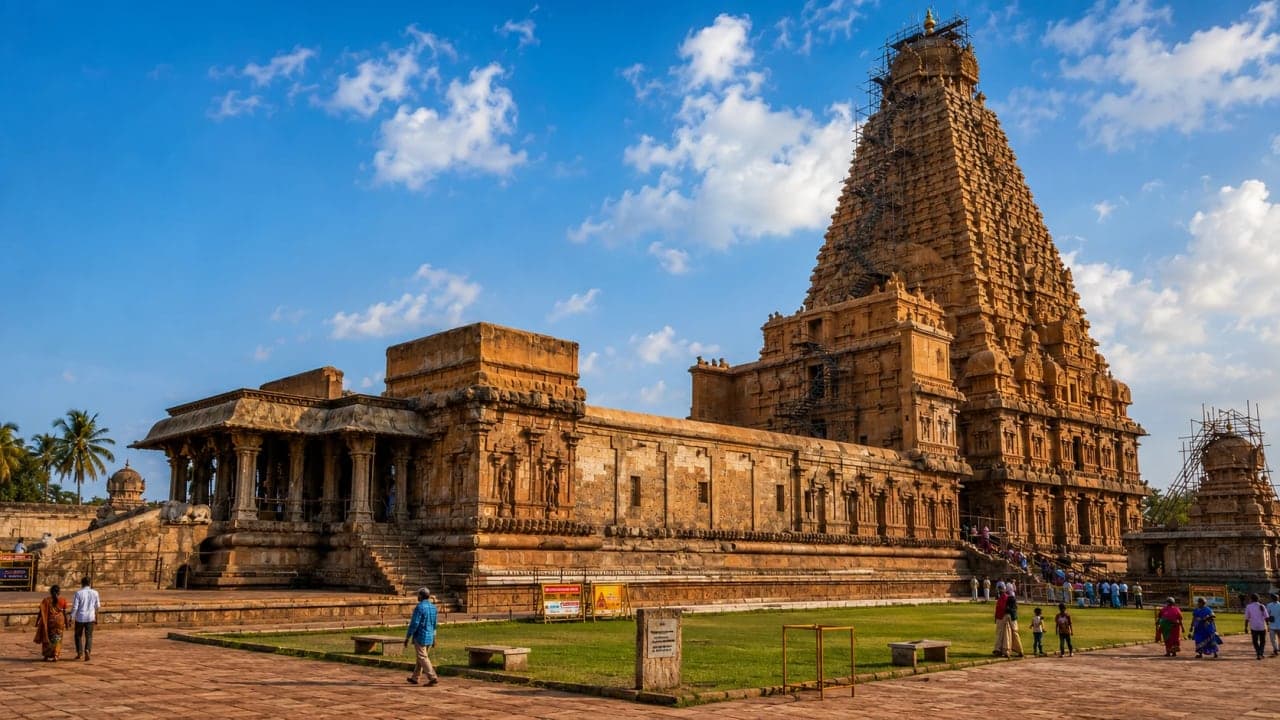
1. Brihadeeswarar Temple, Tamil Nadu
Location: Thanjavur, Tamil Nadu
Imagine building a temple more than 1,000 years ago using enormous blocks of granite—even though there were no granite quarries nearby.
Now imagine placing an 80-ton stone on top of a tower over 60 metres (200 feet) high without cranes, hydraulic lifts, or modern machinery.
That is the story of Brihadeeswarar Temple, also known as the Big Temple, built by the Chola emperor Rajaraja I in the 11th century.
Today, it is recognised as a UNESCO World Heritage Site and is considered one of the greatest architectural achievements in Indian history.
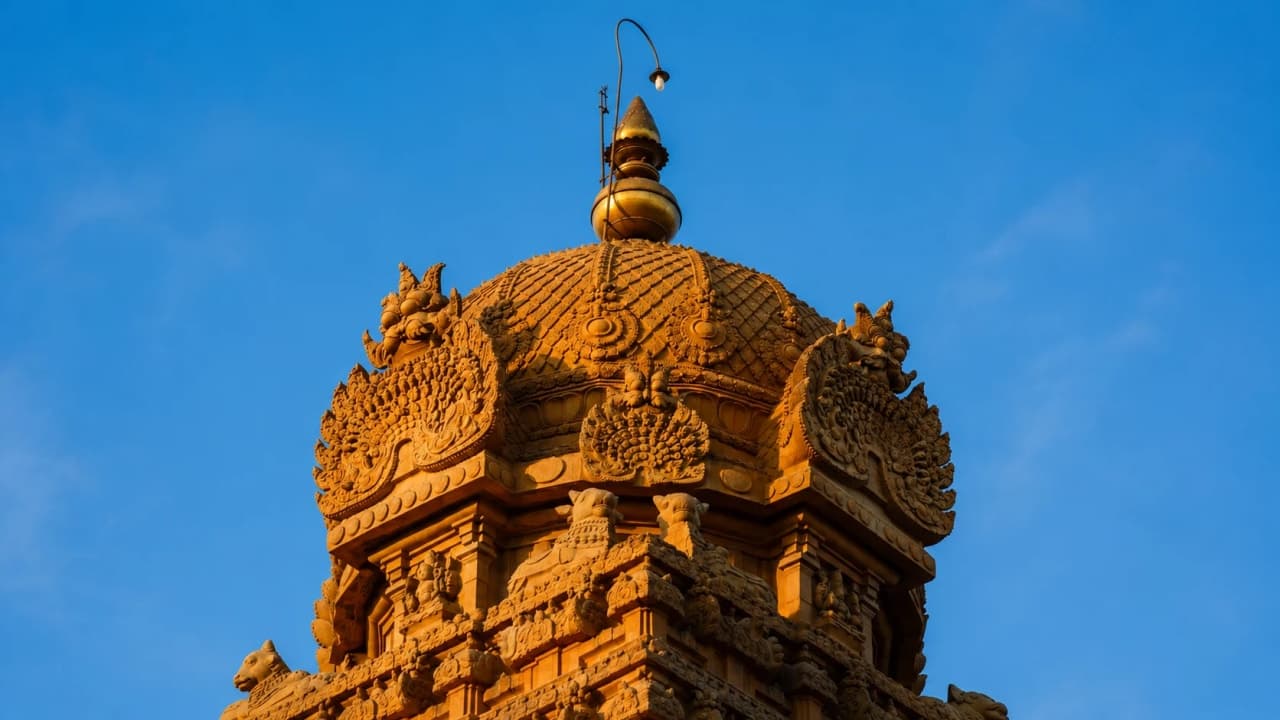
The Mystery of the Giant Capstone
The temple's towering vimana is crowned by a massive granite capstone weighing around 80 tons.
How ancient builders lifted such a heavy stone remains one of the temple's greatest engineering questions.
Historians believe an extremely long earthen ramp—possibly several kilometres in length—was constructed to gradually pull the stone to the top using elephants and manpower.
While this theory is widely accepted, no definitive archaeological evidence of the original ramp survives.
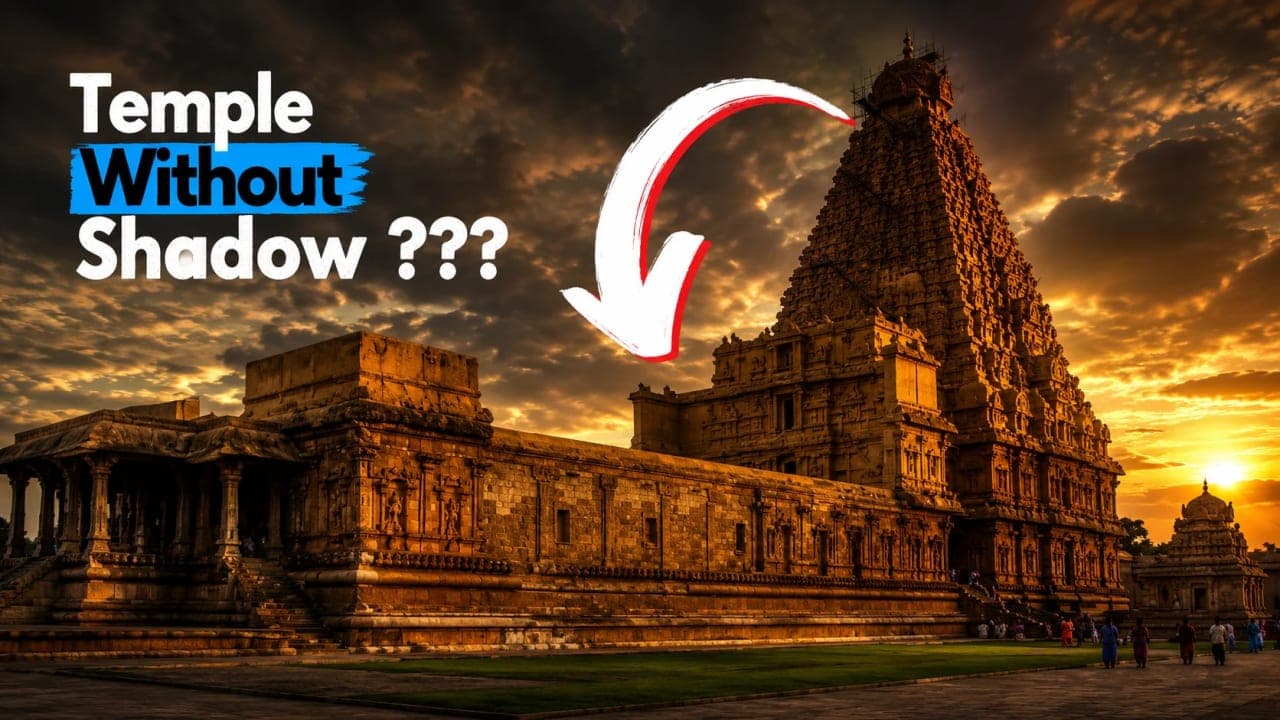
Does the Tower Cast No Shadow?
A popular belief claims that the temple's massive tower never casts a shadow on the ground at noon.
In reality, the tower does cast a shadow. However, because of the temple's proportions, architectural design, and the position of the sun during certain times of the year, the shadow often falls very close to the structure, giving rise to the enduring legend.
Even after understanding the science, standing beneath the towering structure is an unforgettable experience.
The real miracle may simply be the extraordinary engineering of the Cholas.
2. Konark Sun Temple, Odisha
Location: Konark, Odisha
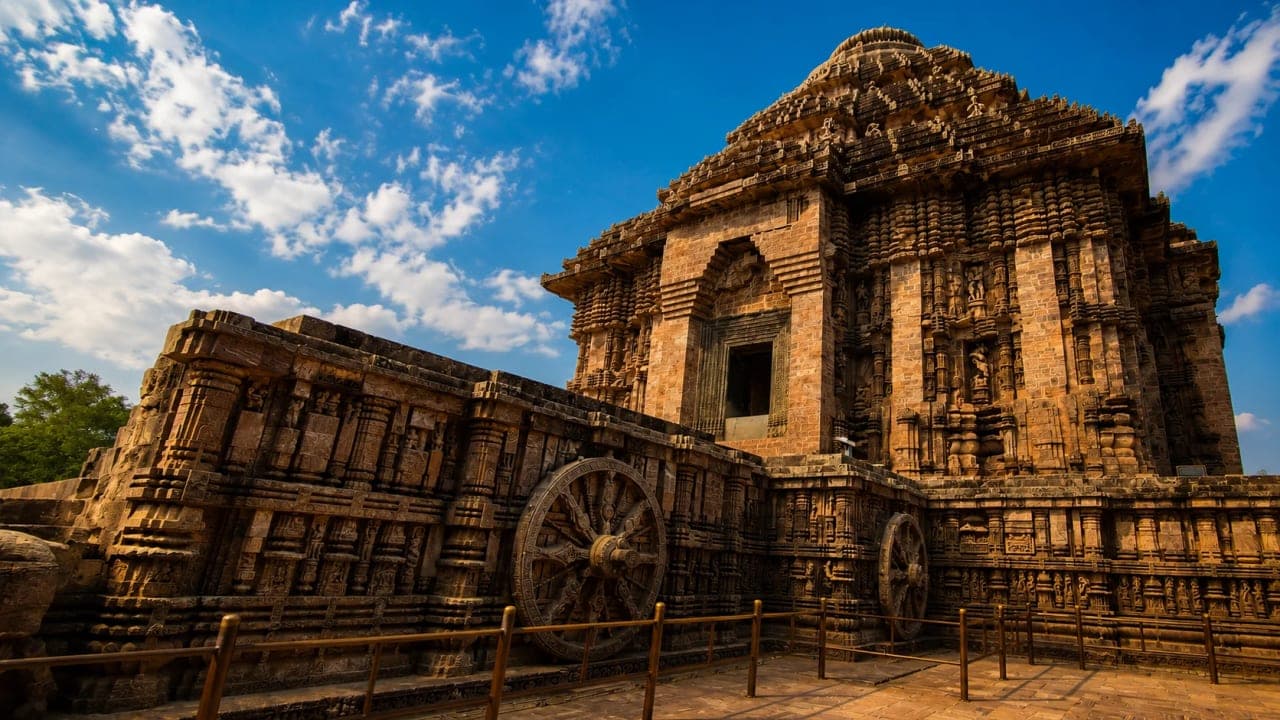
Few temples in the world look as dramatic as the Konark Sun Temple.
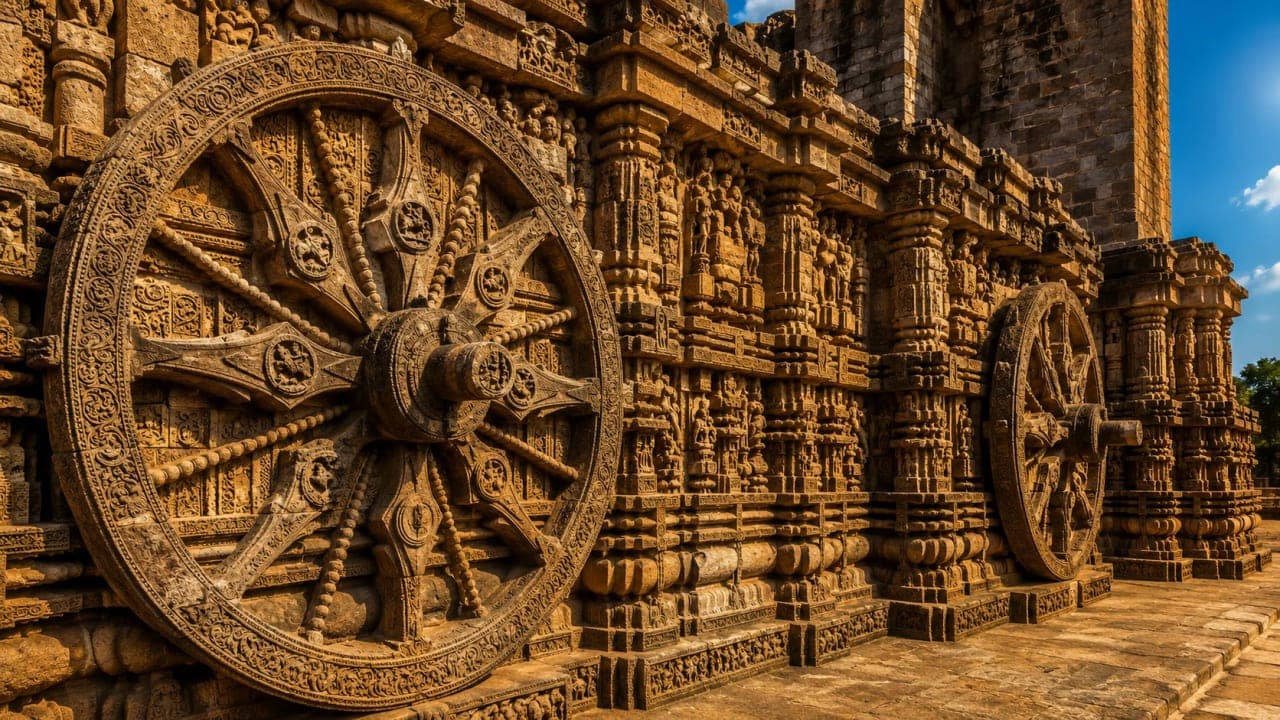
Designed in the shape of the Sun God's celestial chariot, the temple features 24 intricately carved stone wheels, each functioning like a giant sundial, and seven majestic stone horses appearing to pull the chariot across the sky.
Even in its partially ruined state, Konark remains breathtaking.
The Legend of the Magnetic Stone
Perhaps the most famous legend associated with Konark speaks of a gigantic lodestone placed at the temple's summit.
According to folklore, this powerful magnet supposedly caused ships sailing along Odisha's coast to lose their direction because it interfered with their magnetic compasses.
Some versions even claim the stone helped balance parts of the temple itself.
However, historians have found no conclusive evidence proving the existence of such a giant magnetic stone.
Still, the story continues to fascinate visitors.
A Temple Built Around Time
Unlike many temples that simply face east, Konark is believed to have been designed with remarkable astronomical precision.
The carved wheels are said to function as sundials, helping measure time through the position of sunlight.
Whether every claim surrounding the temple's astronomical accuracy is exact or somewhat romanticised, there is little doubt that its builders possessed exceptional knowledge of mathematics, astronomy, and geometry.
Walking around Konark feels like exploring an ancient observatory carved entirely from stone.
3. Mehandipur Balaji Temple, Rajasthan
Location: Dausa District, Rajasthan
Some temples attract people seeking peace.
Others attract people seeking answers.
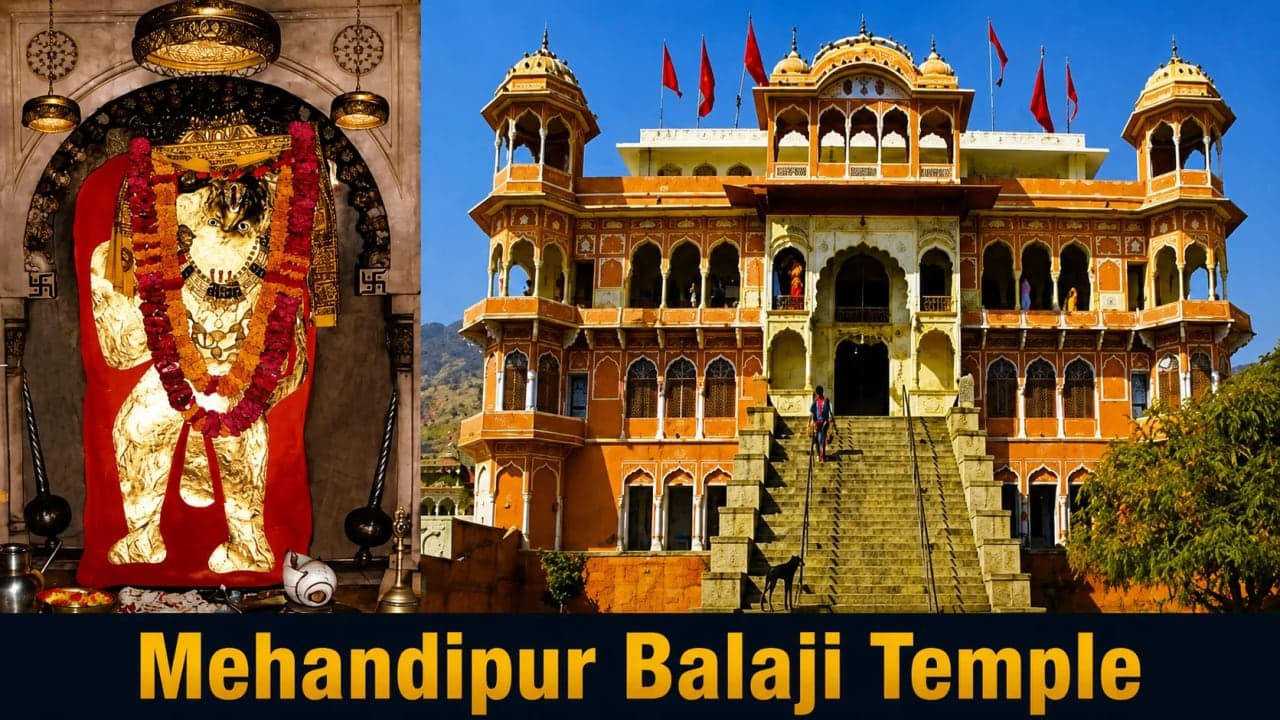
Mehandipur Balaji Temple attracts thousands who arrive believing they can find relief from negative spiritual influences.
Dedicated to Lord Hanuman in his form as Balaji, the temple has become one of India's most unusual pilgrimage destinations.
A Temple Known for Healing Rituals
Visitors often witness prayers and rituals that are rarely seen elsewhere.
Many devotees believe the temple possesses divine power to help those affected by negative energies or spiritual disturbances.
These practices have made Mehandipur Balaji famous throughout India.
For believers, the temple represents hope and healing.
Understanding the Mystery
Medical experts generally explain many reported experiences through psychology, emotional release, cultural beliefs, or community support rather than supernatural causes.
How is it so far?
Vote with other readers
However, these scientific perspectives do not diminish the temple's importance for millions of devotees.
Faith often works in ways that statistics cannot fully measure.
Whether one approaches the temple from a religious, cultural, or anthropological perspective, Mehandipur Balaji remains one of India's most intriguing places of worship.
Visitors are also advised to respect local customs, which include guidelines about photography and carrying food outside the temple premises.
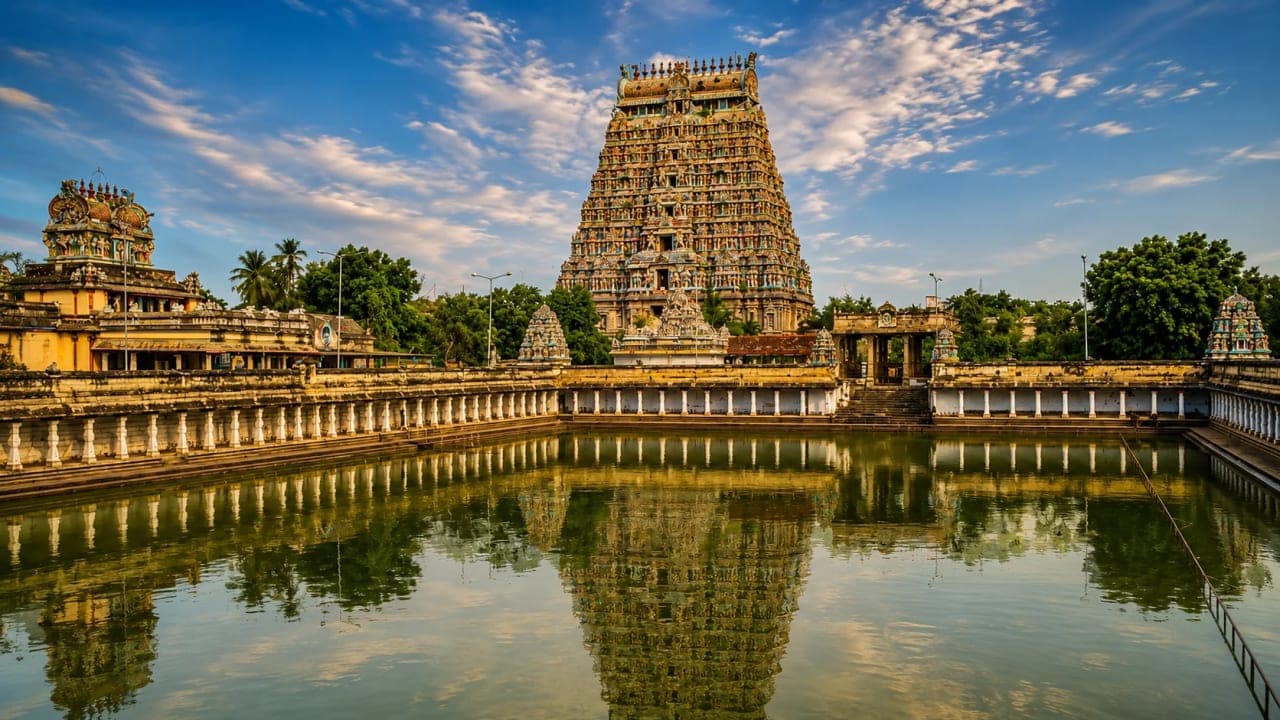
4. Chidambaram Nataraja Temple, Tamil Nadu
Location: Chidambaram, Tamil Nadu
Imagine entering a temple where one of the greatest mysteries is...
Empty space.
Welcome to Chidambaram Nataraja Temple, one of the holiest Shaivite temples in India.
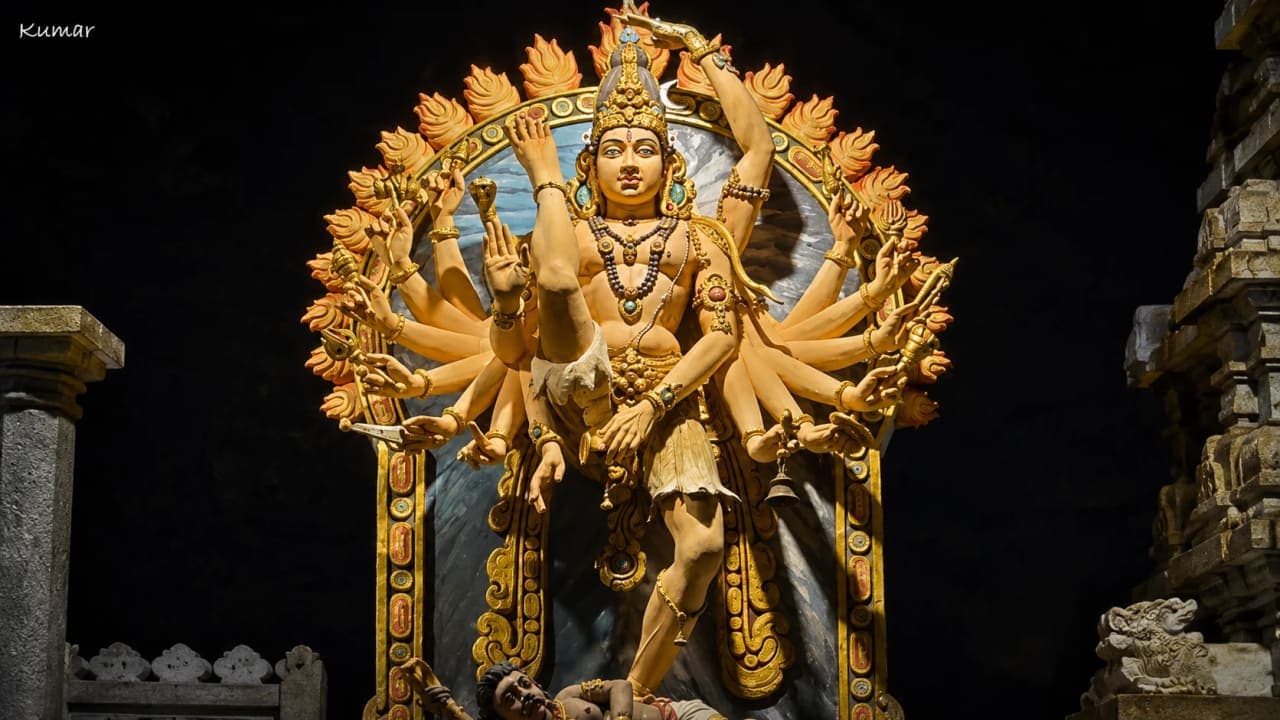
The temple is dedicated to Lord Shiva as Nataraja, the Cosmic Dancer.
But hidden within the sanctum lies something known as the Chidambara Rahasyam—literally, "The Secret of Chidambaram."
The Secret Behind the Curtain
During certain rituals, priests draw aside a curtain to reveal what appears to be empty space decorated with golden bilva leaves.
Rather than representing "nothing," this space symbolises the formless nature of the divine.
In Hindu philosophy, ultimate reality is believed to exist beyond physical form.
The empty space itself becomes sacred.
More Than a Religious Symbol
Historians see Chidambaram as one of the greatest centres of Shaivism.
Architects admire its magnificent Dravidian design.
Philosophers appreciate the temple's symbolic representation of consciousness and the universe.
Even today, the "secret" remains less about hiding something physical and more about understanding a profound spiritual idea.
Sometimes, the greatest mystery is not what we see.
It's what we cannot.
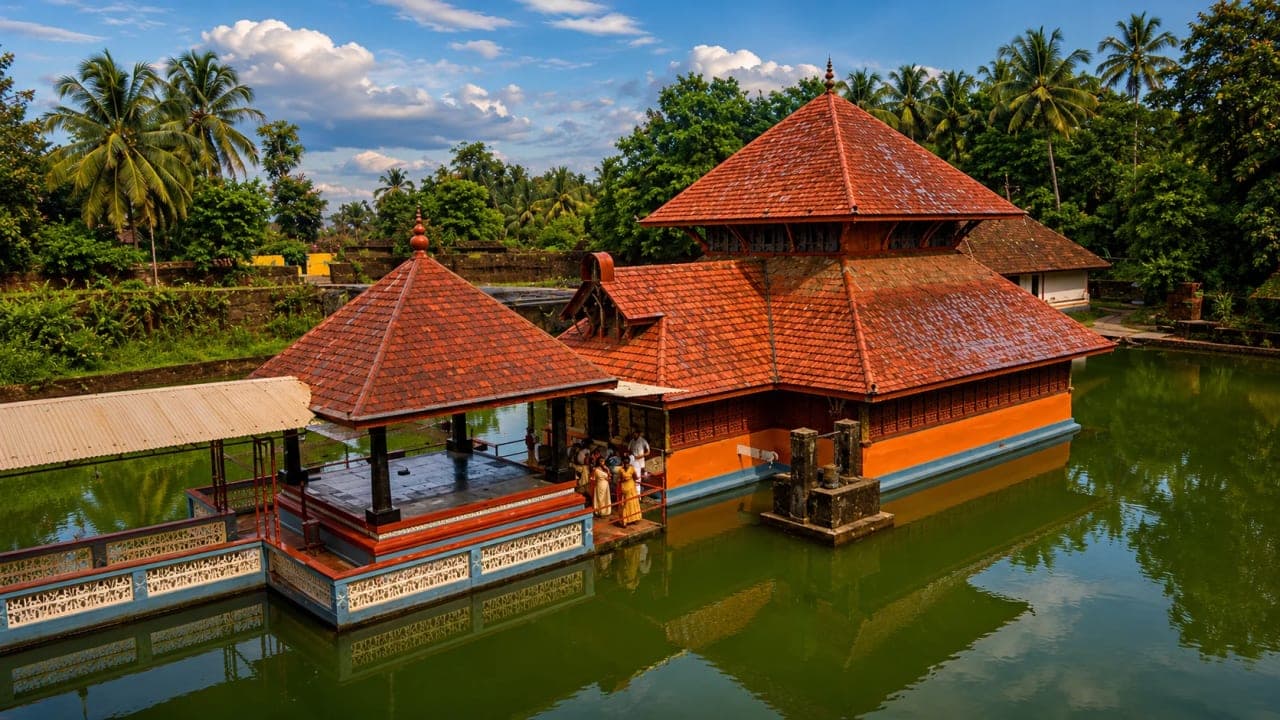
5. Ananthapura Lake Temple, Kerala
Location: Kasaragod District, Kerala
Most temples stand on hills.
Some stand beside rivers.
Ananthapura Temple stands in the middle of a lake.
Connected by a narrow stone bridge, the temple appears almost like an island floating peacefully on calm waters.
Its surroundings alone make it unforgettable.
Yet another story has made the temple famous throughout India.

The Legend of Babia
For decades, visitors spoke about a crocodile named Babia that lived in the temple lake.
What made the story extraordinary was the local belief that Babia was completely harmless and survived on the vegetarian offerings made at the temple.
According to temple tradition, there was never more than one sacred crocodile living in the lake at a time.
Babia became a beloved part of the temple's identity until its reported death in 2022.
Legend or Reality?
The crocodile itself certainly existed and was photographed by countless visitors.
The mystery lies in the traditions surrounding it.
How did a crocodile live peacefully alongside devotees?
Did it truly consume only vegetarian food?
Were local feeding habits responsible for its behaviour?
These questions continue to generate discussion.
Regardless of the explanations, Babia became a symbol of harmony between nature, faith, and local tradition.
Why Are We So Drawn to Temple Mysteries?
It's interesting to notice something.
Very few people travel hundreds of kilometres simply because a building is old.
They travel because stories make places memorable.
A hanging pillar becomes unforgettable.
An eternal flame becomes sacred.
A floating temple becomes magical.
A hidden vault becomes legendary.
An empty space becomes philosophical.
Temple mysteries survive because they are shared from one generation to another.
Parents tell them to children.
Guides tell them to travellers.
Priests tell them to pilgrims.
Historians examine them.
Scientists investigate them.
Photographers capture them.
And every visitor leaves with a slightly different version of the story.

Faith and Science Can Walk Together
One of the most beautiful things about these temples is that they don't force visitors to choose between faith and science.
A geologist may admire the natural landscape.
An engineer may study the architecture.
An archaeologist may examine inscriptions.
A philosopher may contemplate symbolism.
A devotee may simply bow in prayer.
All of them can stand in exactly the same place and experience something meaningful.
That is perhaps India's greatest strength.
Its temples welcome curiosity.
A Journey Worth Taking
If you ever decide to explore these temples, don't rush.
Reach early.
Walk slowly.
Notice the carvings.
Listen to the stories told by local guides.
Observe how devotees pray.
Read the historical plaques.
Ask questions.
And remember that not every mystery needs to be solved.
Sometimes the purpose of a journey is not to find answers but to experience wonder.
The Story Continues...
With these five temples, our journey now spans ten extraordinary temples across India.
From Assam's sacred rock shrine to Kerala's lake temple...
From Odisha's colossal stone chariot to Tamil Nadu's cosmic secret...
From Rajasthan's healing rituals to Himachal's eternal flames...
Every destination reminds us that India's heritage is built not only from stone but also from stories.
Some are supported by history.
Some are explained by science.
Some remain cherished legends.
And perhaps that is exactly why they continue to inspire millions of travellers year after year.
Because long after monuments become ruins, stories continue to live.
And in India, some of the greatest stories are still waiting inside its oldest temples.
Lock in the takeaway
Spiritual Travel Stories
Frequently asked questions
Which temples are covered in Part 2 of Temples That Defy Logic?
Part 2 explores five fascinating temples: Brihadeeswarar Temple (Tamil Nadu), Konark Sun Temple (Odisha), Mehandipur Balaji Temple (Rajasthan), Chidambaram Nataraja Temple (Tamil Nadu), and Ananthapura Lake Temple (Kerala).
Why is Brihadeeswarar Temple considered mysterious?
The temple is famous for its massive granite capstone placed atop a towering vimana and the popular belief that its main tower casts little or no shadow at noon. Its remarkable Chola-era engineering continues to impress historians and architects.
What is the mystery of the Konark Sun Temple?
Konark Sun Temple is associated with legends of a powerful magnetic stone said to have influenced passing ships. It is also celebrated for its giant stone wheels, which are believed to function as sundials.
What is the Chidambara Rahasyam?
The Chidambara Rahasyam, or "Secret of Chidambaram," represents the formless nature of the divine. During certain rituals, a curtain is drawn aside to reveal a sacred empty space symbolising ultimate reality in Hindu philosophy.
Why is Mehandipur Balaji Temple famous?
Mehandipur Balaji Temple is renowned for prayers and rituals performed by devotees seeking relief from negative spiritual influences. It remains one of India's most visited and unique pilgrimage destinations.
What is special about Ananthapura Lake Temple?
Ananthapura Lake Temple is India's only lake temple and is famous for the legend of Babia, a crocodile believed to have peacefully lived in the temple lake while being fed vegetarian offerings.
Are these temple mysteries scientifically proven?
Some mysteries have proposed scientific, historical, or engineering explanations, while others remain rooted in local traditions, religious beliefs, and folklore. The article clearly distinguishes documented facts from popular legends.
Which temple in Part 2 is a UNESCO World Heritage Site?
Both Brihadeeswarar Temple in Thanjavur and Konark Sun Temple in Odisha are recognised as UNESCO World Heritage Sites for their outstanding architectural and historical significance