
Listen to this article
Checking audio support
Sometimes the best journeys begin with a little uncertainty. Ours started with a simple question—"What if it rains too much?"
There are two kinds of travellers.
The first kind carefully checks the weather forecast every day before booking a trip. The second kind knows the forecast, smiles at it, and says, "Let's see what happens."
For our Kerala trip, we somehow became the second kind.
Our Kerala trip actually began long before we packed our bags. Sometime in June, my husband, my mother-in-law, my father-in-law, and I started discussing where we should go for our next family vacation. Like most families, we had a long list of possible destinations. Himachal Pradesh, Gujarat, Rajasthan, and a few other places all came up during our discussions. But somehow, for one reason or another, none of them felt like the perfect choice. Sometimes it was the weather, sometimes the travel plan, and sometimes we simply weren't convinced enough to say, "Yes, this is the one."
Then, one day, someone suggested Kerala.
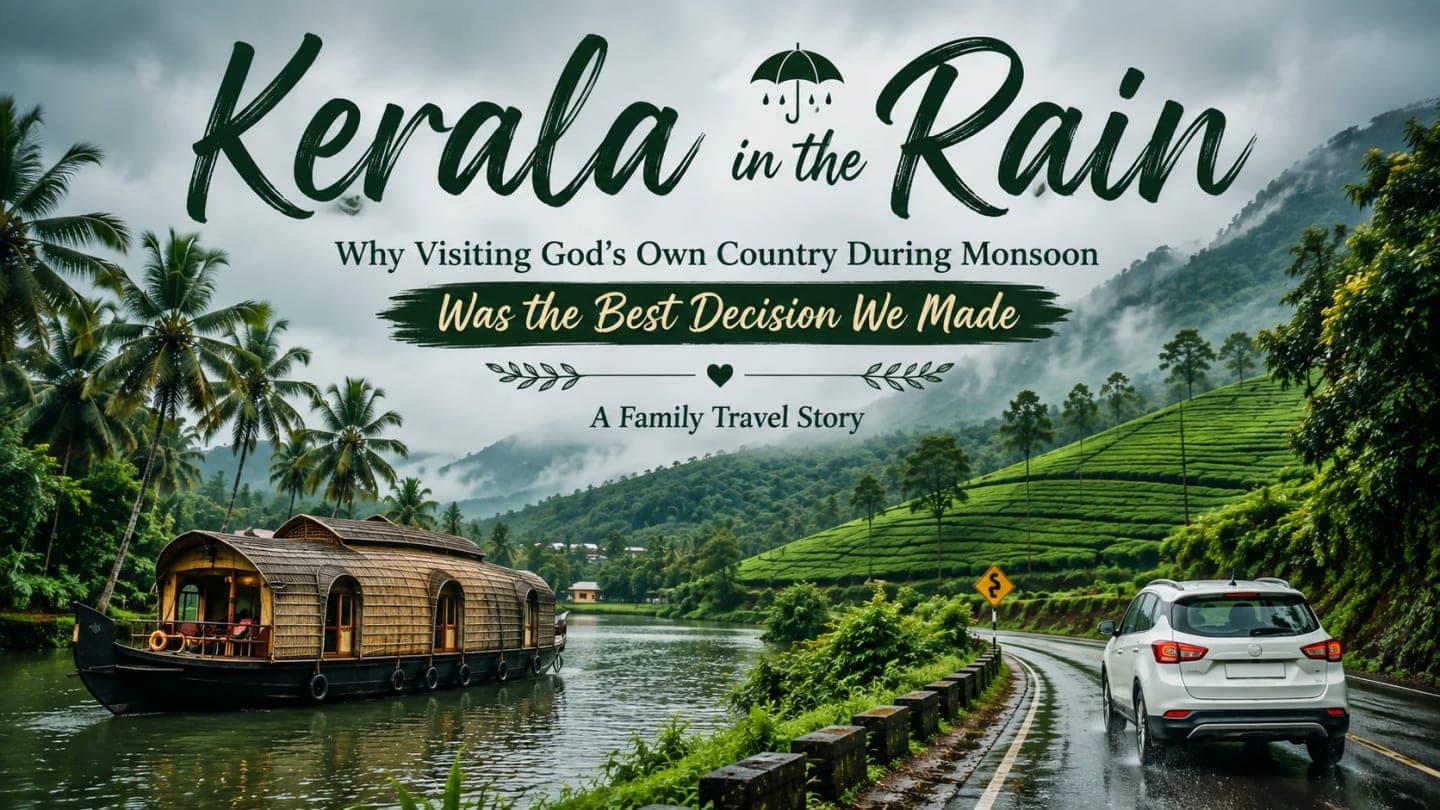
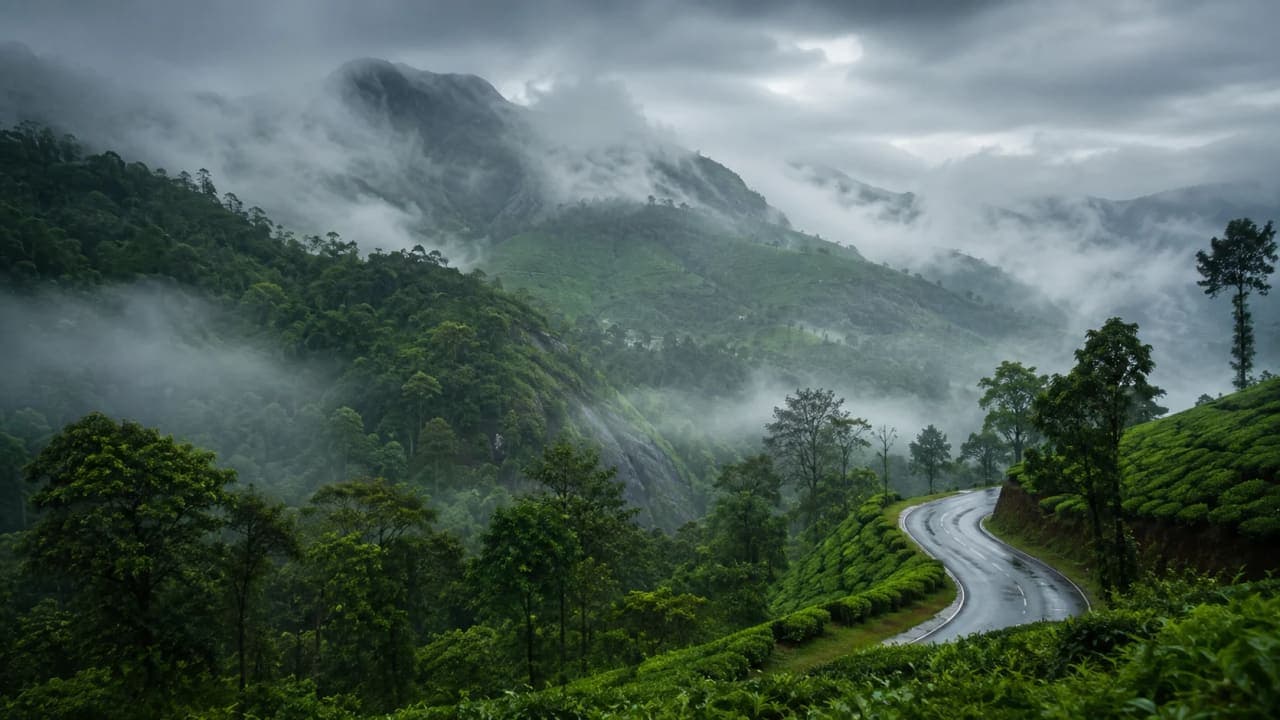
The moment my husband and I heard the name, we looked at each other and instantly agreed. Kerala had been on our travel wish list for quite some time. We had admired countless photographs of endless tea plantations, mist-covered mountains, waterfalls flowing through dense forests, peaceful backwaters, coconut trees swaying in the breeze, and roads so green they looked almost unreal. We shared the idea with my husband's parents, convinced them that Kerala would be the perfect destination, and before long, everyone was excited. We booked our trip for the last week of July, hoping to experience Kerala at its greenest during the monsoon.
There was only one small problem.
July is monsoon season in Kerala.
And everyone we spoke to had an opinion.
"It rains too much."
"Roads might get blocked."
"You may not be able to enjoy sightseeing."
"Why don't you visit in winter instead?"
For a few days, we kept going back and forth.
Should we postpone?
Should we choose another destination?
Should we wait for better weather?
Then one simple thought changed everything.
If Kerala is famous for its greenery, where does that greenery come from?
The answer was obvious.
The rain.
Without the monsoon, Kerala wouldn't be the magical place that millions of travellers fall in love with every year.
So instead of worrying about what could go wrong, we decided to focus on what could go right.
We booked our tickets.
Prepared our itinerary.
Packed our raincoats.
And left with excitement instead of fear.
Looking back today, that may have been the best decision we made.
The Journey Was More Than Just a Vacation
For us, this wasn't just another destination to tick off a bucket list.
Travelling with family always feels different.
The conversations start days before the trip.
"What should we pack?"
"Will it be cold?"
"How many sweaters should we carry?"
"Do we really need umbrellas if we have raincoats?"
Every family has these discussions.
Some end with laughter.
Some end with someone secretly packing five extra things "just in case."
Ours was no different.
The excitement slowly built up as the departure date came closer.
Everyone had their own expectations.
I simply wanted to see those endless green landscapes that I had admired in photographs for years.
Sometimes, the anticipation itself becomes part of the journey.
Kerala — More Than Just a Beautiful State
Before visiting Kerala, most people know it because of Instagram.
Tea gardens.
Houseboats.
Backwaters.
Beaches.
Coconut trees.
Munnar.
Alleppey.
Thekkady.
Kochi.
But once you begin reading about Kerala, you realise there is so much more beneath its beautiful scenery.
Kerala is one of India's most culturally rich states.
Located along the south-western coast of India beside the Arabian Sea, Kerala has been welcoming traders, travellers and explorers for thousands of years.
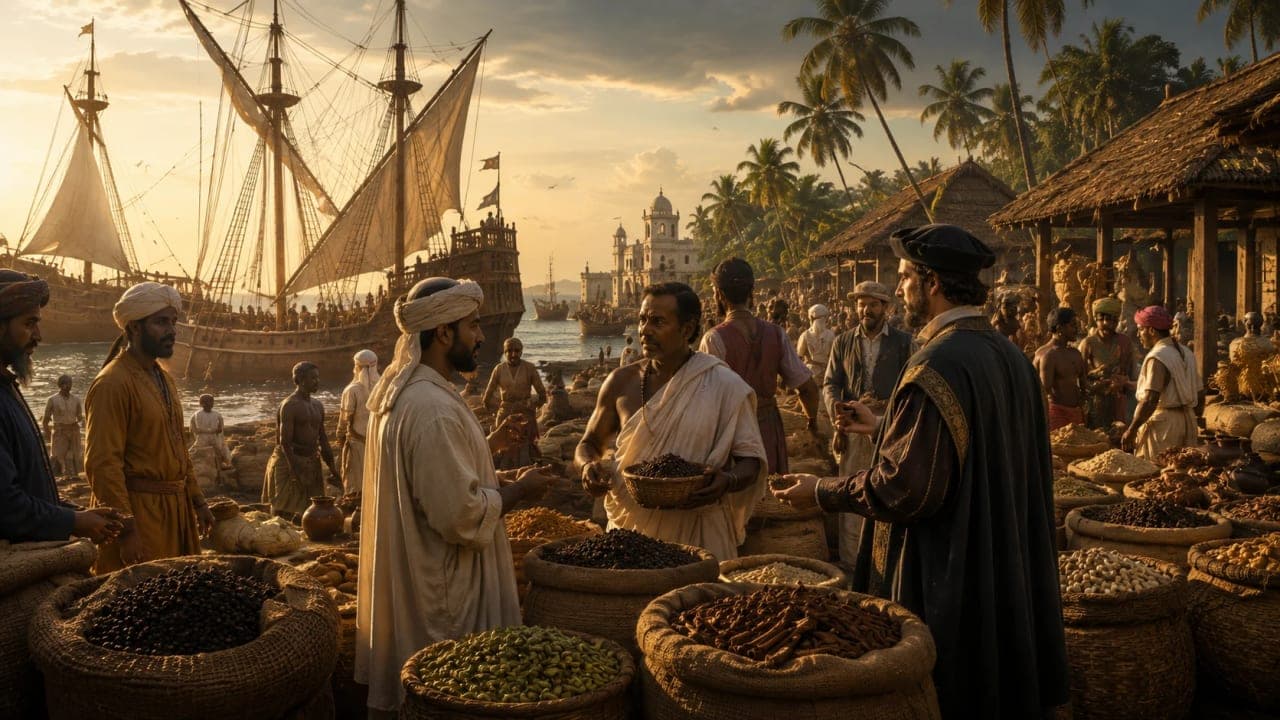
Long before modern tourism existed, merchants from Arabia, China, Rome and Europe visited Kerala's ports to trade spices.
Black pepper from Kerala was once so valuable that it was often referred to as "Black Gold."
The spice trade shaped not only Kerala's economy but also its culture.
Different communities settled here over centuries, bringing their traditions, architecture, food and customs. Yet Kerala managed to preserve its own identity remarkably well.
Even today, as you travel across the state, you'll notice churches standing near temples, mosques beside traditional markets, colonial buildings blending with ancient heritage, and modern cities surrounded by forests and rivers.
It feels like history never really left Kerala—it simply continued growing alongside the present.
Why Is Kerala Called "God's Own Country"?
One phrase appears almost everywhere when Kerala is mentioned.
God's Own Country.
How is it so far?
Vote with other readers
It sounds poetic.
But where did it come from?
Interestingly, the phrase became internationally famous during Kerala Tourism's campaign in the late 1980s and early 1990s. The slogan perfectly captured what visitors felt after experiencing the state.
Of course, there are also local legends connected to Kerala's origin.
According to Hindu mythology, Lord Parashurama, the sixth incarnation of Lord Vishnu, threw his axe into the Arabian Sea. The sea retreated, revealing a new stretch of fertile land.
That land is believed to be Kerala.
Whether one sees it as mythology, faith, or symbolism, the story beautifully reflects how deeply nature and spirituality are connected in Kerala.
And honestly...
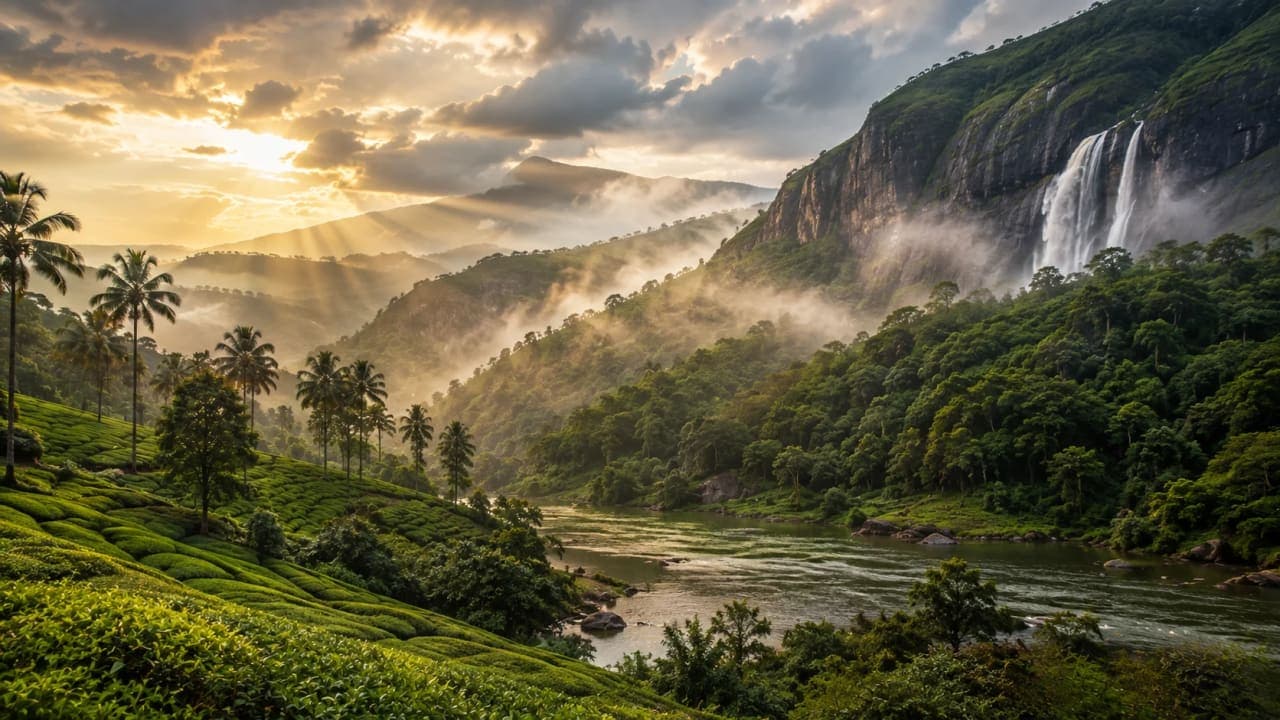
When you stand in front of mist-covered mountains, hear waterfalls echoing through forests, watch clouds floating at eye level, and breathe in air that smells of fresh rain and tea leaves, you begin to understand why someone called it God's Own Country.
Some places don't need advertisements.
Nature does all the marketing.
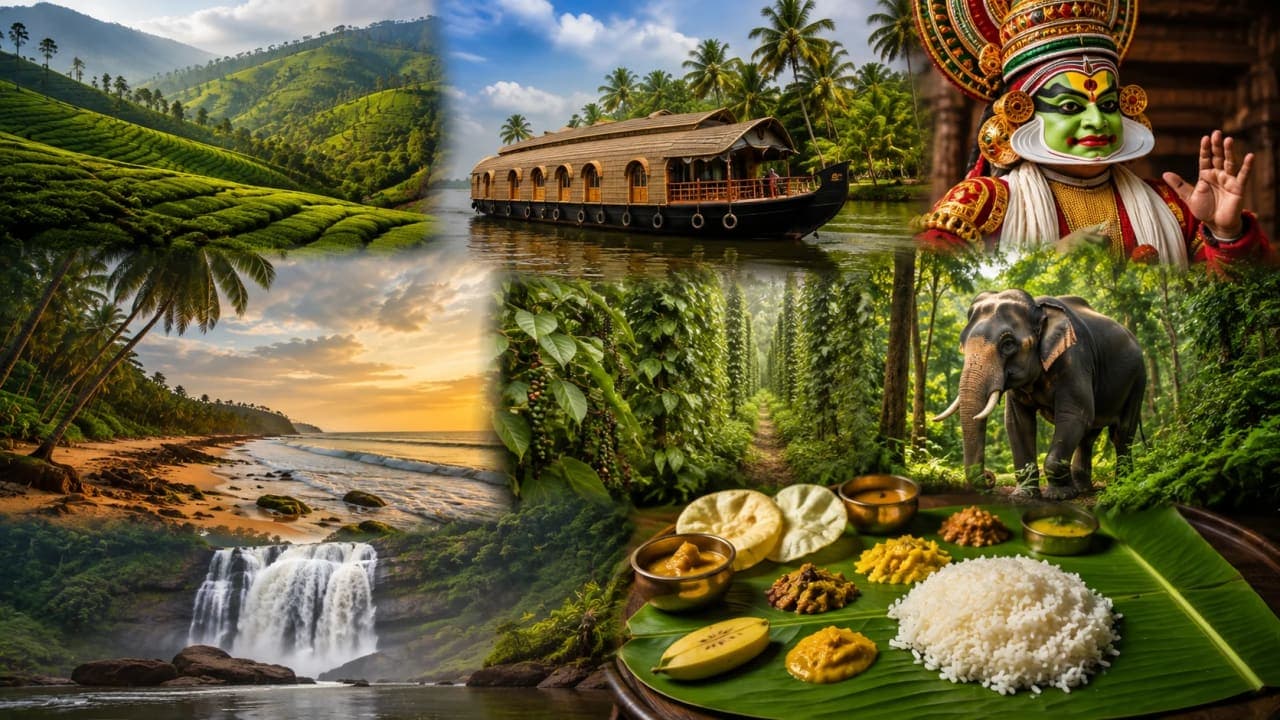
What Makes Kerala So Special?
Every Indian state has something unique.
Kerala somehow has a little bit of everything.
Endless Greenery
The first thing almost every traveller notices is the colour.
Green.
Everywhere.
Not just trees.
Mountains.
Tea plantations.
Rice fields.
Forests.
Roadside plants.
Even the smallest villages appear surrounded by nature.
The monsoon only makes this greenery richer.
Tea Plantations of Munnar
Ask someone about Kerala, and chances are they'll immediately mention Munnar.
Its rolling tea estates stretch across hills like giant green carpets.
Walking through these plantations feels incredibly peaceful.
There are no noisy cities.
No towering buildings.
Just hills, fresh air and endless shades of green.
Backwaters
Kerala's backwaters are unlike anything else in India.
A vast network of lakes, canals and lagoons creates an entirely different way of life.
People travel by boats.
Children go to school by boat.
Goods are transported by boat.
Life simply flows with the water.
Houseboats drifting slowly through these calm waters have become one of Kerala's most iconic experiences.
Rich Wildlife
Kerala is also home to numerous wildlife sanctuaries and national parks.
Elephants, gaurs, Nilgiri langurs, deer and countless bird species inhabit these forests.
Places like Thekkady offer travellers a chance to experience nature beyond mountains and beaches.
Ayurveda
Kerala has long been associated with Ayurveda.
People from around the world visit the state for traditional therapies, massages and wellness treatments.
For many visitors, Kerala isn't just about sightseeing.
It's about slowing down.
Relaxing.
Healing.
Food
Kerala's cuisine is another experience altogether.
Coconut plays a major role in everyday cooking.
From curries and chutneys to desserts and snacks, its flavour appears in countless dishes.
Seafood lovers often describe Kerala as paradise, while vegetarians will also find plenty of traditional meals served on banana leaves.
Even a simple breakfast here feels different from anywhere else in India.
Culture and Festivals
Kerala's cultural heritage is equally fascinating.
Classical dance forms like Kathakali and Mohiniyattam continue to be performed with great pride.
The martial art Kalaripayattu is considered one of the oldest fighting traditions in the world.
Festivals like Onam bring families together with elaborate floral decorations, grand feasts and boat races that have become internationally famous.
Every tradition reflects the state's deep connection with its history.
The Monsoon We Were Worried About...
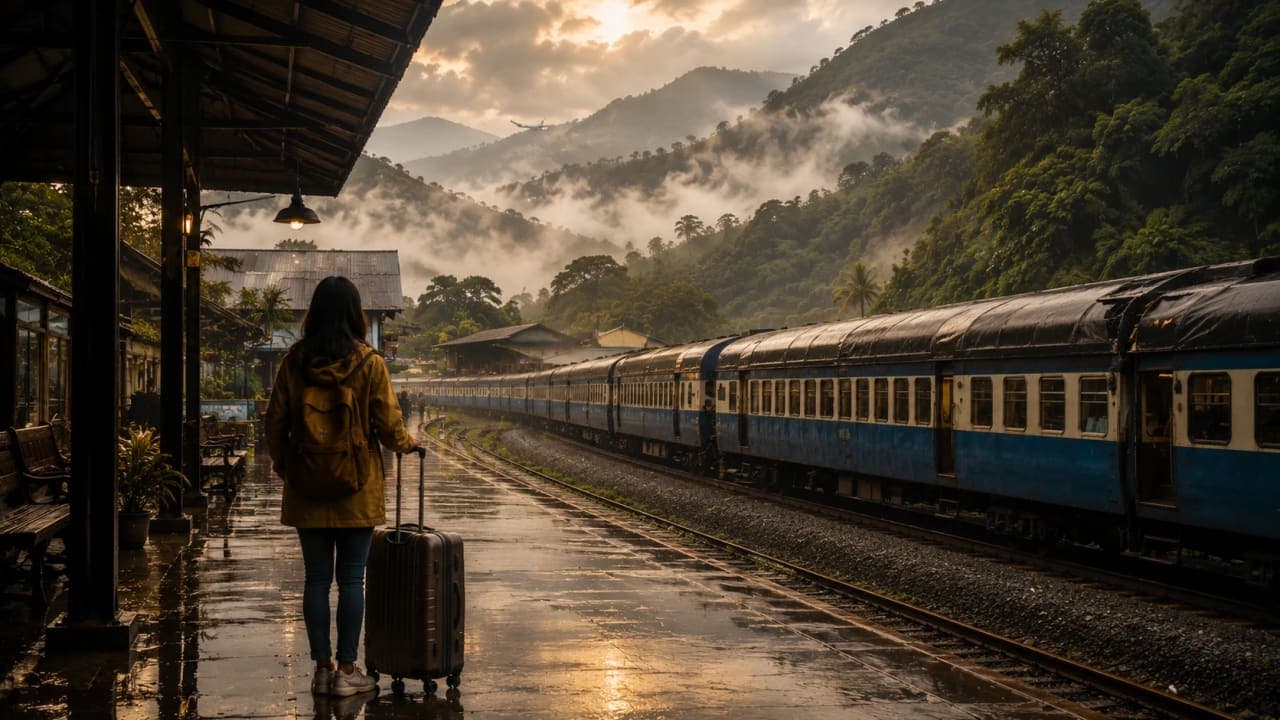
As our travel date approached, weather apps kept showing the same symbol.
🌧️
Rain.
Every single day.
Normally, that might discourage someone from travelling.
But something about Kerala during monsoon felt different.
Instead of imagining ruined plans, we imagined greener mountains.
Larger waterfalls.
Cooler weather.
Clouds rolling across valleys.
The smell of wet earth.
Sometimes weather isn't the enemy of travel.
Sometimes it becomes the highlight.
We reminded ourselves that travelling isn't about perfect conditions.
It's about memorable experiences.
A little rain could easily become part of the story we would laugh about years later.
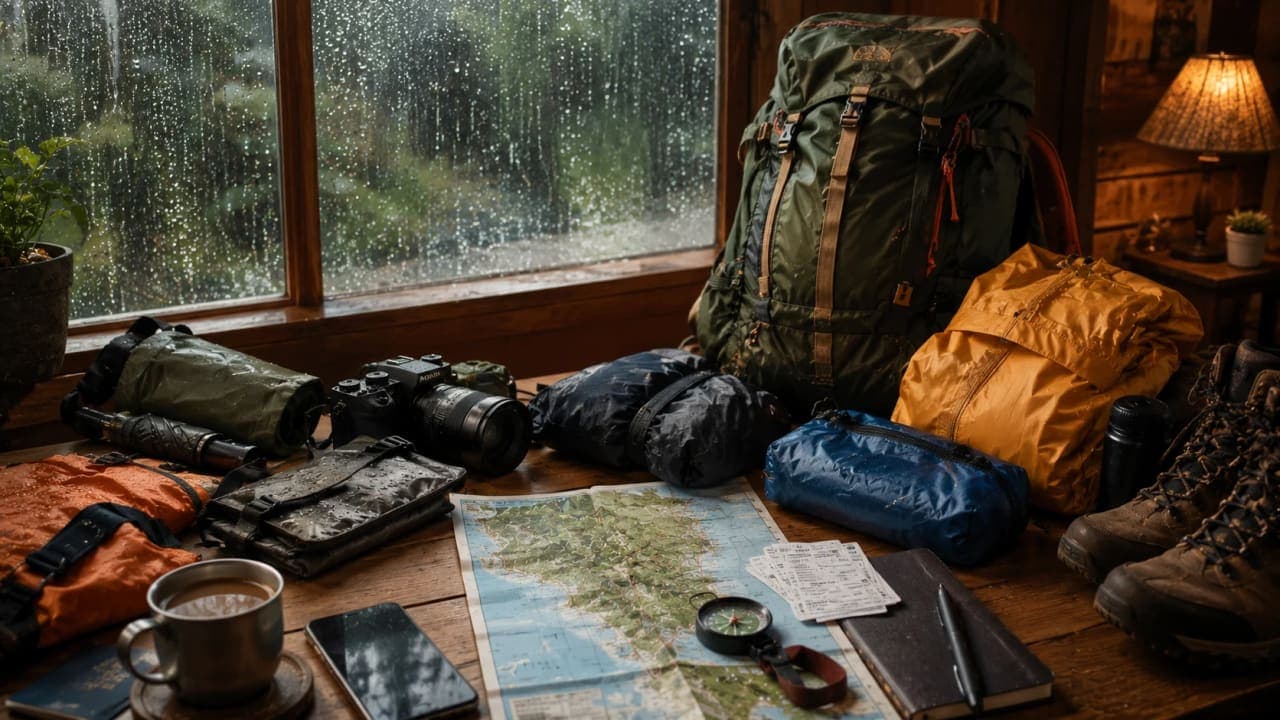
So we packed waterproof jackets, covered our luggage properly, kept extra footwear, downloaded offline maps, and prepared ourselves for whatever Kerala had planned for us.
Every Journey Begins Long Before You Reach the Destination
People often think a trip begins when the flight lands or the train reaches the station.
I don't think so.
A journey begins much earlier.
It begins while searching destinations late at night.
While comparing hotels.
While discussing routes.
While watching travel videos.
While convincing family members.
While making packing lists.
While wondering whether the weather will cooperate.
By the time we finally left for Kerala, we already felt like the trip had begun.
There was excitement.
A little nervousness.
A lot of curiosity.
And one shared hope—that this family vacation would give us memories we'd remember for years.
We had no idea that Kerala had far more surprises waiting for us than we had imagined.
The rain we feared...
would soon become one of the reasons we fell in love with the place.
But that story deserves its own chapter.
In the next part of this travel series, I'll take you through our actual Kerala itinerary—our first impressions, the beautiful roads, unexpected moments, the rain that welcomed us, and everything that happened once we finally stepped into God's Own Country.
Lock in the takeaway
Kerala Travel Stories
Frequently asked questions
Is July a good time to visit Kerala?
Yes. July is one of the best months to experience Kerala's lush greenery, mist-covered hills, overflowing waterfalls, and peaceful atmosphere. While frequent rain is expected, it also makes the landscapes far more beautiful than during the dry season.
Why is Kerala called God's Own Country?
The phrase became popular through Kerala Tourism's branding campaign and reflects the state's extraordinary natural beauty. It is also linked to the Hindu legend of Lord Parashurama, who is believed to have created Kerala by reclaiming land from the Arabian Sea.
What is Kerala famous for?
Kerala is famous for its tea plantations, backwaters, beaches, wildlife, Ayurveda, spice plantations, houseboats, rich culture, Kathakali dance, delicious cuisine, and breathtaking monsoon landscapes.
Is it safe to travel to Kerala during the monsoon?
Yes, provided you stay updated on weather forecasts and follow local travel advisories. Carry rain gear, waterproof footwear, and allow flexibility in your itinerary, as heavy rain can occasionally affect travel plans.
Is Kerala suitable for a family vacation?
Absolutely. Kerala offers a wonderful mix of scenic beauty, cultural experiences, wildlife, temples, hill stations, beaches, and relaxing backwaters, making it an excellent destination for travellers of all ages.
Which places are most popular in Kerala?
Some of Kerala's most popular destinations include Munnar, Alleppey, Kochi, Thekkady, Wayanad, Kovalam, Varkala, Athirappilly Falls, Kumarakom, and Vagamon.
What should I pack for a Kerala trip during monsoon?
Pack lightweight quick-dry clothes, a raincoat, waterproof footwear, an umbrella, waterproof covers for electronics, essential medicines, and an extra pair of shoes. These items make travelling much more comfortable during the rainy season.
Is this article the complete Kerala itinerary?
No. This is the introduction to our Kerala travel series, covering why we chose to visit during the monsoon and what makes Kerala so special. The next article shares our complete itinerary, destinations, experiences, and memorable moments from the trip.