
Listen to this article
Checking audio support
Munnar Unplanned: Rain, Broken Tripods & Beautiful Detours
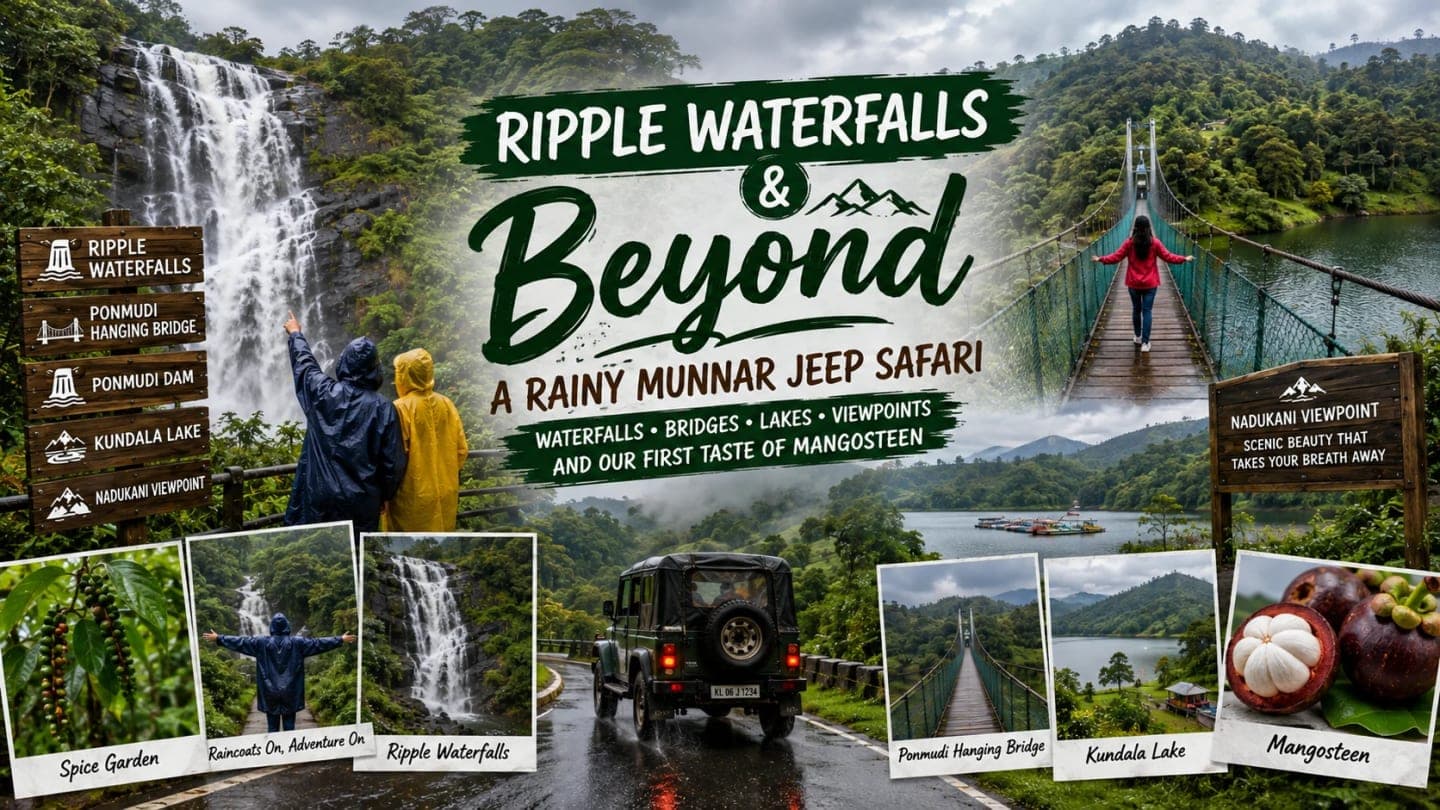
Our jeep safari had officially begun, and the first major stop was one we had been looking forward to—Ripple Waterfalls. The weather had been playing hide-and-seek with us throughout the journey, and just when we thought the rain might finally give us a little break, it started pouring again.
By this point, though, rain no longer felt like an interruption to our Kerala trip. It had become a part of the experience. Almost every place we visited had its own rain story attached to it, and Ripple Waterfalls was about to get one too.
Raincoats First, Waterfall Later
By the time our jeep reached the area near Ripple Waterfalls, the rain had become quite heavy. We knew umbrellas wouldn't be enough for the walk ahead, so our first task was to buy raincoats. There were several small shops along the pathway selling rain gear, snacks, souvenirs and other things travellers might need.
There was also a zipline there. After already missing Eagle's Flight earlier because of the rain, seeing another zipline was tempting. But the weather was still not on our side, so once again we decided to let it go. Apparently, Kerala had decided that ziplining wasn't going to be part of this particular trip.
We bought our tickets and started walking towards the waterfall instead.
And Then My Camera Stand Broke
Before beginning the downhill walk, we stopped at a beautiful spot to take some pictures. I took out the camera stand that I had specifically carried on the trip so that all of us could easily take pictures together without depending on someone else.
And right when I needed it the most—it broke.
I was genuinely sad. Anyone who enjoys taking travel photographs will understand how frustrating it is to carry something throughout a trip only for it to stop working at exactly the wrong moment. For a few minutes, I kept thinking about all the photographs we could have taken with it.
There wasn't much we could do, though. Ripple Waterfalls was waiting, so with a slightly heavy heart and one broken camera stand, we continued walking.
Interestingly, by the end of the jeep safari, I would realise that the broken stand wasn't as big a problem as I'd initially thought.
A Little Colour Between All That Green
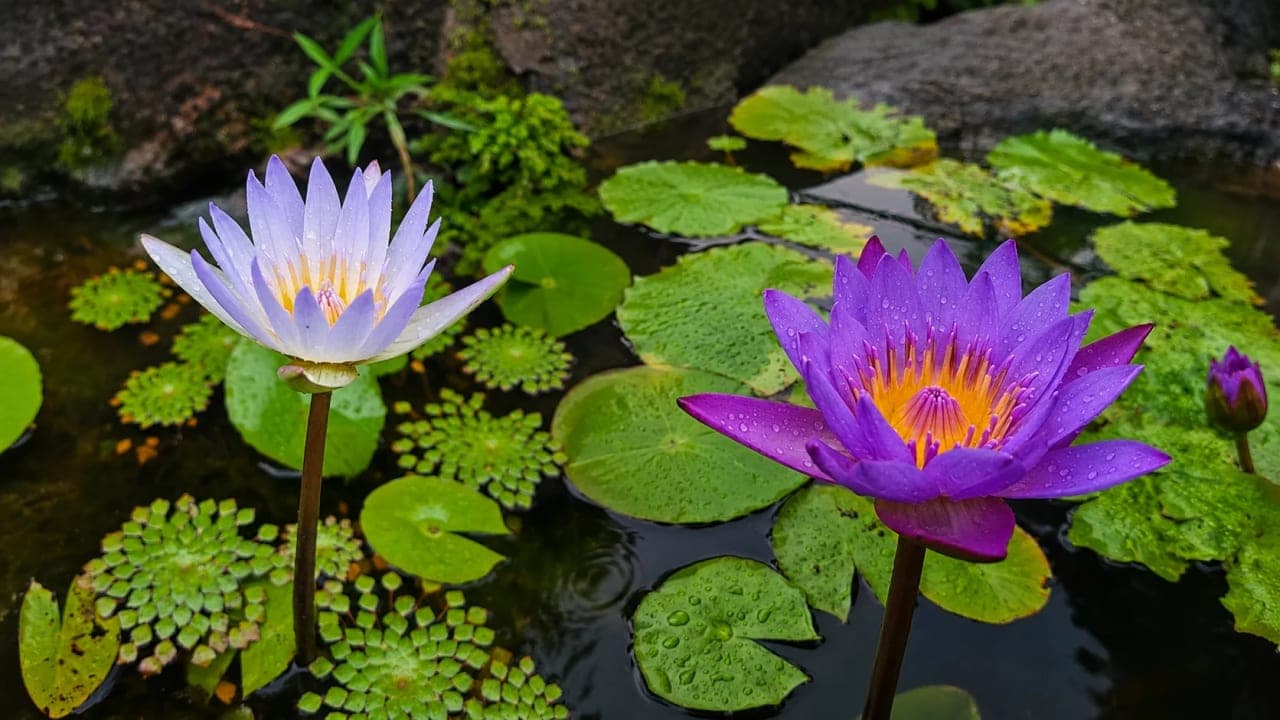
As we moved ahead, something beautiful quickly distracted me from my tripod tragedy. Amid all that deep monsoon greenery were some incredibly beautiful and colourful lotus-like flowers. The contrast was so striking that we simply couldn't walk past them without stopping.
So, naturally, the phones came out again.
We clicked a few pictures and continued towards the waterfall. Before long, the rain decided to say hello once again. This time there was no discussion—we immediately put on our newly purchased raincoats and kept walking.
Small streams of rainwater were flowing down the surrounding slopes, the pathways were wet, and everything around us looked freshly washed. The sound of rushing water also kept becoming louder, telling us that we were getting closer.
And Finally... Ripple Waterfalls
After walking further down, we eventually reached a point from where we could see Ripple Waterfalls in all its glory.
And what a sight it was.
The waterfall was flowing with incredible speed and force. Heavy monsoon rainfall had filled the streams coming down the mountains, turning the waterfall into a powerful rush of white water crashing against dark rocks. Mist rose around it while the surrounding vegetation seemed almost impossibly green.
For a while, we simply stood there looking at it. There are some places where you don't really need to do anything. You don't need an activity, a ride or an elaborate plan. Standing quietly and watching nature is enough.
Ripple Waterfalls was one of those places for us.
We took photographs from different viewpoints, recorded plenty of videos and spent some time enjoying the view before finally deciding to start walking back.
What Makes Ripple Waterfalls Special?
Ripple Waterfalls, also commonly referred to as Sree Narayanapuram Ripple Waterfalls, is one of the scenic waterfalls in Kerala's Idukki high ranges around the wider Munnar region. It flows through rocky terrain surrounded by dense tropical vegetation, making the entire area particularly beautiful during the rainy season.
Monsoon completely changes the character of waterfalls like Ripple. The increased rainfall strengthens the flow, small streams appear across the hillsides, and the surrounding vegetation becomes greener and denser.
Even the walk towards the waterfall becomes part of the experience—wet pathways, tiny streams, mist, raincoats and greenery slowly lead you towards the main cascade.
Perhaps that is what made our visit memorable. Ripple wasn't simply something we reached, photographed and left. The rain, the walk and everything that happened along the way became part of our memory of the waterfall.
The Walk Back and Our Little Trip Ritual
Walking downhill had been easy. Climbing back up was when our legs politely reminded us that gravity exists.
Still, we kept finding excuses to stop along the way. There was another viewpoint here, another beautiful patch of greenery there, and naturally another opportunity for photographs. Even without the camera stand, we somehow managed quite well.
Once we reached the shops near the entrance, it was time for one of our little travel traditions—buying fridge magnets.
Some people collect postcards, some collect keychains and some bring back mugs. We have slowly developed a habit of collecting fridge magnets from the places we visit. They are small, easy to carry, and months later, simply opening the refrigerator can unexpectedly remind you of an entire journey.
So a few more magnets were added to our Kerala collection before we returned to the jeep.
How is it so far?
Vote with other readers
And Ripple Waterfalls wasn't the end of our safari. In fact, there was much more waiting ahead.
Ponmudi Hanging Bridge
Our next stop was Ponmudi Hanging Bridge, located in the beautiful high-range landscape around Rajakkad in Idukki district. This shouldn't be confused with the better-known Ponmudi hill station near Thiruvananthapuram; this Ponmudi belongs to an entirely different part of Kerala.
The landscape here was beautiful—water below us, green hills surrounding us and clouds moving across the mountains. The hanging bridge added just enough adventure to the otherwise peaceful scenery, especially when you could feel the slight movement beneath your feet while walking across.
Naturally, this became another photography stop. We walked around, posed for pictures and recorded videos of each other against the scenic background.
And this was also where our broken camera stand stopped bothering us.
When Our Drivers Became Our Photographers
Throughout these stops, both our cab wale bhaiya and jeep driver started helping us with photographs and videos. And surprisingly, both of them were really good at it.
They weren't simply taking one photograph and handing the phone back. They suggested places to stand, tried different angles, recorded videos and patiently waited while we changed poses. Couple photographs, family pictures, walking videos, landscape shots—they helped us with practically everything.
By the end of the safari, we had more photographs than we probably would have taken with the camera stand.
Sometimes a small travel problem solves itself in a completely unexpected way.
Rajakkad and Ponmudi Dam
Around the same region lies Ponmudi Dam, surrounded by the beautiful mountainous landscape of Idukki. The dam is built across the Panniar River, and the reservoir forms part of Kerala's hydroelectric landscape.
For travellers, however, the attraction is much simpler—the scenery.
Mountains rise around the water while forests and plantations cover the surrounding slopes. Unlike some major tourist attractions where you're visiting a particular monument, places like Ponmudi are about simply experiencing the landscape.
We spent some time there taking photographs and videos before continuing our jeep journey.
By now, every stop seemed to be competing with the previous one for the title of "most scenic place of the day."
Kundala Lake
Next came Kundala Lake, another place surrounded by the beautiful high ranges around Munnar.
The lake is associated with Kundala Dam, also known as Sethuparvathi Dam, which was completed in 1946 as part of the region's hydroelectric development. Situated at a high altitude amid mountains and plantations, the lake has today become a popular sightseeing destination.
What struck us most was how peaceful everything looked.
The water appeared calm against the surrounding green hills, while clouds and mist constantly changed the background. It was the kind of landscape where even an ordinary photograph starts looking like a wallpaper.
We clicked plenty of pictures there, recorded videos and spent some time simply enjoying the view before moving towards our next destination.
Nadukani — Where You Simply Stop and Look
Our next stop was Nadukani, also referred to as Nadukani Para, an elevated sightseeing point in the Idukki high ranges.
The name itself suits the place beautifully. In Malayalam, nadu can refer to land or country, while kani relates to seeing or viewing. And that's essentially what you come here to do—look.
From the elevated landscape, layers of mountains, valleys, plantations and forests stretch into the distance. During monsoon, clouds constantly move through the hills. One moment you can see far across the valley, and minutes later mist begins covering the same mountains.
We spent quite some time taking photographs and videos here as well. By now, our drivers knew the routine. We'd find a beautiful location, hand over the phone, and our unofficial photography team would take over.
But Nadukani gave us something other than photographs.
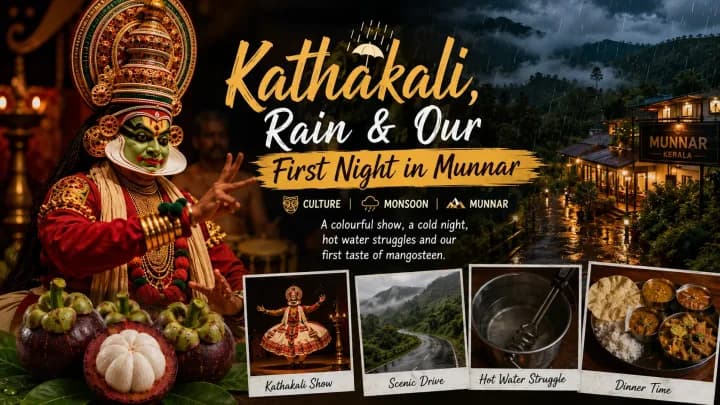
It introduced us to mangosteen.
Our First Encounter With Mangosteen
We spotted the unusual-looking fruit being sold there and decided to try it.
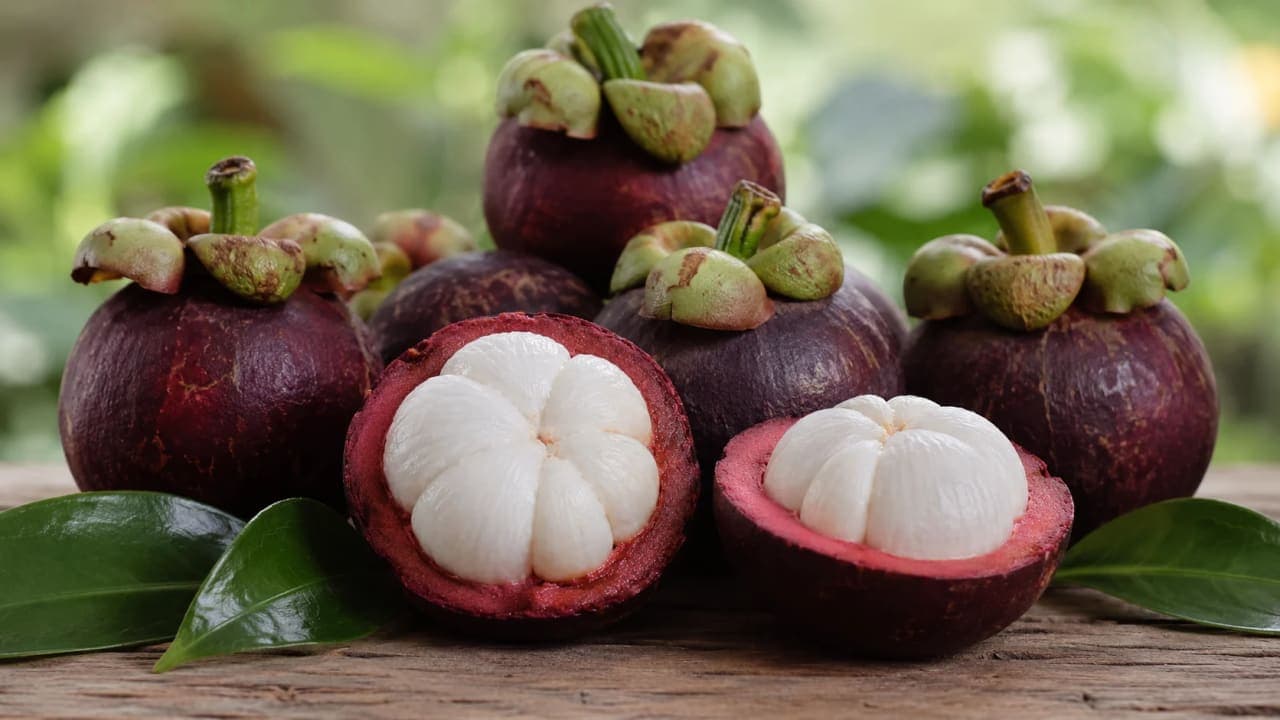
If you've never seen mangosteen before, its appearance gives very little indication of what's hiding inside. The ripe fruit has a thick, dark reddish-purple rind. Once opened, however, it reveals soft white segments that almost resemble garlic cloves.
Thankfully, they taste nothing like garlic.
The flesh is juicy, sweet and slightly tangy. Its flavour is difficult to compare with one particular fruit; people often describe it as somewhere between lychee, peach, strawberry and pineapple.
Its scientific name is Garcinia mangostana, and despite having "mango" in its English name, mangosteen isn't closely related to mango.
The fruit originated in tropical Southeast Asia and has been cultivated there for centuries. Today, it is also grown in suitable tropical regions elsewhere, including parts of southern India.
Mangosteen has even earned the nickname "Queen of Fruits."
There is a popular story claiming that Queen Victoria once offered a reward to anyone who could bring her fresh mangosteen. It is a wonderful story to tell while eating one, although historical evidence supporting the tale is weak, so it is better enjoyed as a legend rather than accepted as fact.
The fruit itself was interesting enough without royal approval.
What Started as a Waterfall Trip Became Much More
When we had agreed to the jeep safari, Ripple Waterfalls had been the main attraction in our minds.
But by the time we started returning towards our original pickup point, we realised the waterfall had been only one chapter of the experience.
We had walked through pouring rain, watched Ripple Waterfalls roaring at full force, crossed a hanging bridge, explored the Ponmudi and Rajakkad landscape, stood beside the peaceful waters of Kundala, looked across the hills from Nadukani and tasted mangosteen for the first time.
Somewhere between all of this, we had also lost a camera stand and gained two unofficial photographers.
Our clothes had survived yet another Kerala downpour, our phones were full of photographs and videos, and everyone was tired in that satisfying way that only comes after a day filled with experiences.
By then, I'd almost forgotten about the broken tripod.
And perhaps that's one of the nicest things about travelling.
A small problem that feels terrible when it happens often becomes just another funny part of the story once the day fills itself with better memories.
We climbed back into the jeep and began our journey towards the starting point.
But our day wasn't over yet.
Munnar still had plenty more waiting for us.
Lock in the takeaway
Kerala Travel Stories
Frequently asked questions
Is Ripple Waterfalls worth visiting during the monsoon?
Yes. The waterfall becomes especially dramatic during the monsoon because of the stronger water flow and lush greenery. Visitors should still be careful on wet and slippery paths.
What can you see during a Munnar jeep safari?
Depending on the route, a jeep safari can include waterfalls, hanging bridges, reservoirs, viewpoints, plantations and smaller scenic spots that are difficult to cover on a regular sightseeing route.
What is Ponmudi Hanging Bridge known for?
Ponmudi Hanging Bridge is known for its scenic setting amid the hills and water bodies of Idukki. It offers beautiful views and is a popular stop for photographs and short sightseeing breaks.
What is special about Kundala Lake?
Kundala Lake is surrounded by high-range greenery and is associated with Kundala Dam, also known as Sethuparvathi Dam. Its peaceful water, hills and misty surroundings make it one of the most scenic stops near Munnar.
What is Nadukani famous for?
Nadukani is known for panoramic views of hills, valleys, plantations and forests. During the monsoon, drifting clouds and mist make the scenery even more dramatic.
What does Nadukani mean?
The name is commonly associated with the idea of viewing the land or countryside, which suits the location perfectly because its main attraction is the wide panoramic landscape.
What is mangosteen?
Mangosteen is a tropical fruit with a thick purple rind and soft white flesh inside. It tastes sweet and slightly tangy and is often nicknamed the “Queen of Fruits.”
Is mangosteen related to mango?
No. Despite the similar English name, mangosteen and mango are not closely related. Mangosteen belongs to the Garcinia genus and has its origins in tropical Southeast Asia.
Is a jeep safari in Munnar worth it?
For us, absolutely. What we expected to be a simple trip to Ripple Waterfalls turned into a much bigger experience with bridges, lakes, viewpoints, monsoon landscapes and several unexpected stops.
How long should you keep for a Munnar jeep safari?
It depends on the route and number of stops, but keeping several hours is a good idea if you want enough time for photographs, viewpoints and short walks without rushing.