
Listen to this article
Checking audio support
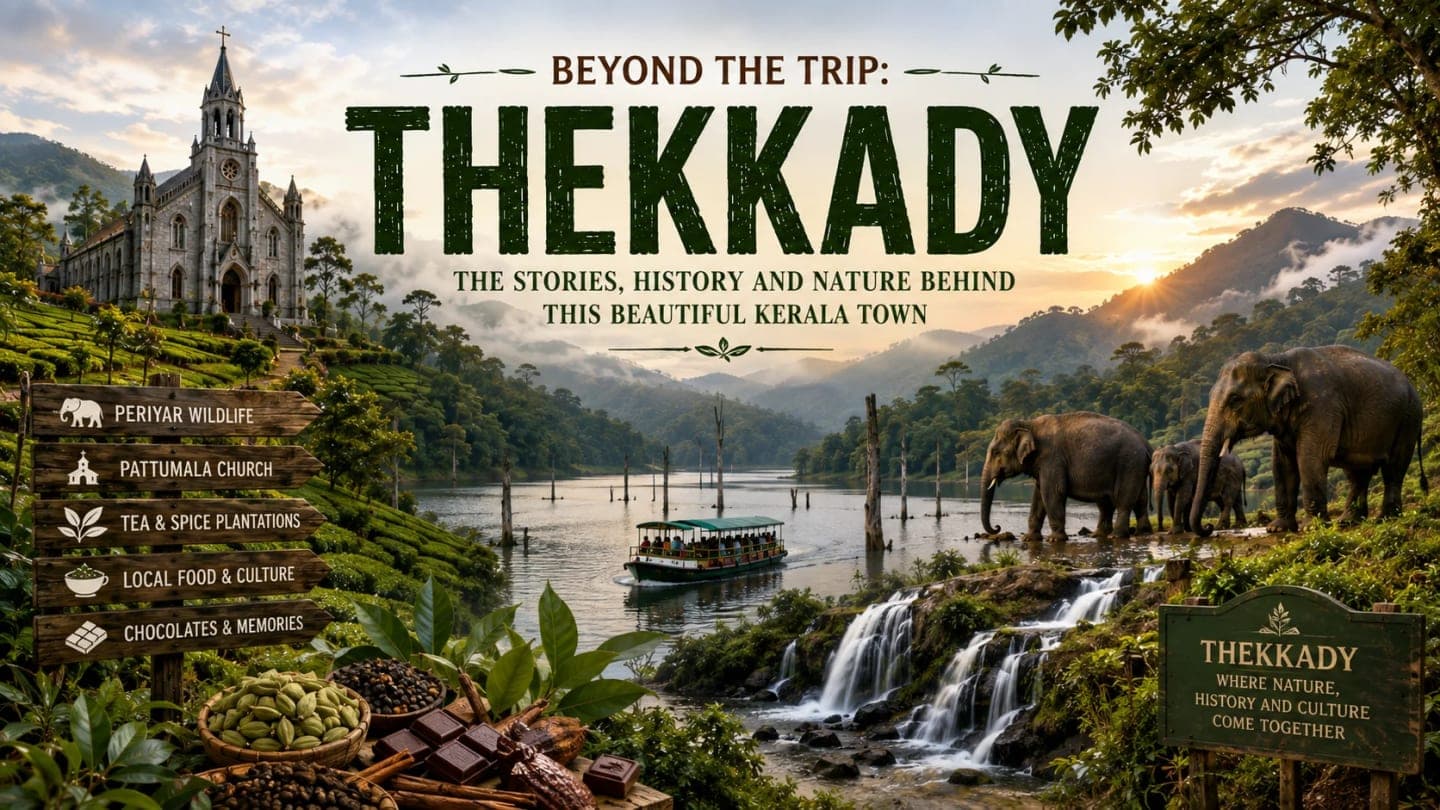
Thekkady Beyond the Trip: The Stories, History and Nature Behind This Beautiful Kerala Town
We had already travelled through Thekkady.
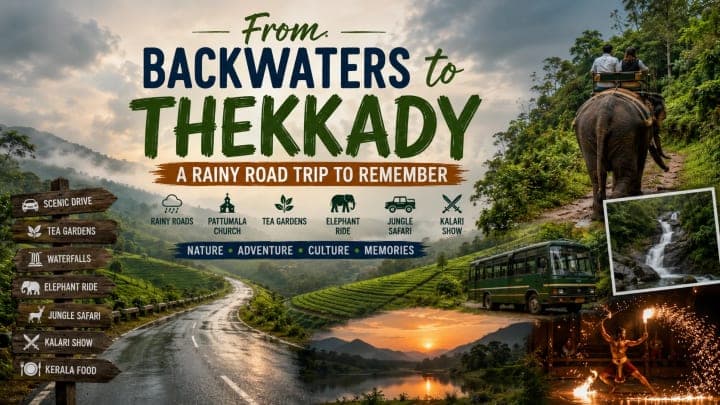
We had driven through its rain-soaked roads, stopped between beautiful tea gardens, visited Pattumala Church, experienced an elephant ride, explored the Periyar region, watched the sun setting between mountains, enjoyed an incredible Kalaripayattu performance, bought chocolates, tasted local food and finally returned to our hotel completely exhausted but extremely happy.
But while writing about that day, I realised something.
We had experienced Thekkady, but had we really understood Thekkady?
Travelling shouldn't always be about reaching a destination, clicking pictures and moving on to the next place. Sometimes knowing the history of a place, understanding why it looks the way it does and discovering the stories hidden behind its forests, plantations and buildings can completely change the way we remember it.
So before our Kerala story moves ahead, let's spend a little more time in Thekkady.
Because there is much more hiding behind those green hills than we initially realised.
First Things First: What Exactly Is Thekkady?
Thekkady is a popular tourism destination in Kerala's Idukki district, situated in the Western Ghats close to the Kerala–Tamil Nadu border.
The neighbouring plantation town of Kumily is only a few kilometres away, and in everyday travel conversations the names Kumily and Thekkady are sometimes used almost interchangeably. But Thekkady is particularly associated with the forests and tourism zone surrounding Periyar Tiger Reserve.
Even the name has an interesting explanation.
One commonly cited derivation connects Thekkady with the Malayalam word thekku, meaning teak, and adi, meaning the lower part, base or place beneath—essentially linking the name with a landscape associated with teak trees.
And trees certainly aren't difficult to find here.
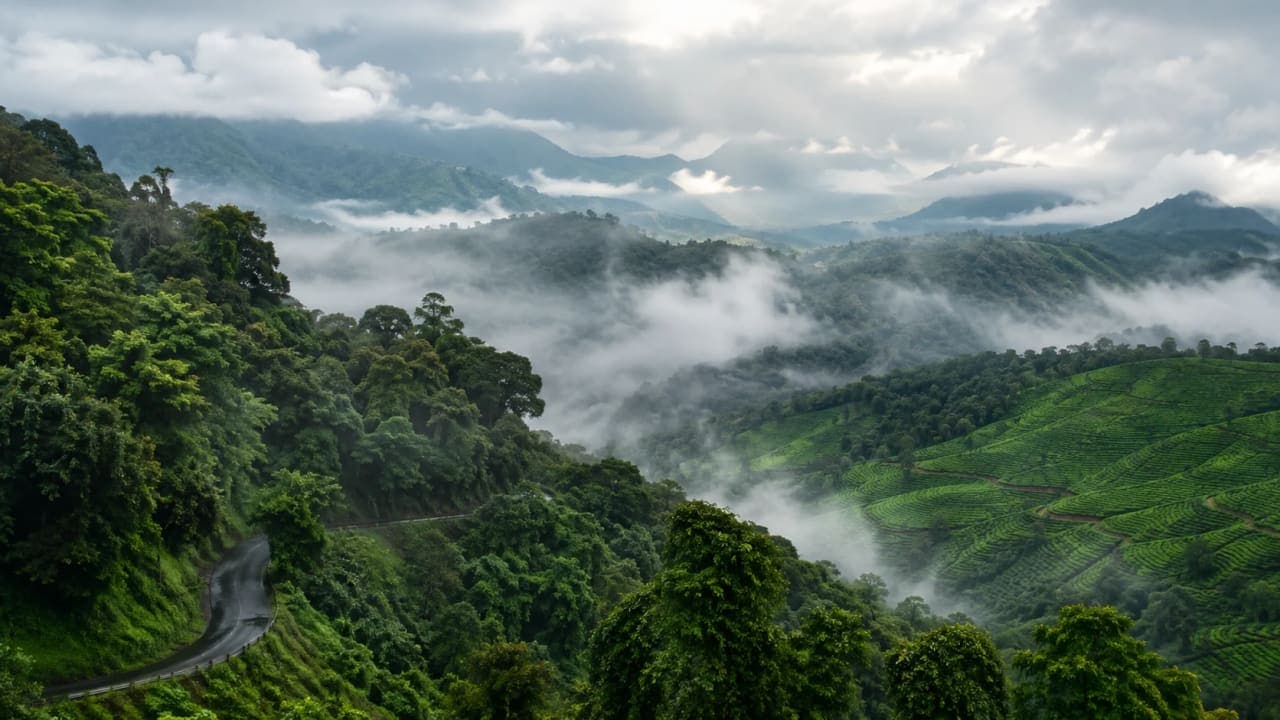
Thekkady is surrounded by the kind of greenery that makes you question whether someone has secretly increased the saturation of the entire landscape.
During the monsoon, it becomes even more dramatic.
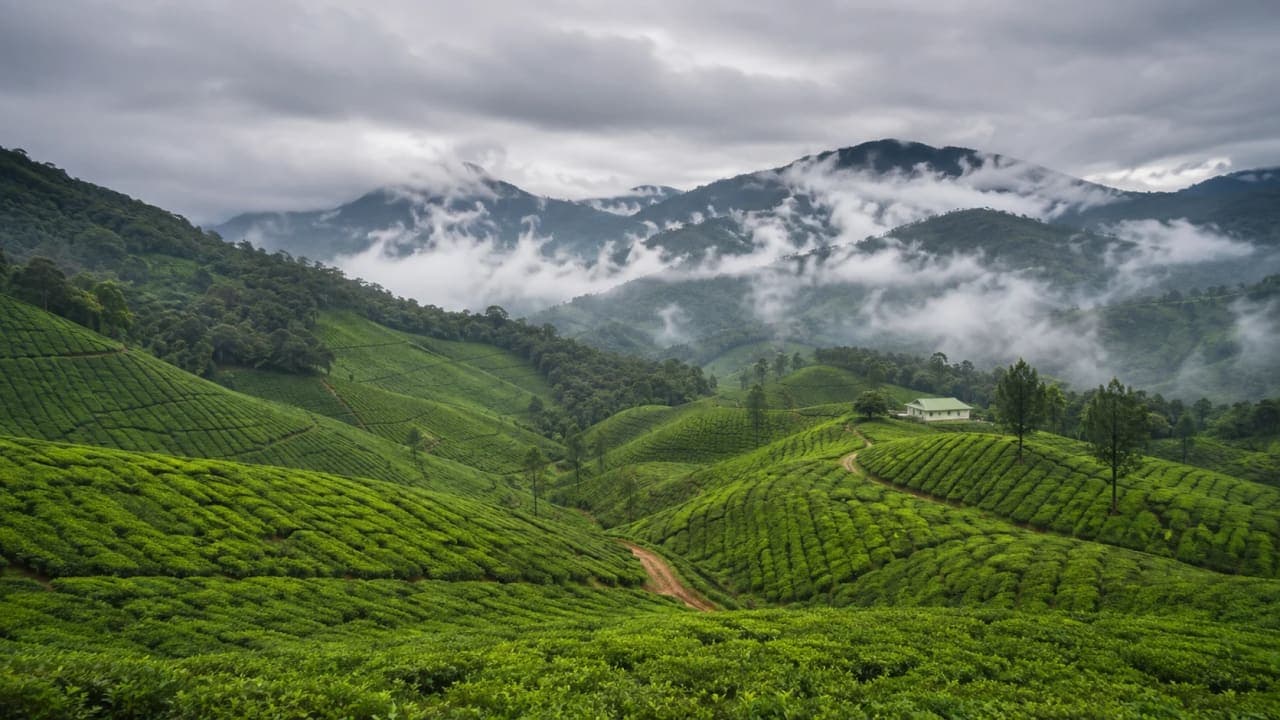
Mist settles over the mountains, rain darkens the roads, streams and waterfalls become stronger, and the plantations turn an almost impossible shade of green.
We had witnessed exactly that while travelling towards Thekkady.
Thekkady's History Is Closely Connected to Its Forest
Unlike places where history revolves around forts, kings and palaces, much of Thekkady's modern identity is connected with its forests, plantations and conservation.
This region formed part of the historic princely state of Travancore.
During the colonial and princely-state periods, the high ranges around present-day Idukki increasingly became associated with plantation agriculture. Tea, coffee and particularly cardamom became economically important crops in these hills.
Kerala Forest Department records show that forest land was being leased for cardamom cultivation in the early twentieth century, while land was also allocated for tea and coffee cultivation during the plantation expansion of the 1920s.
But another development would transform the region even more dramatically.
A dam.
The Story of Periyar
You cannot really tell the story of Thekkady without talking about Periyar.
The name appears everywhere here.
Periyar River.
Periyar Lake.
Periyar Wildlife Sanctuary.
Periyar National Park.
Periyar Tiger Reserve.
But what exactly is Periyar?
The Periyar River is one of Kerala's most important rivers, and the protected landscape surrounding its upper reaches has become one of India's best-known wildlife destinations.
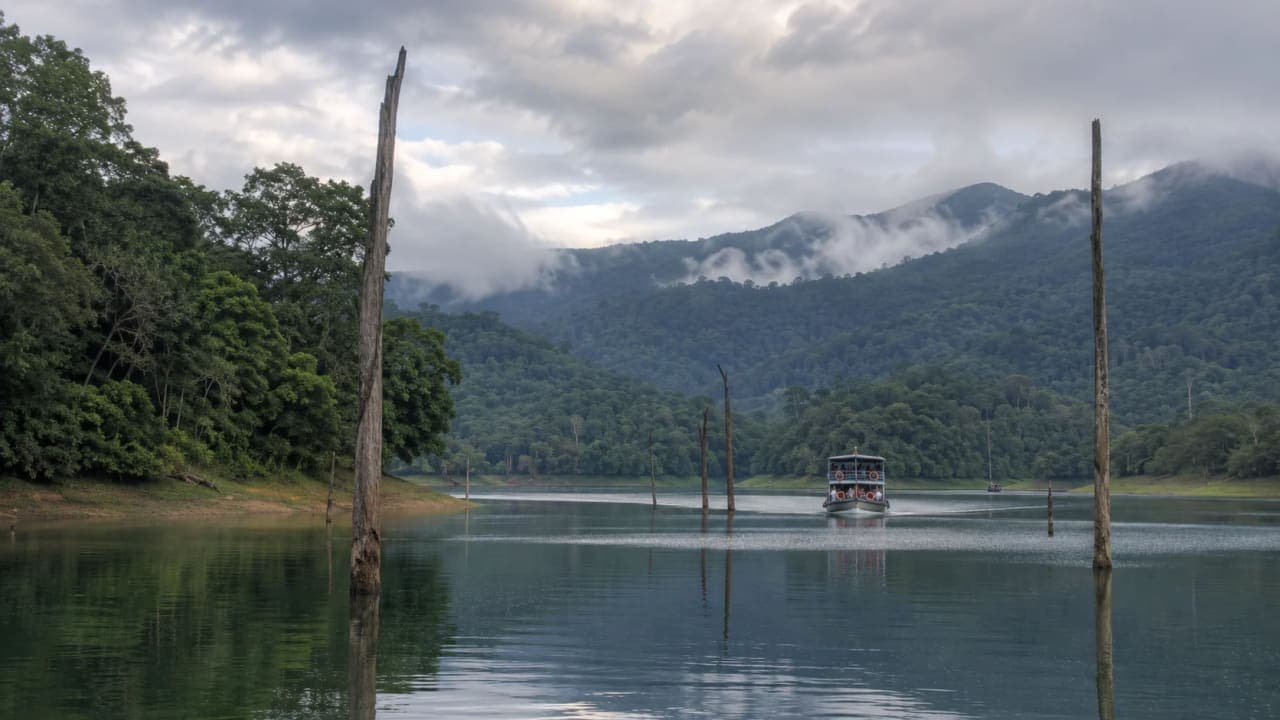
The lake visitors see inside the reserve isn't entirely natural.
In 1895, a dam was constructed across the Periyar River, creating what became Periyar Lake. The surrounding forests were designated as the Periyar Lake Reserve in 1899.
And that was only the beginning.
In 1934, the area was established as the Nellikkampetty Sanctuary. It was expanded and renamed Periyar Wildlife Sanctuary in 1950, brought under Project Tiger in 1978, and a 350-square-kilometre section was notified as Periyar National Park in 1982.
So when we casually boarded our safari bus that afternoon, we were actually entering a conservation landscape whose protected history stretches back more than a century.
Knowing that now makes the experience feel quite different.
Why Is Periyar So Famous?
Tigers may get top billing in the name Periyar Tiger Reserve, but don't arrive expecting a tiger to politely walk beside your safari vehicle for a photograph.
Wildlife doesn't work according to our itinerary.
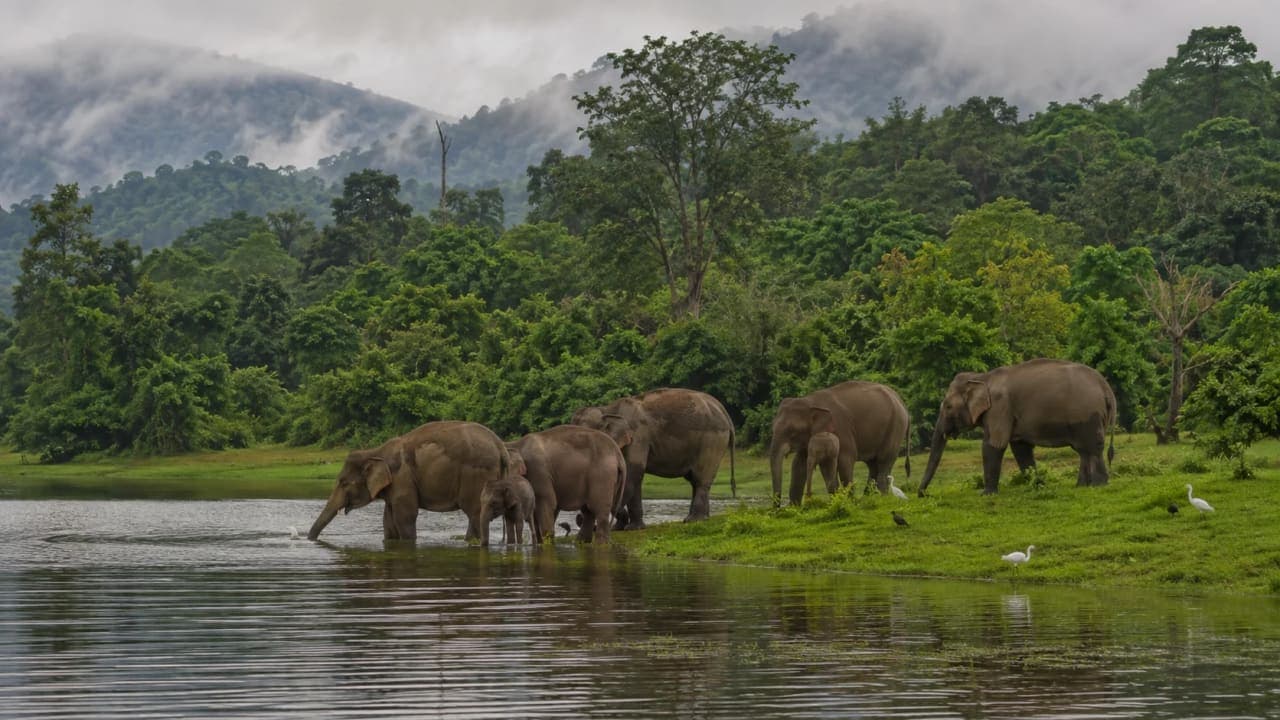
Periyar's forests support elephants, gaur, sambar, Nilgiri langurs, lion-tailed macaques and many other species, alongside a remarkable diversity of birds, reptiles, amphibians and butterflies.
Elephants, in particular, have become closely associated with the image of Thekkady.
The landscape itself is equally important.
Dense forests surround the lake, hills rise in the background and, depending on the season, mist hangs between the trees.
That's probably why our safari memory isn't dominated by a particular animal.
What I remember most vividly is the view.
Mountains.
Water.
Trees.
And the sun setting between them.
It looked exactly like the landscape drawings we made as children in school.
Nature had apparently been using that composition long before we discovered crayons.
Is There a Mythological Side to Periyar?
Unlike some Indian destinations, there isn't one universally accepted mythological origin story explaining the creation of Thekkady or Periyar.
But the wider Periyar landscape has strong connections with Kerala's religious traditions.
The Periyar Tiger Reserve region includes culturally important sites, including the Mangaladevi–Kannagi Temple on its northern edge, while the wider reserve landscape is also associated with the pilgrimage route to Sabarimala.
The Kannagi connection is particularly interesting because it links the landscape to the legendary heroine of the ancient Tamil epic Silappatikaram. Traditions surrounding Kannagi extend across Kerala and Tamil Nadu, adding another cultural layer to a region that most tourists initially visit for wildlife.
It is a reminder that these forests haven't existed separately from people.
Nature, faith, local communities and history have overlapped here for centuries.
Pattumala: The Beautiful Stop We Almost Treated as Just a Photo Spot
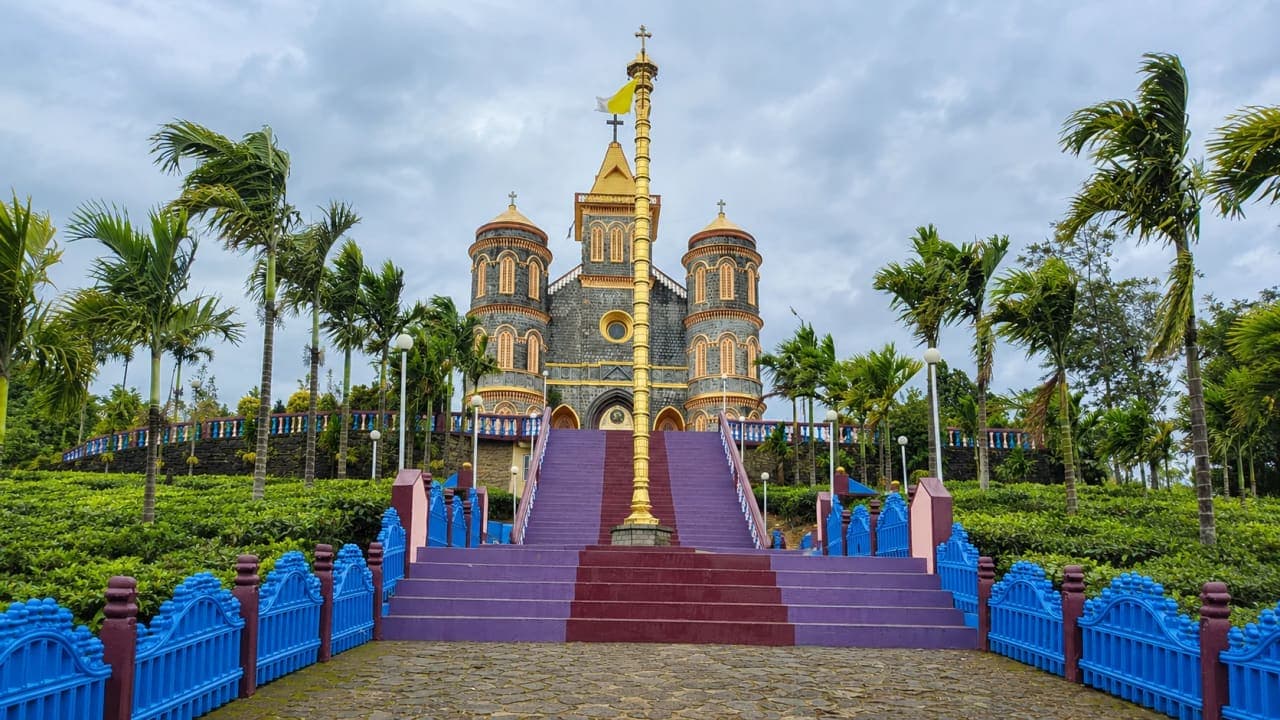
On our drive towards Thekkady, we stopped at Pattumala Church.
The rain had slowed by then.
Tea plantations surrounded us, mist floated over the hills and the church stood beautifully against all that greenery.
Naturally, our first instinct was:
How is it so far?
Vote with other readers
Pictures!
We clicked quite a few.
But Pattumala deserves more than being treated as a beautiful photography location.
Its name itself is poetic.
Pattumala is commonly translated as "Hill Draped in Silk."
Once you see those smooth green hills covered with tea plantations, the name suddenly makes sense.
The Story of Pattumala Church
The church is formally associated with Our Lady of Good Health and is commonly known as the Pattumala Matha Pilgrim Shrine. It is also sometimes called Kochu Velankanni, reflecting its devotion to Our Lady of Good Health.
Its religious history is connected with workers on the area's tea estates, among whom devotion to Mother Mary developed strongly during the British plantation era.
According to accounts of the shrine's history, Franciscan missionary Brother Hippolitus Thadathil recognised this devotion during the 1980s. An ashram chapel was initially used for worship before plans developed for a larger church.
The present church, designed by architect J. P. Bright, was completed and blessed in 1998.
That surprised me.
When looking at its grand architecture and dramatic location, it is easy to assume the present structure must be centuries old.
It isn't.
Its story is relatively modern, but the traditions and devotion that led to its construction go further back.
What Makes Pattumala Church Special?
Architecture is one of the biggest reasons people remember it.
The church is built largely from granite and incorporates Gothic architectural elements. Its setting among tea plantations makes the building even more striking.
The shrine is also associated with local accounts of Marian apparitions and miracles. These belong to the realm of religious tradition and belief rather than something that can be historically verified, but they remain an important part of how devotees understand Pattumala.
That distinction matters.
When travelling, I think we can appreciate a local belief without presenting faith as historical proof.
For some people Pattumala is architecture.
For some, a beautiful tourist stop.
For others, it is a sacred pilgrimage destination.
And all three experiences can exist together.
Thekkady Is Also the Land of Spices
Long before tourism turned Thekkady into a popular itinerary stop, these hills were valued for what could grow here.
The Western Ghats provide favourable conditions for plantation crops, and the wider Idukki high ranges became especially important for cardamom.
There is a reason parts of this region are called the Cardamom Hills.
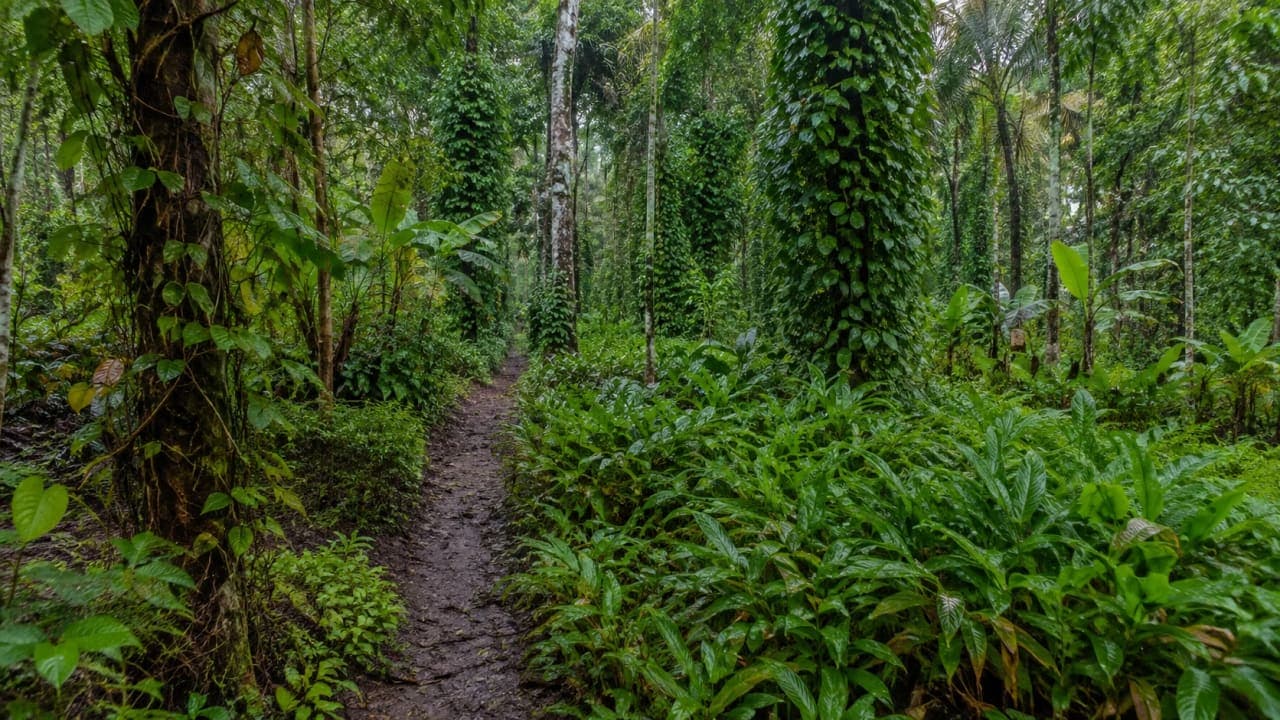
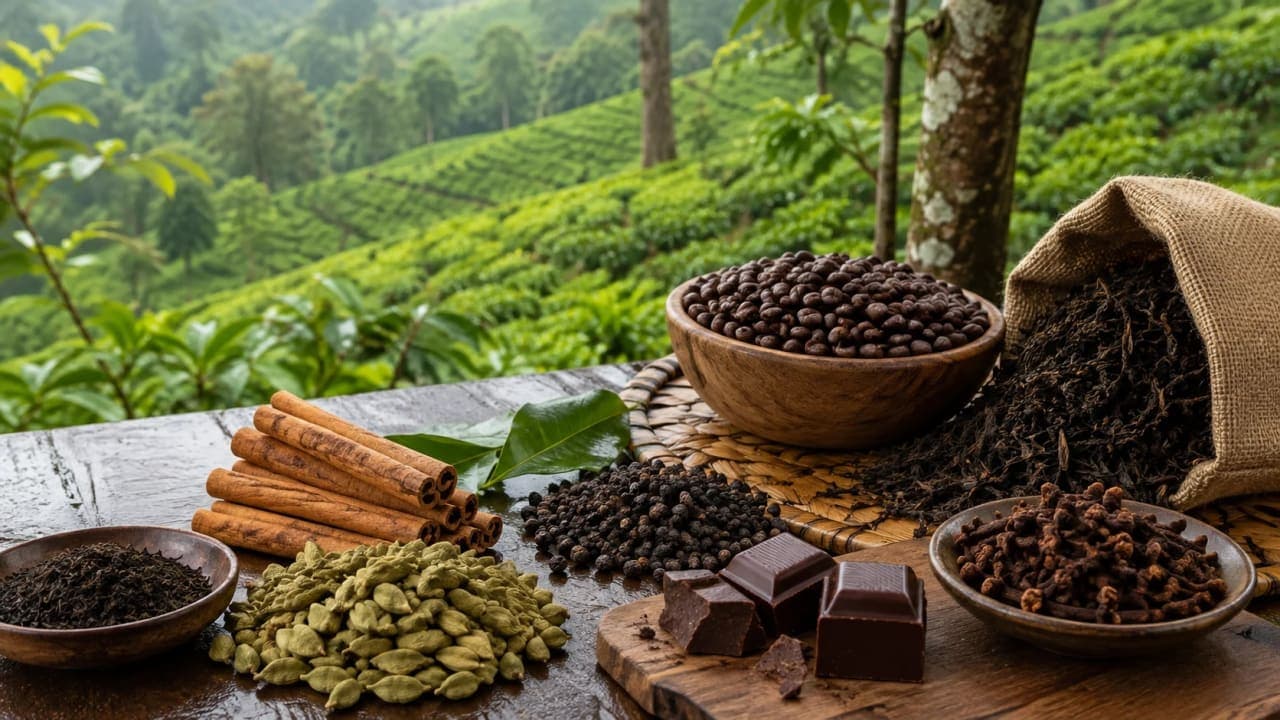
Walk through a spice plantation around Thekkady and you may encounter cardamom, pepper, cinnamon, cloves, nutmeg, ginger, turmeric and other plants depending on the estate.
For someone accustomed to seeing spices inside tiny packets in a kitchen cabinet, seeing how they actually grow is surprisingly fascinating.
Pepper climbing around support trees looks nothing like the black pepper shaker sitting on our dining table.
Cardamom pods emerge close to the base of the plant.
Cinnamon comes from bark.
Suddenly your masala box starts looking much more interesting.
Tea, Coffee and Those Endless Green Hills
Tea plantations are another defining part of the landscape around Thekkady, Peermade and Pattumala.
They also explain those perfectly trimmed green hills we couldn't stop photographing during our drive.
Commercial plantation development transformed parts of Kerala's high ranges during the nineteenth and twentieth centuries, with tea and coffee becoming important crops alongside cardamom. Kerala's Forest Department records document the expansion of land allocated to tea and coffee cultivation in the early twentieth century.
Coffee also grows in the wider high-range plantation belt, although tea and spices are usually more visually associated with the tourist experience around Thekkady.
Together, these plantations shaped employment, settlement patterns and the economy of the region.
So those beautiful tea gardens aren't merely scenery.
They're part of Thekkady's social and economic history.
And Then There Is Chocolate
If you've visited Thekkady, you have probably noticed chocolate shops.
Lots of them.
We certainly did.
And yes, we eventually surrendered.
Towards the end of our day, we entered one of the local shops and came out carrying chocolates.
Thekkady's chocolate shops have become a popular part of the tourist experience, often selling handmade or locally produced chocolates in flavours ranging from nuts and fruit to coffee and spices.
Chocolate isn't an ancient Thekkady tradition comparable to cardamom or pepper cultivation. It is better understood as part of the modern plantation-tourism economy that has developed around Kerala's hill destinations.
But after a long day of travelling, history becomes slightly less important when someone puts chocolate in front of you.
We bought ours happily.
What Should You Eat in Thekkady?
Thekkady's food reflects both Kerala cuisine and its position close to Tamil Nadu.
Expect plenty of coconut, spices, curry leaves, rice and regional meat and fish preparations.
Some dishes worth trying include Kerala parotta with chicken or beef curry, appam with stew, puttu and kadala curry, idiyappam, dosa, fish curry, Kerala meals served with rice, and payasam.
For us, food became part of the memory too.
After our elephant ride, we were hungry enough to appreciate practically anything placed in front of us.
We had Kerala parotta, chicken curry, fish and payasam.
Simple food.
Very satisfying.
And after an active morning, absolutely perfect.
What Else Can You Do in Thekkady?
Thekkady can easily keep a traveller occupied for more than one day.
The obvious attraction is Periyar Tiger Reserve, where tourism experiences may include boating and various nature-based activities depending on current availability and regulations.
Then there are plantation visits where travellers can learn about cardamom, pepper, tea and coffee.
Cultural performances are another highlight.
Kathakali introduces visitors to one of Kerala's best-known classical performing arts, while Kalaripayattu showcases the state's traditional martial-art heritage.
We chose the Kalari performance.
And what a choice that turned out to be.
Sword fighting, jumps, incredible control, martial techniques and finally fire and sparks—the performance was far more thrilling than we'd expected.
You can also explore Kumily's markets, shop for spices, buy chocolates, experience Ayurvedic treatments and simply drive through the surrounding hills.
And sometimes that last option is enough.
Because in Thekkady, the road itself can become an attraction.
Thekkady Made More Sense After We Left
This is perhaps my favourite thing about writing travel stories.
Sometimes you understand a destination only after returning home.
While we were there, Pattumala Church was a beautiful stop.
Now I know why Pattumala has that name and how the shrine developed.
Periyar was our jungle safari.
Now I know that the lake, reserve and conservation story go back to the late nineteenth century.
Tea gardens were places where we stopped for photographs.
Now I understand how plantation agriculture shaped these hills.
The chocolates were simply something delicious we bought before returning to our hotel.
And, well...
They're still chocolate.
Not everything needs a history lesson.
But Thekkady certainly deserved one.
We went there expecting elephants, forests, plantations and beautiful scenery.
We left with photographs and memories.
Only later did I realise that behind those photographs was a much bigger story—of forests protected for more than a century, plantation communities, faith, wildlife conservation, spices, migration, agriculture and traditions that continue to shape the region today.
So if you're travelling to Thekkady, don't just visit it.
Look around.
Ask questions.
Walk through a plantation.
Learn what you're seeing.
Listen to the stories.
Because sometimes understanding a place makes the memories you bring home even more valuable.
And with Thekkady now behind us, our Kerala road trip was ready to move again.
Another morning, another road and another destination were waiting for us.
Lock in the takeaway
Kerala Travel Stories

Frequently asked questions
What is Thekkady famous for?
Thekkady is best known for Periyar Tiger Reserve, wildlife, lush forests, spice plantations, tea and coffee estates, elephant experiences, Kalaripayattu and Kathakali performances, Ayurvedic experiences and locally sold chocolates.
Where is Thekkady located?
Thekkady is located in Kerala's Idukki district in the Western Ghats, close to the Kerala–Tamil Nadu border. Kumily is the nearby town and an important base for travellers visiting Thekkady.
What is Periyar and why is it famous?
Periyar refers to the river, lake and protected forest landscape associated with Periyar Tiger Reserve. The region is famous for its forests, lake, elephants, tigers and other wildlife, as well as nature-based tourism.
Is Periyar Lake natural?
Periyar Lake is a reservoir created after the construction of the Mullaperiyar Dam across the Periyar River in the late 19th century. Today, the lake is one of the most recognisable features of the Periyar landscape.
What is Pattumala Church famous for?
Pattumala Church, also associated with Our Lady of Good Health, is known for its beautiful granite architecture, religious importance and spectacular setting among tea-covered hills. Pattumala is commonly interpreted as meaning "hill draped in silk."
Are there tea and spice plantations in Thekkady?
Yes. Thekkady and the surrounding Idukki highlands are particularly famous for spices such as cardamom and pepper. Tea and coffee are also grown across the wider high-range plantation belt.
What food should you try in Thekkady?
Popular choices include Kerala parotta with curry, appam and stew, puttu with kadala curry, idiyappam, fish curry, traditional Kerala meals and payasam. The region's spice-rich cuisine is particularly worth exploring.
Why are chocolates popular in Thekkady?
Homemade and locally produced chocolates have become a popular part of Thekkady's modern tourism experience. Shops offer numerous varieties, including nut, fruit, coffee and spice-flavoured chocolates.
How many days are enough for Thekkady?
One to two days can cover several major experiences, but two days provide a more relaxed visit if you want to explore Periyar, plantations, cultural performances, local markets and the surrounding scenery.
Is Thekkady worth visiting during the monsoon?
Yes. The monsoon makes Thekkady exceptionally green and atmospheric, with misty hills and rain-washed plantations. Travellers should, however, keep some flexibility in their plans because heavy rain can affect outdoor activities.