
Listen to this article
Checking audio support
Tapkeshwar Mahadev Temple: The Cave Where Shiva Meets a River
Some temples impress you with their enormous towers. Others surprise you with their architecture. But in Dehradun, there is a temple where you walk beneath a mountain, hear water dripping onto a Shivling, and discover a river flowing just outside the cave. And trust me, the experience is much more interesting than it sounds.
There are some places you keep hearing about for years but somehow never manage to visit. They stay on your travel list, quietly waiting for the right moment.
For me, Tapkeshwar Mahadev Temple in Dehradun was one of those places.
I had heard about this temple for a very long time. Every time someone mentioned Dehradun, Tapkeshwar Mahadev would somehow find its way into the conversation. But for one reason or another, I never got the chance to visit.
Until this Diwali.
I was in Dehradun with my husband and in-laws, and finally, the long-pending visit became part of our plans.
I knew the temple was famous for its cave and naturally dripping water. But what I hadn't expected was how peaceful the entire place would feel, how much there would be to explore, or how difficult it would be to resist the river flowing beside it.
Because there is one thing you should know about me.
The moment I see water, my brain forgets the original plan.
A river, a waterfall, a stream—it doesn't matter. I immediately want to get closer, dip my feet in, and enjoy it.
And Tapkeshwar Mahadev was about to test my self-control.
The First Surprise: A Temple Below the Road
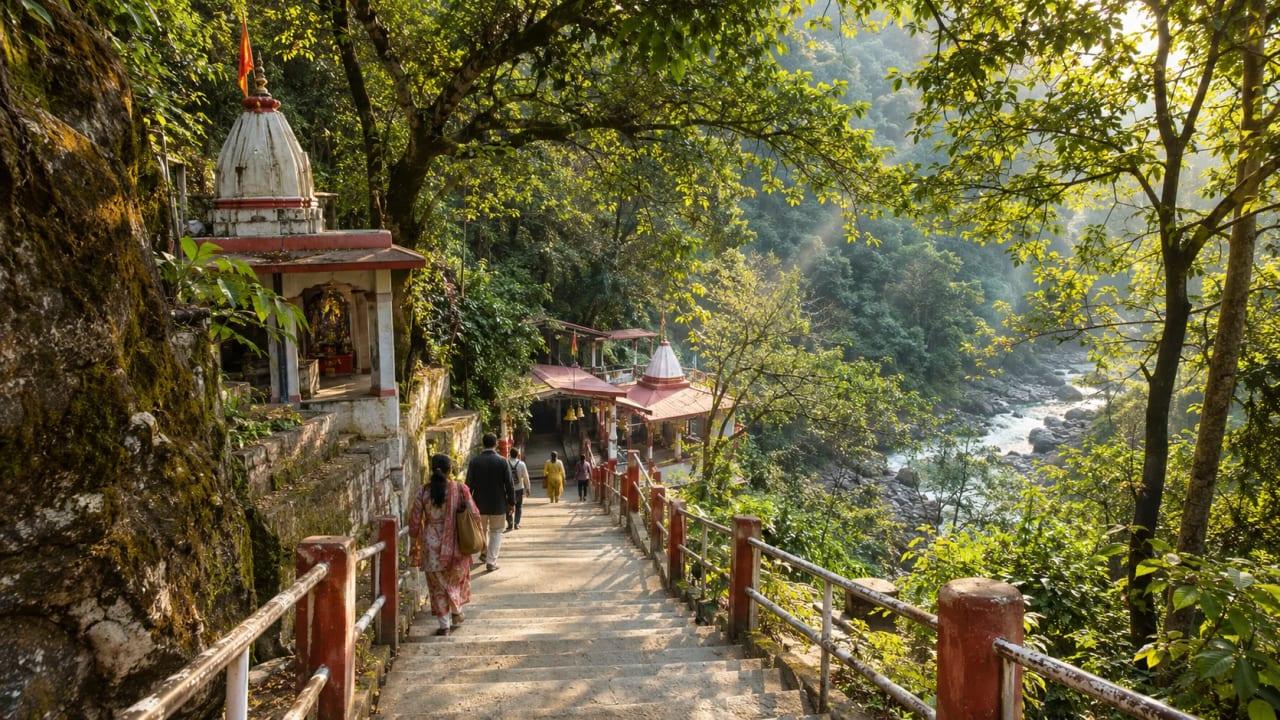
We reached the temple by car and got down near the staircase leading towards the main shrine.
After parking the car, we began walking down the steps.
Now, most temples make you look upwards. You see the shikhara, climb a few stairs, and eventually reach the shrine.
Tapkeshwar does things a little differently.
Here, you descend towards the temple.
And as we walked down, I noticed something that instantly made the place more exciting.
A river.
There it was, flowing below us, surrounded by rocks and greenery. The sound of the water mixed with the peaceful atmosphere of the temple, making the entire setting feel almost like a little escape from the city.
Naturally, my first thought was not about the history of the temple.
It was, Can we go into the water?
But I behaved myself.
For once.
We decided to visit the temple first and explore the river afterwards.
A very sensible decision, although the river was clearly trying to distract me.
A Temple Hidden Inside a Cave
As we approached the main shrine, I realised why Tapkeshwar Mahadev is so different from an ordinary temple.
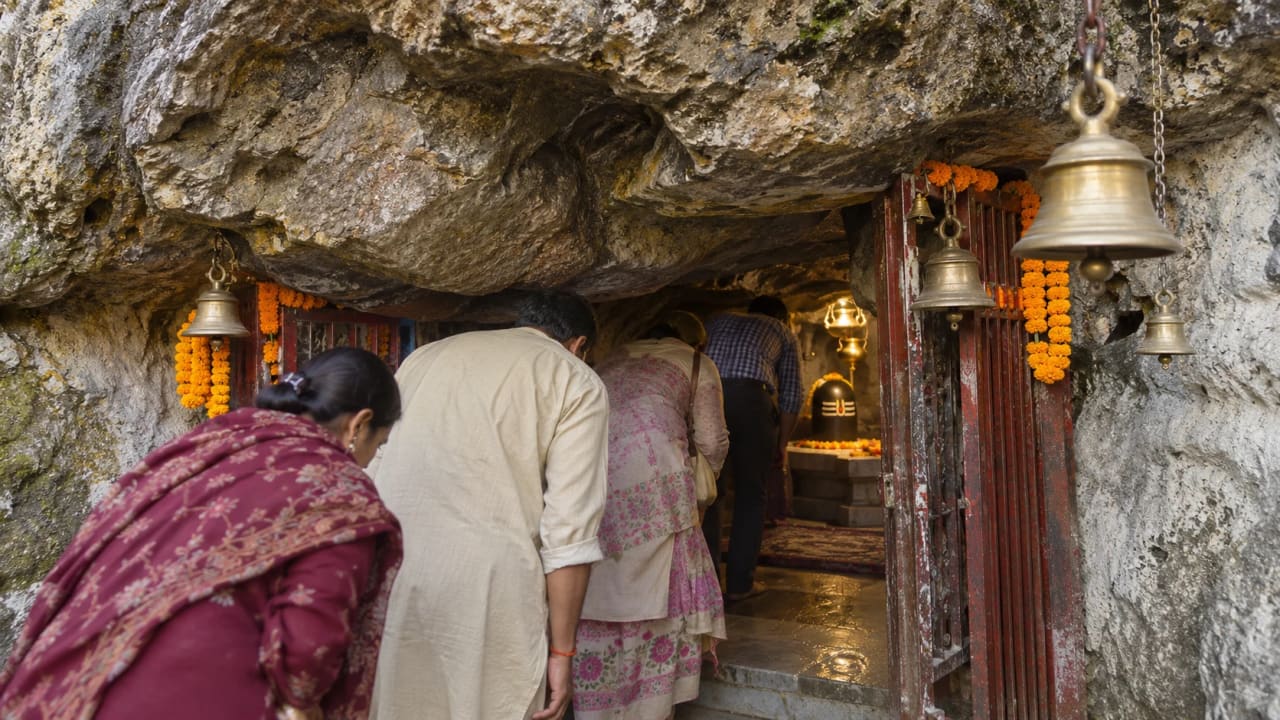
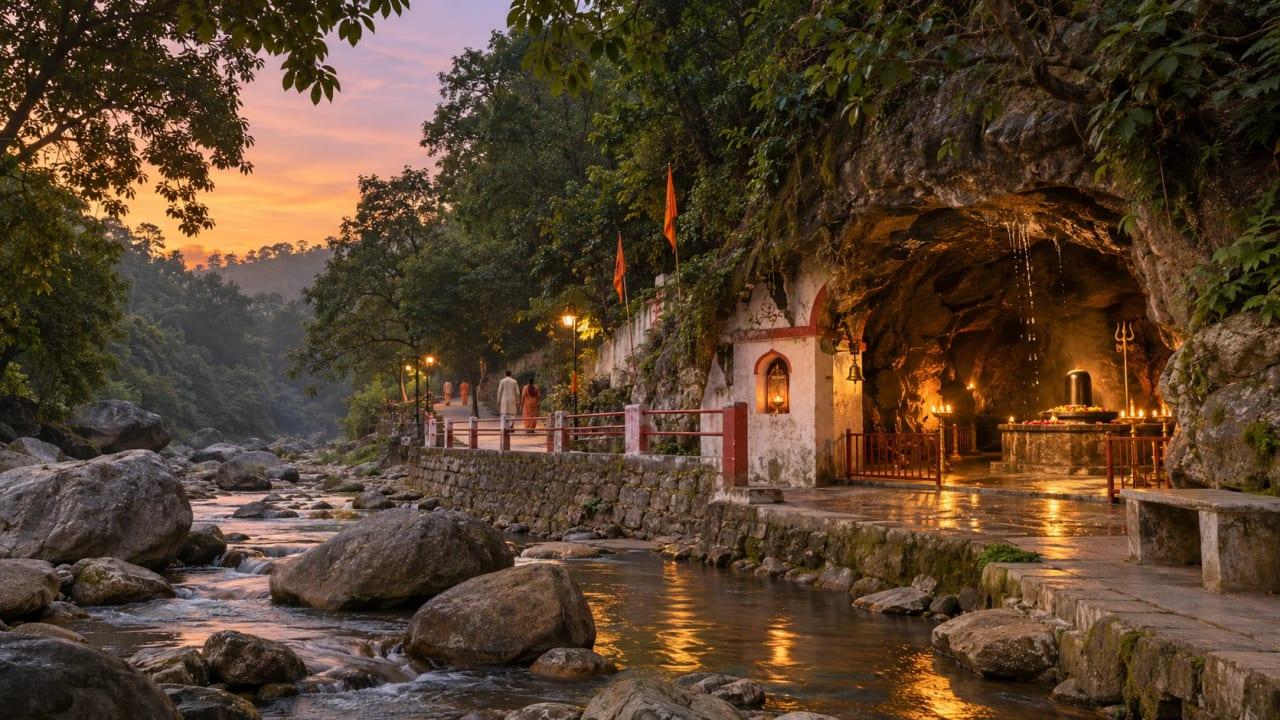
It is built around a natural cave.
Instead of entering a large open hall, you move into a rocky space beneath the hillside. The ceiling is low in places, and as you enter, you have to bend your head slightly.
That small movement makes the experience surprisingly memorable.
One moment, you are outside in daylight. The next, you are beneath the rock, surrounded by the cool atmosphere of a cave.
The walls and ceiling are not perfectly shaped like those of a modern building. They have the irregular surfaces of natural rock, giving the shrine a character that no amount of expensive decoration could recreate.
The cave is traditionally known as Drona Cave, or Drona Gufa.
And that name introduces the first fascinating story associated with the temple.
What Does Tapkeshwar Mean?
The name itself offers a clue.
Tapakna in Hindi means to drip, while Ishwar means God or Lord.
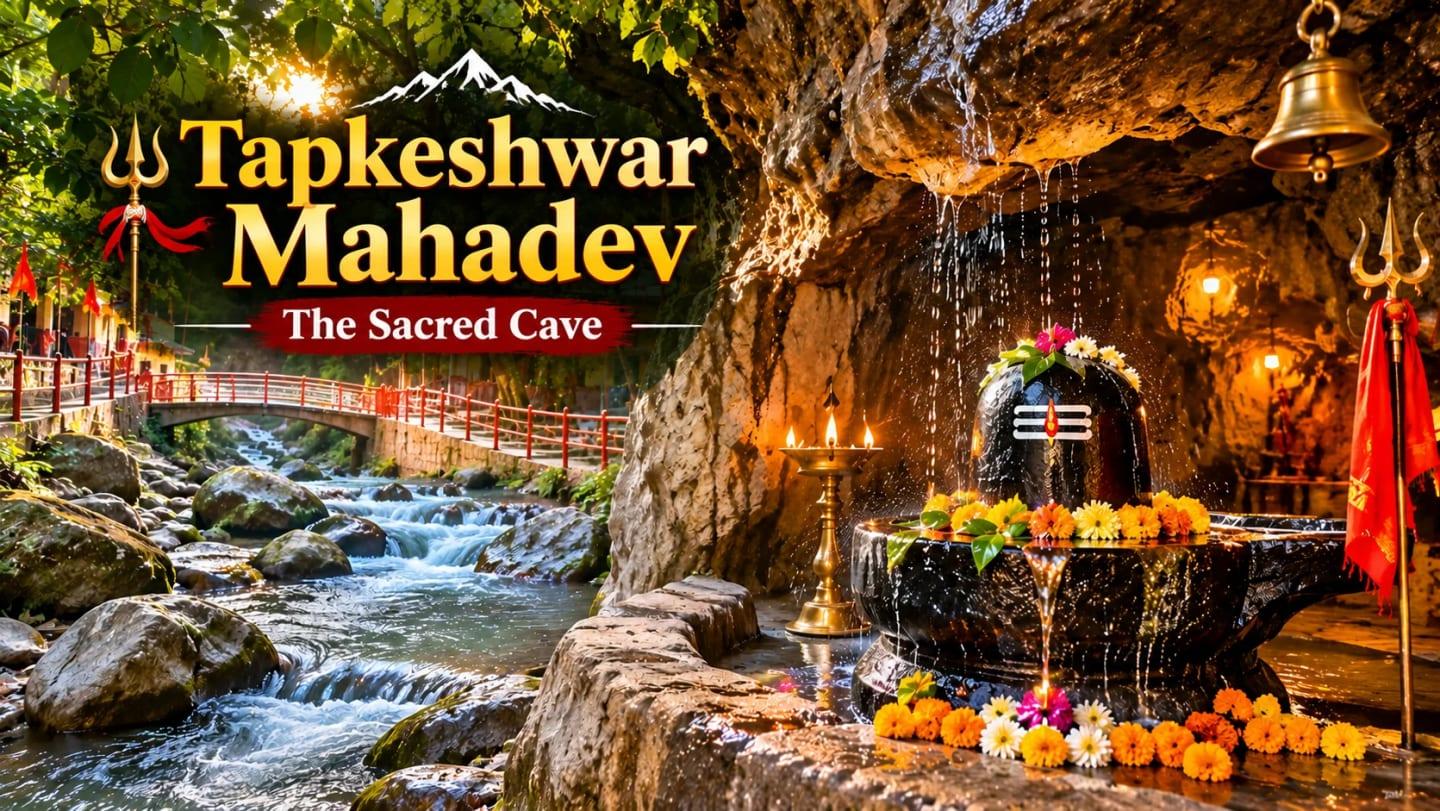
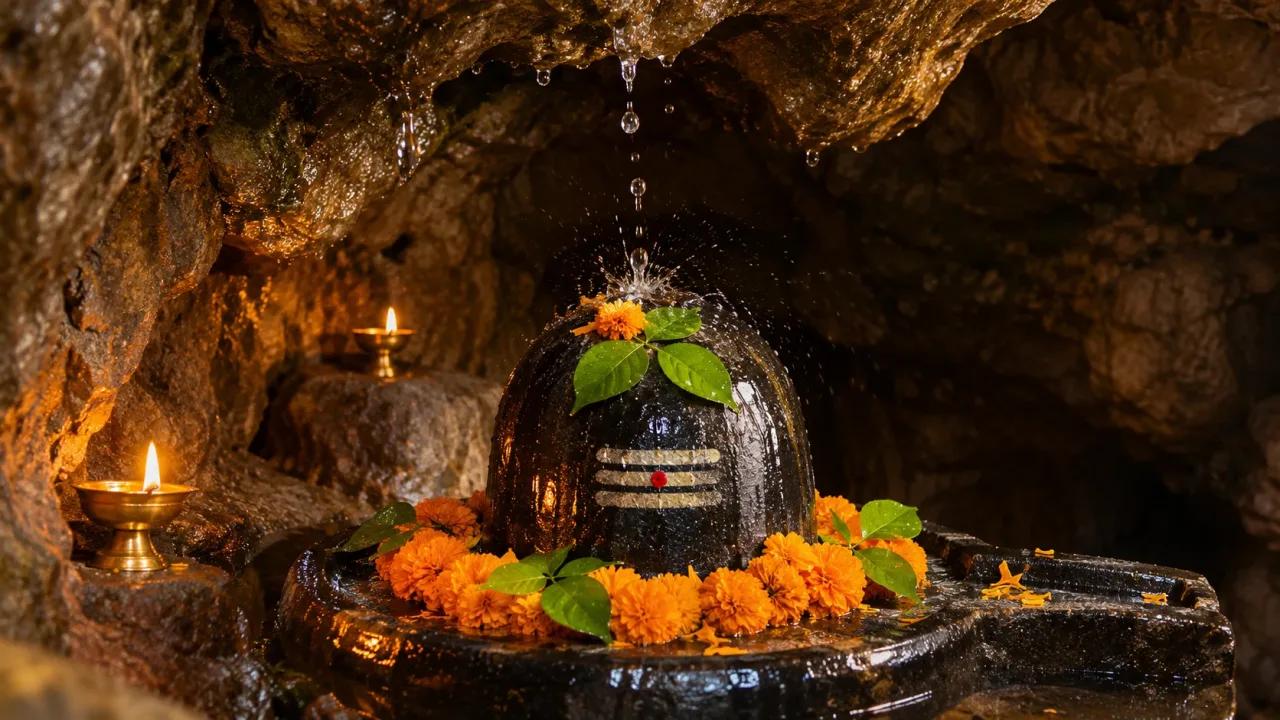
The temple is popularly called Tapkeshwar because water naturally drips from the cave ceiling onto the sacred Shivling.
Unlike temples where priests continuously pour water over a Shivling as part of a ritual, here the cave itself performs something resembling a natural jalabhishek.
Drop after drop.
Day after day.
And according to the temple's religious tradition, this has been happening for a very long time.
But where does the water come from?
That question leads to an interesting meeting between geology and mythology.
The Legend of Dronacharya and Ashwatthama
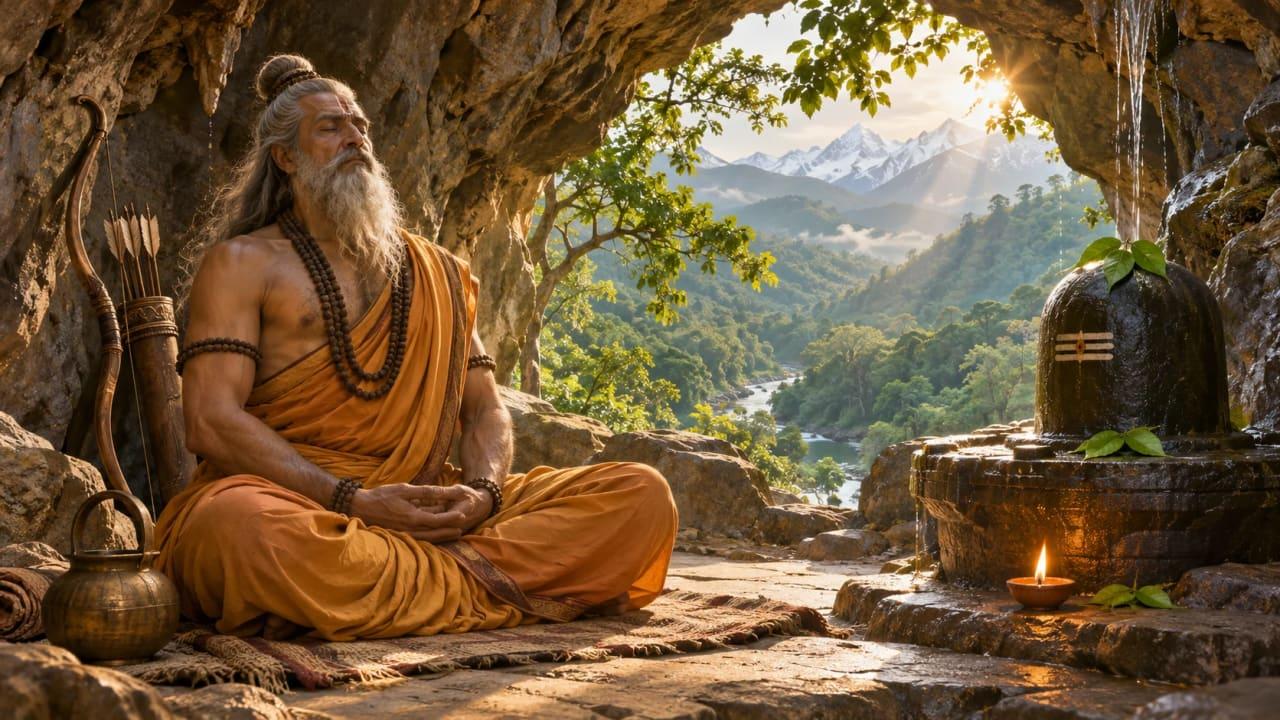
According to local tradition, this cave was once associated with Guru Dronacharya, the famous teacher of the Pandavas and Kauravas in the Mahabharata.
It is believed that Dronacharya lived and meditated here with his family. Some versions of the story also say that his son, Ashwatthama, was born in this cave.
The legend becomes particularly touching when Ashwatthama was a small child.
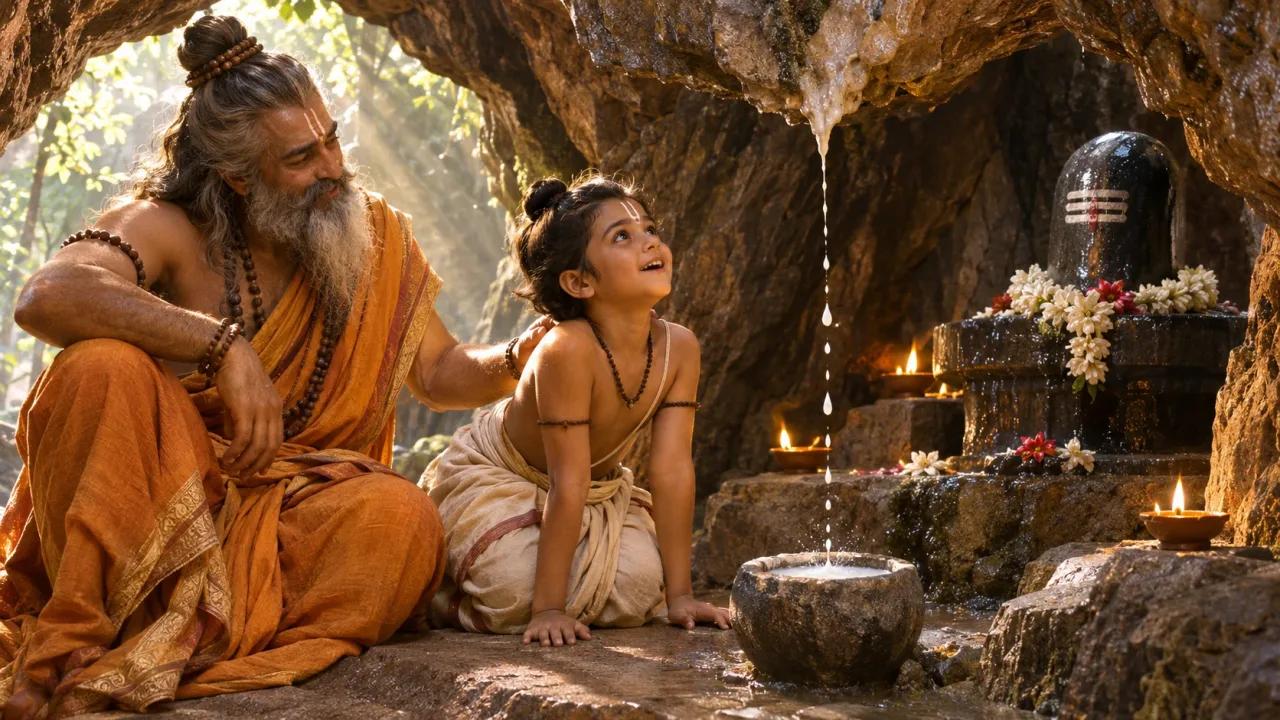
Dronacharya and his wife, Kripi, were living in poverty. They could not afford enough milk for their son, and the hungry child cried.
Unable to bear his hunger, Ashwatthama prayed to Lord Shiva.
And then, according to the legend, something extraordinary happened.
Milk began dripping from the cave's rocky ceiling, providing nourishment to the child.
It is believed that the milk later became water, which continues to fall onto the Shivling.
Of course, this is a religious legend rather than a scientifically verified historical event. But standing inside the cave and watching water fall from the rock makes it easy to understand why such a story developed around the place.
There is also a fascinating connection to Dehradun itself. The city is sometimes associated with the name Dronanagari, reflecting its traditional connection to Guru Dronacharya.
The Mystery of the Water That Never Stops Dripping
As we moved further inside the temple, I noticed water dripping from different sections of the rocky ceiling.
At some places, the droplets were scattered. At others, they fell more steadily.
And then we reached the Shivling.
There, water was continuously dripping from the rock above.
It was such a simple sight, yet strangely fascinating.
No elaborate fountain. No decorative waterfall. Just a natural cave, a sacred Shivling and water falling from above.
The sound of the droplets added to the peaceful atmosphere.
I kept wondering where the water was coming from.
Geologically, water can seep through cracks and porous layers in rock, gradually emerging from the cave ceiling. The flow may vary with rainfall, groundwater levels and the season.
This is a natural explanation for the dripping phenomenon, although the exact underground water route at Tapkeshwar would require site-specific scientific investigation.
For devotees, however, the water represents something beyond geology: the continuing blessing of Lord Shiva.
And perhaps that is the beauty of the place. Science can explain how water moves through rock, while faith gives the same droplets a completely different meaning.
How Old Is Tapkeshwar Mahadev Temple?
One thing that makes Tapkeshwar interesting is that it is difficult to separate the age of the natural cave from the history of the temple built around it.
The cave itself is a natural geological formation. Nobody needed to construct its rocky ceiling or irregular walls.
Over time, the cave became a place of Shiva worship, and the surrounding complex developed with pathways, staircases, additional shrines and facilities for devotees.
Local religious tradition connects the shrine to the Mahabharata era, and some accounts describe it as thousands of years old.
However, a precise historical construction date for the earliest shrine has not been conclusively established through publicly documented archaeological evidence.
What visitors see today is therefore a combination of an old sacred tradition, a natural cave and later additions that have made the site accessible to worshippers.
And personally, I think that makes the temple even more interesting.
A grand temple can be built by people.
But here, nature created the space first, and people turned it into a place of worship.
The Goddesses Hidden Further Inside the Cave
After offering our prayers at the Shivling, we continued moving through the temple.
How is it so far?
Vote with other readers
I had initially imagined that the cave would contain the main shrine and perhaps one or two smaller spaces.
But Tapkeshwar had more to show us.
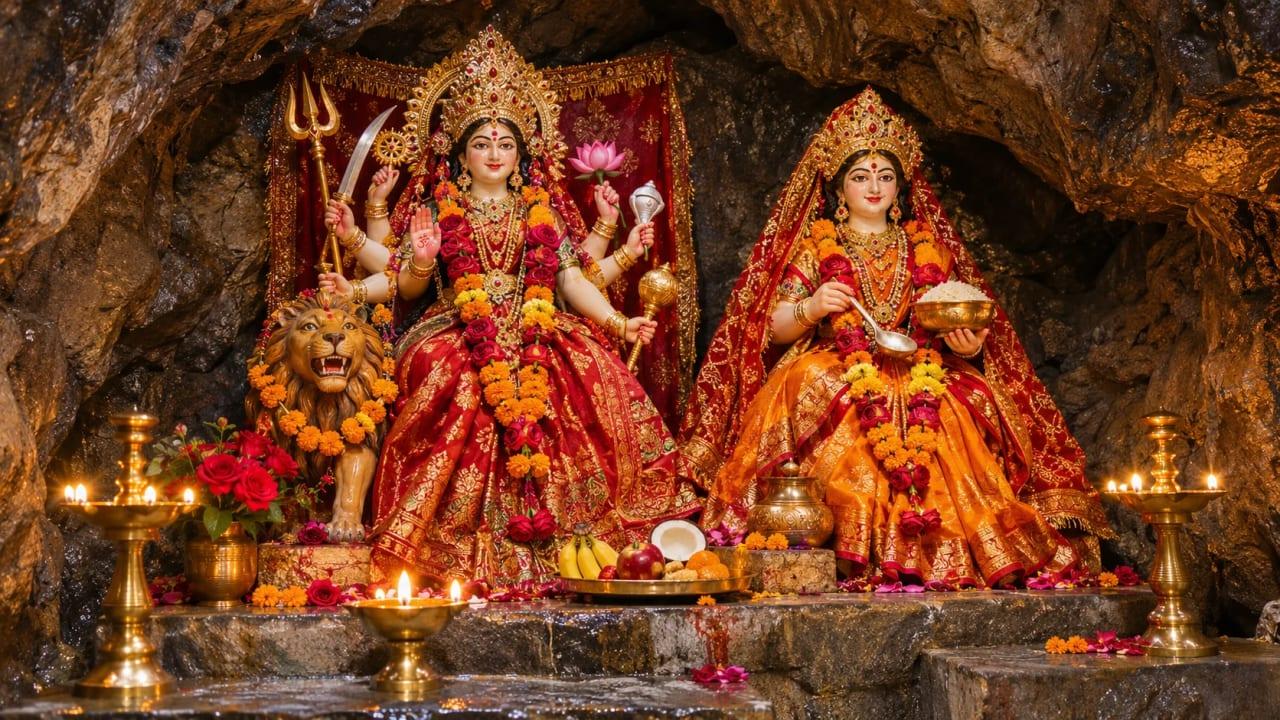
As we moved forward, we came across beautiful idols of Mata Ji and other deities. The rocky surroundings, narrow passages and small shrines made the entire experience feel like exploring a sacred space hidden inside a mountain.
The temple complex includes representations of Maa Durga, Maa Annapurna, Lord Rama and Mata Sita, along with other devotional images. Some areas also contain additional forms of Shiva worship, including a Rudraksha Shivling.
The interesting part was how the natural cave and the constructed shrines blended into one another.
At one moment, you were admiring a beautifully decorated idol. A few steps later, you were looking at water dripping from a rocky ceiling.
It never felt like an ordinary temple corridor.
It felt like the mountain itself was part of the temple.
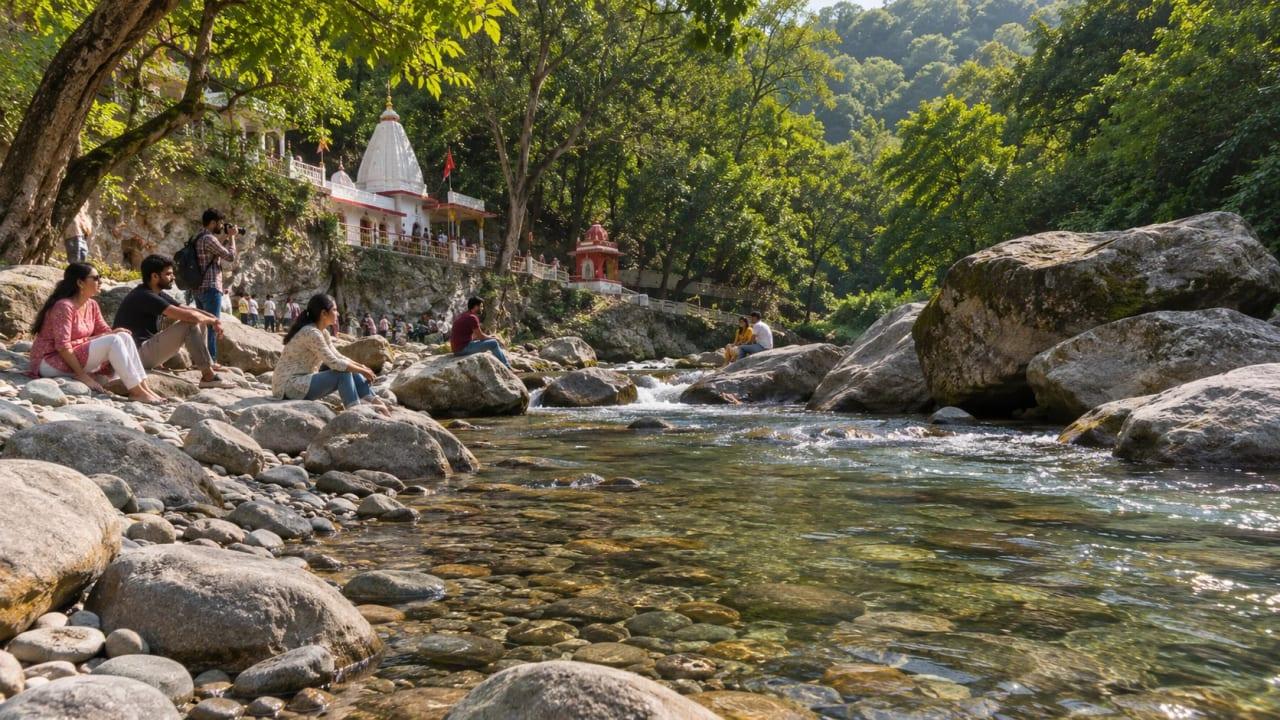
And Then the River Started Calling Me Again
After exploring the cave, we moved towards the corridor overlooking the river.
The river flowing beside Tapkeshwar Mahadev is commonly identified as the Tons River, locally also called the Tamsa. Interestingly, some official and tourism descriptions identify the watercourse here as the seasonal Asan River, so the naming is not completely consistent across sources.
Whatever name you use, the river adds something wonderful to the atmosphere.
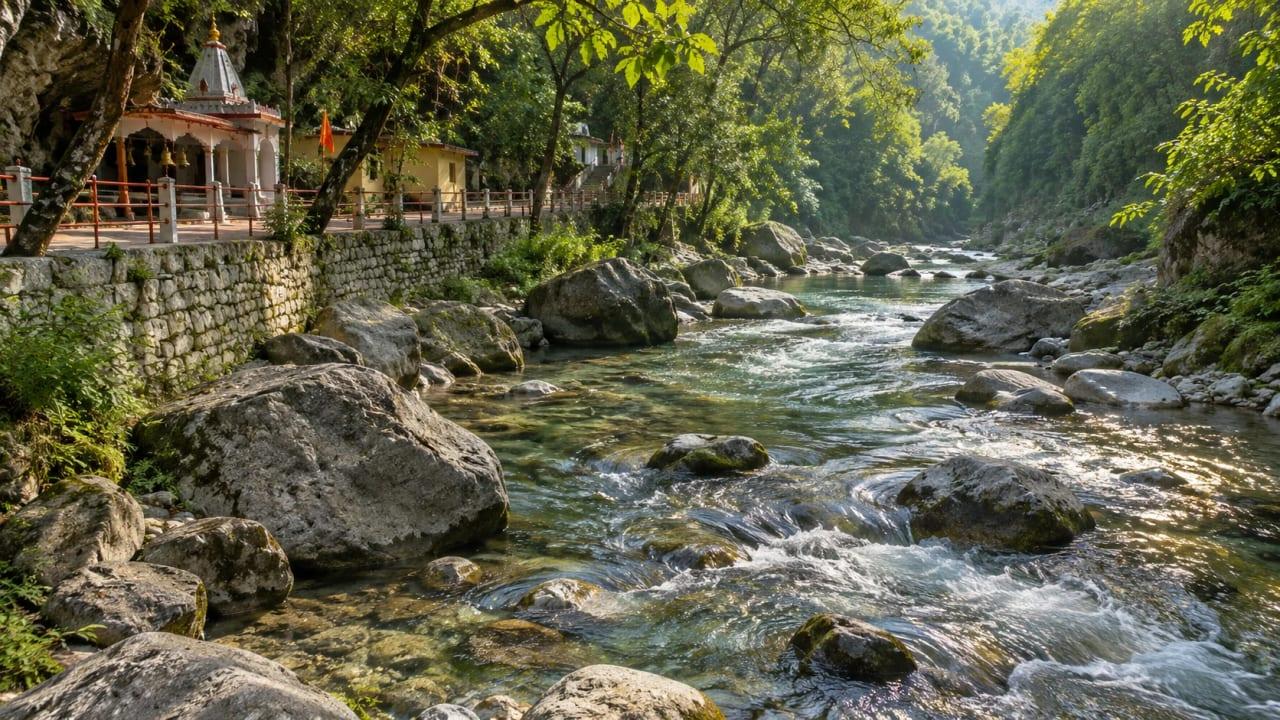
We could see the water flowing between rocks, with the temple complex rising around it.
And naturally, I wanted to go down.
We noticed a way towards the river and decided to explore it. But when we got closer, that particular area was quite dirty.
There was litter around, and it wasn't the sort of place where I wanted to spend time.
That was disappointing.
A beautiful natural setting deserves better care, especially when it is part of such an important religious destination.
So we decided not to enter the water there.
But I wasn't ready to give up.
Not when there was a river right in front of me.
We returned towards the main entrance area, where the riverbank looked much cleaner.
And finally, I got my moment.
The Best Part of My Visit: Time Beside the River
We made our way down towards the cleaner section of the river.
And this was exactly what I had been waiting for.
The water was flowing over the rocks, the surroundings were peaceful, and the entire place felt wonderfully relaxing.
We spent time beside the water, enjoyed the surroundings and clicked photographs.
For me, this was one of the happiest parts of the visit.
There is something about flowing water that immediately changes my mood. I can sit beside a river for ages without feeling bored.
Maybe it is the sound.
Maybe it is the movement.
Or perhaps it is simply the fact that water never seems to be in a hurry, even when it is constantly moving.
We had a lovely time there.
Of course, rivers near hills can become dangerous when the current increases, especially during rainfall. Anyone visiting should stay away from deep or fast-moving sections and follow local safety instructions.
But during our visit, spending time in the suitable riverside area made the temple experience feel even more special.
And just when I thought we had explored everything, we discovered there was an entire section on the other side.
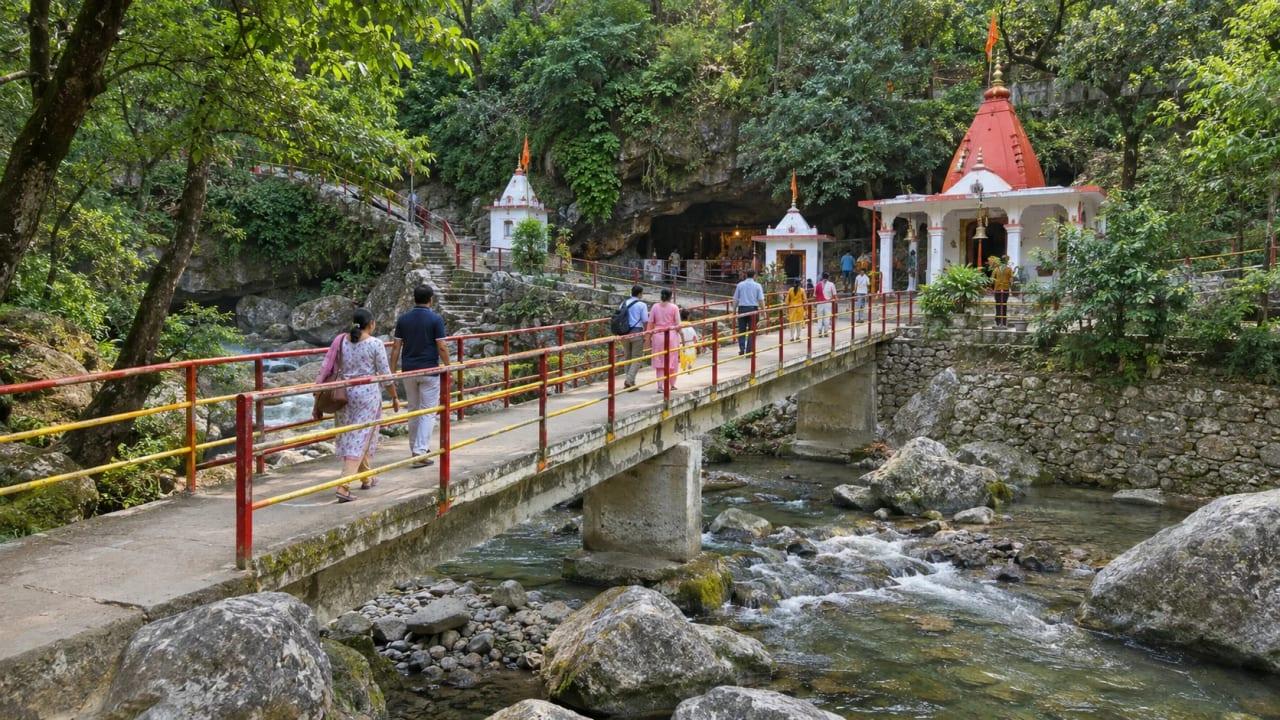
Across the Bridge: Hanuman Ji, Krishna and More Hidden Shrines
After enjoying the river, we decided to explore the other side of the temple complex.
There was a bridge connecting the two sides, and crossing it gave us another lovely view of the water below.
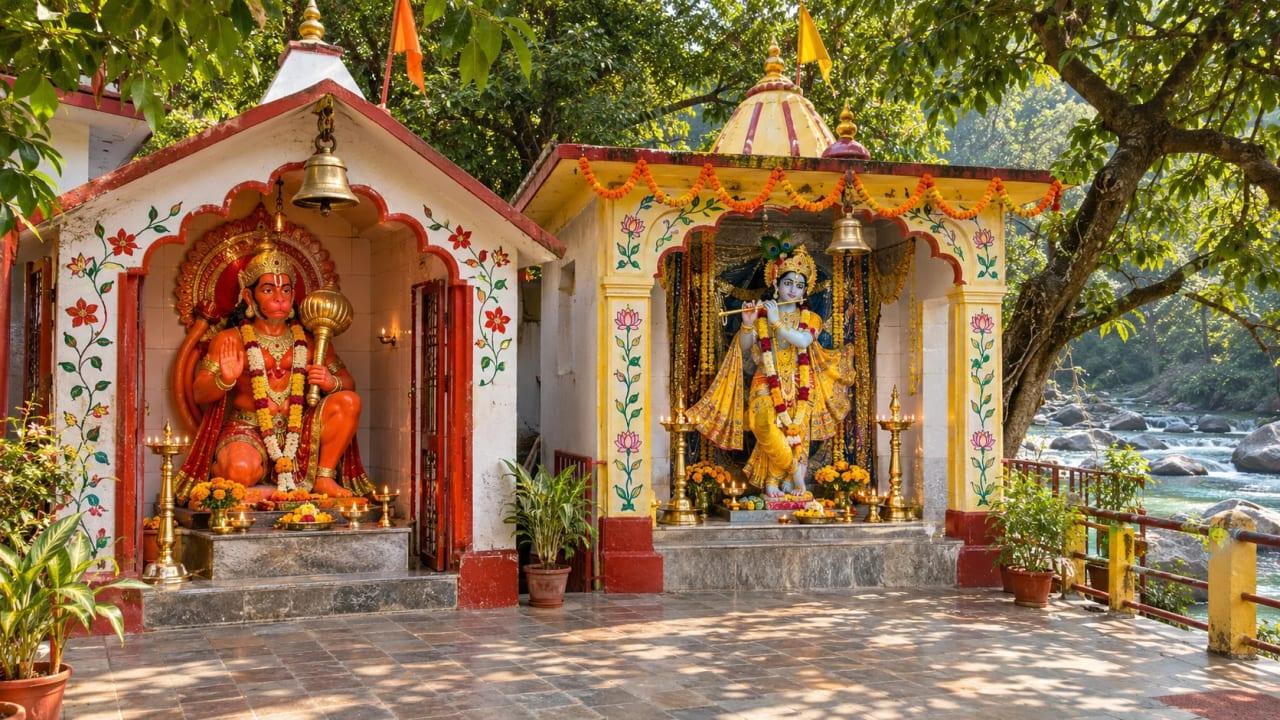
On the opposite bank, we found more shrines and idols.
One of the most noticeable features of this area is the large idol of Lord Hanuman. The complex is also associated with shrines dedicated to Maa Durga and Maa Santoshi.
During our walk, we saw an idol of Shri Krishna as well.
What I loved was that Tapkeshwar didn't feel like a single temple with just one attraction. It felt like a collection of sacred places connected by pathways, caves, stairs and a river.
Every time we thought we had finished exploring, another shrine appeared.
And then we came across something I hadn't expected at all.
Another cave.
But this one was quite different from the main Shiva cave.
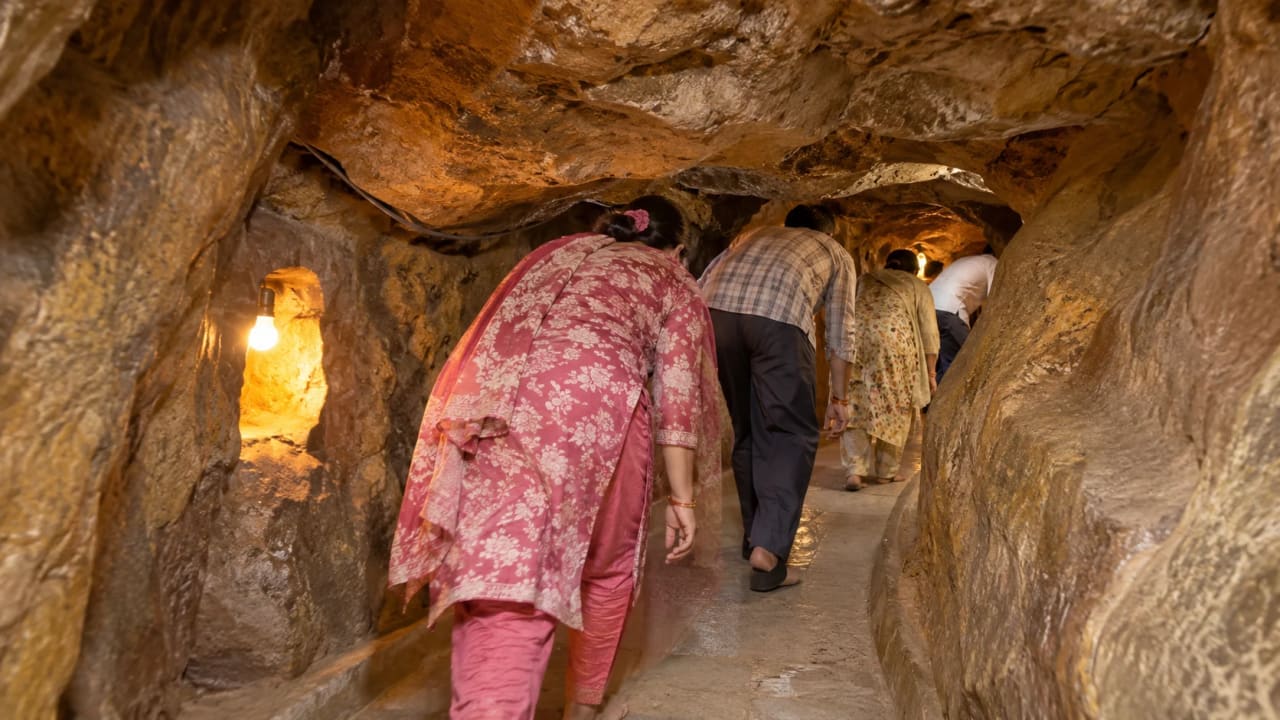
The Vaishno Devi Cave: A Temple Where You Almost Have to Crawl
Across the river is the Mata Vaishno Devi Gufa Yog Mandir, a shrine inspired by the famous Vaishno Devi cave pilgrimage in Jammu and Kashmir.
When I saw the entrance, I was immediately curious.
It looked like a narrow cave passage, and as we moved inside, we realised that walking normally wasn't going to work.
The ceiling became so low that we had to bend down considerably.
At one point, it almost felt as though we needed to sit down to move through the passage.
Now, I enjoy exploring unusual places, but this was certainly not what I had expected during a peaceful temple visit!
There was something exciting about carefully making our way through the narrow space, wondering what we would find at the other end.
And then we emerged into the shrine.
There was a beautiful idol of Mata Vaishno Devi.
The temple also includes sacred representations of Maa Kali, Maa Lakshmi and Maa Saraswati, traditionally associated with the divine feminine powers worshipped at Vaishno Devi. Reports about the shrine also mention an eight-armed form of the Goddess, or Ashtabhuja Mata.
The experience was quite different from visiting a normal temple hall.
You have to make an effort to reach the shrine, moving through a confined passage before arriving at the place of worship.
It gives the journey a sense of discovery.
And perhaps that is why the original Vaishno Devi pilgrimage has inspired so many cave shrines across India.
The passage itself becomes part of the devotional experience.
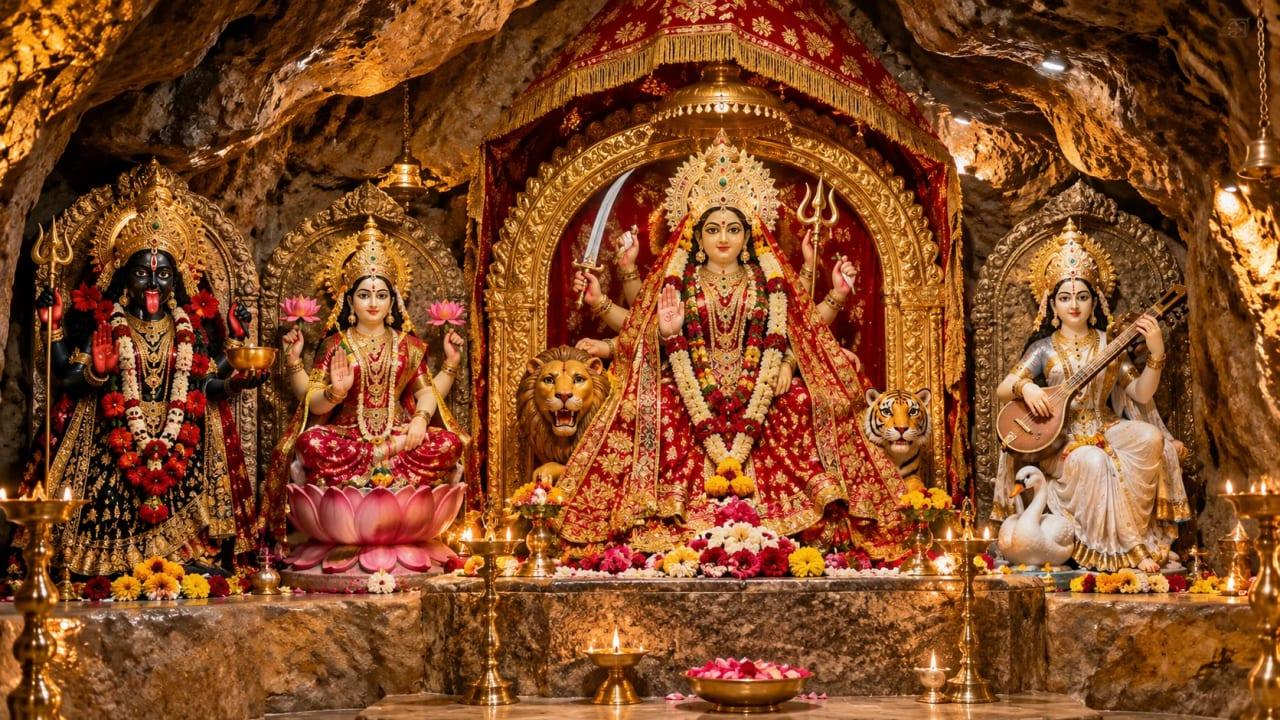
Maa Kali and the Temple Beyond the Cave
After completing our darshan at the Vaishno Devi shrine, we continued exploring.
As we came out, we also saw an idol of Maa Kali.
Maa Kali is one of the most powerful forms of the Divine Mother in Hindu traditions. She is associated with the destruction of evil, protection and the power of transformation.
The temple complex also includes worship associated with Maa Santoshi, a goddess widely revered for blessings connected with contentment, family well-being and the fulfilment of wishes.
What made this part of Tapkeshwar special was the variety of devotional traditions gathered into one place.
On one side of the river, we had visited Lord Shiva inside a natural cave.
On the other side, we found Hanuman Ji, Krishna, Maa Vaishno Devi, Maa Kali and other forms of the Divine Mother.
The entire experience felt like a small pilgrimage within a single temple complex.
And by this point, we had explored much more than I had originally imagined.
A Little Shopping Before Leaving
After completing our darshan, we came across a shop selling religious items and souvenirs.
And naturally, we had to stop.
Because what is a trip without bringing something home?
We bought a few things, including bands, a small trishul and, of course, our usual fridge magnet.
I have developed a habit of collecting fridge magnets from the places I visit. They are small, easy to carry and somehow manage to preserve a little memory of every trip.
The trishul felt particularly appropriate for a visit to a Shiva temple.
After shopping, we began making our way back towards the entrance.
We collected our footwear and prepared to leave.
At least, that was the plan.
But Tapkeshwar still had one more surprise waiting for us.
The ₹20 Lift That We Didn't Expect
Since the temple is situated below road level, visitors have to climb back up to reach the parking area.
We initially headed towards the stairs.
But then there was a change in plans, and we decided to use the lift instead.
Now, I had seen lifts at temples before, but what surprised me was discovering that this one had a separate charge.
₹20 per person.
It wasn't a huge amount, of course, but I genuinely hadn't expected a paid lift at the temple.
After all that walking, cave exploring and riverside enjoyment, I suppose we had earned an easier way back up!
We paid the amount and took the lift.
But even this wasn't the end of our temple visit.
One Last Temple Before We Left
After reaching the upper level, we noticed another beautiful temple.
And naturally, we couldn't simply walk past it.
We went inside, offered our prayers and spent a little more time enjoying the peaceful atmosphere.
I hadn't expected our visit to include so many different shrines, caves and small discoveries.
Finally, we returned towards the car parking area and began our journey back.
But even after leaving, I kept thinking about the place.
Not just the cave.
Not just the Shivling.
And definitely not just the ₹20 lift.
It was the entire experience.
Why Tapkeshwar Mahadev Is Worth Visiting
Tapkeshwar Mahadev Temple is located in the Garhi Cantonment area of Dehradun, roughly 6–7 kilometres from the city centre.
It is particularly popular during Mahashivratri, when devotees gather for special prayers and a fair, and during the holy month of Shravan.
The temple's natural cave, continuously dripping water, Mahabharata legends and riverside location make it one of Dehradun's distinctive religious destinations.
For visitors planning a trip, comfortable footwear is useful because of the stairs and walking involved. The cave floor can be damp, and the narrow Vaishno Devi passage may be difficult for people with mobility limitations or claustrophobia.
It is also worth checking weather conditions before visiting. The river can rise dangerously during heavy rainfall, and the complex has experienced flood damage in the past.
The temple is not just a place for quick darshan. If you want to explore both sides of the river, visit the smaller shrines and enjoy the surroundings, allow at least an hour or two.
The Real Magic of Tapkeshwar Mahadev
I had waited a long time to visit Tapkeshwar Mahadev.
And when I finally got the chance around Diwali, I discovered a place that was far more than a famous Shiva temple.
There was the excitement of descending the stairs and spotting the river for the first time.
There was the unusual feeling of bending down to enter the main cave.
There was the fascinating sight of water continuously dripping onto the Shivling.
There were the stories of Dronacharya and Ashwatthama, the beautiful idols of the goddesses, the bridge across the river and the narrow Vaishno Devi cave that almost made us crawl.
There was also that lovely time spent beside the water, taking pictures and simply enjoying the moment with my husband and in-laws.
And perhaps that is what I will remember most.
Not one particular idol or one particular story, but the calmness of the entire place.
Tapkeshwar Mahadev is one of those destinations where nature and devotion seem to belong together.
The cave provides the shelter. The rock provides the water. The river provides the music.
And somewhere in between, people find their own moments of peace.
I went there expecting to visit a temple I had heard about for years.
I came back with photographs, souvenirs, a little more knowledge about its legends and a very happy memory of finally getting to enjoy the river.
Some places are worth visiting because they are famous. Others become special because of how they make you feel.
For me, Tapkeshwar Mahadev was definitely the second kind.
Lock in the takeaway
Dehradun Travel Stories
Frequently asked questions
Where is Tapkeshwar Mahadev Temple located?
Tapkeshwar Mahadev Temple is located near Garhi Cantonment in Dehradun, Uttarakhand, approximately 6–7 kilometres from the city centre.
Why is Tapkeshwar Mahadev Temple famous?
The temple is famous for its natural cave, where water continuously drips from the rocky ceiling onto a sacred Shivling. It is also known for its peaceful riverside setting and legends connected to Guru Dronacharya.
What is the history of Tapkeshwar Mahadev Temple?
Tapkeshwar is traditionally associated with the Mahabharata era and Guru Dronacharya. The temple developed around a natural cave, although its exact historical construction date has not been conclusively established.
Why does water continuously drip onto the Shivling at Tapkeshwar?
Water naturally seeps through cracks in the cave's rocky ceiling and falls onto the Shivling. Devotees consider this continuous dripping a sacred form of jalabhishek offered to Lord Shiva.
What is the legend of Dronacharya and Ashwatthama at Tapkeshwar Temple?
According to local mythology, Guru Dronacharya lived in the cave with his family. When his son Ashwatthama prayed for milk, Lord Shiva is believed to have caused milk to drip from the cave ceiling. The legend says this later became water.
Which river flows near Tapkeshwar Mahadev Temple?
The river beside the temple is commonly called the Tamsa or Tons River in local and tourism accounts. Some sources identify the nearby watercourse as the seasonal Asan, so descriptions of its name vary.
Is there a Vaishno Devi cave at Tapkeshwar Temple?
Yes. The temple complex includes Mata Vaishno Devi Gufa Yog Mandir, a cave-style shrine inspired by the Vaishno Devi pilgrimage. Visitors pass through a narrow passage to reach the goddess shrine.
Which gods and goddesses can be seen at Tapkeshwar Mahadev Temple?
The complex is primarily dedicated to Lord Shiva and also features shrines or idols associated with Hanuman Ji, Shri Krishna, Maa Durga, Maa Kali, Maa Lakshmi, Maa Saraswati, Maa Annapurna and Maa Santoshi, among others.
Is there a lift at Tapkeshwar Mahadev Temple?
Yes. A lift provides an alternative to some of the stairs leading between the temple area and the upper level. During my visit, the lift cost ₹20 per person, although charges may change.
Can visitors go into the river near Tapkeshwar Temple?
Visitors can access certain riverside areas, but entering the water requires caution. Avoid deep or fast-flowing sections, particularly during monsoon or after heavy rainfall, and follow local safety instructions.
What is the best time to visit Tapkeshwar Mahadev Temple?
October to March generally offers pleasant weather for exploring the temple and its surroundings. Mahashivratri and Shravan are particularly important religious occasions, although the temple can be crowded during festivals.
How much time is needed to explore Tapkeshwar Mahadev Temple?
Around 1–2 hours is usually suitable for visiting the main cave, exploring the smaller shrines, crossing the bridge, visiting the Vaishno Devi cave and enjoying the riverside surroundings.