
Listen to this article
Checking audio support
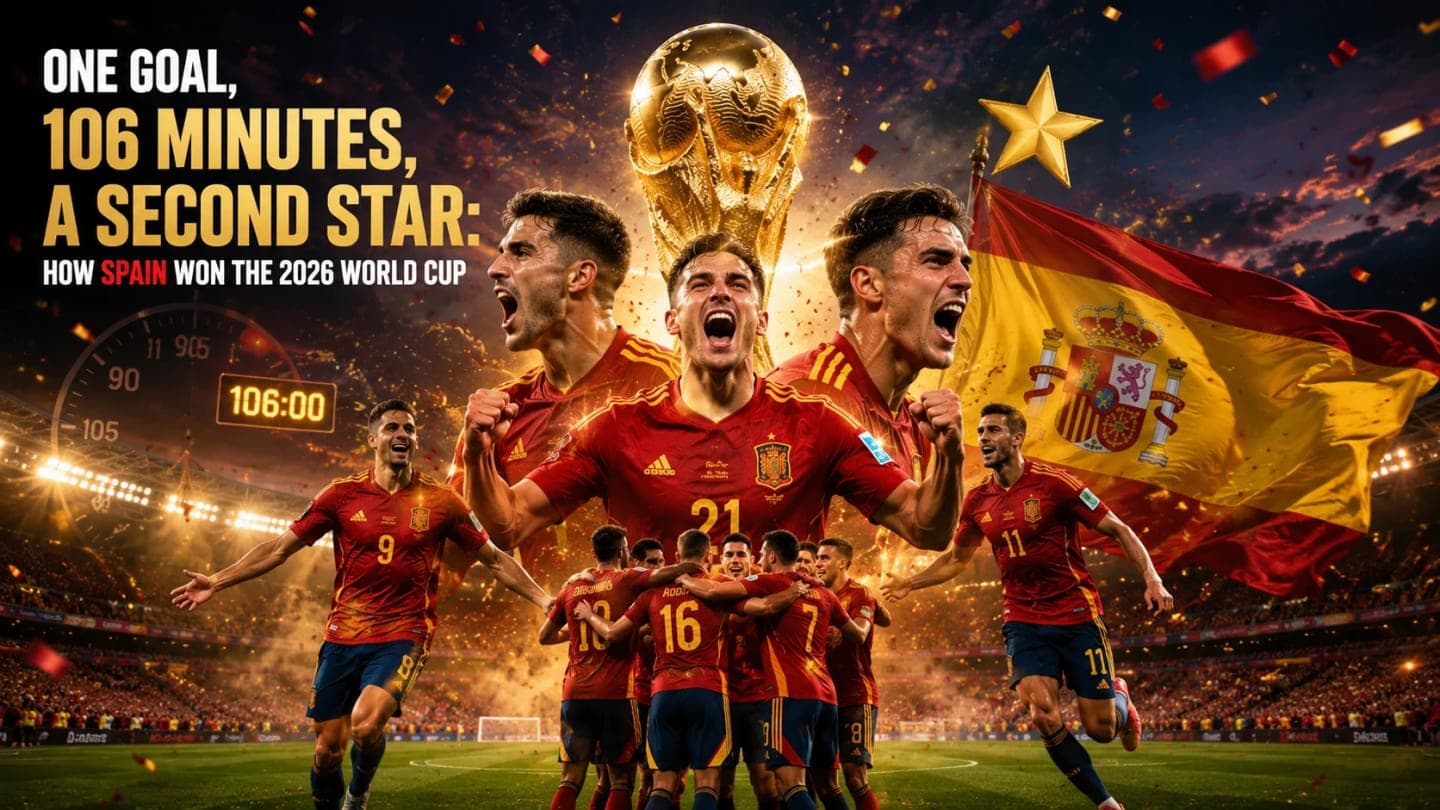
The whistle went, and for a heartbeat nobody moved. Lionel Messi stood near the centre circle with his hands on his hips. Argentina's substitutes stared from the technical area. At the other end, red shirts fell to the grass before rising into one another's arms. Above them, the scoreboard held the sentence that would define an era: Spain 1, Argentina 0.
One hundred and six minutes had been required to find the goal. Fourteen years of rebuilding had been required to find the second star. Now, beneath the lights of New York New Jersey Stadium, Spain were world champions again.
Four Teams, One Weekend, No Place To Hide
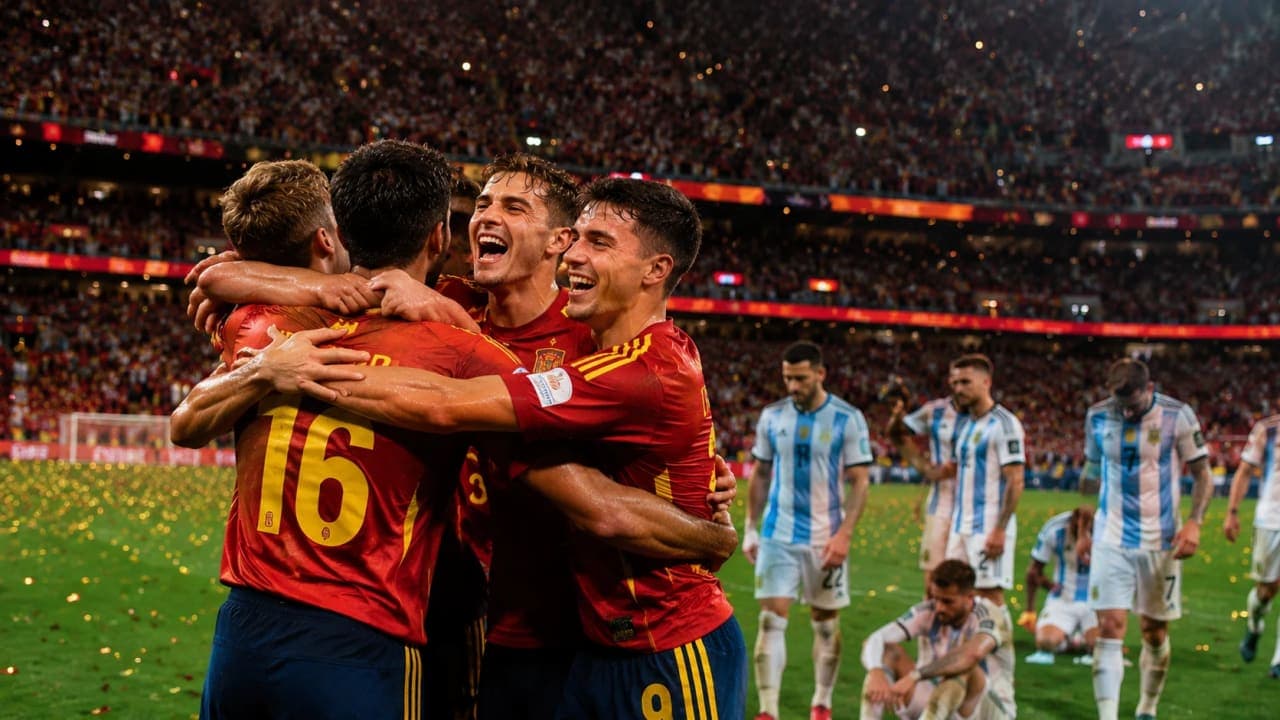
The final four carried four versions of footballing history. France had the depth of a modern superpower. England carried the ache of 1966 and the belief of a new generation. Argentina still had Messi, the defending champion. Spain had control: calm possession, a defence that barely conceded, and a team comfortable enough to wait for the game to reveal its weakness.
Our road-to-the-final feature had framed the last four as a collision of styles. The matches delivered something sharper: Spain's authority in one semifinal, Argentina's late escape in the other.
Match | Score | Winner |
|---|---|---|
France vs Spain | 0-2 | Spain |
England vs Argentina | 1-2 | Argentina |
Spain Did Not Rush The Moment
Against France, Spain played as if the tension belonged elsewhere. Mikel Oyarzabal converted from the penalty spot in the 22nd minute. Pedro Porro added the second after the break. France had match-winners everywhere, yet Spain denied them the thing knockout football usually creates: chaos.
The 2-0 scoreline was not spectacular in the way a five-goal thriller is spectacular. It was more unsettling than that. Spain looked complete. The midfield protected the ball, the back line protected space, and Unai Simon protected the goal. By the end, the French attack had been reduced to the hope that one moment might appear from nowhere. It never did.
Argentina Found One More Miracle
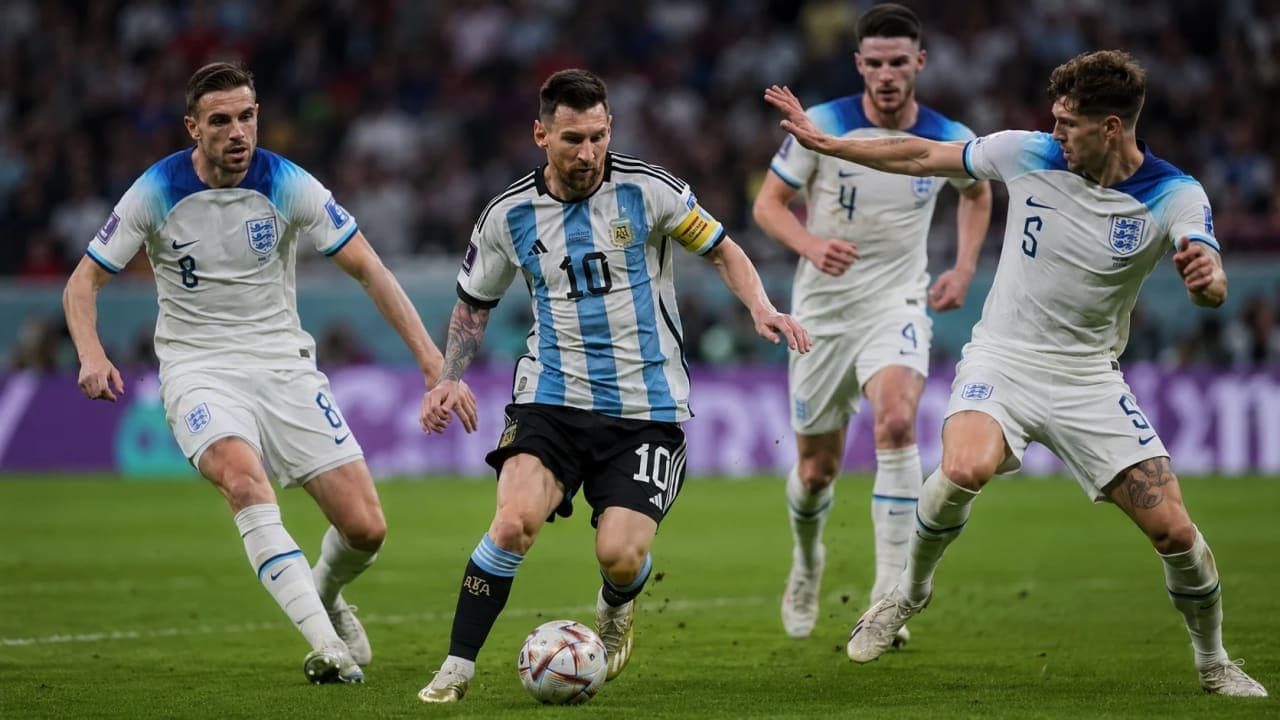
England made Argentina suffer. Anthony Gordon's 55th-minute goal placed the defending champions behind and pushed Messi's tournament toward its final hour. Argentina did not panic, but time began to move faster. Then Enzo Fernandez equalised in the 85th minute. In stoppage time, Messi saw the pass before the stadium saw the run, and Lautaro Martinez finished it.
That 2-1 comeback carried Argentina into another final and gave Messi one more night at the centre of world football. England would later beat France 6-4 in a wild third-place match, with Bukayo Saka scoring a hat-trick, but the medal could not erase the feeling that the final had slipped away in seven devastating minutes.
The Roads That Reached New Jersey
Spain's route was built on defensive certainty. Argentina's was built on attacking survival. The contrast made the final compelling: the tournament's most controlled team against a champion that had already escaped extra-time danger twice.
How is it so far?
Vote with other readers
Team | Group Finish | Round of 32 | Round of 16 | Quarterfinal | Semifinal |
|---|---|---|---|---|---|
Spain | 1st, 7 pts | 3-0 vs Austria | 1-0 vs Portugal | 2-1 vs Belgium | 2-0 vs France |
Argentina | 1st, 9 pts | 3-2 aet vs Cabo Verde | 3-2 vs Egypt | 3-1 aet vs Switzerland | 2-1 vs England |
France     20 | ####################
England    20 | ####################
Argentina  19 | ###################
Spain      14 | ##############
The Final Became A Test Of Patience
Spain took the ball and slowly took the air out of Argentina's attack. They finished with 20 shots to Argentina's two, 11 efforts on target to none, and roughly two-thirds of possession. Emiliano Martinez made save after save. Messi searched for space between lines that refused to separate. Every scoreless minute made Argentina believe resistance might become victory.
The match also grew heavier. Enzo Fernandez was dismissed in second-half stoppage time after a second yellow card, leaving Argentina to survive extra time with ten men. Spain kept circulating the ball, refusing the desperate shot, waiting for the correct one.
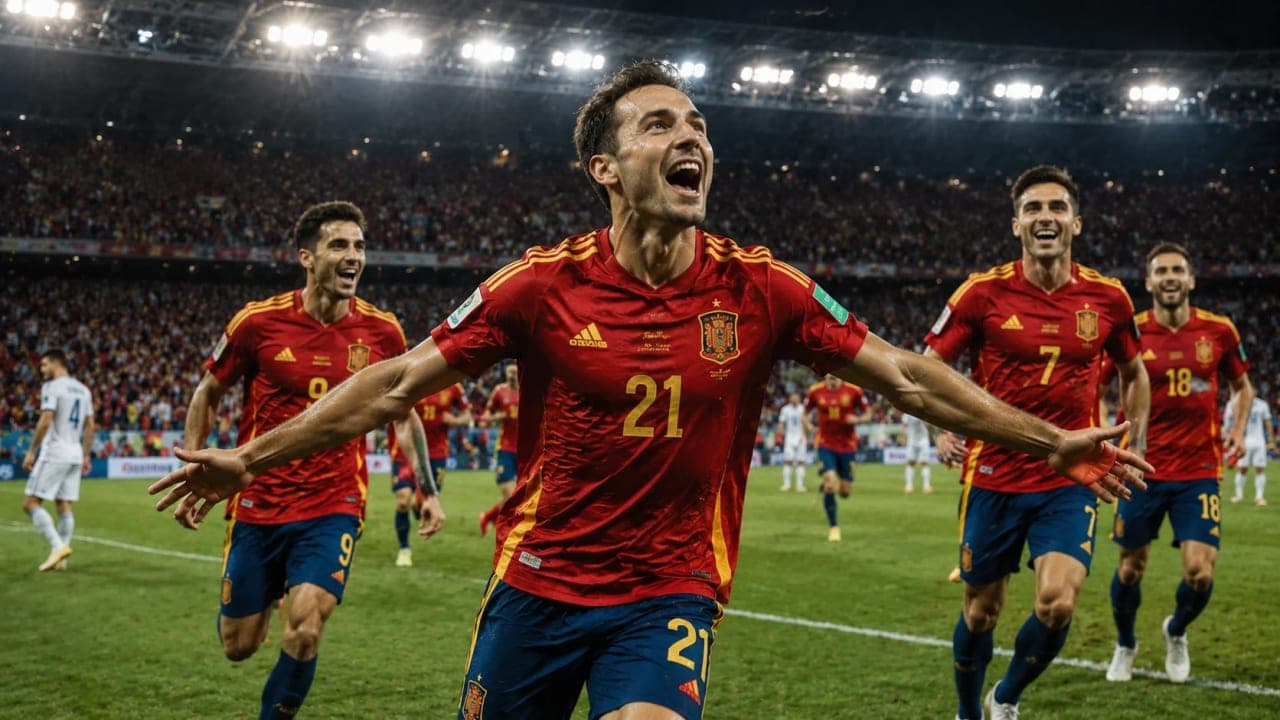
Then came the 106th minute. Ferran Torres attacked the opening, finished beyond Martinez, and ran toward a wall of red. It was not merely the winning goal. It was the reward for a team that had spent the entire final believing patience was an attacking weapon.
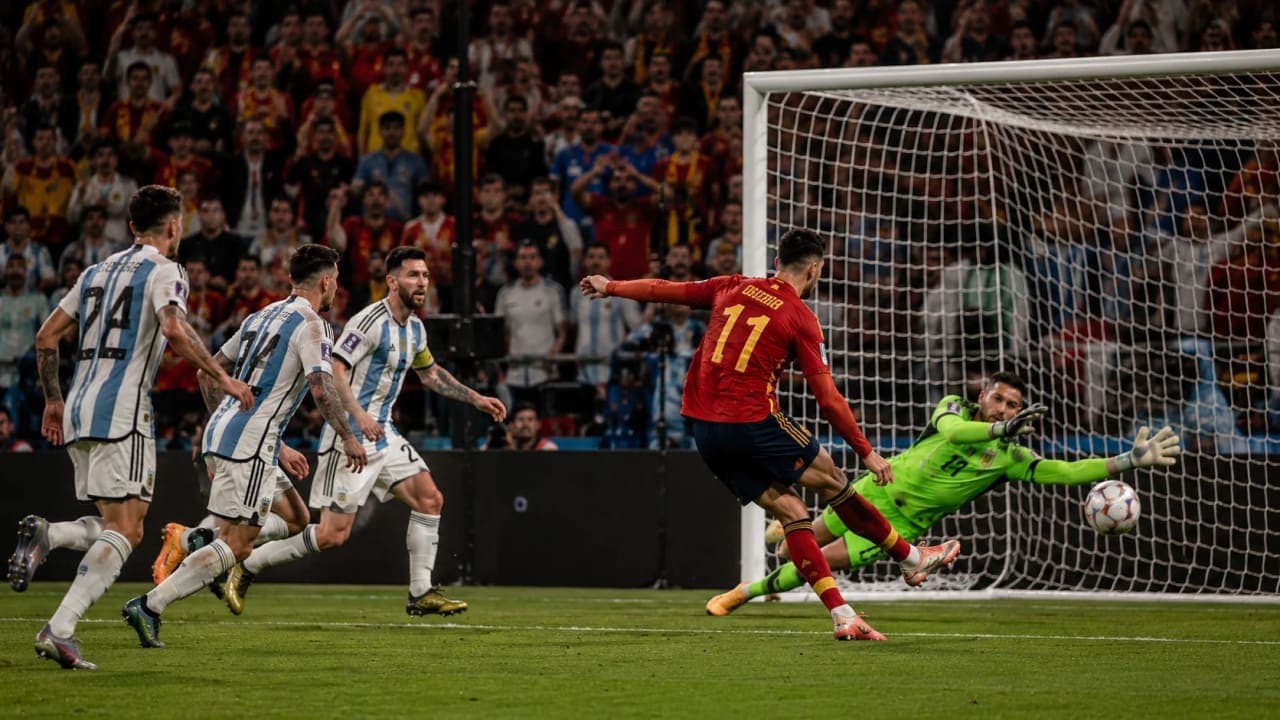
The complete event sequence and archived match statistics remain available in our Spain vs Argentina match centre.
Category | Spain | Argentina |
|---|---|---|
Final score | 1 | 0 |
Possession | About 65% | About 35% |
Tournament goals | 14 | 19 |
Top scorer | Mikel Oyarzabal, 5 | Lionel Messi, 8 |
Captain | Rodri | Lionel Messi |
Coach | Luis de la Fuente | Lionel Scaloni |
World Cup titles before final | 1 | 3 |
World Cup titles after final | 2 | 3 |
Why Spain Deserved The Second Star
Champions are often remembered through goals, but Spain's title was shaped by what opponents could not do. Across eight matches, they conceded once, a new benchmark for a champion. They went unbeaten throughout the tournament and extended a longer unbeaten run to 38 matches. Luis de la Fuente, at 65, became the oldest coach to lead a nation to the men's World Cup title.
This was not a nostalgic copy of 2010. Rodri gave the midfield authority, Oyarzabal supplied five tournament goals, Pau Cubarsi brought youth without fragility, and Simon delivered silence where danger should have been. Spain could dominate with the ball, defend without it, and change the rhythm without losing identity. Their second title felt less like a surprise than the closing argument of a tournament they had controlled from the beginning.
Spain      1 -> 2 | #  => ##
Argentina  3 -> 3 | ### => ###
France     2 -> 2 | ##  => ##
England    1 -> 1 | #   => #
Messi Left The Final Without A Fairytale, Not Without A Legacy
Argentina came closer than the scoreline will remember. Martinez's saves held the final open. A team carrying the physical cost of two extra-time knockout wins stayed alive until Torres finally broke through. Messi finished the tournament with eight goals and four assists, and his semifinal pass had delivered Argentina to the final.
If this was his last World Cup, the defeat changes nothing essential. Six tournaments, the 2022 title, Copa America triumphs, the Finalissima, eight Ballon d'Or awards and a career that made impossible angles feel routine cannot be reduced to one quiet night. At the time of writing, Messi had not made a definitive retirement announcement. The honest ending is therefore not goodbye. It is gratitude, with one question still open.
A Tournament Of New Records And New Names
Rodri received the Golden Ball, Simon the Golden Glove, and Cubarsi the Best Young Player award. Kylian Mbappe won the Golden Boot with 10 goals and moved to 22 career World Cup goals. The expanded competition reached 104 matches and passed 300 goals, turning the first 48-team edition into a month of constant movement across three host nations.
For every scoreline and knockout result, readers can revisit our FIFA World Cup 2026 results or continue through the FIFA World Cup 2026 hub. Yet numbers alone will not preserve this tournament. People will remember Saka's third-place hat-trick, Argentina's late semifinal escape, Martinez keeping the final alive, and Torres arriving when the clock had moved beyond ordinary time.
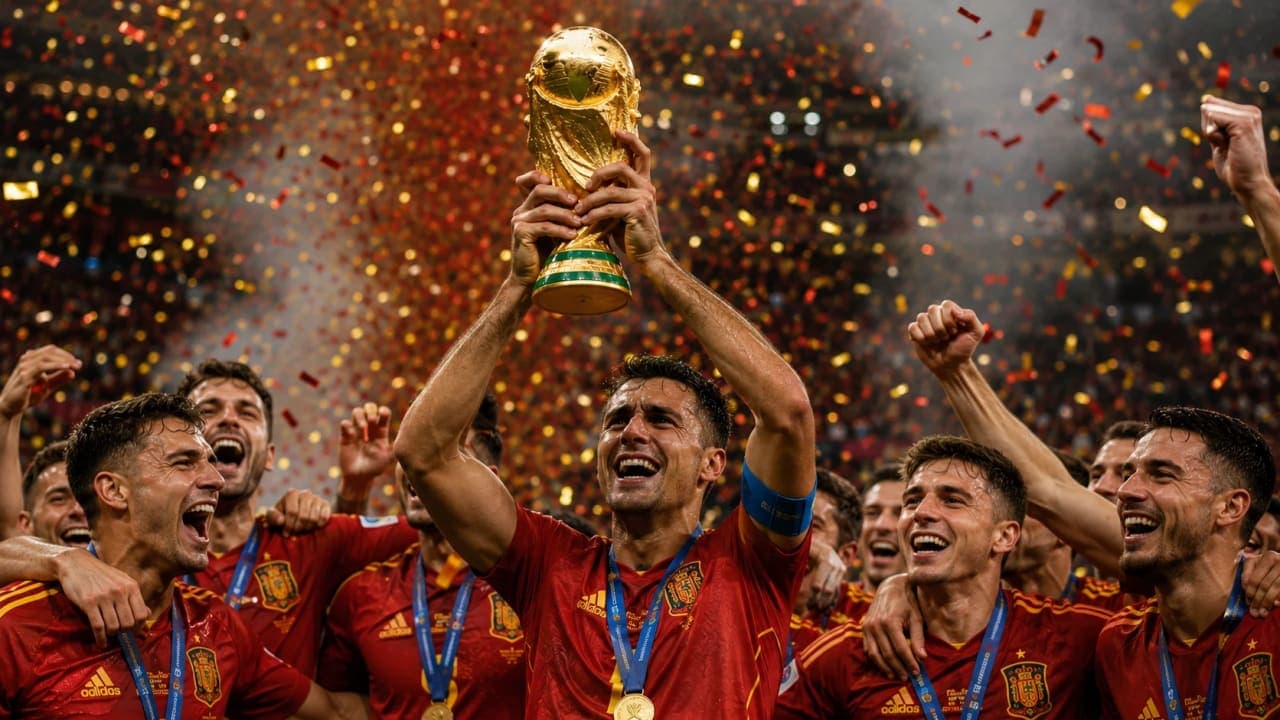
When The Confetti Fell
Back in New Jersey, Rodri climbed the platform with the trophy waiting above him. Spain's players crowded close, exhausted and suddenly young again. When he lifted it, red and gold disappeared into the confetti. Somewhere behind the celebration, Argentina walked toward the tunnel. Messi looked back once more at the field.
World Cups always end this way: one team holding history, another carrying the weight of how close it came. Spain had waited since 2010. They had crossed 106 final minutes, conceded once in eight matches, and found a champion's answer every time the tournament changed its question. The wait was over. The second star was real. Spain were champions of the world.
Lock in the takeaway
Frequently asked questions
Who won the FIFA World Cup 2026 Final?
Spain won the FIFA World Cup 2026 Final, beating Argentina 1-0 after extra time at New York New Jersey Stadium.
Who scored the winning goal in the 2026 World Cup final?
Ferran Torres scored Spain's winning goal in the 106th minute of extra time against Argentina.
Who won the major FIFA World Cup 2026 awards?
Rodri won the Golden Ball, Kylian Mbappe won the Golden Boot with 10 goals, Unai Simon won the Golden Glove, and Pau Cubarsi was named Best Young Player.
Was the 2026 World Cup Lionel Messi's last tournament?
Messi indicated that 2026 could be his last World Cup, but at the time of writing he had not made a definitive official retirement announcement.