
Listen to this article
Checking audio support
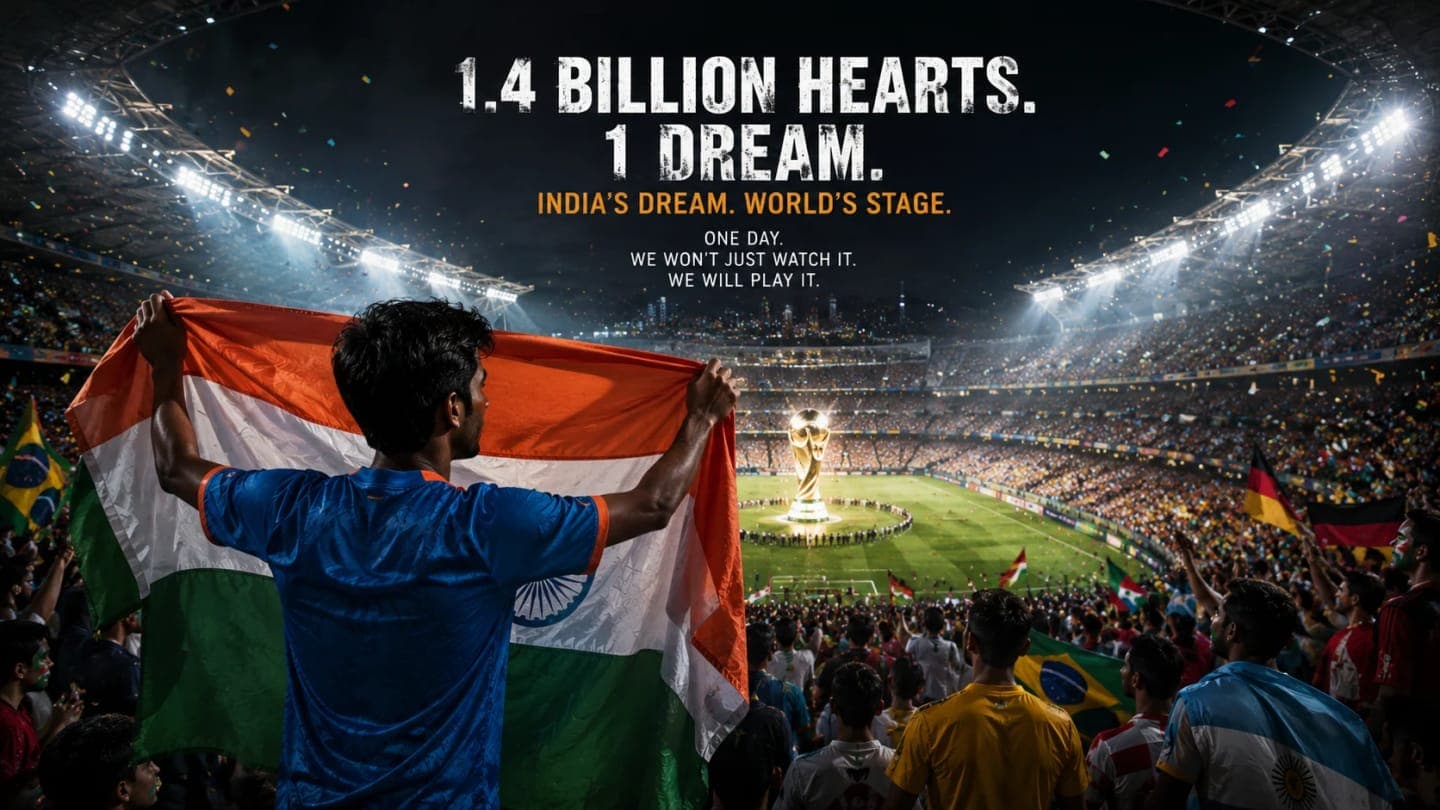
Hours before a World Cup match, India often feels wide awake in the wrong time zone.
In apartment living rooms, hostel common rooms, cafes, office WhatsApp groups and late-night terraces, fans arrange their sleep around football. Some wear Argentina blue. Some argue for Brazil. Some still trust Germany. Some follow Portugal because of Cristiano Ronaldo, France because of Kylian Mbappe, or England because the Premier League has been their weekly classroom.
Then the anthem plays, the camera pans across the players, and the old question returns with familiar weight.
Why isn't India there?
Why does a country with more than a billion people, a deep sporting imagination and passionate pockets of football culture still watch the FIFA World Cup from outside the touchline?
The answer is not one excuse. It is not one bad federation decision, one lost match, one myth about boots, one league problem or one cultural comparison with cricket. It is a longer story - part history, part structure, part missed opportunity, part hope.
The Short Answer: India Did Not Qualify For FIFA World Cup 2026
India is not playing in the FIFA World Cup 2026 because the Indian men's national team did not qualify through the Asian qualification pathway.
For 2026, Asia received a bigger opportunity than ever before: eight direct places at the expanded 48-team World Cup, plus one route through the inter-confederation playoff. That expansion made the dream feel slightly less distant for many Asian nations. It did not, however, make qualification easy.
India entered the AFC qualification process in the second round, drawn with Qatar, Kuwait and Afghanistan in Group A. To keep the World Cup dream alive, India needed to finish in the top two. Qatar won the group. Kuwait finished second. India ended third with five points and was eliminated from World Cup contention before the third round.
Stage | Outcome |
|---|---|
AFC qualification entry | India entered in the second round |
Group | Group A with Qatar, Kuwait and Afghanistan |
Requirement | Top two teams advanced to the third round |
Final position | Third place |
Record | 1 win, 2 draws, 3 losses |
Final points | 5 points |
Campaign ending | Qatar 2-1 India and Kuwait 1-0 Afghanistan on 11 June 2024 confirmed India would not advance |
That is the clean sporting explanation. But it does not fully explain why India keeps arriving at this point. To understand that, the story has to travel backwards before it can move forward.
The World Cup India Never Played
The most haunting chapter in Indian football history is not a match. It is an absence.
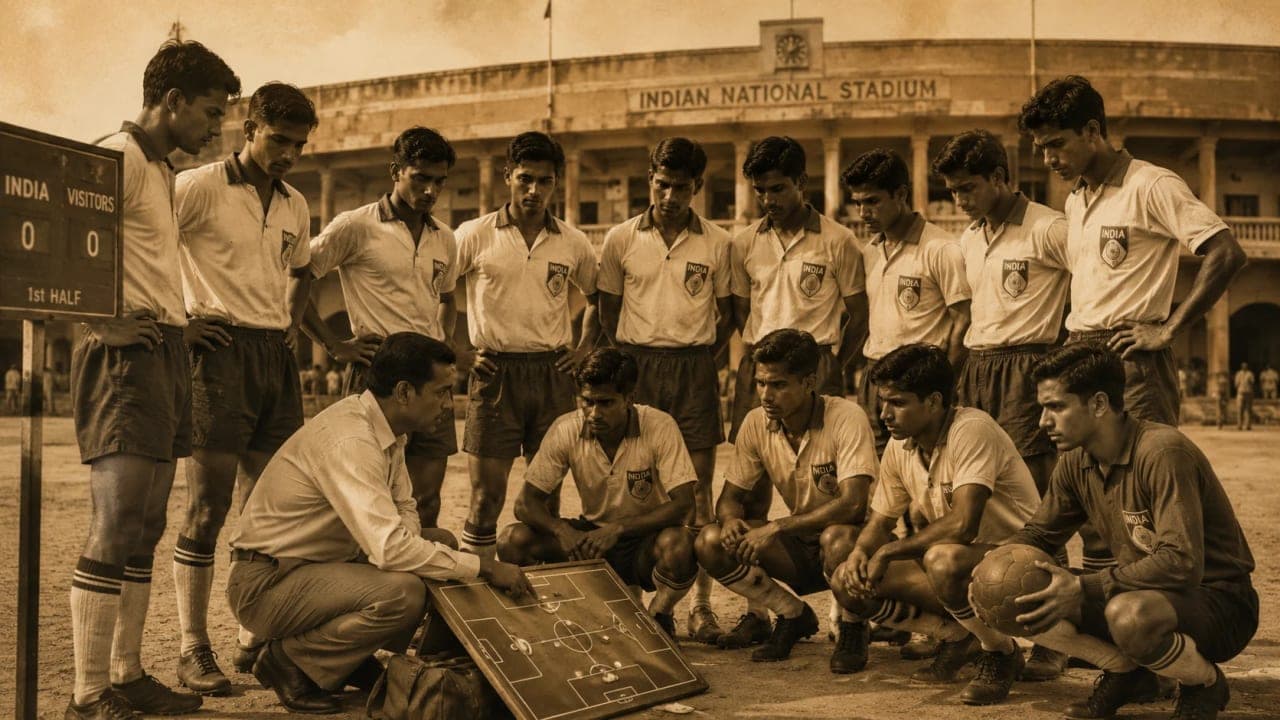
India was supposed to be part of the 1950 FIFA World Cup in Brazil. The country received a place after other Asian teams withdrew from the qualification process. It would have been India's first World Cup, arriving only a few years after independence, at a time when Indian football still had genuine standing in Asia.
But India withdrew before the tournament. For generations, the story was reduced to a dramatic line: India did not go because FIFA would not allow the players to compete barefoot.
The truth is more complicated and less cinematic.
The barefoot issue existed around Indian football in that era, but historians and football writers have repeatedly challenged the idea that it was the main reason for withdrawal. More credible explanations point to travel complications, financial uncertainty, lack of preparation time, team-selection disagreements, and the fact that Indian sporting administrators viewed the Olympics as a more prestigious football stage than the World Cup at that moment.
That last detail matters. Today, the World Cup is the summit of football. In 1950, especially for a newly independent India, the hierarchy of global sporting prestige did not feel as obvious. The Olympics still carried enormous weight. Football officials misread the future.
Year | Event |
|---|---|
1948 | Independent India plays Olympic football in London and earns respect despite losing to France |
1950 | India receives a FIFA World Cup place after other Asian teams withdraw |
1950 | India withdraws before the tournament in Brazil |
1951 | India wins Asian Games gold in New Delhi |
1956 | India finishes fourth at the Melbourne Olympics |
1962 | India wins Asian Games gold again in Jakarta |
1986 onward | India resumes regular World Cup qualifying attempts but does not reach the finals |
2024 | India exits the 2026 World Cup qualification race in AFC Round Two |
The tragedy is not only that India missed 1950. It is that the missed chance became a symbol of everything Indian football would spend decades trying to recover: vision, structure, elite competition and belief that the world stage belonged within reach.
Why Does India Struggle To Qualify?
The honest answer is uncomfortable but not hopeless. India does not miss the World Cup because Indian players lack passion. It misses out because international football rewards systems, and India's system has often developed slower than its dreams.
Grassroots Football Is Still Too Uneven
World Cup teams are not built when players are 24. They are built when children are 8, 10, 12 and 14. That is where habits, technique, game intelligence and confidence begin.
In India, football culture is strong in states such as Kerala, West Bengal, Goa, Manipur, Mizoram, Meghalaya and parts of the Northeast, but the pathway is not equally strong across the country. A child may love football deeply but still lack regular coaching, safe grounds, competitive matches, nutrition support or scouting visibility.
The Domestic League Is Still Maturing
The Indian Super League and I-League have raised visibility, improved professionalism and created more full-time football environments. That matters. Players need stadium pressure, tactical coaching, recovery teams, video analysis and a clear club calendar.
But World Cup-level football requires more than a visible top league. It requires a deep pyramid beneath it: reserves, youth leagues, state competitions, district competition, academy minutes, promotion pressure and a structure where teenagers can play meaningful football before they are expected to save the national team.
Asia Is Much Harder Than Many Fans Realise
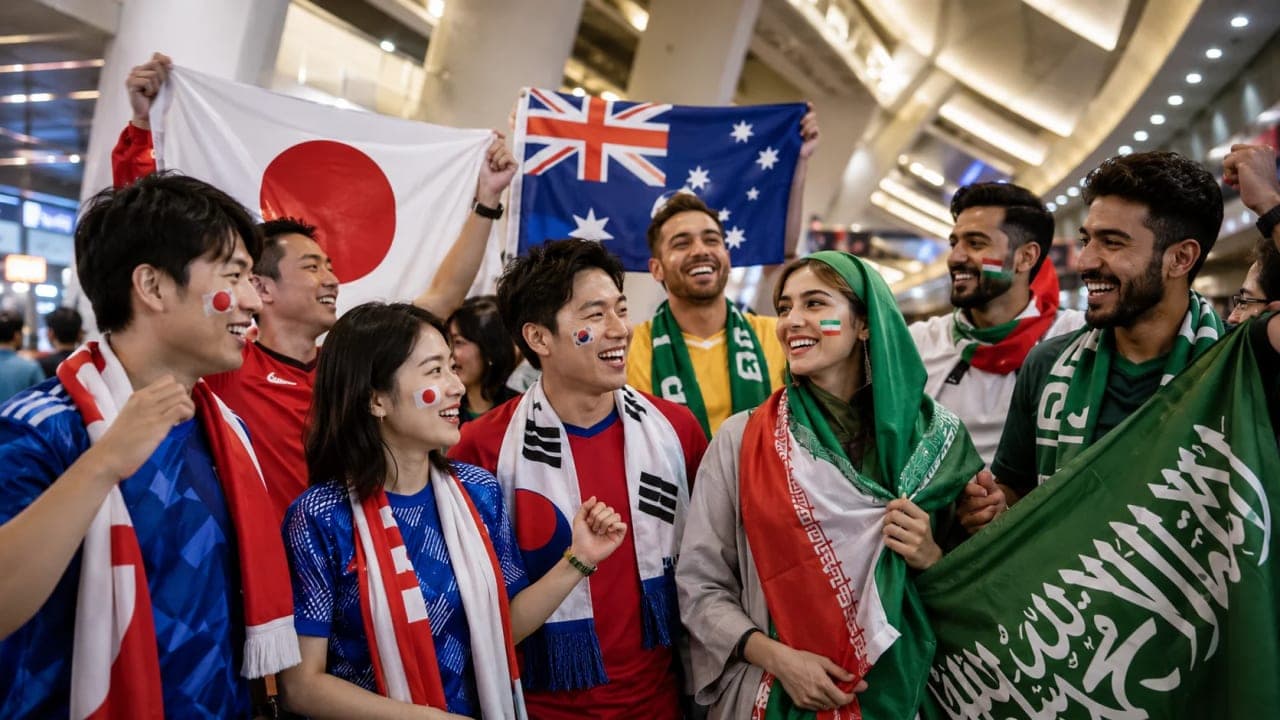
The AFC route is unforgiving. India is not competing only with nearby South Asian teams. It is competing with Japan, Korea Republic, Iran, Saudi Arabia, Australia, Qatar, Iraq, Uzbekistan, UAE, Jordan and more - countries with stronger leagues, deeper talent pools, better youth systems or longer histories of elite Asian competition.
How is it so far?
Vote with other readers
India's FIFA ranking also shows the gap. In the June 2026 FIFA men's ranking, India was listed 138th. Rankings are not perfect, but they are a useful signpost: India is trying to climb a mountain while many Asian rivals are already operating far higher up the slope.
Coaching And Talent Identification Need Depth
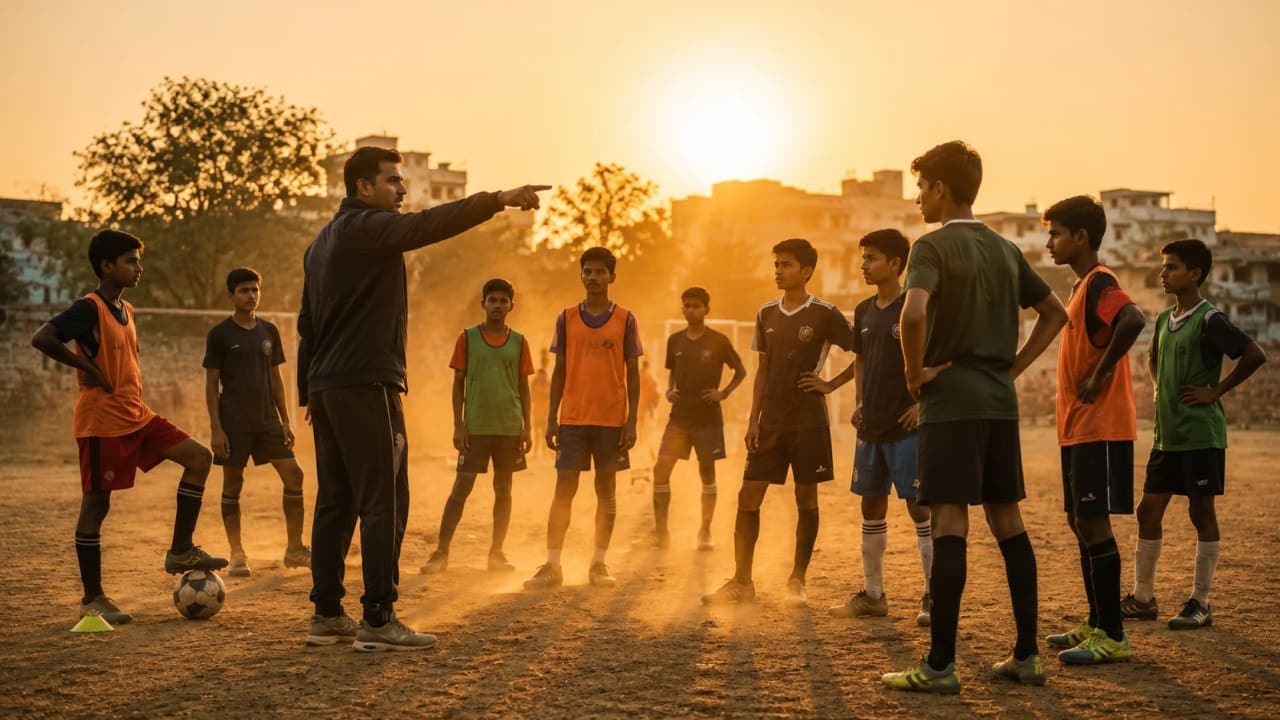
A country of India's size can produce talent. The harder question is whether it can identify, train, protect and challenge that talent at the right age.
Modern football is brutally specific. A technically gifted 13-year-old needs not only encouragement but position-specific coaching, sports science, match minutes, psychological development and tactical education. Without that ecosystem, raw talent can fade long before it reaches senior international football.
Football Still Fights For Space In The National Imagination
Cricket's dominance is real, but it should not be used as a lazy excuse. Many countries succeed in football while loving other sports. The challenge is not that Indians love cricket. The challenge is that football must build its own serious, consistent development culture rather than depend only on emotional bursts around World Cups and derbies.
Area | Why It Matters |
|---|---|
Grassroots access | More children need regular coaching, safe pitches and competitive games |
Youth development | Players need structured pathways before senior football |
Coaching education | Better coaches create better habits and tactical understanding |
Domestic competition | A deeper league pyramid creates pressure and match readiness |
Sports science | Modern football depends on fitness, recovery, nutrition and injury prevention |
Scouting | Talent from smaller towns must be seen early and tracked properly |
International exposure | Players and teams need regular games against stronger opponents |
What Japan, Korea Republic And Others Did Differently
The most useful comparison for India is not Brazil or Argentina. It is Asia.
Japan built a serious professional league, invested in coaching, connected schools and clubs, and created a culture where technical development became non-negotiable. Korea Republic developed a fierce football identity, strong domestic structures and a pipeline that could send players into top European leagues. Australia benefited from a high-performance sporting culture and later found a competitive route in Asia. Iran and Saudi Arabia built consistency through domestic strength, football identity and repeated exposure to elite continental competition.
None of these countries became World Cup regulars by accident. They built systems that made qualification repeatable, not miraculous.
Nation | World Cup finals appearances including 2026 |
|---|---|
Korea Republic | 12 |
Japan | 8 |
Australia | 7 |
Iran | 7 |
Saudi Arabia | 7 |
Qatar | 2 |
Korea DPR | 2 |
That table is not meant to shame India. It is meant to clarify the standard. The countries India wants to catch have been stacking World Cup cycles on top of each other for decades.
What The World Cup Means To Indian Fans
This is the part numbers cannot fully explain.
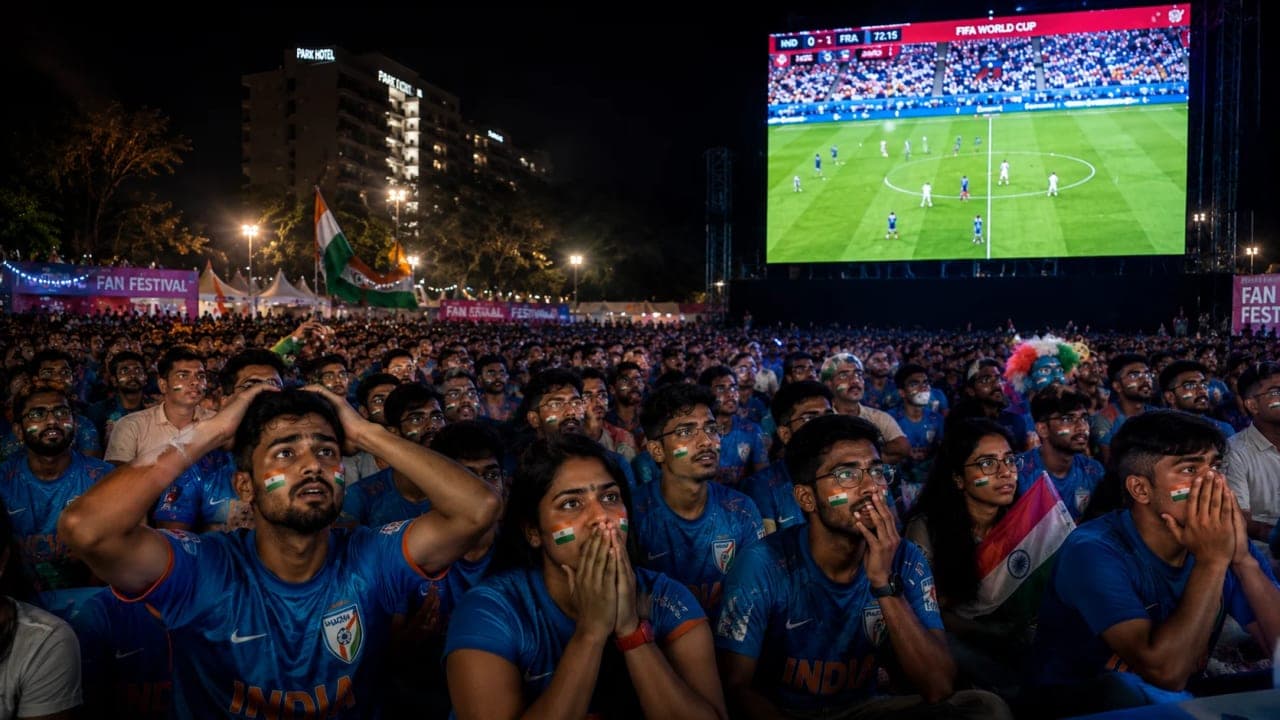
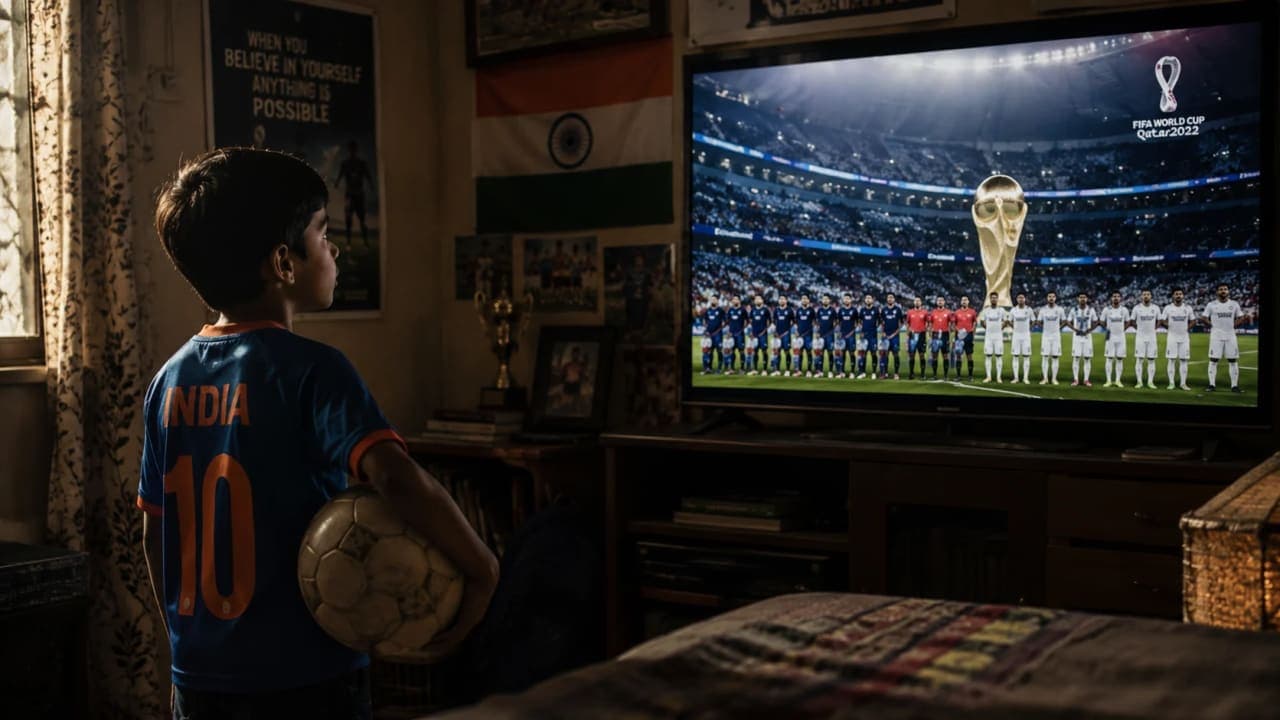
For Indian fans, the World Cup is often inherited before it is understood. A child watches a father cheer for Brazil. A college student discovers Messi at 1:30 AM. A hostel corridor becomes a temporary stadium. Office friends divide into rival fan clubs for a month and then return to normal life with one more shared memory.
India may not be on the pitch, but India is absolutely inside the World Cup. It is there in the sleep schedules, the arguments, the jerseys, the screenings, the reels, the fantasy predictions and the sudden emotional investment in countries many fans may never visit.
That is why the question hurts. Indian fans do not ask why India is absent because they are casual. They ask because they care.
Readers following the tournament itself can continue through SNIGDHA Blogs' FIFA World Cup 2026 hub, fixtures coverage, team pages and match-centre updates. But this Indian football question sits beside those live match stories like a quiet parallel tournament: the tournament of waiting.
Indian Football Today: The Dream Has Not Disappeared
It would be unfair to pretend nothing has changed.
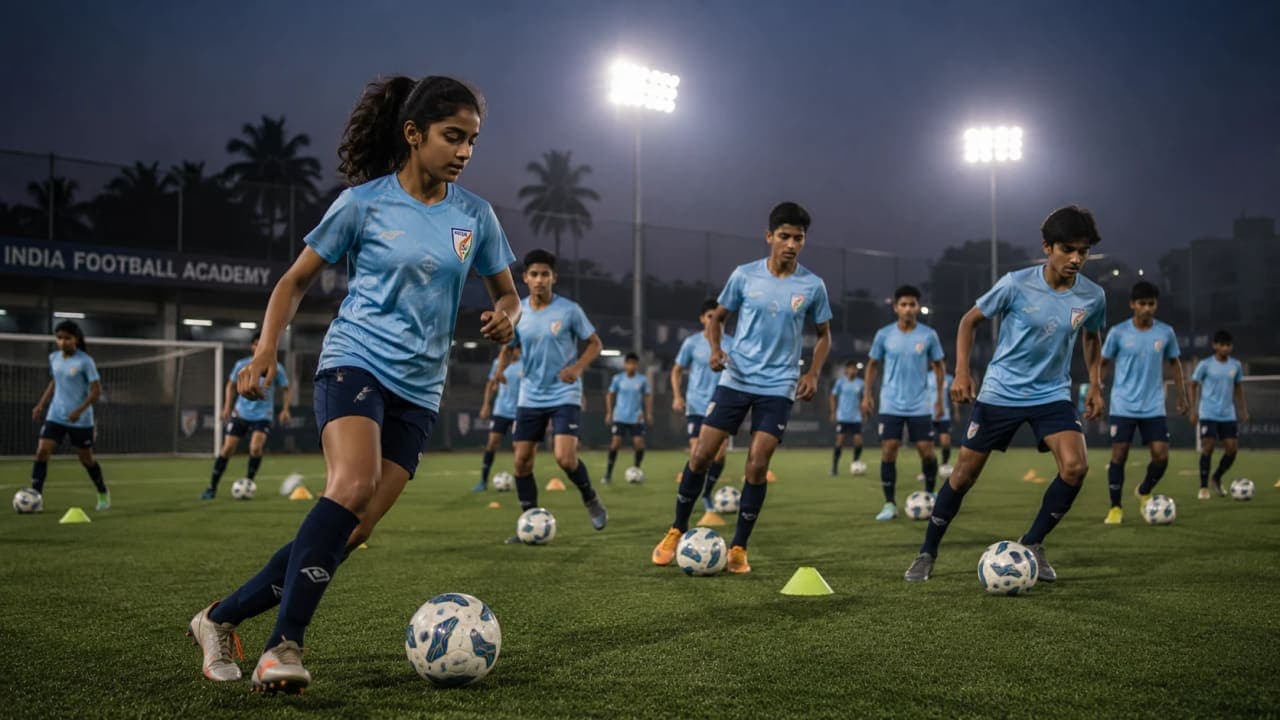
The Indian Super League has made professional football more visible. Clubs are investing more in facilities and academies. Youth competitions have grown. The AIFF's long-term Vision 2047 roadmap and grassroots programmes such as Blue Cubs show that the conversation has shifted toward children, coaching and long-term participation rather than only senior-team firefighting.
There are more young fans now. More girls playing. More parents open to football. More academies. More conversations about player pathways, sports science and club responsibility.
Progress exists. The problem is scale and speed. Other countries are not standing still while India improves. The target keeps moving.
Can India Qualify In The Future?
Yes, but not through optimism alone.
The expanded 48-team World Cup gives Asia more room. That matters. More Asian qualification places mean the ceiling is not as narrow as it once was. Countries such as Jordan and Uzbekistan reaching the 2026 tournament for the first time show that new names can break through when structure, timing and performance meet.
But expansion does not remove the need to win. India still has to move from being a hopeful outsider to a genuine top-12 Asian contender, then a top-eight contender. That requires years of compounding work.
The realistic path is not one golden generation appearing from nowhere. It is a better system creating more good players every cycle, then a few excellent ones emerging from that larger base.
Future Requirement | What It Would Look Like |
|---|---|
Regular top-100 ranking push | More wins against stronger Asian opponents |
Deeper domestic pyramid | More meaningful matches for young Indian players |
Academy accountability | Clubs judged on player development, not only senior results |
Better overseas pathways | Top Indian players testing themselves in stronger leagues |
Stable national-team planning | Clear style, consistent coaching and smart scheduling |
Fan patience with pressure | Demanding progress without turning every setback into collapse |
So Why Is India Not Playing In 2026?
Because in the qualifying table, India did not do enough.
Because Qatar and Kuwait finished ahead. Because the margins in Asia punish slow starts and missed chances. Because India's football system is still catching up with the demands of modern qualification. Because the country has produced love for football faster than it has produced a complete football machine.
But also because football history is rarely final.
The same country that missed 1950 through hesitation can still build a future through clarity. The same fans who stay awake for other nations can one day stay awake for their own. The same children watching the World Cup tonight can become the players, coaches, analysts, scouts, physios and administrators who change what the next generation expects from Indian football.
Final Whistle
When the floodlights glow in Mexico City, New York, Dallas, Vancouver or Doha in future tournaments, Indian fans will still gather. They will still debate formations, celebrate goals, argue about referees and fall in love with players from faraway places.
For FIFA World Cup 2026, India is not there. That fact is clear.
But the dream has not disappeared. It has simply moved back to the training ground, the school field, the academy pitch, the state league, the coaching classroom and the administrative table where long-term decisions are made.
One day, if those places do their work properly, the old question may finally change.
Not: why isn't India there?
But: who are India playing next?
Lock in the takeaway
Frequently asked questions
Did India qualify for the FIFA World Cup 2026?
No. India did not qualify for the FIFA World Cup 2026. The team was eliminated in the AFC second round after finishing third in Group A behind Qatar and Kuwait.
When did India last qualify for a FIFA World Cup?
India received a place at the 1950 FIFA World Cup after other Asian teams withdrew, but the team withdrew before the tournament and has never played in the World Cup finals.
Was India banned from the 1950 World Cup for playing barefoot?
The barefoot story is widely treated as an oversimplified myth. Historical accounts point more strongly to travel, preparation, team-selection and administrative priorities, with the Olympics seen as more important at the time.
Can India qualify for a future FIFA World Cup?
It is possible, especially with the World Cup expanded to 48 teams and Asia receiving more places, but India would need deeper youth development, stronger domestic competition, better coaching pathways and more consistent international results.