
Listen to this article
Checking audio support
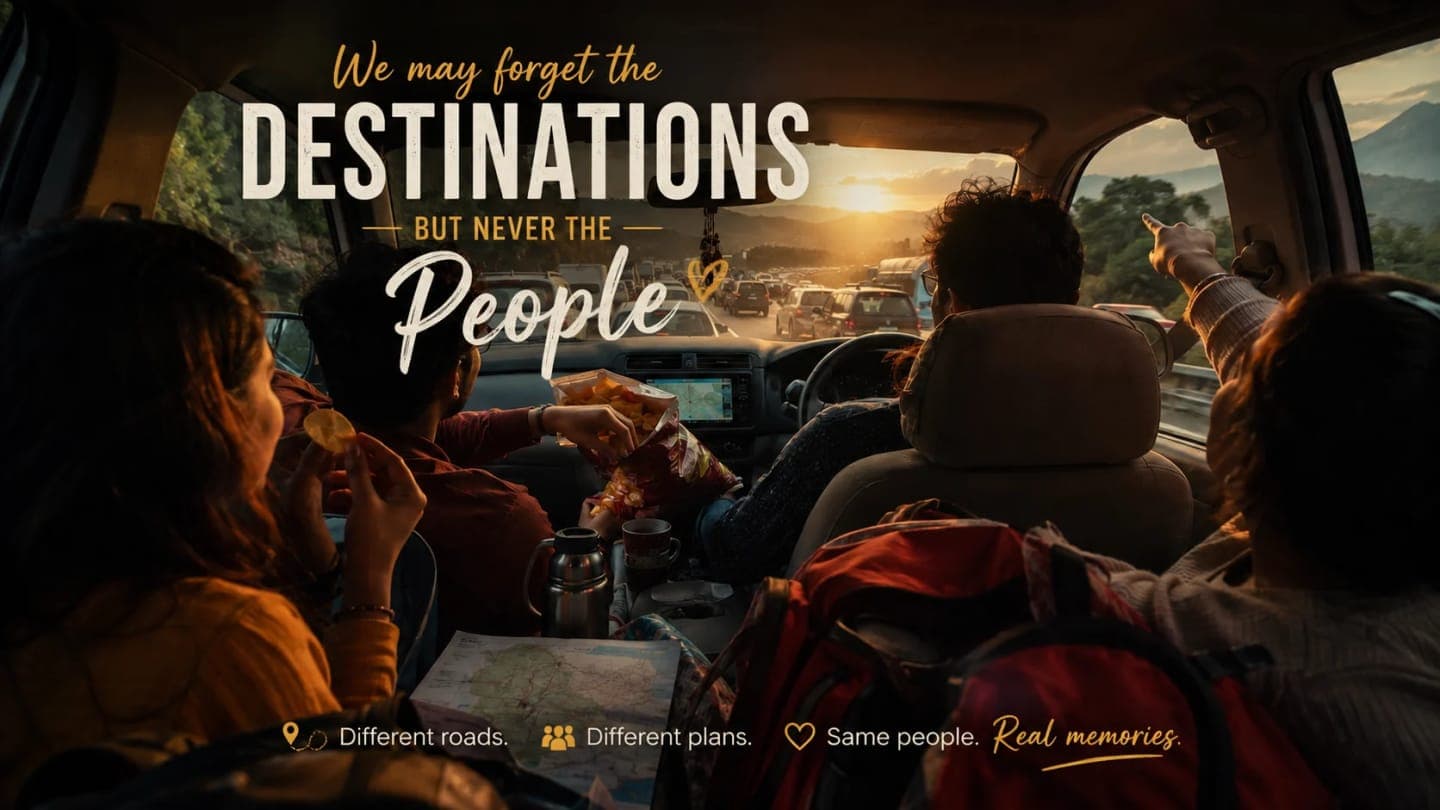
Nobody says much in the car at first.
The traffic has been standing still for almost an hour. Someone in the back seat is hungry. Someone else is pretending not to be irritated. The driver has already taken one wrong turn and is now depending on Google Maps like it is a spiritual guide. A packet of chips is being passed around with the seriousness of emergency relief.
Then, suddenly, someone says something completely silly.
Everyone laughs.
Not because the joke was brilliant. It probably was not. But because travel does that sometimes. It takes tired people, hungry people, slightly annoyed people, people who may have argued ten minutes ago, and turns one ordinary moment into something they will remember for years.
Most people think travel is about places. Mountains. Beaches. Forts. Museums. Cafes. Airports. Railway stations. Beautiful views.
But years later, when the trip returns to memory, the destination often becomes the background.
What stays is who sat beside you. Who shared their food. Who became quiet when they were tired. Who got angry over directions. Who made everyone laugh when the plan collapsed. Who held the bag while you ran for the train. Who said, "It is okay, we will manage."
Travel does not just create memories.
It changes relationships too.
Why Travel Shows You The Real Person
Everyday life allows people to edit themselves.
At home, everyone has their comfort zone. Their own room. Their own routine. Their own way of handling moods. If someone is tired, they can disappear for a while. If someone is annoyed, they can stay silent and scroll their phone. If plans do not work out, there is usually a backup.
Travel does not always give that luxury.
A delayed train, a sudden rainstorm, a hotel room that looks nothing like the photos, a missed bus, a wrong booking, a road that refuses to end, a restaurant that closes exactly when everyone becomes hungry - these moments quietly reveal people.
Some become problem-solvers.
Some become silent.
Some panic first and think later.
Some keep joking even when everyone else wants to throw the itinerary into a dustbin.
And some, honestly, become a little difficult. Sach bolo, every group has at least one person whose patience leaves the trip before they do.
But that is exactly why travel matters. It reveals the real person not in a dramatic way, but through small reactions. How someone treats a waiter when the order is late. How someone behaves when plans change. Whether they help carry luggage without being asked. Whether they notice when someone is tired. Whether they make space for others or only chase their own version of fun.
You learn things about people on trips that years of normal meetings may never show.
The Small Moments Nobody Plans
Most travel plans are built around big things.
The famous viewpoint. The palace. The beach. The temple. The cafe everyone recommended. The sunset spot. The picture everyone wants.
But relationships usually change in the smaller spaces between those plans.
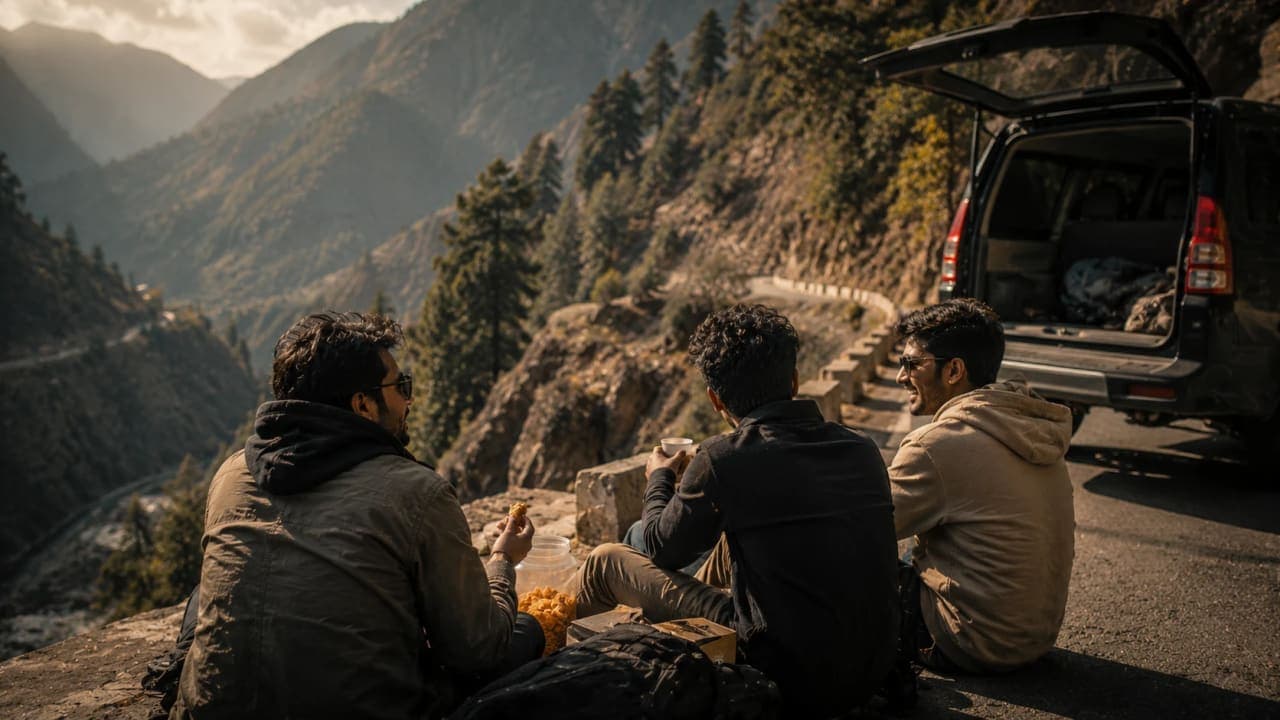
It happens while waiting for transport with bags at your feet. It happens while sharing one bottle of cold water because nobody remembered to buy more. It happens when someone gives you the last piece of sandwich without making a big deal out of it. It happens when two people walk slowly behind the group because one of them is tired. It happens when everyone gets lost and somehow the wrong road becomes the funniest part of the day.
These are not itinerary moments.
Nobody writes, "4:30 PM - accidentally bond while waiting for a cab."
But that is often exactly what happens.
Travel creates empty time. Waiting time. Walking time. Sitting quietly time. And in those gaps, people talk differently. They share stories they never bring up during normal life. They become softer. They become sillier. Sometimes they become more honest because the usual surroundings are gone.
How Travel Strengthens Friendships
Friendships are often built on shared routines.
School. College. Office. Neighbourhood. Weekend plans. Group chats. Birthday calls. Random memes sent at midnight.
Travel adds something different: shared survival.
Not survival in a dramatic jungle-documentary way. More like surviving a long bus ride, a confusing metro change, a bad hotel breakfast, a failed plan, or a trek where everyone confidently said, "It is easy," and then regretted that sentence within fifteen minutes.
Friends who travel together collect private jokes. The kind that make no sense to outsiders. One word, one song, one food item, one place name, and suddenly everyone starts laughing because they remember exactly what happened.
Those jokes become emotional bookmarks.
They say: we were there together. We saw this. We handled this. We made it funny.
That is why a trip can make friendships feel deeper. You see your friends outside their usual roles. The serious friend becomes playful. The quiet friend becomes unexpectedly brave. The always-late friend somehow becomes the person who wakes everyone up. The planner loses control and learns to laugh. The carefree one quietly takes responsibility when something goes wrong.
Travel gives friendship new evidence.
It proves who shows up when things are inconvenient.
Couples Learn Teamwork Outside The Perfect Picture
How is it so far?
Vote with other readers
Couple travel looks beautiful online.
Matching outfits. Sunrise photos. Hands held against mountain views. Coffee cups near windows. Captions about forever.
Real couple travel is also deciding who will ask the hotel reception about the missing towel.
It is one person wanting to leave early and the other needing twenty more minutes. It is choosing between local food and a safe restaurant. It is agreeing that yes, maybe both people cannot be in charge of navigation if both are equally confident and equally wrong.
Travel changes couples because it makes teamwork visible.
A couple can live together and still not understand how they handle uncertainty together until a trip tests it. Who becomes patient? Who becomes protective? Who needs reassurance? Who needs space? Who apologizes first after a silly argument? Who can laugh when everything is not going according to the romantic plan?
Good travel does not mean there are no disagreements.
Sometimes the strongest couples are not the ones who never fight on trips. They are the ones who can fight, cool down, still share dinner, and later turn the entire incident into a story.
Because travelling together is not about becoming perfect partners for three days. It is about learning how to be on the same team even when the AC is not working, the cab is late, and one person is definitely hangry.
Family Trips Feel Different Because Time Feels Different
Family trips carry a different kind of emotion.
With friends, travel can feel adventurous. With a partner, it can feel intimate. With family, it often feels layered.
Parents who usually worry about bills, work, health, groceries and responsibilities suddenly become people eating roadside snacks, taking photos, asking children to stand properly, bargaining in markets, and saying, "One more picture," even when everyone knows five pictures have already been taken.
Siblings return to their old roles within minutes. Someone becomes the responsible one. Someone becomes the comedian. Someone refuses to admit they are tired. Someone controls the music. Someone takes snacks very seriously.
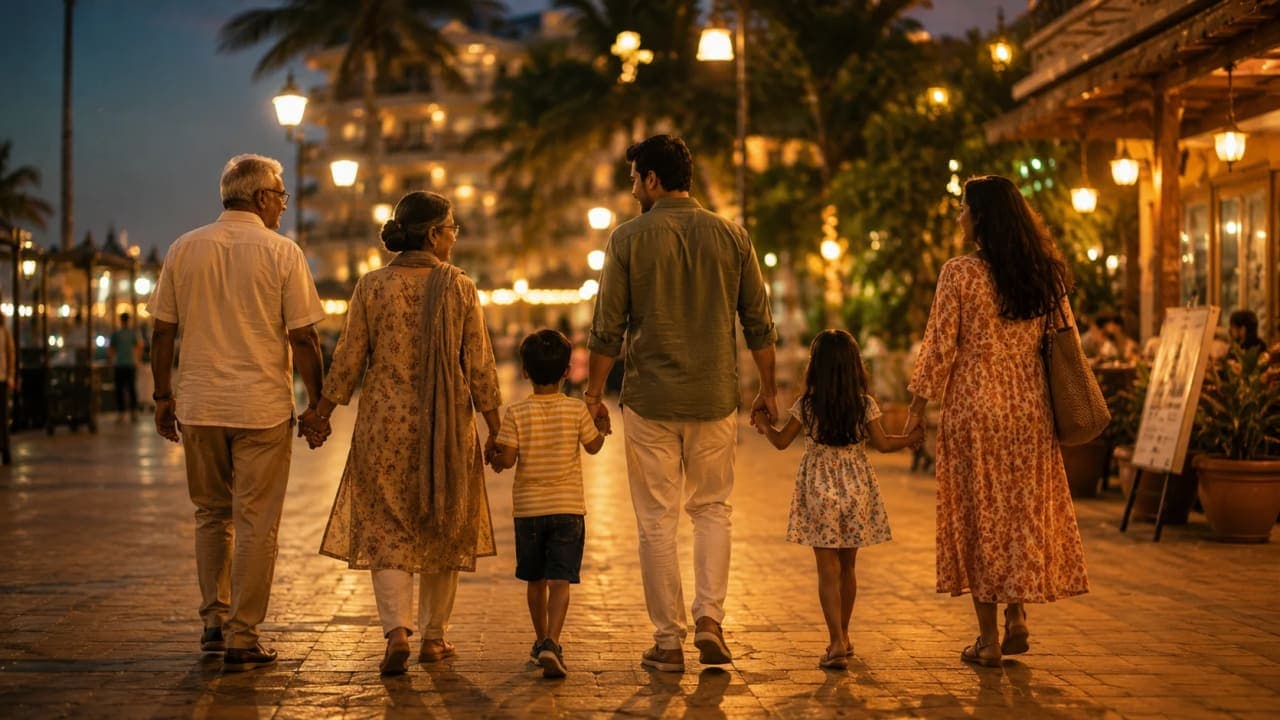
Grandparents, when they travel, bring another kind of tenderness. The pace changes. The group slows down. People become more careful. A short walk becomes meaningful because everyone knows such moments cannot be recreated forever.
That is why family trips often become emotional with time.
At the moment, it may feel chaotic. Someone is forgetting something. Someone is asking where the tickets are. Someone is calling from the wrong gate. Someone is overpacking as if the family is shifting permanently.
But years later, those exact details become precious.
Because family travel is not only about seeing a place. It is about seeing your own people outside their normal responsibilities.
Sometimes Travel Creates Conflict Too
A truthful article about travel and relationships cannot pretend every trip is soft music and golden light.
Travel can create conflict.
People have different expectations. One person wants rest. Another wants to cover every place possible. Someone wants expensive cafes. Someone else is mentally calculating the budget after every bill. One person likes early mornings. Another believes vacations should legally begin after 10 AM.
Add heat, crowds, hunger, traffic, lack of sleep and uncomfortable seats, and even loving people can become slightly dramatic versions of themselves.
But conflict during travel is not always a bad sign.
Sometimes it simply shows where communication was missing. Sometimes it teaches people to plan better. Sometimes it reveals that one person always compromises silently. Sometimes it reminds a group that not everyone enjoys the same pace.
The important part is what happens after the conflict.
Do people blame each other for the rest of the trip? Or do they adjust? Do they learn? Do they make space? Do they say sorry? Do they laugh about it later?
Travel does not magically fix relationships. But it gives relationships honest material to work with.
The People Become Part Of The Destination
Ask someone about an old trip and notice what they remember first.
Sometimes they remember the famous place. But more often, they remember a person inside that place.
The friend who laughed the loudest during dinner.
The sibling who kept taking terrible photos but insisted they were artistic.
The parent who packed extra food and saved everyone when hunger arrived.
The partner who held your hand during a difficult climb.
The cousin who negotiated with an auto driver like a courtroom lawyer.
The person who stayed calm when everyone else lost patience.
This is how people become part of places.
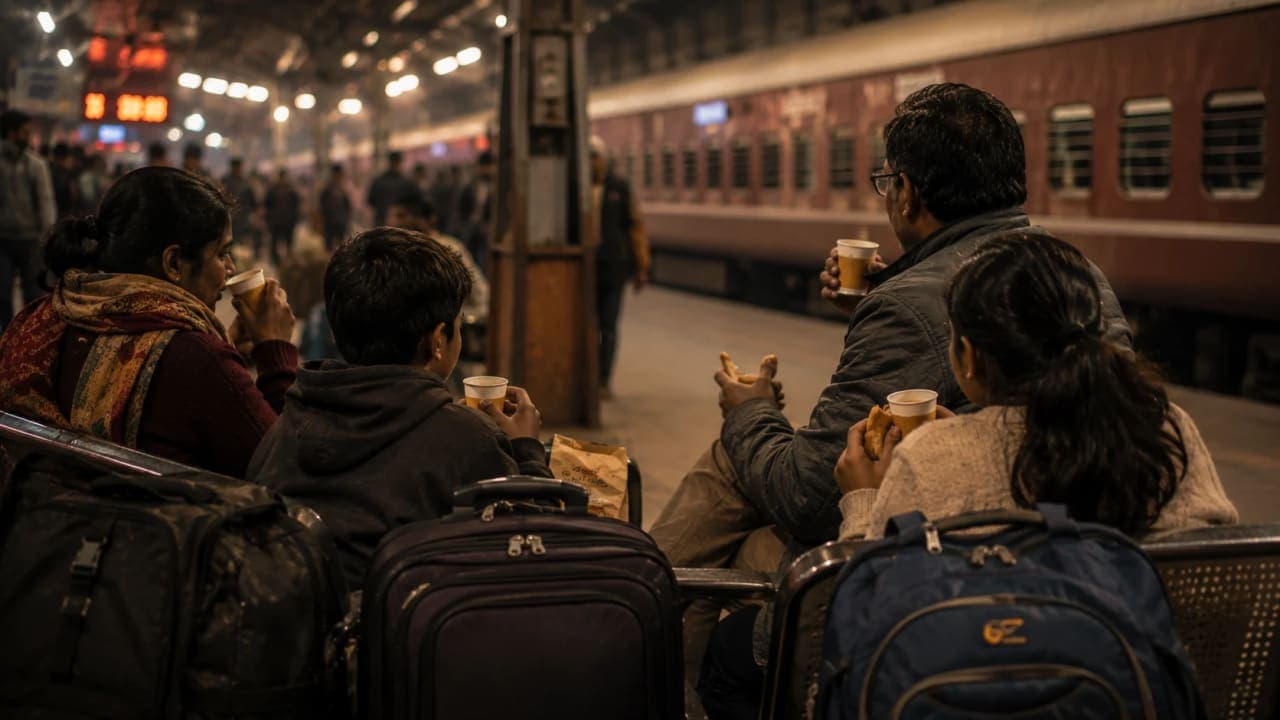
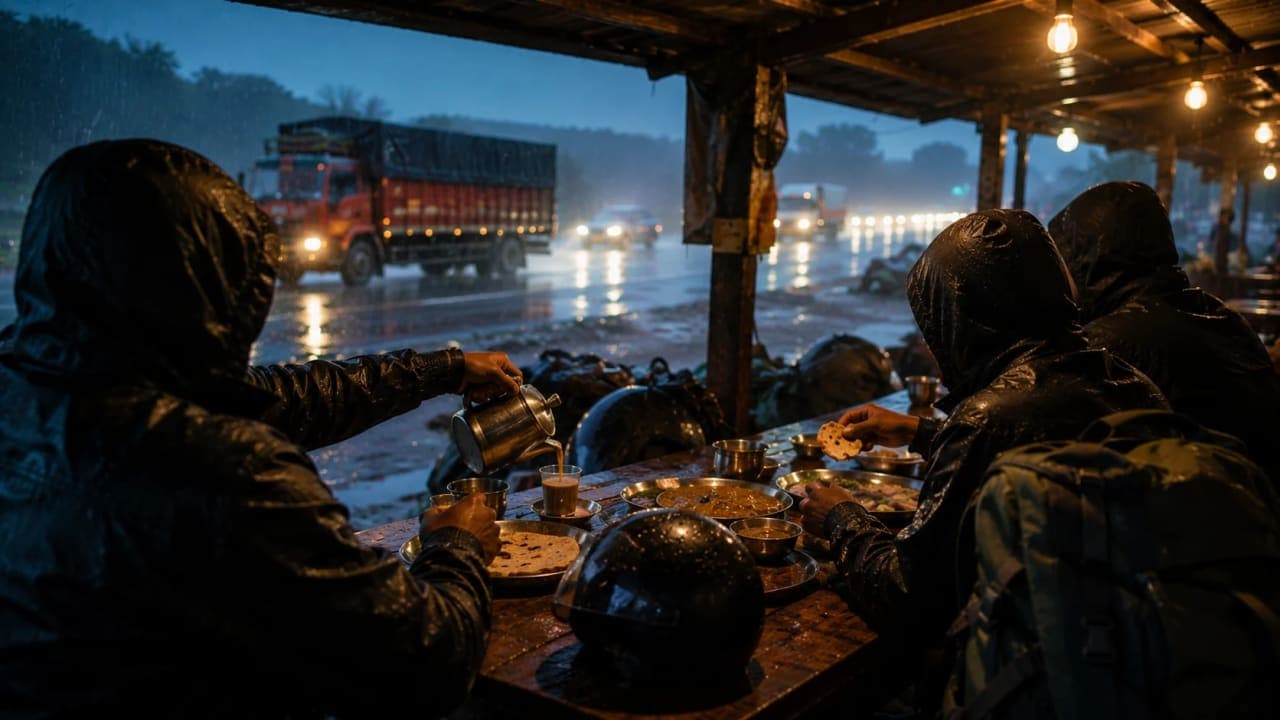
A road is no longer just a road because you remember who sat beside you. A hotel is no longer just a hotel because you remember the late-night conversation. A railway platform is no longer just a platform because you remember the tea, the bags, the jokes, the waiting.
Years later, you may forget the ticket price. You may forget the exact route. You may forget the restaurant name.
But you remember the feeling of being together there.
The Trips We Talk About Years Later
The trips people talk about for years are rarely perfect.
Perfect trips are pleasant. Imperfect trips become stories.
The time the cab broke down. The time it rained suddenly. The time someone booked the wrong bus stop. The time everyone got lost. The time the hotel looked suspiciously different from the photos. The time a simple plan became a full family comedy production.
At the time, these moments may feel frustrating.
Later, they become group folklore.
Every friendship group, couple and family has these travel stories. They are repeated at dinners, weddings, phone calls, reunions and random evenings when someone says, "Remember that trip?"
And suddenly everyone is back there.
Not physically. But emotionally.
That is the strange power of travel memories. They do not stay locked in the past. They keep returning, bringing people back to each other.
The Relationships We Bring Back Home
Every trip ends.
Bags are unpacked. Laundry returns to reality. Photos are uploaded. Bills are settled. Sleep schedules recover slowly. The group chat becomes active for a few days with pictures, then slowly returns to normal.
But something small comes back with people.
A little more trust.
A private joke.
A better understanding of someone's mood.
A memory of who helped when things went wrong.
A softer feeling toward someone you thought you already knew.
This is why travel changes relationships. Not always dramatically. Not always immediately. Sometimes the change is quiet. You return home and realize you are closer to someone. You understand them better. You forgive them faster. You trust them more. You have a story together that nobody else fully owns.
And that shared story becomes part of the relationship.
Lock in the takeaway
Frequently asked questions
How does travel change relationships?
Travel changes relationships by placing people in unfamiliar situations where they must communicate, compromise, support each other and share small moments that later become meaningful memories.
Why does travelling together reveal someone's real personality?
Travel removes many daily routines. Delays, tiredness, missed plans, hunger and excitement show how a person reacts under pressure, how patient they are and how they care for others.
Can travel create conflict between people?
Yes. Travel can create disagreements because people have different expectations, energy levels and habits. But when handled with patience, those conflicts often lead to better understanding.
Why are family trips remembered for so long?
Family trips become special because they create rare uninterrupted time across generations. Years later, people may forget the hotel or route but remember who laughed, helped and sat beside them.
Is travel good for couples and friendships?
Travel can strengthen couples and friendships because it creates shared stories, teamwork, private jokes and trust, especially when people handle imperfect moments together.