JavaScriptMay 27, 2026
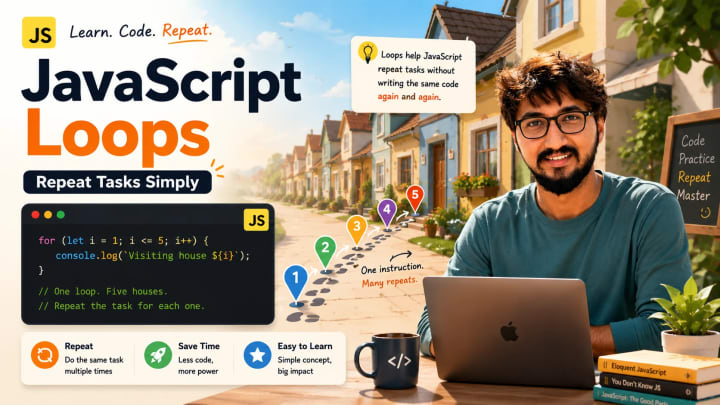
JavaScript Loops Explained in Simple Words
A warm beginner-friendly story guide to JavaScript loops, explaining for, while, do while, break, continue, nested loops, and infinite loops in simple words.
1221

Explore
Travel With Snigdha
Beginner-friendly JavaScript notes from real frontend work, moving from first concepts into everyday code decisions.
The JavaScript diary is written for early learners: small concepts, real console examples, and a senior-developer voice that does not rush the basics.
Start with the newest entries in this collection.
A warm beginner-friendly story guide to JavaScript loops, explaining for, while, do while, break, continue, nested loops, and infinite loops in simple words.
1221
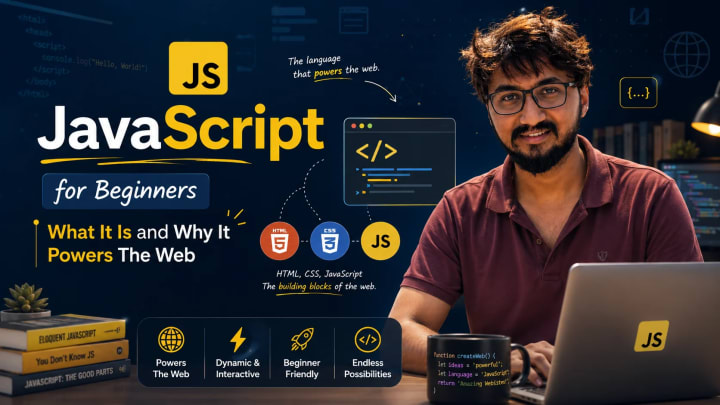
A Day 1 JavaScript story from a mechanical engineer turned software developer: how the language began, why it powers the browser, and what beginners should learn first.
1117
Keep moving through the lessons in this learning path.
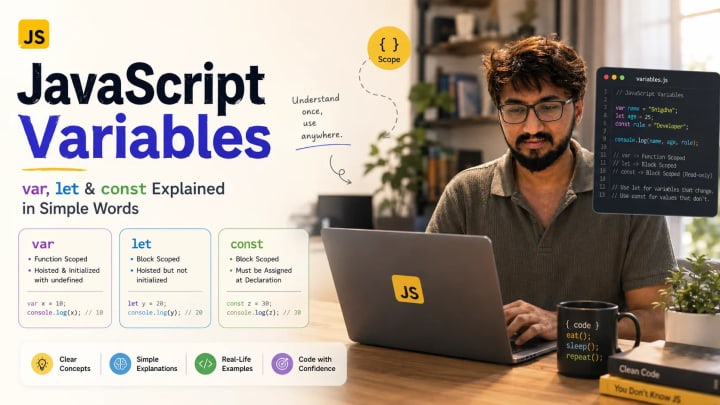
Variables are where JavaScript starts to feel real. Let’s understand var, let, and const in simple words, with practical examples beginners can actually use.
0070
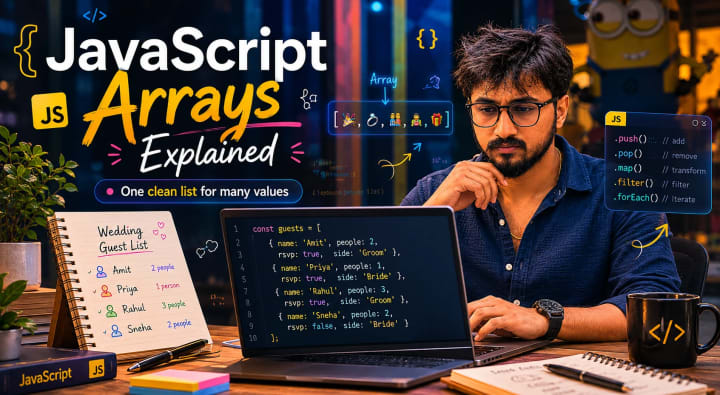
A beginner-friendly story guide to JavaScript arrays, told through a wedding guest list that grows from separate names into one clean list.
1212
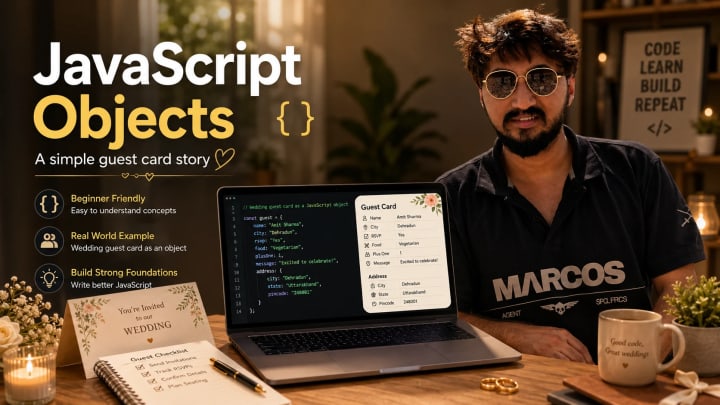
A beginner-friendly JavaScript objects guide that continues the wedding guest list story and turns one guest into a clear detail card.
2237
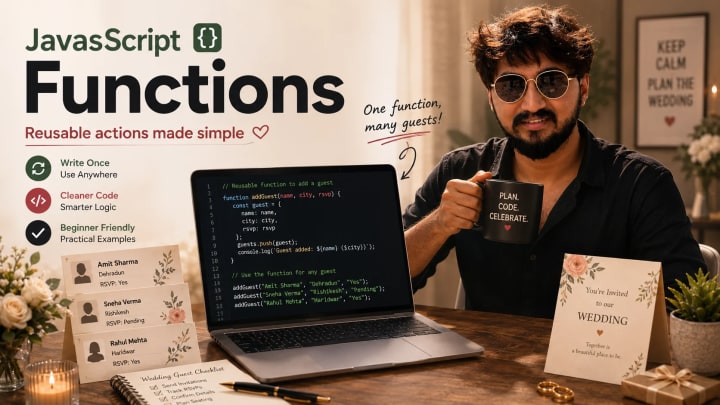
A beginner-friendly story about the moment JavaScript functions turn repeated wedding-planning tasks into reusable code that actually starts doing work.
1123
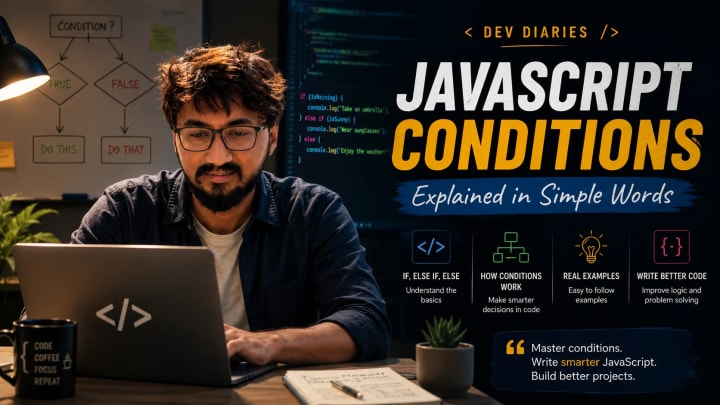
A story-style beginner guide to JavaScript conditions, showing how if, else, truthy/falsy values, switch, ternary, and UI logic appear in real frontend work.
0043
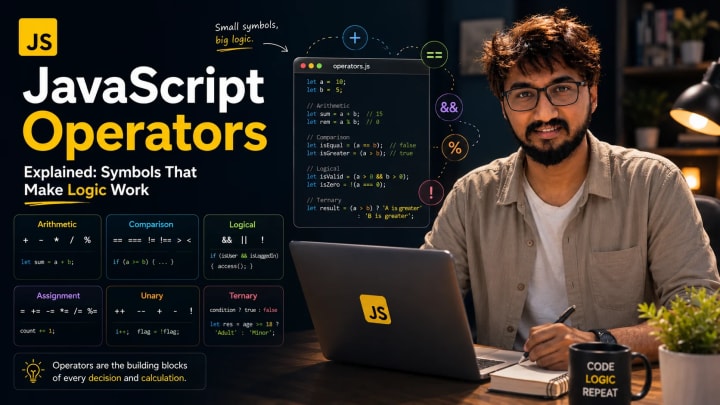
A beginner-friendly JavaScript operators guide with practical frontend examples for calculations, comparisons, conditions, fallbacks, and UI logic.
1131
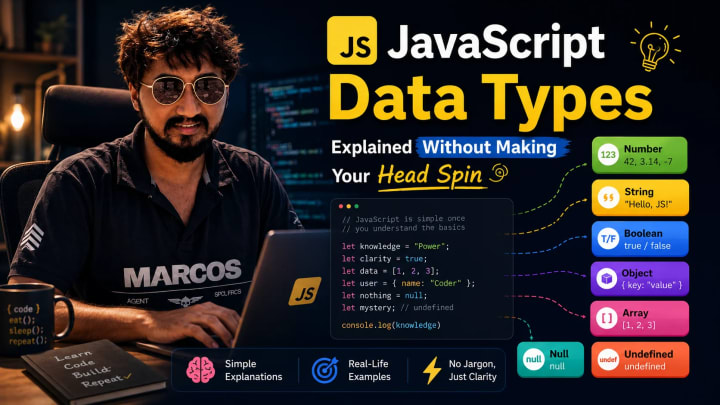
A practical beginner-friendly guide to JavaScript data types, with simple examples, frontend use cases, and real-world mistakes developers often debug.
1034
Yes. The sequence starts with what JavaScript does, then moves into variables, data types, operators, conditions, loops, functions, and asynchronous code.
No. Browser examples appear often because they are easy to see, but the series treats JavaScript as a general software development language.
Start with the newest visible article if you are browsing casually, or use the learning path rail when you want a basic-to-advanced sequence.